
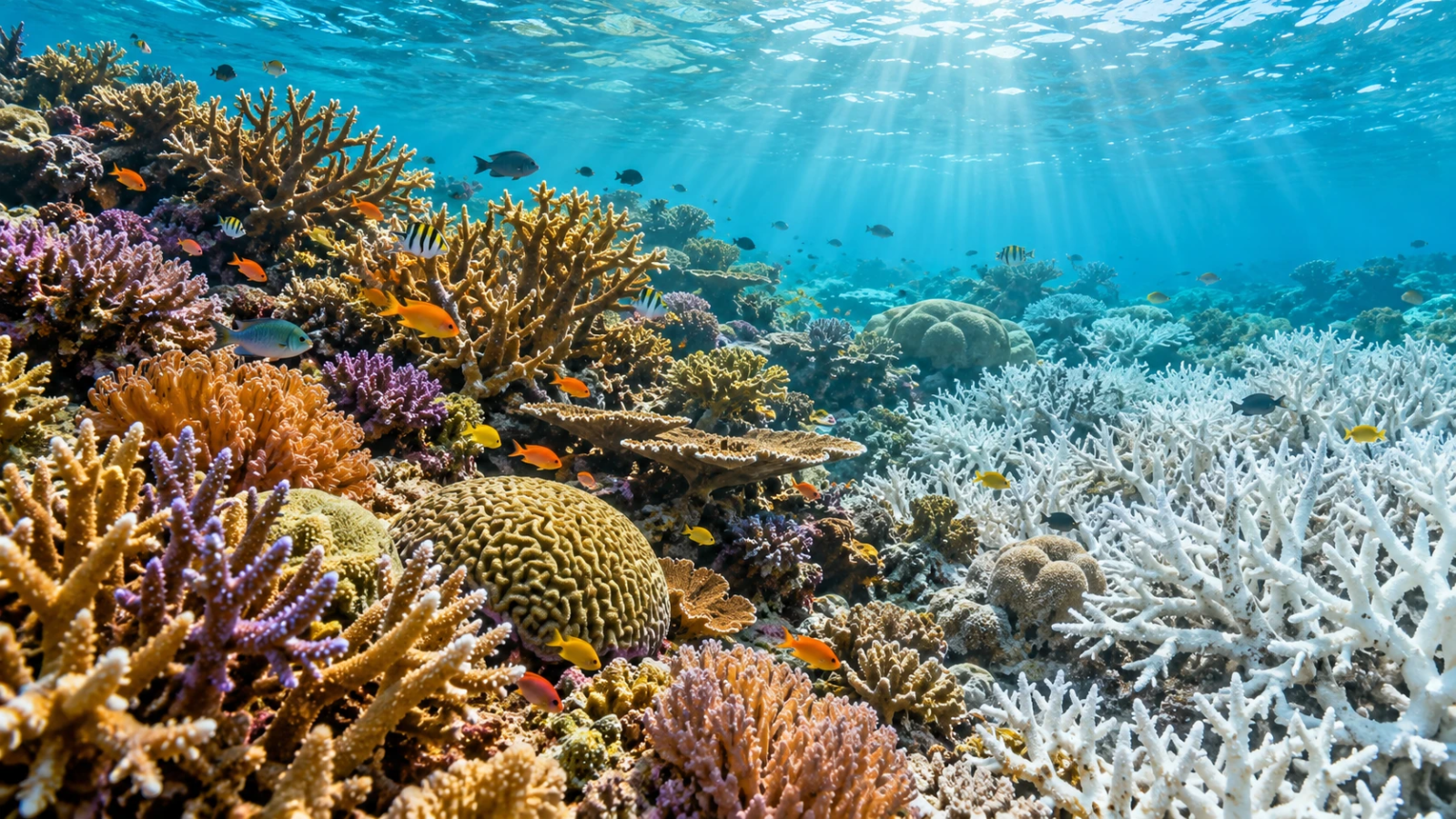
Nearly all of the world’s shallow-water coral reef systems face an extremely high risk of collapse within the next 50 years, according to a new global assessment by the International Union for Conservation of Nature (IUCN).
In a report released on Thursday, the conservation organisation classified 96% of the world’s tropical and subtropical coral reef systems as critically endangered, warning that they could disappear entirely by 2075.
Michal Gadka, scientific lead for the IUCN Red List of Coral Reef Ecosystems assessment, said the future threat posed by climate change was imminent and severe, placing these ecosystems at extremely high risk of collapse.
Corals are highly sensitive to heat, making them particularly vulnerable to human-induced climate change.
Rising ocean temperatures are increasing the frequency and severity of harmful coral bleaching events, which can weaken or kill corals.
When coral reefs collapse, hard corals are replaced by algae, rubble and sponges. This transformation undermines their ability to support the diverse marine life that depends on them, from tiny invertebrates to reef fish such as groupers.
Speaking at a press conference during the United Nations biodiversity conference, COP17, in Yerevan, Armenia, Gadka also warned that the development of a natural climate phenomenon known as a “Super El Niño” this year could pose an additional threat to coral reefs.
Coral reefs are vital sources of seafood and tourism revenue and serve as natural barriers against coastal erosion and storms. Often described as the “rainforests of the sea”, they harbour extraordinary biodiversity, supporting around a quarter of marine species while sustaining coastal communities and businesses.
The assessment identified many of the world’s best-known reef systems as critically endangered, including Australia’s Great Barrier Reef, the Coral Triangle in the western Pacific and Southeast Asia, the Mesoamerican Barrier Reef System and the Red Sea reefs.
The IUCN based its assessment on an intermediate climate scenario used by the United Nations climate science panel, projecting that global temperatures could rise by 2.7 degrees Celsius above pre-industrial levels by 2100. Researchers examined 127 tropical and subtropical reef systems covering 188,362 square kilometres.
The warning follows a separate IUCN study published in the journal Nature a week earlier, which found that around 44% of reef-building coral species face an increased risk of extinction due to climate change. Another survey conducted a year ago found that harmful bleaching had affected 84% of the world’s reefs, marking the most severe such event on record.
Despite the alarming findings, the IUCN stressed that most coral reefs have not yet disappeared. Gadka said reefs had demonstrated a remarkable ability to recover from devastating bleaching events.
He added that small pockets of resilient coral reefs could survive into the future, making it essential to take every possible measure to improve their chances of survival.



COMMENTS