
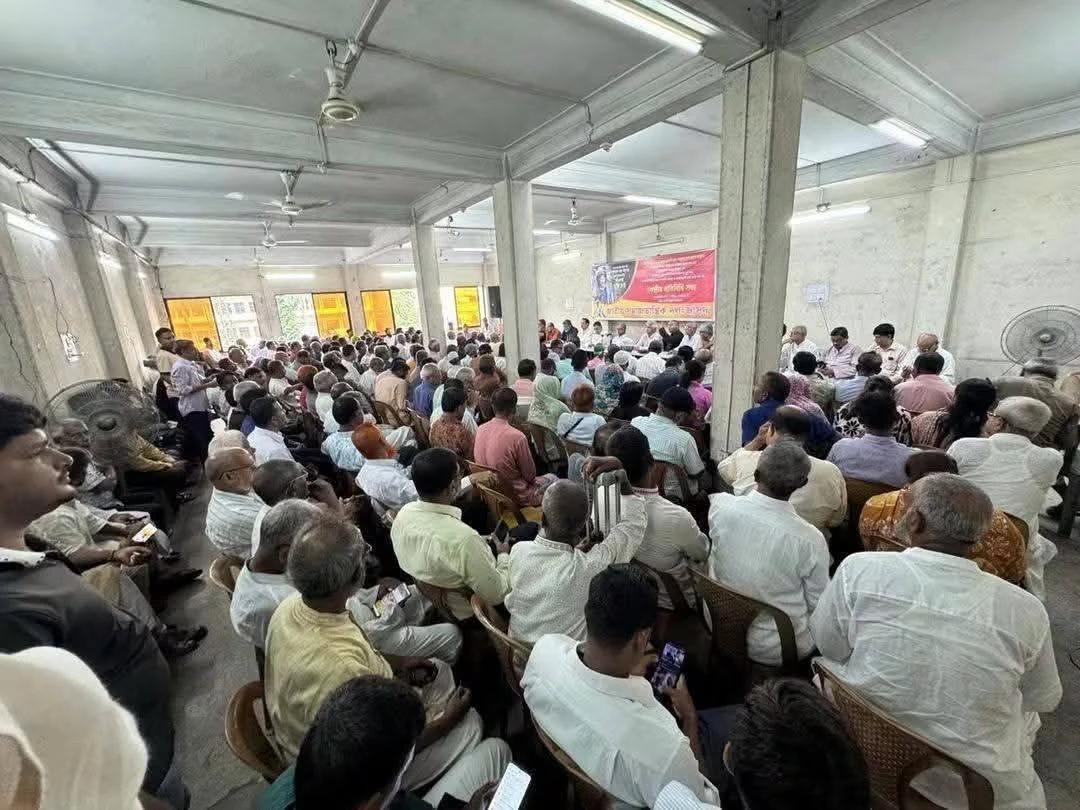
Questions have been raised over the role of police after an incident at the central office of the Jatiya
Samajtantrik Dal (Jasad) in Dhaka, where a representative meeting of the party was being held on Saturday.
The party says it had formally informed police in advance about the meeting and requested permission to use microphones as well as necessary security arrangements for the programme.
A letter signed by Jasad Office Secretary Sajjad Hossain and dated September 23 shows that the party informed the Dhaka Metropolitan Police commissioner that it planned to hold the representative meeting at the Colonel Taher Auditorium at the party’s central office at 35–36 Bangabandhu Avenue in Gulistan from 9am to 9pm on September 26.
The letter specifically requested permission to use microphones and asked police to take necessary measures to ensure overall security during the programme. It was also addressed for the attention of the additional deputy commissioner of police of the Ramna Zone.
According to the party, representatives and leaders from different parts of the country were expected to attend the meeting, which was scheduled to be chaired by Jasad Central Executive Committee President and freedom fighter AKM Robiul Alam.
Against this backdrop, Jasad leaders have questioned the subsequent police response and the circumstances surrounding the gathering.
The party has also alleged that a group of people appeared at the venue and created an atmosphere in which the political meeting was portrayed as something other than a routine organisational programme.
Reports about the incident subsequently described the gathering as an alleged meeting involving leaders or activists linked to the Awami League, with police reportedly taking several people into custody. Jasad, however, maintains that the gathering was its own organisational representative meeting and that the authorities had been informed beforehand.
The issue has raised a key question over law enforcement’s handling of political programmes: If police had been formally informed about the meeting and had been requested to provide security, on what basis was intervention at the venue considered necessary?
Jasad has also criticised what it described as the premature presentation of the meeting as an Awami League gathering without adequately verifying the identity of the participants and the purpose of the programme.
The party says political disagreements with Jasad’s position do not justify disrupting a political meeting, intimidating its activists or allowing a crowd to determine whether a political programme can take place.
The incident has also prompted broader questions about political rights and the responsibilities of law enforcement agencies in maintaining a space for peaceful political activity.
Jasad argues that the protection of political rights should apply to all parties regardless of their political positions. It says a political party’s office should not become the target of crowd pressure or politically motivated disruption simply because of disagreements over its policies or affiliations.
The police have yet to provide, in the information available here, a detailed public explanation addressing the party’s prior written request, the security arrangements made for the meeting and the specific legal basis for the reported intervention.
The episode therefore leaves two issues requiring clarification: whether the gathering was, as Jasad says, an authorised organisational meeting, and what prompted police to intervene despite the party’s advance communication seeking security for the event.

COMMENTS