
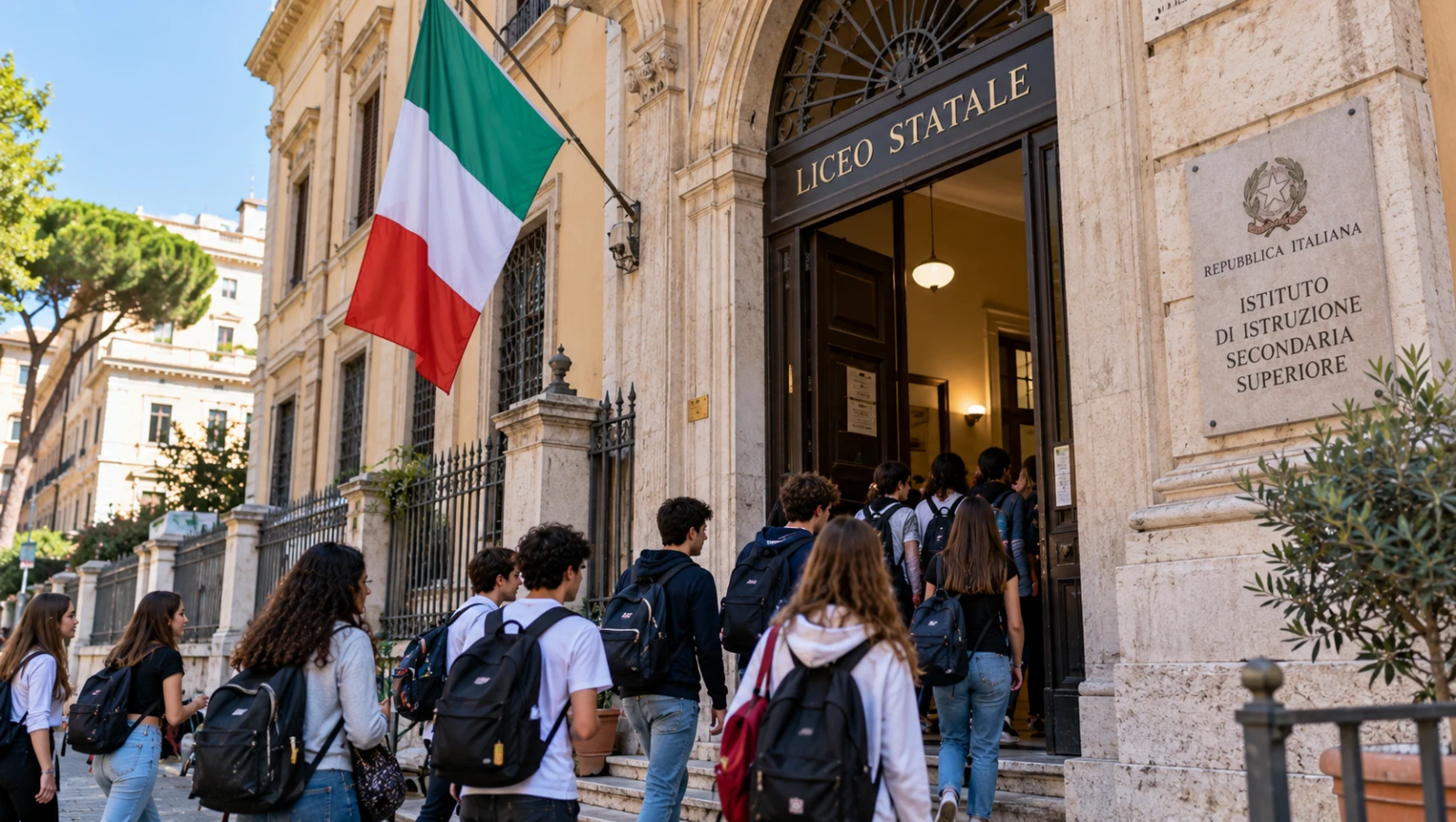
ROME — Italy’s government has moved to ban face-covering garments such as the burqa and niqab in schools and introduce limits on the number of students with insufficient Italian-language skills in classrooms, as part of a broader package of education reforms.
Prime Minister Giorgia Meloni announced the proposed measures at a gathering of the youth wing of her nationalist-conservative Brothers of Italy (FdI) party. Her cabinet had approved a decree-law on Thursday containing the measures.
Under the proposed rules, schools would be prohibited from allowing students to wear burqas or niqabs that cover the face. From next year, students unable to speak Italian would also be capped at 30% of a classroom’s enrolment, according to Al Jazeera.
Violations of the new rules could result in fines of up to €1,000.
As a decree-law, the measures can take immediate effect but must be converted into legislation by parliament within 60 days. President Sergio Mattarella is also expected to sign the measure, although he has recently signalled concerns about potential obstacles affecting the education system.
Meloni defended the measures in a post on X, saying that creating opportunities to learn Italian and ending the use of burqas and niqabs in schools were matters of “common sense” rather than divisive policies.
She said the government wanted an education system that promotes integration without abandoning rules, supports students facing greater difficulties and gives everyone the opportunity to start from the same point.
Opposition parties, however, have accused the government of using the issue ahead of next year’s election to counter the growing popularity of the far-right National Future (FN), led by former army officer Roberto Vannacci.
The FN had called for a ban on burqas in schools in July as part of its wider “remigration” campaign, which advocates returning migrants to their countries of origin.
The government’s proposals are likely to intensify Italy’s debate over integration, immigration and the role of national language requirements in public education.



COMMENTS