
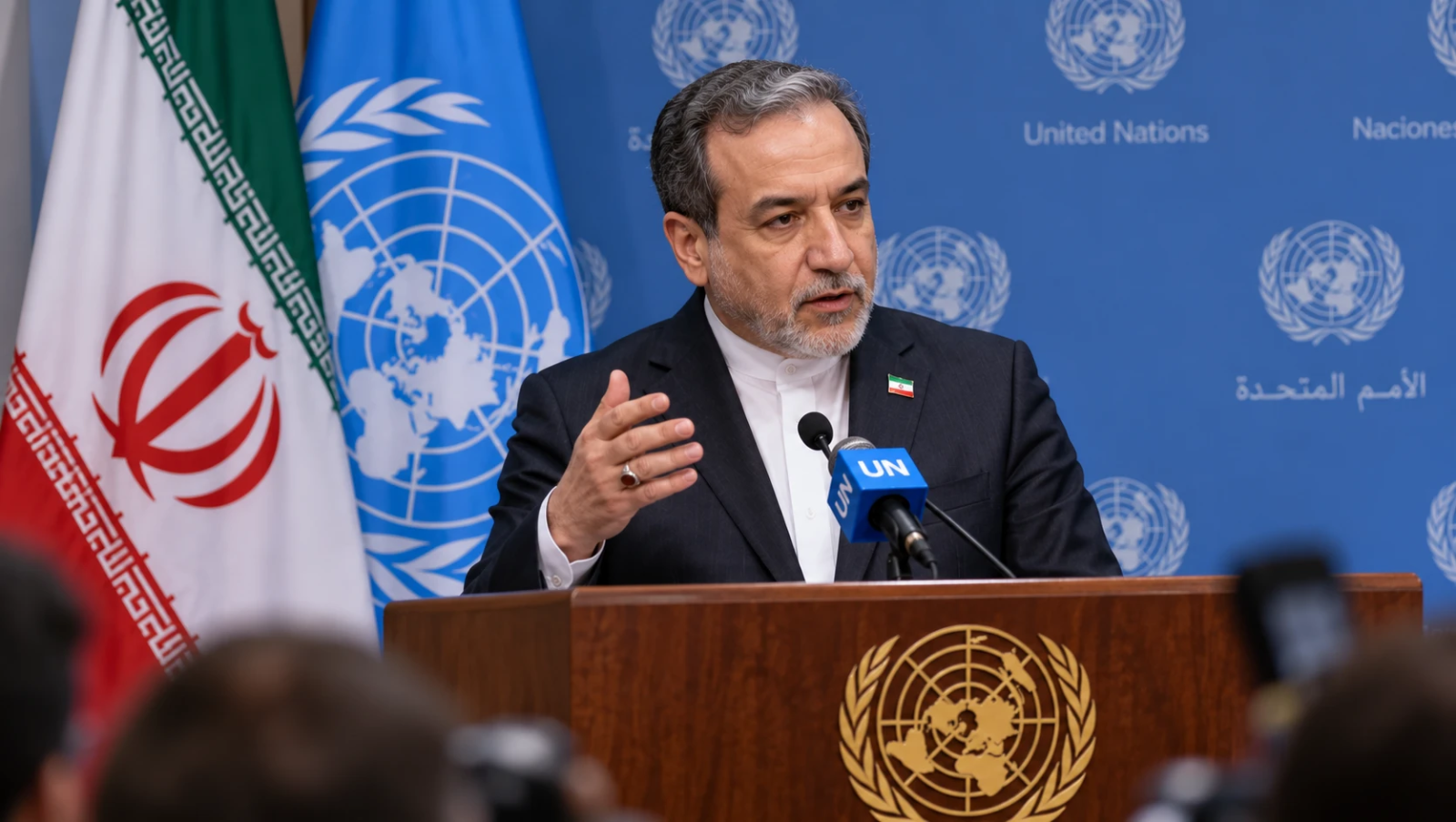
Iran has proposed a new agreement to the United States that could lead to the reopening of the strategically vital Strait of Hormuz within seven days, Iranian Foreign Minister Abbas Araghchi said on Friday.
Speaking to reporters in New York, Araghchi said the strait could be reopened if the necessary conditions were met. He added that normal maritime traffic could resume within a week after an agreement was signed.
“If the necessary conditions are fulfilled, the Strait of Hormuz can be reopened. Normal shipping can resume within seven days,” Araghchi said.
He did not publicly specify the conditions Iran has presented to Washington. However, he said the terms were already included in a 14-point memorandum of understanding reached in Islamabad in June and did not contain any new demands.
A US official, responding to questions about Iran’s proposal, said positive discussions were taking place through intermediary countries, including on the nuclear issue, according to Reuters.
The June 18 memorandum reportedly included Iran’s commitment not to acquire nuclear weapons, an end to fighting across all fronts involving Iran, the United States and their allies, and the lifting of a US naval blockade and easing of sanctions on Iran.
In return, Iran was to ensure safe passage for vessels through the Strait of Hormuz and discuss future arrangements for maritime traffic with Oman.
The understanding, however, collapsed within days after fighting resumed between the two sides.
Iran subsequently attacked vessels operating in the Strait of Hormuz, saying they had used routes not authorised by Tehran. The United States later carried out strikes against Iranian targets near the strait and imposed a strict naval blockade, disrupting Iran’s economy.
Before the conflict began, about 20 percent of global oil and liquefied natural gas demand passed through the Strait of Hormuz, making the waterway one of the world’s most important energy routes.
Its closure has contributed to heightened volatility in global energy markets and increased pressure over fuel prices.
With the US midterm elections scheduled for November, the impact of higher energy prices and the broader conflict has also emerged as a significant issue for the administration of President Donald Trump.
Araghchi said the next move was now up to Washington.
“The proposal has been given to the United States. What they do with it is up to them,” he said.



COMMENTS