

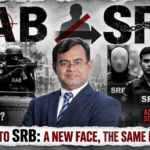
The initiative to dissolve the Rapid Action Battalion (RAB) and establish a new force under the name Special Response Battalion (SRB) risks bringing back “the same force in a new package,” Transparency International Bangladesh (TIB) has warned.
The organisation expressed concern that the proposed Special Response Battalion Bill, 2026, could allow RAB’s controversial culture to persist because of broad and vaguely defined powers, provisions for searches and arrests without warrants, and weak accountability mechanisms.
In a statement sent to the media on Sunday (September 6), TIB Executive Director Dr Iftekharuzzaman said the policy decision to dissolve RAB was long overdue and that TIB had hoped to see it as a positive step. However, he said, changing the name of a force does not amount to institutional reform.
Referring to serious allegations and evidence of extrajudicial killings, enforced disappearances and torture involving RAB, he said fundamental changes were needed in the structure, personnel, powers, use-of-force provisions and accountability mechanisms of the proposed new force to prevent such abuses from recurring.
Otherwise, he warned, an SRB could emerge as essentially the same force as RAB, operating with similar powers and institutional culture.
According to Iftekharuzzaman, the proposed bill would give the SRB a wide range of powers, including intelligence surveillance, operations, searches and general investigations. It also contains broadly worded provisions concerning “maintaining internal security” and “other duties directed by the government.”
Such vague provisions could create opportunities for suppressing dissent and using force for political purposes, he said. They could also create a risk of providing legal cover for extrajudicial killings similar to those alleged in the past.
TIB also raised concerns over provisions allowing searches and arrests without warrants based merely on suspicion, as well as proposals to establish detention facilities and interrogation rooms within the force.
The organisation said such provisions could conflict with the International Covenant on Civil and Political Rights (ICCPR) and fundamental rights guaranteed under Bangladesh’s Constitution.
TIB also expressed concern over the proposal to transfer RAB personnel to the new force. It said that if RAB members were transferred wholesale to the SRB without proper screening, individuals allegedly involved in past human rights violations could also find a place in the new organisation.
The organisation therefore called for a transparent and impartial vetting process.
It urged the government to follow United Nations standards on Security Sector Reform (SSR) and Disarmament, Demobilization and Reintegration (DDR), and to ensure that members accused or found to have been involved in serious crimes, including extrajudicial killings, torture or enforced disappearances, are not recruited into the new force.
TIB also questioned the mechanism proposed under Section 22 of the draft SRB Bill for handling complaints.
According to Iftekharuzzaman, the bill proposes establishing a complaints redress committee comprising the force’s additional director general and other police officials. Allowing allegations of serious human rights violations by members of the force to be investigated by their own colleagues would create a conflict of interest and would not ensure impartial investigations, he said.
Instead, TIB called for the establishment of a fully independent and impartial oversight authority comprising human rights and legal experts who would be free from the influence of the police and executive branch.
The organisation also called for legal provisions requiring investigation reports to be made public and guaranteeing victims’ rights to compensation and rehabilitation.
TIB said the dissolution of RAB presents the government with an important opportunity to establish a fundamentally different law-enforcement institution.
It urged the government to use the opportunity to ensure clearly defined limits on the new force’s powers, independent and impartial oversight, transparent vetting of personnel, judicial safeguards and effective remedies for victims.
“The dissolution of RAB should not be limited to changing the name and appearance of a force,” Iftekharuzzaman said. Instead, he argued, it should mark the beginning of a new law-enforcement system based on the rule of law, protection of citizens’ rights and effective accountability, while ending the culture of human rights violations and impunity.
He further said the government could not mislead citizens or the international community through a mere “cosmetic makeover.”
TIB said it had submitted a detailed policy brief to the relevant minister and parliamentary committee, containing a clause-by-clause analysis of the proposed Special Response Battalion Bill, 2026, along with recommendations.
The organisation urged the authorities to give due consideration to its recommendations and to involve experts and relevant stakeholders before finalising the bill into law.



COMMENTS