
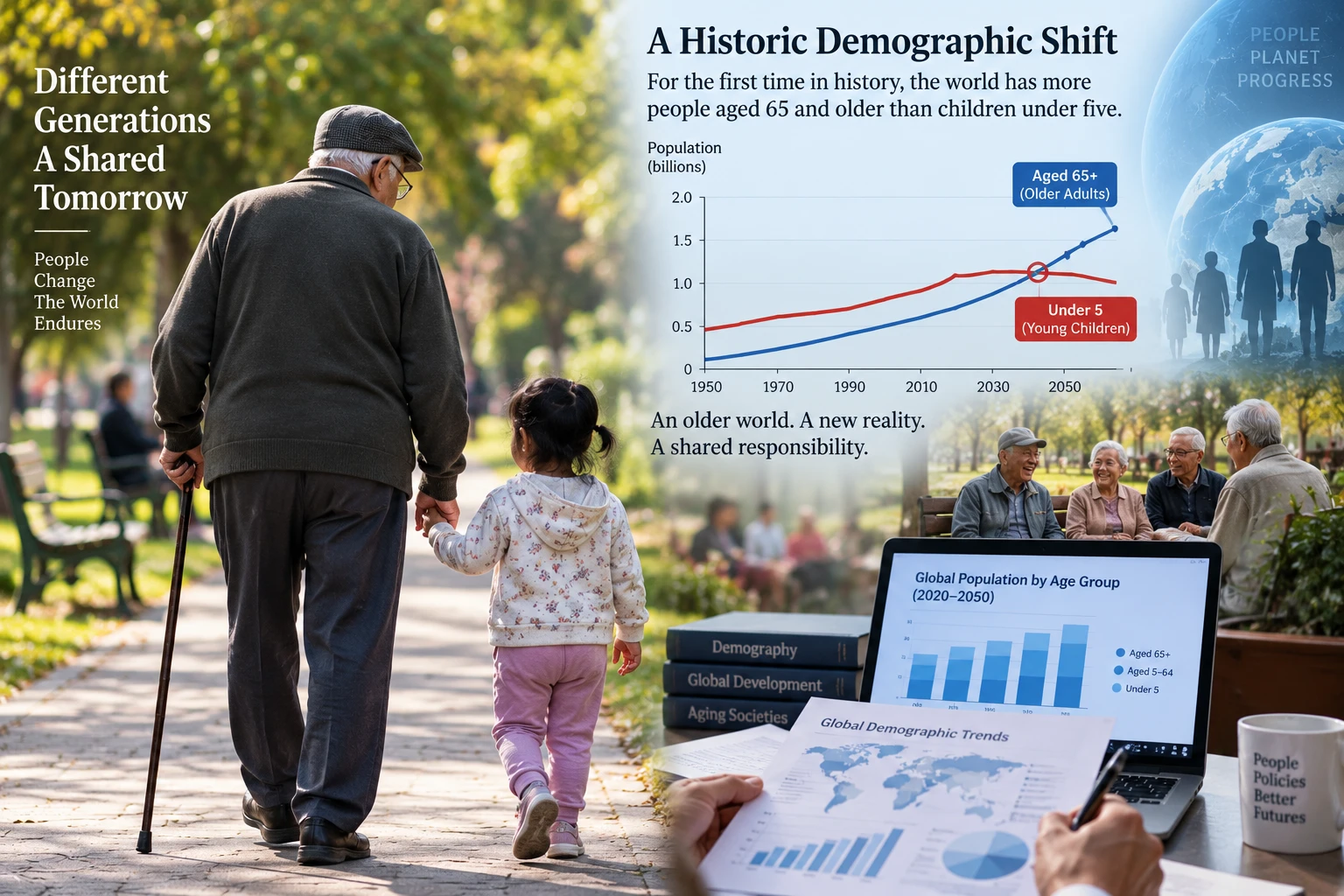
The world has reached a historic demographic turning point, with the number of older people now exceeding the number of children under the age of five, according to a report by the U.S. Census Bureau.
The shift is being driven primarily by declining birth rates and improvements in healthcare that have enabled people to live longer. Demographers say the change is not the result of a sudden development but the outcome of demographic trends that have unfolded over several decades.
The transformation is expected to have far-reaching consequences for societies and economies worldwide. Governments may face growing pressure to strengthen healthcare systems, social-security programmes and elderly-care services while adapting to changes in the size of the working-age population.
Birth rates fall as life expectancy rises
Two long-term trends are at the heart of the demographic shift: people are having fewer children, while they are living longer.
Birth rates have declined significantly in many parts of the world as marriage and childbearing are increasingly delayed, living costs rise and access to family planning improves. The trend is no longer confined to wealthy nations and is increasingly visible across developing countries as well.
At the same time, advances in medicine, improved nutrition, sanitation and public-health systems have contributed to longer life expectancy. As a result, the proportion of children in the global population is shrinking while the number of older people continues to grow.
Countries such as Japan and Russia were among the early major economies to experience population decline alongside rapid population ageing. Russia’s population began declining in the mid-1990s, while Japan entered a period of population decline in 2008.
More countries have since followed a similar trajectory. However, the world’s total population is still expected to continue growing for several more decades, although at a much slower pace.
Developing countries face a growing ageing challenge
Population ageing was once viewed largely as an issue affecting Japan, South Korea and several wealthy European countries. That picture is now changing, with ageing populations becoming increasingly common in developing regions of Asia and Latin America.
The rise in the number of elderly people also raises concerns about their quality of life. Ageing can become particularly difficult when it is accompanied by poverty, social isolation or dependence on others for everyday activities.
Smaller families and a growing number of people without children could further complicate traditional systems of family-based elderly care. Governments are therefore likely to face increasing demands to expand healthcare, housing and social-protection programmes tailored to older populations.
The demographic transformation is about more than changing population numbers. It could reshape family structures, employment patterns, healthcare needs and economic policy around the world.
As the balance shifts toward fewer children and more older people, governments and societies will need to rethink how they organise work, healthcare, housing and social security for an increasingly ageing global population.





COMMENTS