
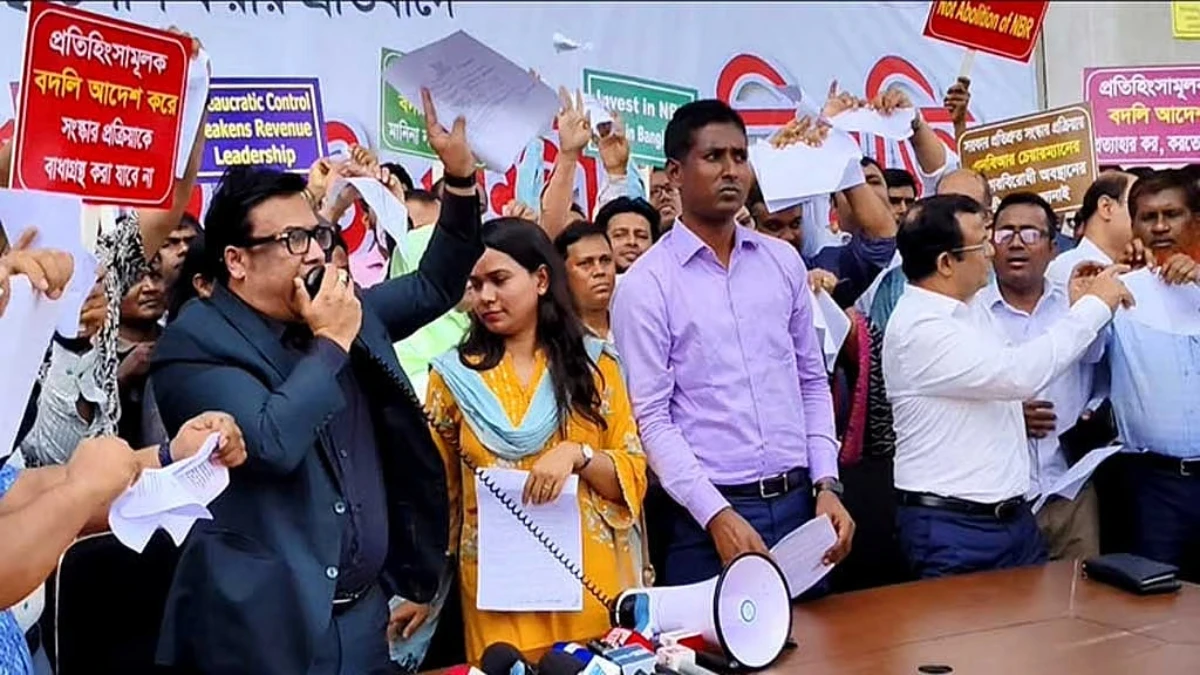
DHAKA — The Bangladesh government has waived disciplinary penalties imposed on 20 National Board of Revenue officials who were punished for taking part in protests against the previous interim government’s move to split the revenue authority into two separate divisions.
The Internal Resources Division issued separate orders on Sunday, Sept. 6, waiving the minor penalties imposed on officials of different ranks. Several NBR officials said penalties against four other officials punished over the same movement could also be waived soon.
The decision follows an appeal by NBR officials to Prime Minister Tarique Rahman during a revenue conference on Aug. 18.
At the conference, the officials asked the prime minister to withdraw the disciplinary measures taken against them. They also expressed concern that fear of punishment could adversely affect revenue collection.
Rahman advised the officials to put the past behind them and move forward, while assuring them that the penalties would be waived.
According to the Internal Resources Division orders, the penalties were waived following appeals submitted to the president.
The officials had faced disciplinary measures on various allegations, including playing an “organizing role” in the protest movement during Yunus regime. Their basic salaries had been reduced by two or more increments as punishment.
Protests Over Plan to Split NBR
The dispute dates back to 2025, when the interim government issued an ordinance to restructure the NBR by creating two separate entities — the Revenue Management Division and the Revenue Policy Division.
NBR officials and employees opposed the move and launched a series of protests, including work stoppages.
Amid the protests, the Finance Ministry announced on May 22, 2025, that necessary amendments would be made to the ordinance. Until those amendments were completed, the NBR would continue operating under its existing structure.
The dispute, however, did not end there.
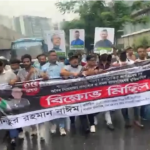
Officials subsequently launched a fresh movement demanding the resignation of then-NBR Chairman Abdur Rahman Khan. Protesters also declared him unwelcome at the NBR headquarters.
On June 28, officials and employees began a “complete shutdown” to press their demands.
The shutdown brought much of the NBR’s operations to a standstill, affecting activities including import and export processing.
In response, the government decided to declare NBR services essential and called on employees to return to work.
The NBR Reform Unity Council later withdrew the shutdown following mediation by business leaders.
Officials Faced Punitive Measures
After the movement ended, the Anti-Corruption Commission began gathering information on corruption allegations involving several prominent leaders of the protests.
Before the new government took office, several NBR officials were sent into compulsory retirement, while others received lesser disciplinary penalties.
Leaders of the protest movement say disciplinary action was taken against 24 officials who participated in the movement.
They regard the process of withdrawing those punishments as a major outcome of their campaign.
The leaders also hope the government will reinstate four officials — three NBR members and a tax commissioner — who had been sent into compulsory retirement.


COMMENTS