
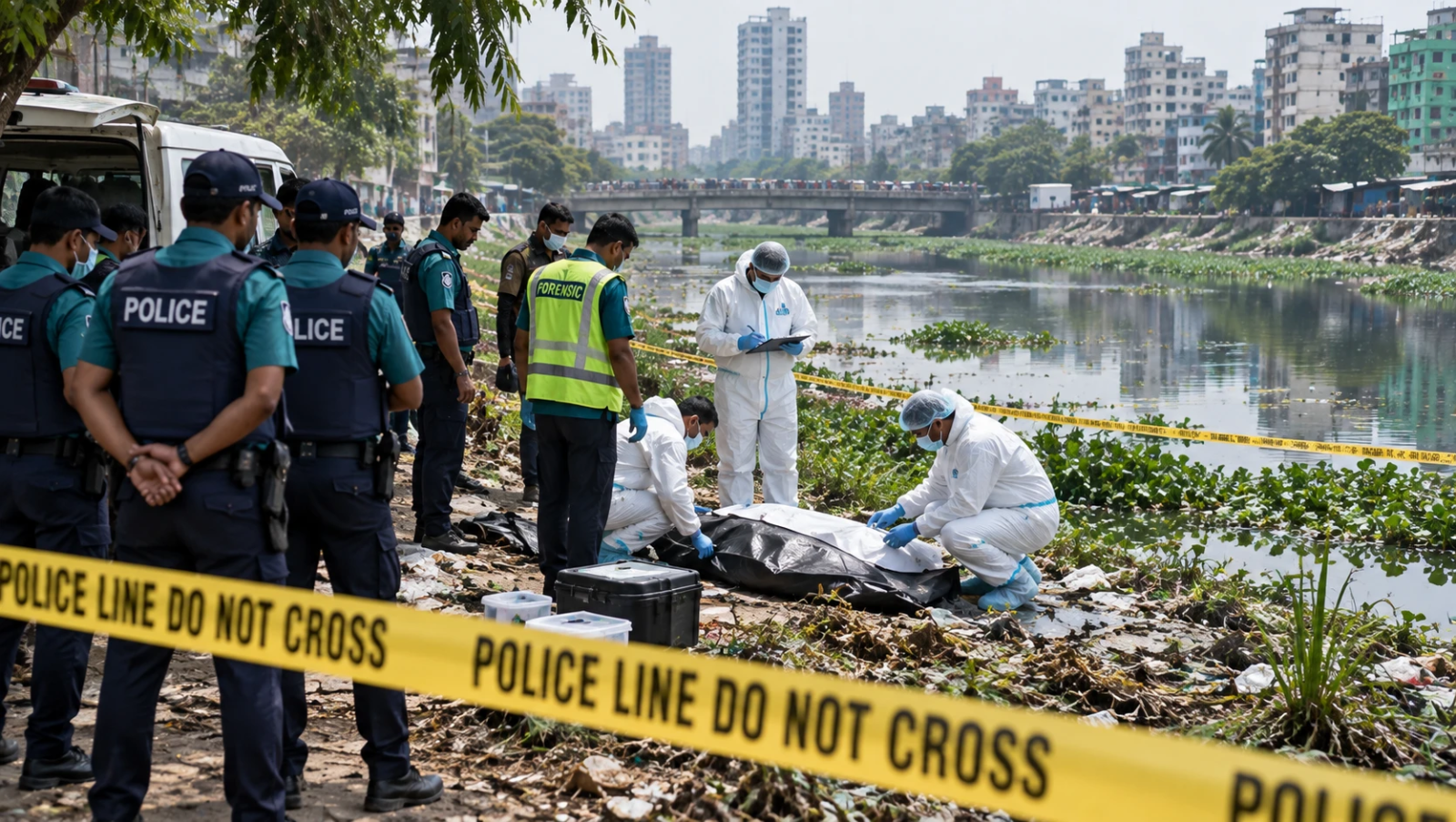
Dhaka — Unidentified bodies are being recovered almost every day from canals, wetlands, roadsides, railway tracks, parks and other locations in Dhaka and elsewhere in Bangladesh, highlighting concerns over violence, social isolation, homelessness and difficulties in identifying the dead.
While some victims are later identified and claimed by their relatives, those whose identities remain unknown are eventually classified as unclaimed bodies. After completing the required legal procedures, police hand them over to Anjuman Mufidul Islam for burial or cremation.
The organisation said it handled 400 unclaimed bodies between January and August this year. The figure included 30 in January, 59 in February, 52 in March, 46 in April, 56 in May, 67 in June, 42 in July and 48 in August.
Of those, 74 were buried at Jurain Cemetery and 325 at Rayerbazar Cemetery, while one body was cremated at the Postogola crematorium. The organisation had handled 570 unclaimed bodies in 2024 and 643 in 2025.
Several bodies recovered in recent days
On Wednesday, police recovered the partially decomposed body of an unidentified man from Dhalibari Jheel in Dhaka’s Bhatara area. Authorities were trying to establish his identity.
The same day, police recovered the body of an unidentified man from inside a drum floating near the Begunbari sluice gate area in Mymensingh. Local residents alerted police after spotting the drum in the water.
Mohammad Shibirul Islam, officer-in-charge of Kotwali Model Police Station, said investigators initially suspected that the man had been killed and his body placed inside the drum before being dumped in the water. Police were working to identify him.
On Sept. 14, police recovered five unidentified bodies, including that of a woman, from separate locations in Dhaka, including Jatrabari, Motijheel, Shahbagh, Kamrangirchar and the Dhaka Medical College premises.
Three unidentified bodies were recovered in the capital on Sept. 12. In one case, the dismembered body of a teenage girl was found inside a schoolbag floating in the Hakkarpar Canal in Adabor.
Police later recovered two additional legs believed to belong to the same victim. Investigators estimated that the girl was aged between 14 and 16.
Adabor police said they collected her fingerprints and attempted to match them against the national identity database, but no match was found because she was apparently not registered for a national identity card.
Police subsequently filed a murder case over the incident.
Not every unidentified body is a murder victim
Dhaka Metropolitan Police said unidentified bodies should not automatically be presumed to be victims of murder.
Road accidents, drowning, illness, homelessness, mental health-related vulnerability and prolonged separation from family are among the reasons people may die without being identified, police said.
Some victims of crime are also difficult to identify because their bodies may have been decomposed, mutilated or deliberately dismembered. Such damage can destroy fingerprints and other evidence that could help establish identity.
In such cases, police may preserve DNA samples. However, limited capacity in morgues can make it difficult to preserve bodies for extended periods.
Police first use technological means to establish an unidentified person’s identity, followed by manual identification efforts when necessary. Once the post-mortem and other legal procedures are completed, bodies that remain unidentified are handed over as unclaimed remains.
Experts cite multiple social and personal causes
Rezaul Karim, chairman of the Department of Criminology at the University of Dhaka, said there was no single explanation for the growing number of bodies being recovered from different locations.
He pointed to family disputes, land and civil conflicts, political and economic interests, revenge, jealousy and personal disputes as possible factors behind some violent incidents.
He said disputes over property and other family matters could escalate into violence, while competition over business, contracts or other economic opportunities could also lead some people to regard rivals as threats.
Karim called for stronger coordination between law enforcement agencies and local communities, including better information gathering, surveillance and preventive measures.
He also suggested identifying areas where crimes or body recoveries occur repeatedly and strengthening monitoring and law-enforcement activity there.
Police say identification remains the priority
A H M Shahadat Hossain, assistant inspector general for media and public relations at the Police Headquarters, said authorities first try to identify unidentified bodies using available technology.
Once an identity is established, investigators determine the cause of death. If the death is found to be a murder, police investigate the case and seek to bring those responsible to justice.
However, he said, severely decomposed or mutilated bodies can make identification particularly difficult.
Kamrul Ahmed, a burial-services officer at Anjuman Mufidul Islam, said the organisation does not bury or cremate any body as unclaimed without police clearance.
Bodies are accepted only after police complete the inquest and post-mortem examination and formally hand them over for burial or cremation.
COMMENTS