
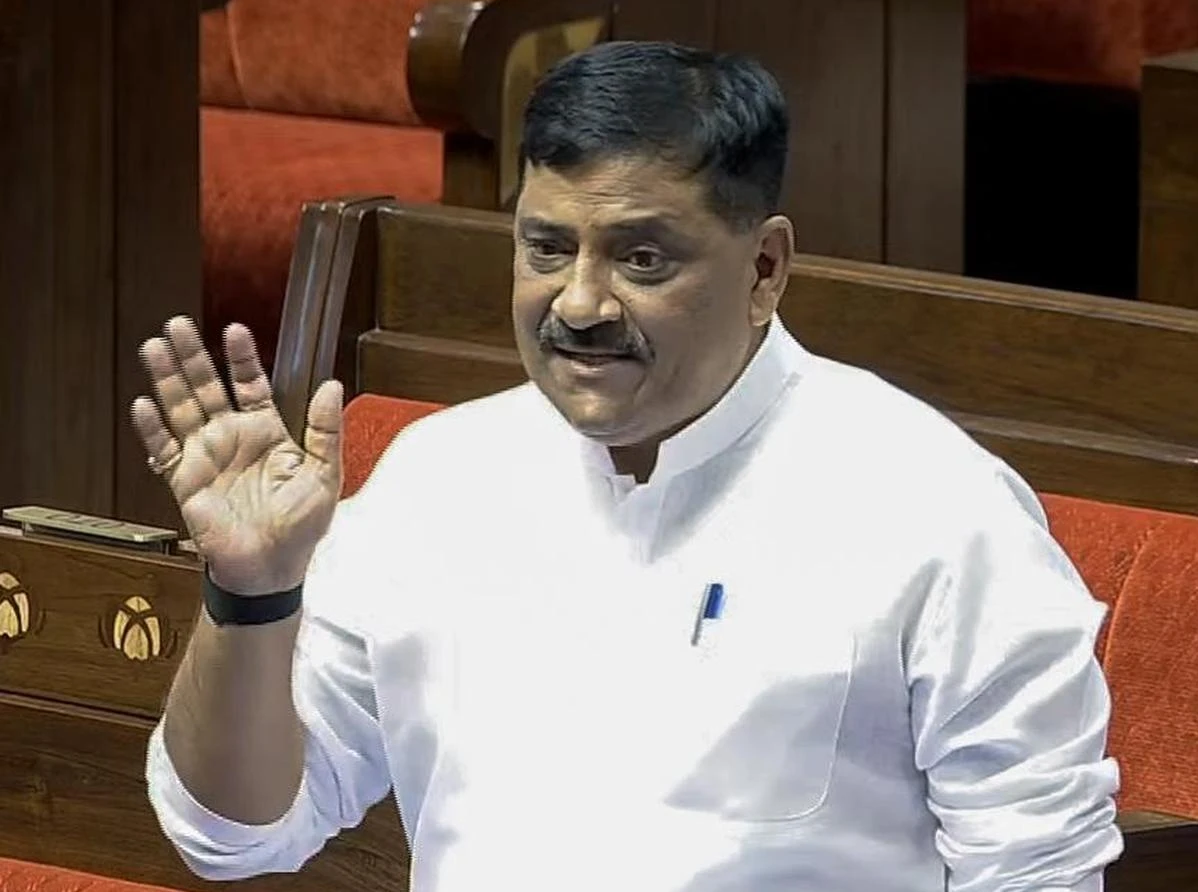
India’s ruling coalition partner Janata Dal (United), or JD(U), has opposed renewing the 1996 Ganges Water Sharing Treaty with Bangladesh in its current form, arguing that the agreement has worked against the interests of Bihar for the past three decades.
JD(U) national working president and Rajya Sabha member Sanjay Kumar Jha said Bihar’s concerns were not adequately considered when the treaty was signed and called on India’s central government to ensure that the state’s water requirements are protected in any future agreement with Bangladesh.
The 30-year treaty, signed by Bangladesh and India on December 12, 1996, is due to expire this December, bringing the future of dry-season water sharing at the Farakka Barrage into renewed focus.
‘Bihar’s interests were sacrificed’
Raising the issue in the Rajya Sabha, Jha claimed that Bihar’s interests had been “sacrificed” when the treaty was negotiated.
“The interests of Bihar were sacrificed when the treaty was signed. The people of Bihar have been bearing the burden for the last 30 years,” Jha said.
He argued that during the dry season, Bihar itself requires substantial quantities of Ganges water for irrigation, drinking water and other needs, while India is obligated under the treaty to ensure specified flows toward Bangladesh at Farakka.
According to Jha, the arrangement has contributed to water shortages in Bihar during periods when the state needs the river most. He said JD(U) would strongly oppose renewing the agreement under the existing terms unless Bihar’s concerns were addressed.
Jha also pointed to Bihar Chief Minister Nitish Kumar’s longstanding concerns over sedimentation in the Ganges, flooding, irrigation requirements and the impact of the Farakka Barrage.
Some of the figures cited by Jha regarding the volume of water Bihar requires and the amount flowing toward Bangladesh, however, were not presented alongside a recent joint assessment by the water authorities of India and Bangladesh.
Farakka Barrage comes under scrutiny
Jha also questioned the consequences of the Farakka Barrage for Bihar.
The barrage was constructed primarily to divert water into the Hooghly River to help maintain navigability and support the Kolkata port system. Bihar politicians, however, have long argued that the structure has contributed to sediment accumulation upstream and aggravated flooding in parts of the state.
Jha said sedimentation had made Bihar’s flood problems more complicated while also affecting the state’s ability to utilize Ganges water during the dry season.
JD(U)’s position is that the impact of the Farakka Barrage, along with the water-sharing formula, should be reassessed before India enters into a new agreement with Bangladesh.
30-year treaty expires in December
The Ganges Water Sharing Treaty was signed on December 12, 1996, during the governments of then-Bangladesh Prime Minister Sheikh Hasina and Indian Prime Minister H.D. Deve Gowda.
The agreement established a formula for sharing the dry-season flow of the Ganges at Farakka between January 1 and May 31 each year.
With its 30-year term set to expire on December 12, 2026, Bangladesh and India face the task of negotiating the future framework for sharing the river’s water.
For Bangladesh, maintaining an adequate dry-season flow is particularly important for agriculture, river navigability, fisheries and ecosystems. The Ganges flow also has implications for salinity intrusion in the country’s southwestern region.
For India, negotiations involve not only its relationship with Bangladesh but also the interests of upstream and riparian states, including Bihar and West Bengal.
Opposition extends beyond JD(U)
Concerns over the treaty’s future are not confined to JD(U).
Rashtriya Janata Dal lawmaker Sudhakar Singh has also urged Indian Prime Minister Narendra Modi to ensure that Bihar’s water, navigation and economic interests are protected during the review of the treaty.
Singh has argued that the Ganges is important to Bihar not only as a source of water but also for agriculture, inland navigation and the state’s broader economy.
For landlocked Bihar, the river system also provides potential access for transporting goods toward the ports of Kolkata and Haldia.
The positions taken by politicians from both government and opposition parties in Bihar indicate that India’s central government could face growing domestic pressure as negotiations with Bangladesh advance.
Domestic politics adds another layer to negotiations
The emerging debate in Bihar adds an internal political dimension to what is already one of the most consequential water-sharing issues between Bangladesh and India.
Dhaka has historically emphasized the need for sufficient downstream flows during the dry season, while upstream Indian states have their own agricultural, drinking water, flood-control and economic concerns.
The approaching expiration of the treaty therefore presents the two countries with a complex diplomatic challenge: finding a long-term arrangement that addresses Bangladesh’s downstream requirements while navigating competing demands within India.
The issue also comes against the backdrop of the unresolved Teesta water-sharing dispute. Despite years of negotiations, Bangladesh and India have yet to sign an agreement on sharing the Teesta’s dry-season flow.
Bangladesh Water Resources Minister Shahid Uddin Chowdhury Annie recently said Dhaka wants to protect its interests over the Teesta while maintaining friendly relations with India.
With only months remaining before the Ganges treaty expires, the public opposition from influential political forces in Bihar could make negotiations between Dhaka and New Delhi more complicated.




COMMENTS