
Dhaka, 18 August: Dhaka’s hardening stance toward India, growing space for Islamist forces and the Jamaat’s expanding influence raise questions over whether the BNP government is becoming increasingly dependent on Islamist politics
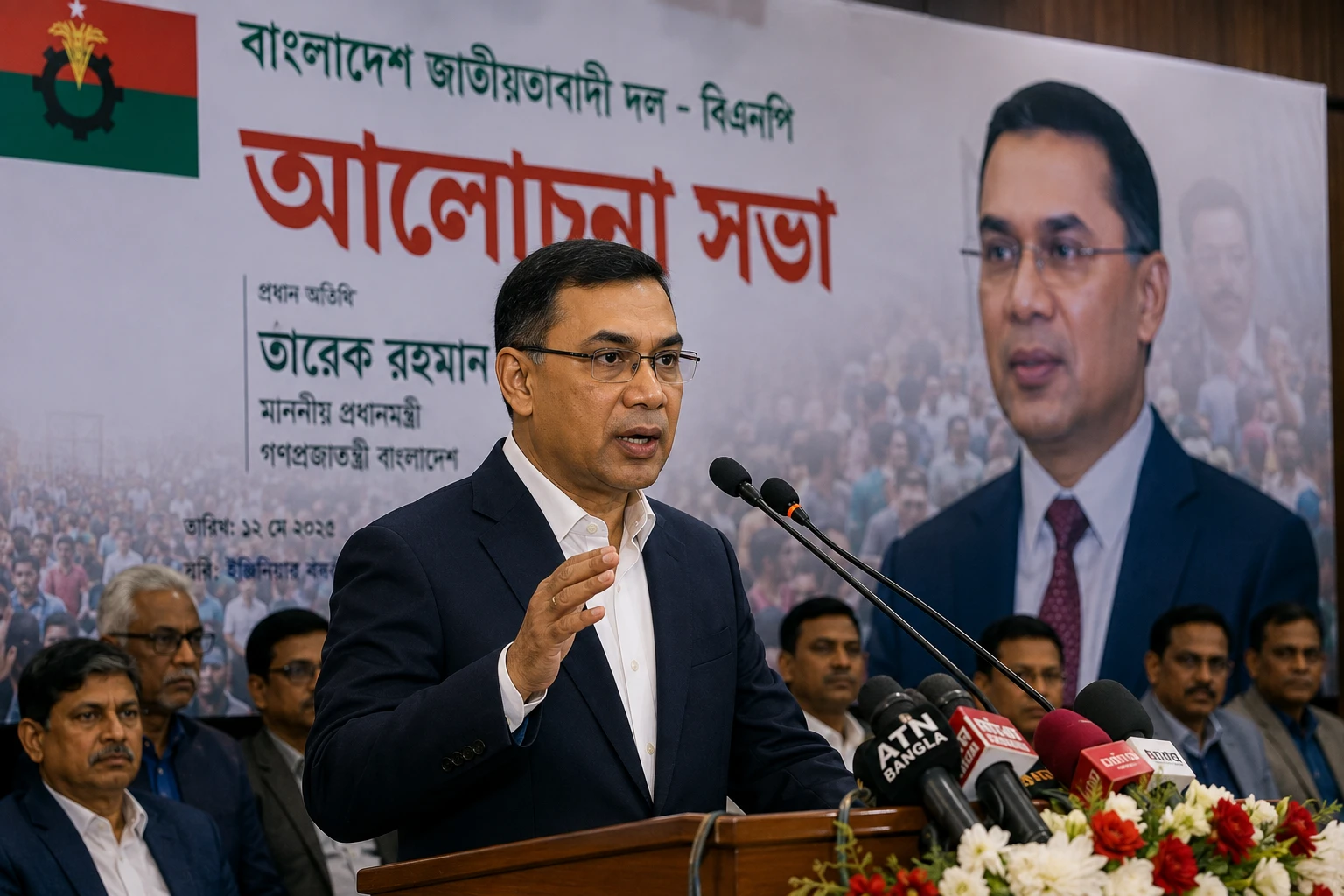
Bangladesh Prime Minister Tarique Rahman’s increasingly confrontational stance toward India and the growing political space enjoyed by Islamist forces are raising questions over whether the BNP leader is becoming increasingly constrained by Jamaat-e-Islami and other hardline Islamist elements.
Rahman is unlikely to visit New Delhi in September to attend the BRICS leaders’ summit, despite being invited by the Narendra Modi government as a special guest in Bangladesh’s capacity as chair of BIMSTEC. Dhaka has said that a “propitious environment” must first be created for a visit, while linking Rahman’s trip to India with New Delhi’s position on the extradition of former prime minister Sheikh Hasina.
The position has fuelled concerns that bilateral relations are increasingly being shaped by domestic political calculations rather than conventional diplomatic considerations.
The invitation to Rahman had been viewed by many Bangladesh watchers as an opportunity to reset relations between Dhaka and New Delhi following the turbulence of the July 2024 upheaval and the deterioration of ties during the Muhammad Yunus-led interim administration.
Instead, Dhaka appears to be maintaining a hard line.
At the same time, Jamaat-e-Islami and other Islamist groups appear to have acquired considerable political space under the BNP government. The trend was particularly visible on August 5, 2026, when an official programme organised to commemorate the July uprising was disrupted by Jamaat supporters. The event was attended by senior foreign diplomats, including India’s high commissioner to Bangladesh.
Although the organisers later apologised, the incident highlighted the influence Islamist groups can exercise in Bangladesh’s current political environment.
The lesson of Mujib
The developments have also revived debate over the historical consequences of accommodating hardline Islamist and pro-Pakistan political forces.
Bangladesh’s founding leader Sheikh Mujibur Rahman attempted to integrate sections of his former political opponents into the post-independence political order. Critics argue that this approach ultimately failed to neutralise forces hostile to the country’s secular and nationalist foundations.
Mujib and 18 members of his family were assassinated on August 15, 1975, in a military coup.
His political legacy itself remains complex. Although he emerged as one of the principal architects of Bengali nationalism and Bangladesh’s independence, his government later adopted several policies that reflected a greater accommodation of Islamic sentiment.
The experience offers a warning to Rahman: political accommodation of ideological forces may provide short-term advantages, but such alliances can become difficult to control once those forces acquire institutional and political influence.
The Ram statue controversy
The controversy surrounding the construction of an 81-foot statue of Lord Ram in Gaibandha has further highlighted the competing pressures facing the BNP government.
The statue, reportedly around 80 per cent complete, was halted following objections and threats from Islamist groups. The subsequent arrest of an individual associated with the project in a money-laundering case has added to the controversy.
For critics, the episode raises a broader question: how much political space will the BNP government allow religious hardliners to exercise over cultural and religious expression?
Is the BNP riding the Jamaat tiger?
The BNP may have strategic reasons for keeping Islamist forces close. With the Awami League excluded from mainstream electoral politics, cooperation with conservative and Islamist constituencies could offer the BNP significant short-term political benefits.
But that strategy carries risks.
Once a mainstream political party becomes dependent on a more ideologically driven political force, withdrawing concessions can become increasingly difficult. The political space surrendered to Islamist groups can also come at the expense of secular and pluralist political forces.
This is why the question facing Rahman is no longer simply whether he is cooperating with Jamaat.
The larger question is whether Tarique Rahman is becoming politically dependent on Jamaat — and whether he will still be able to control the forces he is empowering.
The BNP may seek to construct a political order in which the Awami League has little or no role. But political vacuums rarely remain empty. If established political forces are denied meaningful space, other organised groups eventually move in to fill it.
In Bangladesh’s present circumstances, Islamist groups could be among the principal beneficiaries.
A choice still remains
Rahman still has an opportunity to change course.
A competitive democratic system, in which political parties are allowed to operate within constitutional and legal boundaries, could provide Bangladesh with a more stable political future.
India, meanwhile, could play an important role as a regional partner. But for that to happen, Dhaka-New Delhi relations would need to be separated from the unresolved political fate of Sheikh Hasina.
At the same time, the BNP could consider creating conditions under which the Awami League is able to return to legitimate political competition, regardless of whether Sheikh Hasina herself returns to Bangladesh.
Allegations that anti-India, pro-ISI and pro-Jamaat elements have gained excessive influence within sections of the BNP establishment make the issue even more consequential.
Rahman’s decision to prioritise Beijing and Kuala Lumpur for his early foreign engagements rather than New Delhi has already been interpreted by some observers as a sign of Dhaka’s shifting strategic orientation.
For Bangladesh, however, the stakes extend beyond diplomacy.
An increasingly Islamist political environment could have consequences for the country’s democratic institutions, minority rights, cultural freedoms, foreign investment and relations with its largest neighbouring power.
Tarique Rahman may be riding the Jamaat tiger for political advantage. But the longer he remains on its back, the harder it may become to get off.




COMMENTS