
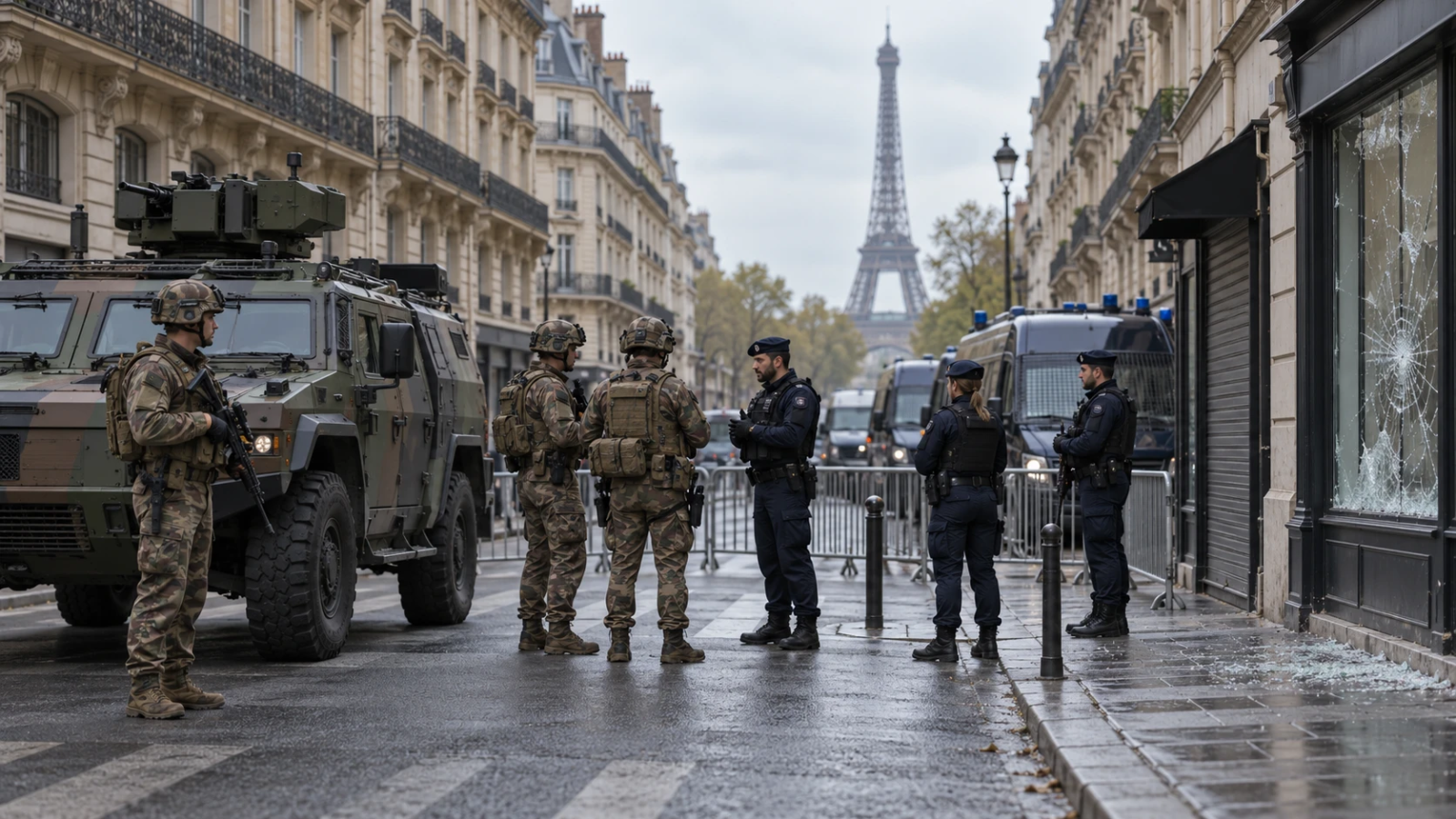
PARIS — France will deploy military personnel alongside police in riot-prone areas across the country from October 24 as the government steps up efforts to contain widespread violence and looting, Prime Minister Sébastien Lecornu has announced.
Addressing parliament on Tuesday, Lecornu said restoring order following the unrest that erupted in Paris, Marseille, Lyon and other cities on October 17 was the government’s top priority. The planned deployment will be accompanied by large-scale security operations.
Interior Minister Laurent Nuñez also confirmed that military personnel would support police operations, as the government faces mounting criticism over its failure to protect city centres and contain the violence.
Lecornu described the unrest as a struggle between “violence and the Republic” and blamed far-left groups for the disturbances. The groups, however, argue that the government has failed to address public anger over the rising cost of living and deteriorating public services.
The government has imposed local curfews in areas affected by the unrest, including restrictions applying to people under the age of 18 in some locations. Authorities said the measures had helped restore a degree of calm, with restrictions extended through Tuesday night.
Lecornu acknowledged shortcomings in the government’s response, citing intelligence gaps, insufficiently flexible police deployments and the failure to cancel officers’ pre-scheduled leave. Nuñez apologised to parliament, saying he accepted responsibility for what had happened.
Parliament is establishing an investigative commission to examine the causes of the unrest. Authorities have also assigned 200 intelligence officers to identify and track people suspected of involvement in street violence.
Police arrested a suspect on Tuesday over a fire that destroyed the historic town hall in Limoges during the riots. Officials said the suspect had been on a security watchlist and was linked to a far-left group.
The unrest is also affecting France’s economy. The country’s borrowing costs rose on Tuesday as investors grew increasingly concerned about further instability. The yield on 10-year French government bonds reportedly reached its highest level in 24 years.
Supermarket chain Carrefour said theft and vandalism had caused losses worth tens of millions of euros, warning that the scale of the disruption had created an unprecedented situation for the company.
Meanwhile, France’s main student union, UNEF, has called for further demonstrations on Saturday, pledging to maintain pressure on President Emmanuel Macron’s government over what it describes as a deteriorating education system and inadequate funding.
Groups associated with the Yellow Vests movement have also called for protests against rising fuel prices. The movement emerged in 2018 in opposition to a planned increase in fuel taxes under Macron’s first presidency, triggering months of road blockades and forcing the government to offer costly concessions.
With public discontent growing and next year’s presidential election approaching, the latest unrest has intensified political tensions. Protests over living costs have also spread to other European countries, including Italy and Albania, raising concerns that the wider economic grievances could fuel further instability across the continent.




COMMENTS