
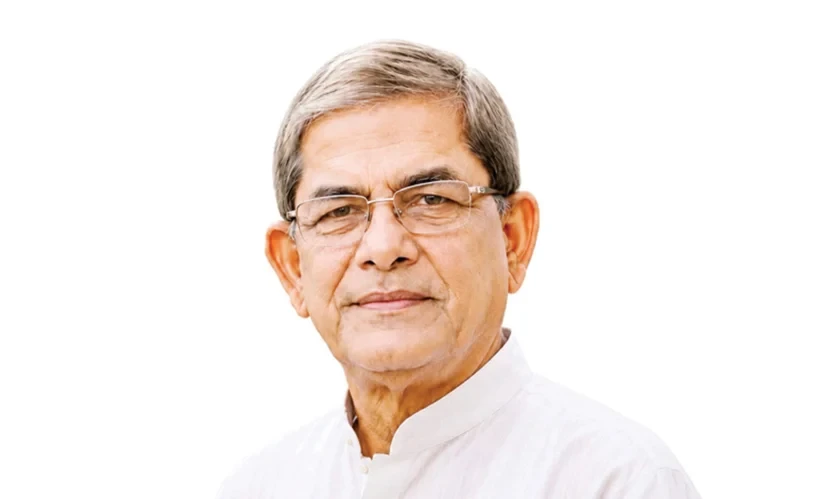
DHAKA — BNP candidate Mirza Fakhrul Islam Alamgir was elected Bangladesh’s 23rd president Thursday, securing 255 votes in Parliament and defeating Col. (retd.) Oli Ahmad, the candidate of the Jamaat-e-Islami-led 11-party alliance.
Oli, chairman of the Liberal Democratic Party, received 88 votes.
Chief Election Commissioner A.M.M. Nasir Uddin, who served as the election officer, announced the result after ballots were counted openly in the Parliament chamber.
The election marked Bangladesh’s first contested presidential vote by lawmakers in 35 years. The last such vote was held on Oct. 8, 1991. In subsequent presidential elections in 1996, 2001, 2002, 2009, 2013, 2018 and 2023, voting was not required because there was only one candidate.
Fakhrul’s victory had been widely expected because the ruling BNP holds a two-thirds majority in the Parliament formed after the one-sided February general election.
The presidential election was held by a Parliament formed through the February general election, from which the Awami League had been barred. As a result, the country’s longest-governing political party, which led Bangladesh’s independence movement and the 1971 Liberation War, has no representation in the legislature that elected the new president.
The Awami League was not permitted to contest the February parliamentary election. Other political groups associated with the country’s Liberation War tradition were also kept out of the election. The resulting Parliament is dominated by the BNP and Jamaat-led blocs, leaving a substantial section of Bangladesh’s traditional political spectrum without representation.
The Awami League governed Bangladesh for the longest period in the country’s history and was in power when Bangladesh achieved lower-middle-income status.
Fakhrul wins 255-88
Voting began at 2 p.m. Thursday with a recitation from the Quran in the session chamber of the Jatiya Sangsad.
Nasir experienced a microphone problem as he began speaking. After the technical issue was resolved, he announced the names of the two candidates and explained the voting procedures to lawmakers.
Election officials then distributed ballot papers to MPs at their seats. Lawmakers signed their full names and cast their ballots for their preferred candidate.
Acting President Hafiz Uddin Ahmad was the first to vote. Acting Speaker Barrister Kaiser Kamal, Prime Minister Tarique Rahman and other lawmakers followed. Fakhrul also cast his ballot.
Three ballot boxes were used, with ballot papers distributed to lawmakers in stages to avoid congestion. The names of both presidential candidates appeared on the ballot.
The first 20 minutes of the proceedings were broadcast live.
Voting ended at 5 p.m., after which the ballot boxes were opened and the votes counted publicly.
Fakhrul received 255 votes against Oli’s 88, giving the BNP candidate a clear victory.
Six lawmakers did not vote
A total of 349 members of Parliament were eligible to vote in the presidential election, but 343 cast ballots.
BNP lawmaker Mirza Abbas was unable to participate because of illness. Oli could not vote for himself because he is not a member of Parliament.
Election Commission and Parliament Secretariat officials assisted the chief election commissioner in conducting the vote.
The contest was the first presidential election in 35 years in which lawmakers had to choose between more than one candidate.
Fakhrul to take oath Friday
Fakhrul, a veteran BNP politician and former secretary-general of the party, is scheduled to take the oath of office at Bangabhaban at 7:30 p.m. Friday, Aug. 21, according to Government Chief Whip Nurul Islam Moni.
The oath will formally install Fakhrul as Bangladesh’s 23rd president.
COMMENTS