
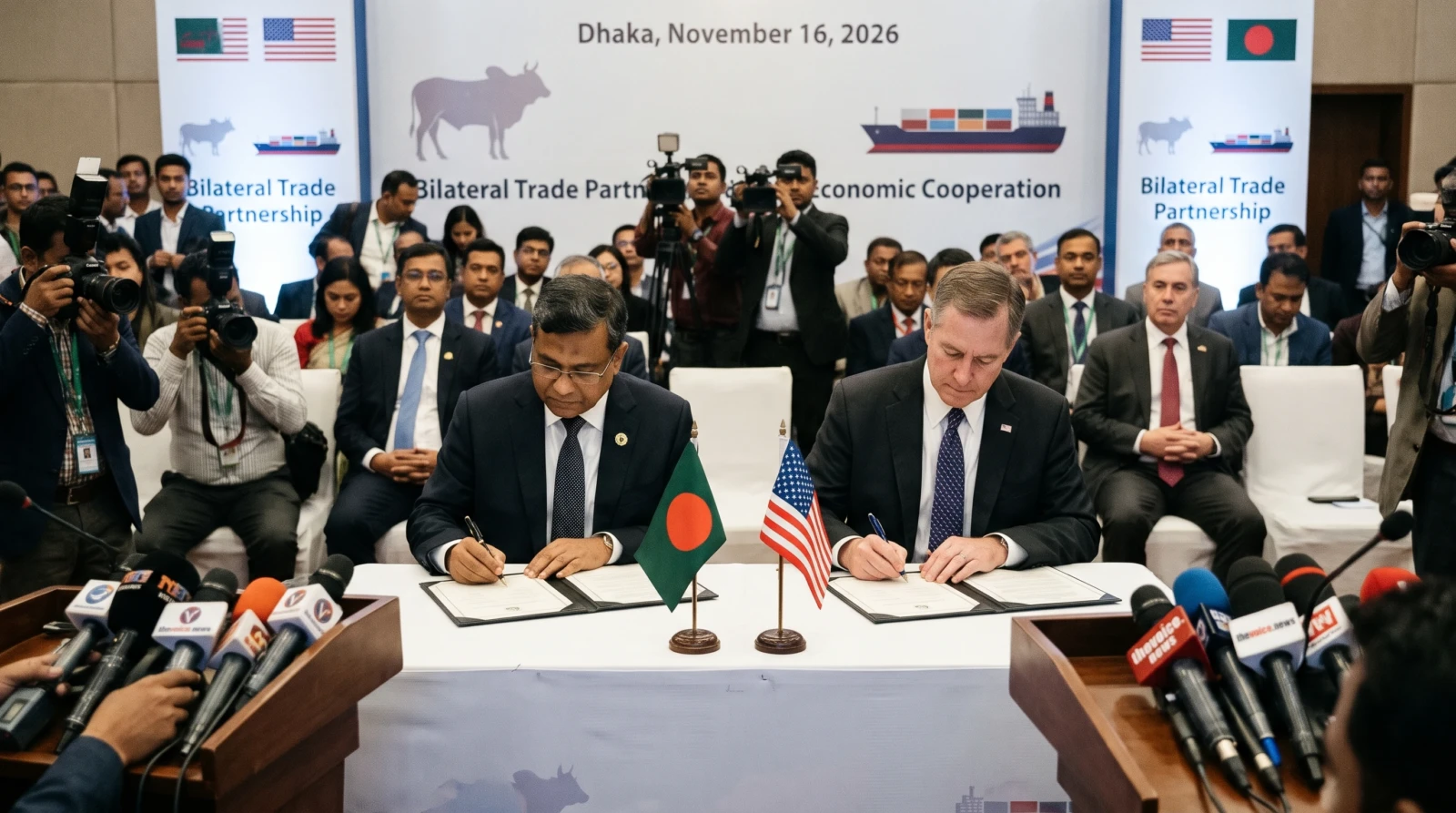
Domestic Cattle Rearers Face New Market Pressures from Incoming US Beef
Bangladesh consumes approximately 200,000 tonnes of beef annually, while domestic production has been estimated at around 200,000-205,000 tonnes.
The country is therefore broadly self-sufficient in beef, with imports accounting for only a negligible proportion of its overall requirements.
The decision to facilitate imports from the United States consequently raises questions about the commercial rationale behind the arrangement, its potential implications for domestic cattle farmers and meat producers, and the terms under which American beef will enter the Bangladeshi market.
The November 16 announcement by the US Embassy is expected to provide greater clarity on the proposed arrangement and the extent of access being offered to American beef exporters.
For the US, Bangladesh represents a potential new market for its beef industry. Increased access to the Bangladeshi market would also fit into Washington’s broader efforts to expand agricultural exports and improve market access for American producers.
Speaking to Northeast News, Bangladesh Meat Importers and Traders Association Shamim Ahmed said, “Bangladesh is not self-sufficient in beef production.
Per capita meat consumption in the country remains among the lowest, while per capita availability has not registered any significant increase. The growing demand for meat is being met largely through the poultry sector, which has undergone a significant expansion in recent years”.
The US-Bangladesh Reciprocal Trade Agreement, signed on February 9, 2026, opened the way for wider access to American beef and other meat products in Bangladesh.
The agreement, signed by US Trade Representative Jamieson Greer and Bangladesh Commerce Adviser Sheikh Bashir Uddin, contained no specific information on fixed quantity (in tonnes) in imports or any particular company.
Bangladesh will import US beef, deal to be announced in Dhaka on November 16
Bangladesh’s total annual meat demand (as of 2024-2025) is 7.792 million tonnes and total domestic meat production is 8.954 million tonnes. During this period, the production surplus was about 1.162 million tonnes.
A Bangladesh livestock-sector study estimated that cattle beef accounted for 66.46 percent of total meat supply in FY2020-21, equivalent to approximately 1.473 million tonnes. This is an older estimate and should not be presented as current annual beef consumption.
A February 10, 2026 report cited approximately US$190 million in American beef exports to Bangladesh in 2024.
The February 2026 agreement provides preferential market access for American beef.
However, the implications for Bangladesh’s domestic livestock industry could be considerable, depending on the volume of imports, applicable tariffs, pricing arrangements and the regulatory conditions governing entry.
Bangladesh has invested substantially in expanding its domestic livestock sector over the years. The growth in cattle farming, commercial fattening operations and local meat production has reduced the country’s dependence on imported meat.
The entry of American beef, particularly if imported in substantial quantities or at competitive prices, could introduce fresh competition for domestic producers. Local cattle farmers may face pressure if imported beef is able to reach consumers at lower prices.
The Unanswered Questions of July: Was a Peaceful Uprising Hijacked?
In January 2026, the then Fisheries and Livestock Adviser Farida Akhter had said that Bangladesh had no plan to import beef, as it could hurt domestic farmers and pose potential health risks. She had also said that “beef import requires careful consideration. The government wants to prioritise meat from cattle reared domestically as the main source.”
But data released by the Halal Meat Processing Industries Association of Bangladesh says the country recorded 69 import shipments of beef between September and October 2026 when 31 companies traded with 41 overseas partners, making beef one of the most actively traded products in the country’s import market.
Bangladesh sourced most of its beef imports from South Korea, followed by China and Saudi Arabia. These countries remained the leading trade partners for Bangladesh, reflecting stable sourcing routes and established supplier networks.
Ahead of the expected announcement on November 16, several important details remain to be established, including the proposed volume of American beef imports, the duration of the arrangement, applicable import duties, sanitary and phytosanitary requirements, and whether the agreement involves government-to-government commitments or commercial purchases by private importers.



COMMENTS