
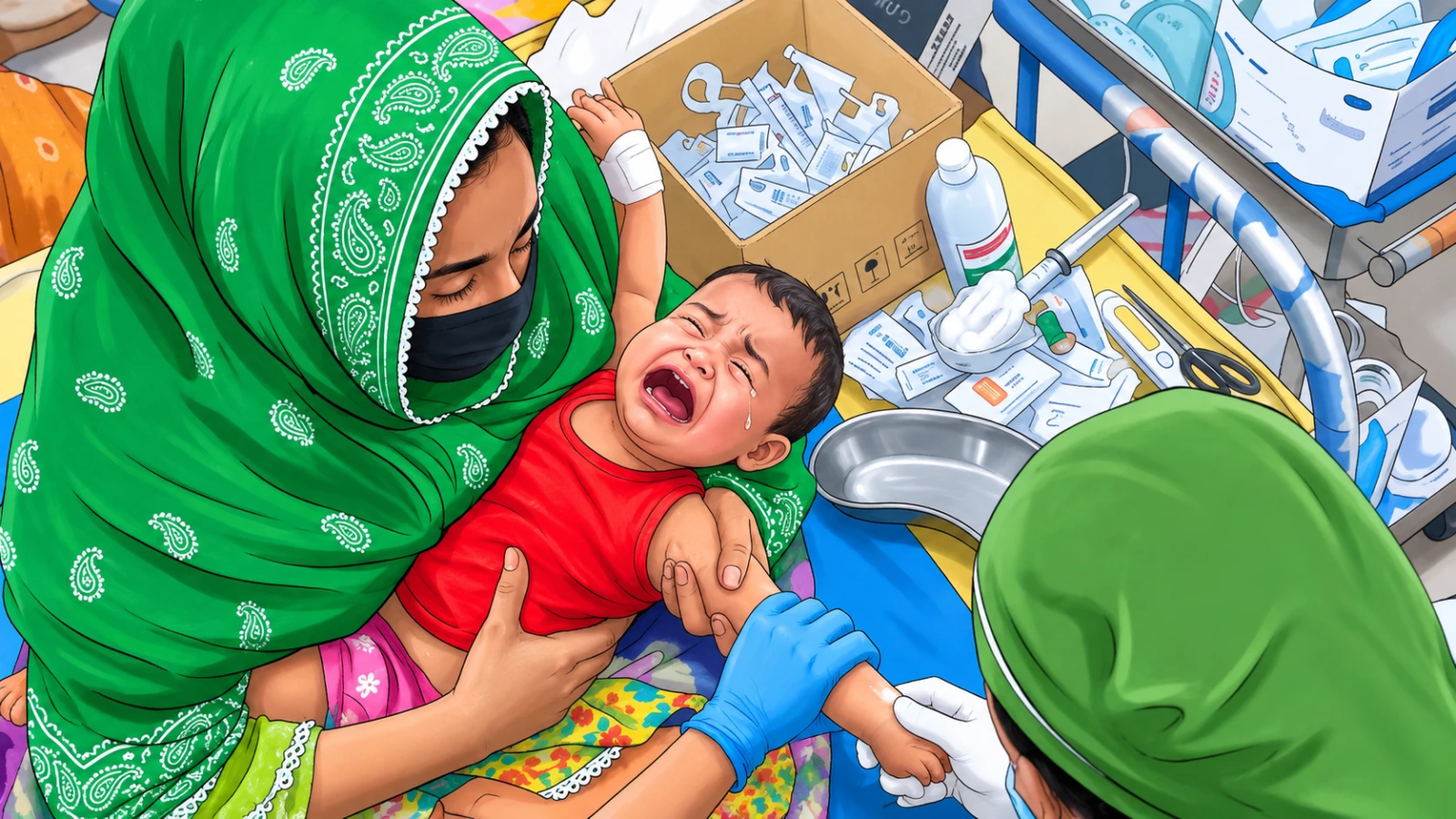
DHAKA — Eight more children have died with measles symptoms across Bangladesh in the latest 24-hour reporting period, pushing the combined death toll from confirmed measles and suspected cases above 900 as the country continues to grapple with a prolonged outbreak.
The massive outbreak and resulting deaths are occurring as the interim government led by Muhammad Yunus halted vaccination, ignoring requests from UNICEF and local experts, various reports suggest.
The Directorate General of Health Services (DGHS), in its regular measles situation report released Saturday afternoon, said 798 new confirmed and suspected cases were recorded during the period. Of them, 70 children were confirmed to have measles, while 728 were classified as having symptoms consistent with the disease.
The eight latest deaths were all recorded among children with measles symptoms. No additional death from laboratory-confirmed measles was reported during the 24-hour period.
According to the DGHS figures, 803 children with suspected measles have died since March 15, while another 99 deaths have been recorded among confirmed measles patients. The combined toll now stands at 902.
The milestone represents another grim escalation in an outbreak that has continued for months, with children bearing the overwhelming burden.
700 more children hospitalized in 24 hours
The latest DGHS report shows that the outbreak continues to place substantial pressure on hospitals.
Seven hundred children were newly admitted to hospitals during the latest reporting period, while 549 were discharged after treatment.
Since March 15, health authorities have recorded 141,776 suspected measles cases and 17,800 confirmed cases nationwide. Together, the two categories represent 159,576 confirmed and suspected infections.
Of those patients, 123,494 have required hospitalization, while 119,089 have subsequently been discharged.
The figures indicate that although large numbers of patients are recovering and leaving hospitals, new infections and deaths continue to be recorded.
Death toll rising rapidly
The latest figures also show how quickly the death toll has climbed.
On August 7, the DGHS reported 860 deaths since March 15—96 among confirmed measles patients and 764 among children who had symptoms of the disease.
The latest total of 902 represents an increase of 42 recorded deaths since then.
Earlier in August, the cumulative toll had stood at 840. At that stage, health authorities had recorded 16,180 confirmed measles cases and another 129,061 suspected cases.
The sustained rise in deaths and infections indicates that the outbreak has yet to be brought under control despite months of transmission.
Vaccination disruption under scrutiny
The outbreak has intensified scrutiny of disruptions to Bangladesh’s childhood immunization system during the interim administration led by Muhammad Yunus.
Health-sector accounts indicate that Bangladesh missed a scheduled nationwide measles vaccination campaign during the interim-government period from August 2024 to February 2026. The previous mass campaign had been conducted in 2020.
Vaccine stocks were also reported to have declined as procurement slowed, while large numbers of vacant healthcare positions placed additional pressure on routine immunization and primary healthcare services.
The disruption is particularly significant because measles is highly contagious and vaccination coverage must remain exceptionally high to prevent sustained transmission.
The background material says public health specialists have linked the outbreak to gaps in immunization, vaccine procurement problems and the failure to conduct the scheduled nationwide campaign. It also describes parents reporting that their children missed vaccinations because doses were unavailable at local facilities or vaccination programs had been postponed.
These factors have fueled criticism of the interim administration’s handling of vaccine procurement and immunization services.
Outbreak had spread across most of Bangladesh
By April, the scale of the outbreak had become apparent. The World Health Organization said measles outbreaks had been detected in 58 of Bangladesh’s 64 districts.
Young children were particularly vulnerable, with a large proportion of suspected deaths involving children under two who were either unvaccinated or had not completed their vaccination schedule.
Speaking in April about Bangladesh’s emergency measles vaccination response, WHO Dhaka divisional coordinator Dr. Jahangir Alam warned about the consequences of gaps in immunization coverage.
“Measles is one of the most contagious diseases,” he said. “Even a small gap in vaccination coverage can lead to an outbreak. Every child left unvaccinated increases the risk, even though this disease is preventable.”
The rapid transmission of measles means relatively small pockets of unvaccinated children can sustain an outbreak, particularly in densely populated communities.


COMMENTS