
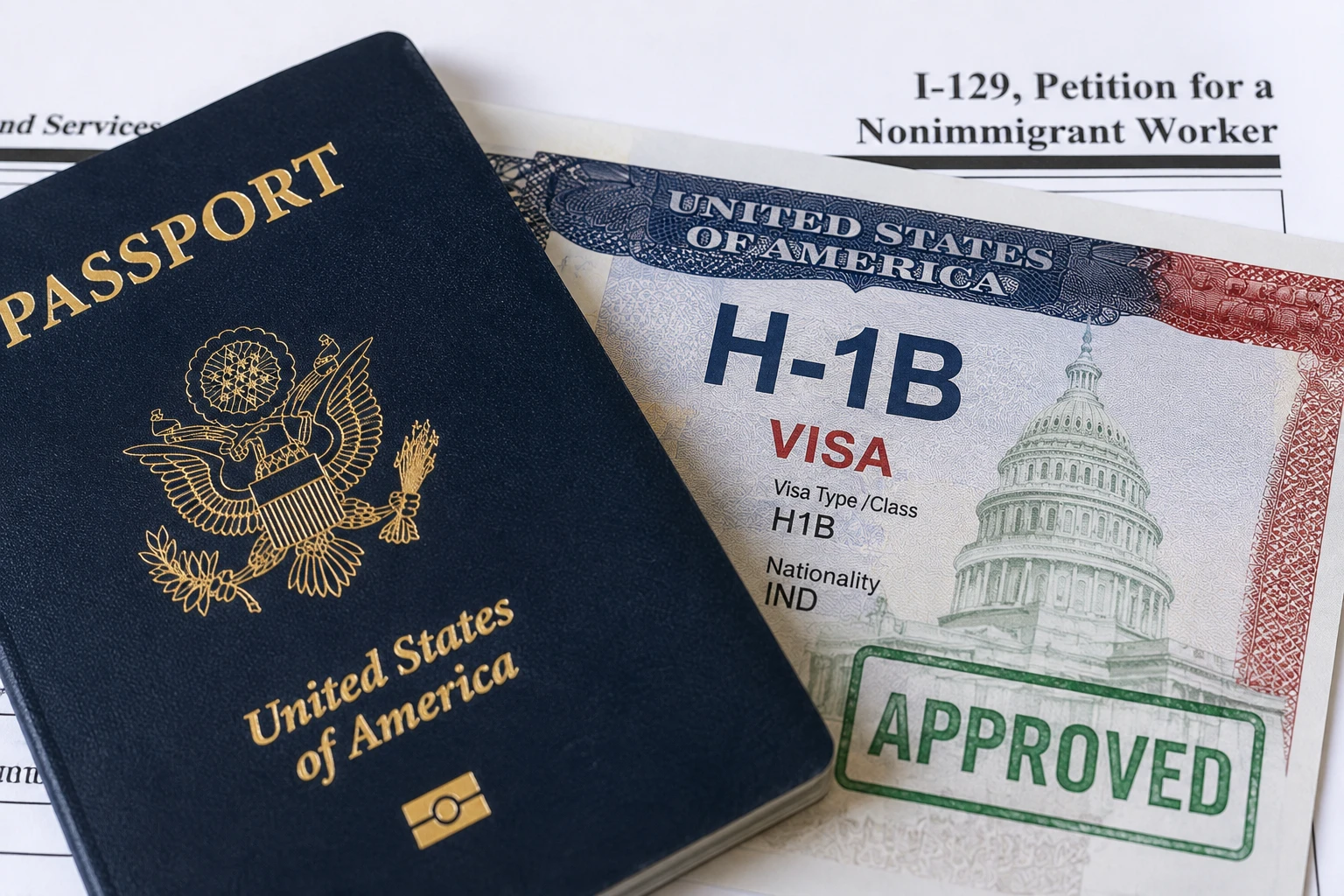
WASHINGTON — The Trump administration has proposed imposing a $103,265 fee on new H-1B visa applications, reviving a controversial measure that was first introduced last year but later blocked by a US court.
The proposed rule, published online by the Department of Homeland Security (DHS) on Monday, would impose the unprecedented charge on new H-1B petitions for skilled foreign workers. The proposal is expected to be formally entered into the Federal Register on Tuesday, triggering a 30-day public comment period. The rule could be finalized by the end of this year.
President Donald Trump first introduced the fee through an emergency proclamation in 2025, sharply increasing the cost of a visa widely used by employers in the technology, education and research sectors.
A US judge ruled the fee unlawful in June and barred the administration from collecting it. The ruling is currently under review by a federal appeals court in Boston. A separate legal dispute is also pending in Washington, DC, over whether another judge properly dismissed a challenge brought by a business group.
Trump’s 2025 proclamation is due to expire in September after completing one year. However, the administration had directed DHS to turn the measure into a permanent regulation.
H-1B program at the centre of debate
The H-1B program allows US employers to hire foreign professionals for jobs requiring specialized skills. The program generally makes 65,000 visas available each year, with an additional 20,000 visas for foreign workers holding advanced US degrees. H-1B visas are typically valid for three to six years.
Before the Trump administration’s earlier measure, H-1B-related application costs generally ranged between $2,000 and $5,000, depending on the type of application.
Trump and other critics of the programme argue that some US companies have abused the system by replacing American workers with lower-paid foreign employees.
Business groups and major companies, however, say the programme remains essential because some specialised positions cannot be filled by US workers and because American companies need access to highly skilled talent from around the world.
According to court records, around 70 companies had paid the $100,000 fee for 85 H-1B applications by the end of February.
Legal battle over presidential authority
The US Chamber of Commerce, several Democratic-led states, labour unions and a coalition of employers are challenging the fee in court.
They argue that the president’s authority to restrict the entry of foreign nationals does not allow the administration to effectively override the law governing the H-1B programme. The challengers also contend that DHS cannot impose a new fee or tax designed to generate additional revenue without explicit congressional approval.
The Trump administration disputes that argument, saying the charge is not a conventional tax and that courts have limited authority to review the president’s power to restrict the entry of foreign nationals.
H-1B registrations have fallen sharply
The proposed fee comes as H-1B demand has already declined significantly.
According to US Citizenship and Immigration Services (USCIS), employers registered around 344,000 H-1B applicants last year, more than 25% fewer than in 2024 and less than half the approximately 794,000 registrations recorded in 2023.
The Trump administration has also ordered stricter background checks for H-1B applicants and proposed giving greater priority to higher-paid and highly skilled workers.
Earlier this month, DHS separately introduced additional fees of up to $4,500 for certain H-1B-related applications, including visa extensions and transfers involving workers based outside the United States.
If adopted, the proposed $103,265 charge would dramatically increase the cost of hiring skilled foreign professionals and could have significant implications for US technology companies, universities, research institutions and other employers that rely on the H-1B programme.


COMMENTS