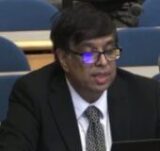

Suriname’s parliament has elected Jennifer Simons as the country’s first female president, marking a historic moment for the South American nation as it prepares for an anticipated oil-driven economic surge.
Simons, a physician and former parliamentary speaker, secured the presidency six weeks after a tightly contested general election led to a coalition agreement between the ruling and opposition parties. Her election comes at a pivotal time, with Suriname poised to benefit from its first major offshore oil project.
In the May 25 parliamentary elections, Simons’ National Democratic Party (NDP) won 18 seats, narrowly edging out incumbent President Chan Santokhi’s Progressive Reform Party, which took 17. The remaining 16 seats were claimed by smaller parties. Under Suriname’s system, the president is chosen indirectly by the National Assembly, requiring a two-thirds majority.
“I come into this office to serve,” said Simons, 71, during a brief address after her confirmation, which was met with applause in parliament. “I will use all my knowledge, strength, and insight to ensure our national wealth benefits all Surinamese people.”
Simons emphasized the importance of creating opportunities for young people and underserved communities. “I am aware of the great responsibility now placed on our shoulders—and particularly what it means to be the first woman in this role,” she added. “Thank you—and let’s get to work.”
Outgoing President Santokhi, 66, a former police commissioner, faced criticism during his term for inadequate support of vulnerable populations. In his farewell remarks, he congratulated Simons and acknowledged his administration’s shortcomings. He pledged to continue serving in parliament following the transition.
Economic Transformation on the Horizon
Suriname, which gained independence from the Netherlands in 1975, is on the brink of a major energy boom. The Gran Morgu offshore oil project—led by TotalEnergies—is expected to begin production in 2028. The venture could position Suriname alongside neighboring Guyana, which saw explosive economic growth last year, largely due to similar energy developments.
Despite the high stakes, the recent election campaign included little discussion on how the new government—elected through 2030—will manage future oil revenues.
Simons’ ascent to the presidency was formalized in a six-party agreement reached shortly after the elections. Her vice president will be Gregory Rusland, leader of the National Party of Suriname (NPS). The official inauguration is scheduled for July 16.
Simons previously served as parliamentary speaker for 10 years until 2020. In the recent election, she was the second-highest vote-getter after Santokhi, earning over 41,700 votes. She now leads the NDP, originally founded by former President Desi Bouterse.
Bouterse, a dominant figure in Surinamese politics for decades, left office in 2020. He was convicted for the 1982 executions of 15 political opponents and went into hiding after his conviction was upheld in 2023. Bouterse died at an undisclosed location on December 24, 2024, at age 79.
With a new government in place and oil riches on the horizon, all eyes are now on Simons as she takes office with both historic symbolism and significant responsibility.