HomeBlogPage 5

Six Suspected Extremists Remanded for Three Days After Arrest in Dhaka’s Jatrabari

Six Suspected Extremists Remanded for Three Days After Arrest in Dhaka’s Jatrabari

A Dhakacourt on Sunday granted a three-day remand for six men arrested on suspicion of involvement with an extremist organization after they were detained during a police raid in the capital’s Jatrabari area.

Metropolitan Magistrate Ariful Islam issued the order after hearing a remand petition filed by police. The information was confirmed by Md. Masum Khan, a sub-inspector attached to the prosecution division of the Dhaka court.

The six suspects were identified as Shah Amanat Sabir, Hossain Tanim, Junaid, Ataullah Shah, Abidur Rahman and Bayojit.

According to police, the suspects were arrested at around 6:30 a.m. on Sunday from the “Mini Cox’s Bazar” area of Jatrabari during an operation based on confidential intelligence.

Investigating Officer and Jatrabari Police Station Inspector A.B. Siddik produced the suspects before the court under Section 54 of the Code of Criminal Procedure and sought a seven-day remand for questioning. After the hearing, the court allowed a three-day remand. No defense lawyer was present during the hearing.

In the remand application, police said officers conducting routine patrols received intelligence indicating that several members of an alleged extremist group had gathered on a sand field beside the Amin Mohammad Group area in Mini Cox’s Bazar for training and organizational activities.

Police said the suspects attempted to flee after noticing law enforcement officers but were apprehended during the operation.

The application further stated that the suspects failed to provide a satisfactory explanation for their gathering during preliminary questioning. Based on intelligence reports and the initial investigation, police suspect they may be linked to extremist activities and argued that further interrogation is necessary to uncover the circumstances surrounding the case.

The suspects were brought to the Dhaka court premises under tight security on Sunday afternoon.

Trump Says Iran Has Offered Nuclear Concessions, but Admits Deal Is Not Final

Trump Says Iran Has Offered Nuclear Concessions, but Admits Deal Is Not Final

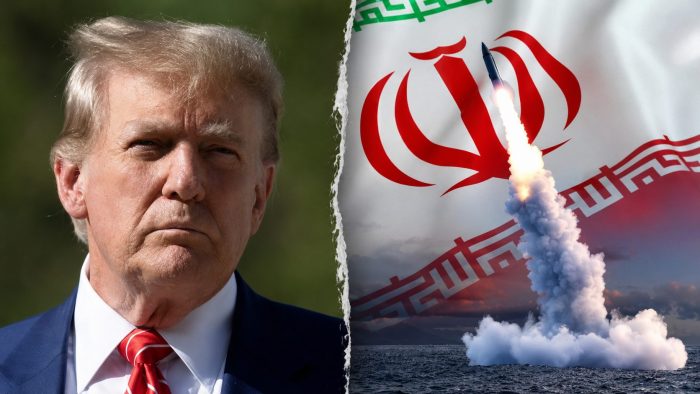
WASHINGTON, July 6: U.S.President Donald Trump has claimed that Iran has offered concessions during ongoing nuclear negotiations, but acknowledged that the proposed compromises have not yet been finalized.

Speaking to reporters at the Oval Office, Trump said the United States had received “some concessions” from Tehran and stressed that Iran must remain committed to those promises if negotiations are to move forward.

Trump also asserted that Washington would be allowed to remove Iran’s stockpile of highly enriched uranium under a potential agreement. However, Iranian authorities have not publicly confirmed that they have agreed to such a provision.

The U.S. president further said that the objective of recent military operations had never been to overthrow Iran’s current government. His remarks appeared to contrast with statements he made on the first night of the campaign, when he urged the Iranian people to take control of their country after U.S. and Israeli airstrikes ended.

“We may be close to a deal… I don’t know,” Trump said. “But we will win one way or another. Either we make a deal, or we finish the job.”

Despite Trump’s optimistic assessment, there are currently no formal negotiations taking place between Washington and Tehran. Both sides have reportedly agreed to pause talks this week due to mourning ceremonies following the death of Iran’s Supreme Leader, Ayatollah Ali Khamenei.

Referring to the Iranian population, Trump said he would prefer to reach a diplomatic settlement rather than inflict further hardship on the country’s estimated 91 million people.

“I would rather make a deal because I don’t want to hurt 91 million people,” he said.

Trump also claimed that the United States has so far refrained from targeting much of Iran’s civilian infrastructure but warned that such action remains an option if deemed necessary.

The remarks come amid continued uncertainty over the future of U.S.-Iran nuclear diplomacy and regional tensions in the Middle East.
Source: Times of Israel.

Report Questions Neutrality of UN Fact-Finding Mission on Bangladesh

Report Questions Neutrality of UN Fact-Finding Mission on Bangladesh

A report published by Protect Bangladesh has raised fresh questions over the impartiality of United Nations fact-finding missions, citing recent analyses by Geneva-based UN Watch and the New York-based Gatestone Institute that accuse some UN human rights experts of political bias and conflicts of interest.

According to the report, the UN Watch investigation alleges that several UN Special Rapporteurs accepted substantial funding from governments including China, Russia, and Qatar, raising concerns about the independence of their work. The report argues that these financial relationships may have influenced the handling of human rights assessments in several countries.

The article identifies Bangladesh as a key example, focusing on the UN Office of the High Commissioner for Human Rights (OHCHR) report released in February 2025 on the country’s anti-quota protests.

Critics cited in the report contend that the UN findings relied on a limited number of interviews while estimating approximately 1,400 deaths during the unrest. They argue that the methodology lacked sufficient direct testimony from victims, relatives, and frontline witnesses, and that official Bangladeshi records reported significantly lower casualty figures.

The report also references the Gatestone Institute’s analysis, which claims that some UN human rights experts have increasingly relied on activist-driven narratives and unverified claims instead of objective evidence. It further alleges that the Bangladesh report closely reflected the position of the country’s interim administration formed in August 2024.

Among the allegations highlighted are claims that references to violence against law enforcement personnel appeared in earlier drafts of the UN report but were omitted from the final version. The article argues that such omissions raise questions about the consistency and completeness of the investigation.

The report further notes that although the UN document cautioned against being used as courtroom evidence, it has nonetheless been cited in legal and political discussions concerning accountability for the 2024 unrest.

Concluding its assessment, the article argues that the credibility of the UN human rights system depends on maintaining impartiality, transparency, and rigorous investigative standards. It calls for structural reforms to strengthen public confidence in international fact-finding mechanisms while ensuring that future investigations are based on comprehensive and balanced evidence.

The allegations summarized in the article are drawn from analyses by UN Watch and the Gatestone Institute. The United Nations has not accepted these criticisms as established fact, and its findings remain part of ongoing public and legal debate.

Vance Emerges as Frontrunner to Succeed Trump in Republican Leadership Race

Vance Emerges as Frontrunner to Succeed Trump in Republican Leadership Race

WASHINGTON, July 6: U.S. Vice President J.D. Vance has emerged as the leading contender to inherit President Donald Trump’s political mantle, with senior administration officials and Republican insiders increasingly viewing him as the party’s strongest potential candidate for the 2028 presidential election.

Vance has enjoyed a series of political successes in recent months, including helping mediate a temporary agreement with Iran, publishing a bestselling book, and maintaining an extensive media presence. According to officials close to the administration, his recent performance has significantly strengthened Trump’s confidence in him.

One senior Trump adviser said Vance has consistently demonstrated his abilities and that the president has taken notice. Another administration official noted that Trump no longer asks advisers to compare Vance with Secretary of State Marco Rubio, once considered another potential successor. Instead, the president has reportedly begun praising Vance’s performance on his own.
Vance’s political momentum accelerated in mid-June when he, alongside Special Envoy Jared Kushner and diplomat Steve Witkoff, played a key role in facilitating a memorandum of understanding with Iran aimed at advancing efforts to end the ongoing conflict.

Just a day earlier, Vance released his new book, Communion: Finding My Way Back to Faith, which became a major focus of his nationwide promotional tour. The combination of diplomatic achievements and media exposure further elevated his national profile.

According to his office, Vance gave 33 interviews during June, appearing on conservative podcasts, White House press briefings, private media discussions, HBO’s Real Time with Bill Maher, and ABC’s The View. Trump reportedly watched clips from these appearances and expressed satisfaction with Vance’s performance.

Beyond media appearances, Vance has also become a major fundraiser for the Republican National Committee, helping raise nearly $70 million, a network that could prove valuable if he launches a presidential campaign in the future.

Although Vance’s overall national approval ratings remain relatively modest, polls indicate he enjoys strong support among Republican voters. A recent survey by Navigator Research found his net favorability among Republicans at 62%, close to Trump’s 65% and well ahead of Rubio’s 51%. Polling in several early primary states also places Vance ahead of other potential Republican contenders.
However, Vance continues to face criticism from some conservative and pro-Israel groups over his role in the Iran agreement and his comments on Israeli right-wing politics. Some critics have encouraged Rubio to challenge him in a future Republican primary, though Rubio has repeatedly stated he has no intention of seeking the presidency.

Despite internal debates over policy and ideology, Republican insiders say Vance currently enjoys a commanding position within the administration and remains the clear favorite to become Trump’s political successor.
Source: Axios.

Political Violence, Mob Attacks Rise in Bangladesh

Political Violence, Mob Attacks Rise in Bangladesh

Bangladesh witnessed a marked deterioration in its human rights and law-and-order situation in June, with increases in political violence, mob attacks, violence against women and children, and attacks on journalists and minority communities, according to the latest monthly monitoring report by the Human Rights Support Society (HRSS).

The June 2026 report, compiled by the Dhaka-based human rights organization through monitoring of media reports and field information, documents a broad range of human rights violations across the country. The findings have intensified concerns among rights advocates about public safety, institutional accountability and the rule of law at a time when the country remains deeply polarized following last year’s political transition.

The report comes less than five months after Bangladesh’s February 2026 parliamentary election, which brought the BNP to power following the tenure of the interim administration headed by Nobel laureate Muhammad Yunus. Since then, the government has maintained that restoring law and order and reforming state institutions remain among its highest priorities. However, opposition parties and several rights organizations argue that security conditions remain fragile and that many longstanding human rights concerns persist.

Political violence on the rise

According to HRSS, 58 incidents of political violence were recorded across Bangladesh during June, leaving nine people dead and 346 others injured. The figures represent an increase over the previous month and point to continuing instability in local political competition.

Internal disputes within the BNP accounted for a significant share of the violence. HRSS documented 21 clashes involving rival BNP factions, resulting in three deaths and 146 injuries. The report attributes many of these confrontations to disputes over local leadership, political influence, extortion networks and territorial control.

The organization also recorded clashes involving Jamaat-e-Islami and several other political groups. In a number of incidents, homes, business establishments and local party offices were reportedly vandalized or attacked.

Although Bangladesh has experienced political violence under successive governments, HRSS notes that localized power struggles have become increasingly prominent following the country’s latest political transition.

Mob violence emerges as a growing threat

Beyond organized political conflict, HRSS identifies mob violence as one of the country’s fastest-growing security concerns.

According to the report, 63 incidents of mob attacks and vigilantism occurred during June, resulting in 33 deaths and 69 injuries.

Many of these attacks reportedly stemmed from allegations of theft, robbery, mugging, religious defamation, child abduction rumors and personal disputes. In numerous cases, victims were assaulted by crowds before police could intervene.

The report also highlights the growing risks faced by law enforcement personnel.

HRSS says 66 police officers were assaulted or injured in 29 separate incidents while attempting to control violent crowds or respond to mob attacks.

The findings suggest that informal vigilante violence continues to challenge the state’s ability to enforce the rule of law, particularly in areas where public confidence in formal legal processes appears weak.

Bangladesh has witnessed periodic outbreaks of mob violence in recent years, prompting repeated calls from legal experts and rights advocates for stronger public awareness campaigns, quicker criminal investigations and more effective prosecution of those responsible.

Women and children remain among the worst affected

The HRSS report paints an equally troubling picture regarding violence against women and children.

According to the organization, 352 women and girls experienced various forms of violence during June.

Among the reported incidents were 106 rapes, including 75 involving minors, while 19 gang rape cases were documented during the month.

HRSS also recorded the deaths of two girls following rape, underscoring the severity of sexual violence reported during the reporting period.

Domestic violence remained another major concern.

The organization documented 57 women killed in domestic violence, 48 injured, and 36 women who reportedly died by suicide following abuse or family-related violence. In addition, 94 women and girls were subjected to sexual harassment.

Children also continued to face serious risks.

According to HRSS, 291 children became victims of violence, resulting in 54 deaths during June.

Human rights organizations have long argued that sustained improvements in women’s and children’s safety require not only stronger criminal investigations but also faster judicial proceedings, expanded victim support services and improved enforcement of existing laws.

Rights organizations call for stronger safeguards

The June findings have reinforced broader concerns expressed by international human rights organizations regarding Bangladesh’s institutional safeguards.

On June 27, Human Rights Watch warned that the proposed National Human Rights Commission Bill 2026 could significantly weaken the independence of the country’s principal human rights watchdog.

In a statement released on its website, the organization said, “The proposed law would significantly weaken the National Human Rights Commission’s independence and ability to investigate abuses.”

Human Rights Watch urged Bangladesh’s authorities to amend the legislation so that the commission retains the authority to independently investigate allegations involving state institutions and security agencies.

The rights organization argued that an effective and independent national human rights institution remains essential to ensuring accountability and maintaining public confidence in democratic governance.

The June HRSS report adds fresh urgency to that debate by documenting a broad spectrum of alleged abuses affecting political activists, ordinary citizens, women, children and law enforcement personnel alike. Whether these trends represent a temporary deterioration or the beginning of a longer-term pattern is likely to remain the subject of close scrutiny by both domestic observers and the international community.

Mass Arrests and Selective Enforcement

Alongside documenting rising violence, the HRSS report also raises concerns over the scale of law enforcement operations carried out across Bangladesh during June.

According to the organization, at least 4,775 people were arrested in 257 separate operations conducted nationwide. HRSS says many of the operations involved coordinated block raids by the Dhaka Metropolitan Police (DMP) and district police units, with dozens of people detained in single operations.

The report notes that the government has described the operations as part of an effort to apprehend individuals accused of criminal activity and to enforce the ban on the Awami League. However, HRSS argues that the scale and pattern of the arrests have raised concerns among rights advocates regarding due process, arbitrary detention and the selective application of the law.

According to the report, 1,559 of those arrested were identified as Awami League leaders and activists. HRSS also recorded the detention of at least 35 members of other political parties, including Jamaat-e-Islami and allied organizations, indicating that the operations extended beyond a single political group.

Human rights organizations have consistently maintained that governments have a legitimate responsibility to combat crime and maintain public order, but any arrests must comply with constitutional safeguards, due process and international human rights obligations.

Custodial Deaths Continue to Raise Concern

The HRSS report also documents three deaths in custody or during law enforcement operations in June.

One of those deaths allegedly occurred while an individual was in the custody of the Detective Branch (DB) of police, prompting renewed concern among human rights advocates over custodial protections and accountability.

Custodial deaths have remained a recurring concern in Bangladesh for many years. Domestic and international rights organizations have repeatedly called for independent investigations into every custodial death and for those responsible for abuses to be prosecuted in accordance with the law.

The government has consistently stated that allegations of misconduct by law enforcement personnel are investigated whenever credible evidence is available and that officers found responsible are subject to legal action.

Press Freedom Under Pressure

Freedom of the press also remained a significant concern during June, according to HRSS.

The organization documented 47 incidents involving journalists across 39 separate cases, including allegations of physical assault, threats, intimidation and arbitrary detention.

Several of the reported incidents involved journalists covering local political disputes, alleged extortion networks and criminal activity.

Bangladesh has long faced scrutiny from international media freedom organizations over attacks on journalists and restrictions affecting independent reporting. Rights groups have repeatedly emphasized that protecting journalists is essential to ensuring transparency, accountability and democratic governance.

Minority Communities Also Affected

The June HRSS report also records several incidents targeting religious and ethnic minority communities.

According to the organization, 12 temples and seven homes belonging to minority families were vandalized during the month. HRSS also documented the gang rape of an Indigenous woman, identifying the incident as part of a broader pattern of violence affecting vulnerable communities.

Human rights advocates have repeatedly urged the authorities to ensure prompt investigations into attacks on minority communities and to strengthen protection for groups that remain particularly vulnerable to communal or targeted violence.

International Scrutiny Over Human Rights Commission Bill

The broader human rights debate has also been shaped by proposed legal changes affecting Bangladesh’s National Human Rights Commission.

On June 27, Human Rights Watch published a statement expressing concern over the draft National Human Rights Commission Bill 2026, warning that several provisions could substantially weaken the commission’s independence.

In its statement, the organization said, “The proposed law would significantly weaken the National Human Rights Commission’s independence and ability to investigate abuses.”

Human Rights Watch argued that the draft legislation would restrict the commission’s authority to independently investigate allegations involving state security agencies and urged the government to revise the bill to ensure compliance with international standards governing national human rights institutions.

Government Maintains Operations Are Lawful

Government officials have consistently defended ongoing law enforcement operations as necessary to preserve public order, combat criminal activity and implement decisions taken under existing laws.

Authorities have also maintained that arrests are based on specific allegations and legal procedures rather than political affiliation, rejecting accusations that security agencies are being used to suppress political opposition.

Officials have further stated that reforms of state institutions remain an ongoing process and that the government remains committed to strengthening governance and accountability.

Awami League Blames Government for Deteriorating Situation

The June HRSS findings have drawn strong political reactions, particularly from the Awami League.

In an article published on its official website, the party argued that June represented “a grim reality of surging violence, unchecked impunity, and institutional regression,” claiming that the government’s pre-election promises of justice, security and human rights reforms had not materialized.

The party further alleged that the country had witnessed increasing murders, rape, extortion, mob violence and arbitrary arrests while institutions responsible for protecting citizens had failed to function effectively.

Those assessments represent the Awami League’s political position and have been rejected by government leaders, who maintain that they inherited significant institutional challenges and continue to implement reforms aimed at improving security and governance.

A Month That Raises Difficult Questions

Taken together, the June findings documented by HRSS present a challenging picture of Bangladesh’s human rights landscape.

The report records increases in political violence, mob attacks, gender-based violence, attacks on journalists, custodial deaths and incidents targeting minority communities while also raising concerns over large-scale arrest operations.

Whether these developments represent temporary setbacks or indicators of longer-term institutional weaknesses remains a matter of political and public debate.

What is clear, however, is that the June figures have intensified scrutiny from domestic rights organizations, international watchdogs and political actors alike. As Bangladesh continues to navigate a complex political transition, issues relating to public security, human rights, judicial independence and institutional accountability are likely to remain central to both domestic discourse and international engagement.

Nine Killed in Landslides at Rohingya Camps in Cox’s Bazar

Nine Killed in Landslides at Rohingya Camps in Cox’s Bazar

At least nine people, including seven members of two Rohingya families, were killed after heavy monsoon rains triggered multiple landslides in and around Rohingya refugee camps in southeastern Bangladesh early Monday, underscoring the persistent humanitarian and environmental risks facing the world’s largest refugee settlement.

According to Bangladeshi authorities, eight of the victims were Rohingya refugees living inside the camps in Ukhiya, while another person died after a hillside collapsed onto a home in Cox’s Bazar municipality. Several others were injured, and numerous makeshift shelters were damaged as mud and debris swept through vulnerable hillside settlements.

ANM Shajadur Rahman, Superintendent of Police in Cox’s Bazar, told The Voice that eight deaths occurred inside the Rohingya camps while one fatality was reported within the municipality. He added that many dwellings were also damaged by landslides triggered by the torrential rainfall.

Torrential monsoon rains overwhelm camps

More than 250 millimeters (about 10 inches) of rain fell across Cox’s Bazar district during the 24 hours ending Monday morning, according to local authorities, with the Bangladesh Meteorological Department forecasting continued heavy rainfall over the following two days.

The prolonged downpour saturated the steep hillsides where thousands of refugee shelters are built, increasing the risk of landslides and flash flooding.

Authorities have begun relocating families living in particularly dangerous areas as emergency responders continue to monitor conditions across the camps.

Mohammed Mizanur Rahman, Bangladesh’s Refugee Relief and Repatriation Commissioner, said rescue and evacuation efforts were underway to prevent further casualties.

“We’re moving people out of high-risk areas as quickly as possible to prevent any more casualties,” Rahman told Reuters on Monday after the landslides struck several Rohingya camps in Cox’s Bazar.

Victims buried while asleep

Officials said the landslides struck multiple locations across the refugee settlements before dawn, when most residents were asleep inside bamboo-and-tarpaulin shelters.

The densely populated camps, established on steep deforested hillsides, remain especially vulnerable during Bangladesh’s annual monsoon season.

Police official Tumpa Das told The Voice, “Eight people have died in landslides caused by heavy rain,” she said on Monday while confirming the fatalities in the Rohingya camps.

Emergency teams, volunteers and camp authorities continued clearing debris and searching damaged areas while relocating residents from unstable slopes.

World’s largest refugee settlement

The Rohingya camps in Cox’s Bazar host more than 1.2 million refugees, most of whom fled a brutal military crackdown in neighboring Myanmar’s Rakhine State in 2017.

The massive influx forced humanitarian agencies and Bangladeshi authorities to rapidly establish emergency settlements across hilly terrain that had previously been covered by forest. Although extensive engineering work—including retaining walls, drainage systems and slope stabilization—has been carried out over the years, large sections of the camps remain highly susceptible to landslides during periods of intense rainfall.

Aid agencies have repeatedly warned that the combination of fragile shelters, steep slopes, overcrowding and increasingly extreme weather linked to climate change continues to threaten refugee safety during every monsoon season.

Seasonal disaster repeats

Landslides and flash floods are recurring hazards in Bangladesh’s southeastern hill districts between June and September.

Deforestation, rapid and often unplanned construction on unstable hillsides, and prolonged heavy rainfall significantly increase the likelihood of deadly slope failures. Cox’s Bazar has experienced repeated monsoon disasters over the past decade, affecting both local residents and Rohingya refugees.

Humanitarian organizations, including the United Nations and its partners, have invested in slope protection, drainage improvements, volunteer emergency response teams and early warning systems within the refugee camps. Nevertheless, officials acknowledge that complete risk elimination is impossible because of the terrain and the sheer size of the refugee population.

Australia Crush England to Claim Women’s T20 World Cup Title

Australia Crush England to Claim Women’s T20 World Cup Title

LONDON, July 5:Australia reaffirmed their dominance in women’s cricket by defeating hosts England by seven wickets in the ICC Women’s T20 World Cup 2026 final at Lord’s on Sunday, completing an unbeaten tournament campaign and lifting a record-extending seventh T20 World Cup trophy.

In front of a record crowd of more than 28,000 spectators, Australia successfully chased down England’s total of 150 for 4, finishing on 153 for 3 in just 17.1 overs—the highest successful run chase in the history of a Women’s T20 World Cup final.

Veteran opener Beth Mooney once again proved her class on the biggest stage, anchoring the innings with a composed 64 off 49 balls, including 10 boundaries. Phoebe Litchfield provided explosive support with 48 from 35 deliveries as the pair shared a match-defining 100-run partnership after the early dismissal of Georgia Voll.

England, who had also entered the final unbeaten, struggled to build momentum after being sent in to bat. Amy Jones and tournament-leading run-scorer Danni Wyatt-Hodge both fell inside the powerplay as Australia’s disciplined bowling attack kept the hosts under pressure.

Captain Nat Sciver-Brunt led England’s resistance with a determined 58 off 53 balls, while Freya Kemp added an unbeaten 44 from just 28 deliveries. Their 80-run partnership helped England recover to a competitive 150 for 4 after a slow start.

Australia’s bowling effort was shared among Kim Garth, Lucy Hamilton, Annabel Sutherland and Sophie Molineux, with each claiming one wicket while maintaining tight control throughout the innings.

England briefly fought back during Australia’s chase as Charlie Dean dismissed Litchfield and Sophie Ecclestone trapped Mooney leg-before, but the target had already been reduced to a manageable total.

Experienced all-rounders Ellyse Perry and Ashleigh Gardner calmly guided Australia across the finish line with 17 balls to spare.

The triumph marked Australia’s 14th ICC women’s world title across formats and their first Women’s T20 World Cup crown since 2023, reaffirming their status as the dominant force in international women’s cricket.

Over 600,000 Migrants Join Spain’s Workforce Before Regularization Approval

Over 600,000 Migrants Join Spain’s Workforce Before Regularization Approval

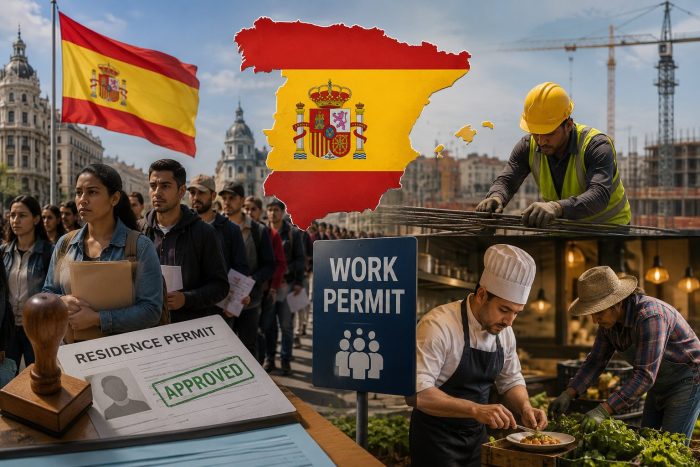
MADRID, July 5: More than 600,000 undocumented migrants have entered Spain’s labor market under temporary work permits while the government reviews applications submitted through its large-scale regularization program.

According to the Spanish government, 609,737 applicants have been granted temporary authorization to work as their residency applications are processed.

Spain launched the regularization initiative to provide legal status to undocumented migrants who have been living in the country. Under the program, successful applicants will receive a one-year residence permit, provided they can prove they had lived in Spain for at least five months before December 31, 2025, and have no criminal record.

Applications were accepted between April 16 and June 30 this year, attracting more than 1.1 million submissions—more than double the government’s initial estimate of around 500,000 applicants.

Secretary of State for Migration Pilar Cancela and Secretary of State for Social Security Borja Suárez said most applicants are migrants from Latin American countries. They noted that temporary work authorization was granted to eligible applicants while authorities carry out the verification process.

Government data show that by June 30, around 160,000 of those holding temporary permits had already secured employment in the formal sector.

Authorities have also approved one-year residence permits for approximately 11,000 applicants so far. Among all applicants, 81 percent are under the age of 45, while 57 percent are women.

The figures underscore Spain’s growing reliance on migrant workers to address labor shortages while advancing one of the country’s largest migrant regularization efforts in recent years.

JCD Expels Two Leaders Over Murder Allegation in Mymensingh

JCD Expels Two Leaders Over Murder Allegation in Mymensingh

The Bangladesh Nationalist Party’s (BNP) student wing, Jatiyatabadi Chhatra Dal (JCD), has expelled two of its leaders over allegations of involvement in the fatal beating of former labour union vice-president Manik Mia in Mymensingh’s Gouripur upazila.

The decision was announced in a statement issued on Thursday (July 2), signed by Mohammad Saddam Hossain Talukder, office secretary of the Mymensingh North District unit of Chhatra Dal.

The expelled leaders are Al Imran Khan, a member of the Mymensingh North District Chhatra Dal and joint convener of the Gouripur Upazila unit, and Rifat Hasan, joint general secretary of the Gouripur Government Technical School and College Chhatra Dal unit.

Mymensingh North District Chhatra Dal President Nuruzzaman Sohel said the two leaders had been expelled following allegations related to the killing of labour leader Manik Mia. He also called on law enforcement agencies to take necessary legal action against those responsible.

According to the party statement, the two leaders were removed from their primary membership as well as all organisational posts over “specific allegations” of involvement in anti-public and criminal activities. The party also declared that it would not accept responsibility for any actions committed by the expelled members.

The statement further instructed Chhatra Dal leaders and activists at all levels to refrain from maintaining any organisational ties with the expelled individuals.

Earlier, the BNP’s youth wing, Jatiyatabadi Jubo Dal, also expelled its Mymensingh North District assistant general secretary, Shoaib Munshi, over allegations of involvement in the same incident.
The decision was announced in a separate statement on Thursday, signed by Minhajul Islam Bhuiyan,

joint general secretary (office) of the Jubo Dal central executive committee. Mymensingh North District Jubo Dal President Shamsul Islam Shamshu confirmed the expulsion.

Professor Abul Kashem Fazlul Haq Dies

Professor Abul Kashem Fazlul Haq Dies

Eminent academic, essayist, literary critic and President of Bangla Academy, Professor Abul Kashem Fazlul Haq, passed away on Sunday afternoon after suffering a cardiac arrest in the capital’s Mirpur area. He was 85.

The death of one of Bangladesh’s most respected intellectuals has prompted an outpouring of grief from academics, writers, cultural figures and public organizations, who have paid tribute to his lifelong commitment to the Bengali language, literature and intellectual life.

Bangla Academy Director General Professor Mohammad Azam confirmed the news of his death. According to him, Professor Haq had gone to a restaurant in Mirpur-1 between 2:30 pm and 3:00 pm when he suddenly fell ill. He was immediately taken to the National Heart Foundation Hospital, where physicians declared him dead.

Professor Haq had been serving as President of Bangla Academy since October 2024, following his appointment to lead the country’s premier literary and cultural institution. During his tenure, he emphasized strengthening research, protecting the Bengali language, and expanding intellectual engagement through the Academy’s activities.

Personal tragedy

Professor Haq’s personal life was marked by profound tragedy. His son, publisher Faisal Arefin Dipan, owner of Jagriti Prokashoni, was murdered in 2015 by Islamist militants in Dhaka, an incident that deeply shocked Bangladesh’s literary community.

Despite the personal loss, Professor Haq continued his academic and literary work with remarkable resilience, remaining actively engaged in writing, research and public discourse.

A lifetime devoted to scholarship

Born on September 30, 1940, in Pakundia village under Pakundia Upazila of Kishoreganj district, Abul Kashem Fazlul Haq emerged as one of Bangladesh’s foremost literary scholars and public intellectuals.

After completing his higher education at the University of Dhaka, he joined its Department of Bengali, where he spent more than four decades teaching generations of students. He later served as Chairman of the department and earned widespread recognition as a teacher whose lectures combined literary criticism, philosophy, history and social analysis.

Beyond the classroom, Professor Haq became one of the country’s most influential essayists, consistently engaging with issues of language, nationalism, democracy, culture and social transformation. His writings reflected a rare ability to connect literature with contemporary political and social realities, making his work widely respected across Bangladesh’s intellectual community.

Champion of the Bengali language

Professor Haq played a pioneering role in campaigns promoting the use of Bengali at every level of state administration, education and public life.

He served as convener of the State Language Bengali Protection Committee, advocating the wider implementation of Bangla in government institutions and public communication. Throughout his career, he argued that language is not merely a medium of communication but a central pillar of national identity, cultural confidence and democratic participation.

His advocacy extended well beyond academic debates, influencing public discourse on language policy and cultural identity.

Influential publications

Professor Haq authored and edited more than 20 important books covering literature, politics, philosophy, history and culture.

Among his best-known works are:

  • Ekushey February Andolan
  • Rajniti Dorshon (Political Philosophy)
  • Sahitya Chinta (Literary Thoughts)
  • Sanskriter Shohoj Kotha

He also edited several important research volumes, including:

  • Itihasher Aloke Bangladesher Sanskriti
  • Swadeshchinta

His essays became standard reference materials for students, researchers and readers interested in Bengali intellectual history and literary criticism.

Editor and intellectual leader

Professor Haq also made lasting contributions through literary publishing.

He edited the respected quarterly journals Sundaram and Lokayata, both of which became important platforms for progressive scholarship, literary criticism and cultural debate in Bangladesh.

These publications introduced new generations of readers to critical discussions on literature, society, philosophy and national identity while encouraging independent intellectual inquiry.

Recognition for literary excellence

In recognition of his outstanding contribution to Bengali essay literature and literary criticism, Professor Haq received the prestigious Bangla Academy Literary Award in 1981.

Over the decades, he established himself as one of Bangladesh’s leading essayists and literary thinkers, earning admiration from scholars across ideological and academic traditions.

Tributes pour in

News of Professor Haq’s death has triggered widespread mourning across Bangladesh’s educational and cultural sectors.

Universities, literary organizations, writers’ associations and cultural institutions have expressed deep sorrow, describing his death as an irreparable loss to the country’s intellectual heritage. Colleagues and former students remembered him as a dedicated teacher, fearless thinker and generous mentor whose influence extended far beyond the university classroom.

Various social, political and cultural organizations also conveyed condolences to his bereaved family, praying for the eternal peace of his soul and expressing sympathy to his loved ones.