HomeBlogPage 4

Scaloni in Tears After Argentina’s Stunning Comeback: “An Incredible Match”

Scaloni in Tears After Argentina’s Stunning Comeback: “An Incredible Match”

ATLANTA, July 8: Argentina head coach Lionel Scaloni struggled to contain his emotions after his side produced a dramatic 3-2 comeback victory over Egypt in the 2026 FIFA World Cup, describing it as “an incredible match” and one of the greatest moments of his coaching career.

Argentina appeared to be heading for elimination after falling two goals behind, but a remarkable late rally saw the South American side score three times in the final 11 minutes to secure a memorable victory and a place in the quarter-finals.

Visibly emotional during FIFA’s post-match television interview, Scaloni was unable to hold back tears.
“I can’t even look straight ahead. I’m sorry, I’m very emotional. What an extraordinary group of players. I have to go now, forgive me,” he said.

At the post-match press conference, Scaloni praised his team’s resilience and determination.
“Today’s match was a test that leaves a lasting mark. This team never stops fighting. Tactics and planning are important, but without the mentality our players showed today, we would have been eliminated.”

Scaloni also praised captain Lionel Messi for his perseverance after missing a penalty.
“Leo could have stopped after missing the penalty, but he always looks for another chance and keeps trying. It gives me goosebumps.”

While acknowledging Egypt’s impressive performance, the Argentina coach said his team created plenty of chances and always believed they could turn the match around.
“These are the emotions I became a coach to experience, even though they make you suffer. If we ever had to lose, I would want my team to lose fighting like this.”

Scaloni described the dramatic comeback as one of the finest moments of his managerial career.
“This is one of the best moments of my career. Despite every obstacle, this team never gives up.”
Argentina will face the winner of the Switzerland-Colombia match in the World Cup quarter-finals on Saturday.

Egypt Coach Alleges Bias to Keep Messi in World Cup After Argentina Defeat

Egypt Coach Alleges Bias to Keep Messi in World Cup After Argentina Defeat

Egypt head coach Hossam Hassan launched a scathing attack on the match officials after his side’s dramatic 3-2 defeat to Argentina in the FIFA World Cup Round of 16, alleging that refereeing decisions favored the defending champions to keep Lionel Messi in the tournament.

Egypt appeared on course for a memorable victory after taking a two-goal lead, but Argentina mounted an impressive comeback with three unanswered goals to secure a place in the quarter-finals.
Speaking after the match in Atlanta, Hassan questioned the decision to disallow one of Egypt’s goals.
“One of our goals was ruled out, and I don’t know why. It wasn’t fair,” Hassan said. “It seems there is a desire to keep Messi in the tournament, and there are marketing interests involved.”
The Egyptian coach claimed his team had been treated unfairly by the referee.

“We were the better team, but football was unfair to us. Perhaps they want to keep the reigning world champions and Messi in the World Cup for commercial reasons. The referee was unjust to the Egyptian national team. There was no justice today,” he added.

Despite his frustration, Hassan praised his players for their performance.
“I thank my players because they worked incredibly hard. But there were other factors that made the situation difficult. I simply don’t like losing,” he said.
Hassan also expressed disappointment at failing to reward Egypt’s supporters.
“We wanted to make our fans happy, but sometimes things happen in football that go beyond technical matters. There seems to be support for the reigning world champions, though I don’t know why,” he said.

The coach concluded by apologizing to Egyptian and Arab supporters.
“I apologize to the people of Egypt and the Arab world. We wanted to bring you joy and go as far as possible in the World Cup. The players gave everything they had, and our ambitions remain even greater. Alhamdulillah for everything,” Hassan said.

Hassan’s remarks came after a controversial match that featured a disallowed Egyptian goal and several disputed officiating decisions, sparking debate over the referee’s performance. His allegations reflect his opinion and have not been substantiated by independent evidence or by FIFA.

Four Bengal Tiger Cubs Born at Cuba’s National Zoo

Four Bengal Tiger Cubs Born at Cuba’s National Zoo

Havana, July 7: Cuba’s National Zoo has welcomed the birth of four Bengal tiger cubs, including a rare white cub, in what officials describe as a rare moment of hope amid the country’s ongoing economic and energy crisis.

Veteran animal caretaker Ángel Cordero, who has worked at the zoo for 44 years, said this is only the second time a white tiger cub has been born in Cuba. He expressed pride at witnessing the milestone despite the country’s difficult circumstances.

Cordero said the current fuel shortage, worsened by U.S. sanctions, has created one of the toughest periods in his career. He recalled helping build the lion and tiger enclosures decades ago and said maintaining the zoo has become increasingly challenging.

Zoo authorities said they require about 20 liters of diesel each day to transport food for nearly 1,000 animals but are currently receiving only around 5 liters. The shortage has complicated the care and feeding of animals, including buffaloes, zebras, rhinos, and hippos.

Zoo Director Juan Carlos Santos said the dedication of staff and support from small private businesses have helped ensure the animals continue to receive essential care. These businesses have assisted in supplying food and other necessary materials.

Because of the fuel shortage, zoo workers now rely on horse-drawn carts and electric three-wheeled vehicles to travel across the zoo’s 375-hectare grounds.

“Everything depends on fuel,” Cordero said, noting that transporting animals and delivering food is impossible without vehicles.

Cuban officials hope that the government’s proposed economic reforms will attract greater foreign investment, scientific cooperation, and access to equipment and supplies, strengthening wildlife conservation efforts in the future.

Three Oil Tankers Attacked in Strait of Hormuz Within 24 Hours, Tensions Escalate

Three Oil Tankers Attacked in Strait of Hormuz Within 24 Hours, Tensions Escalate

Three oil tankers were attacked within a 24-hour period in the strategically vital Strait of Hormuz, intensifying security concerns despite an ongoing ceasefire between the United States and Iran.

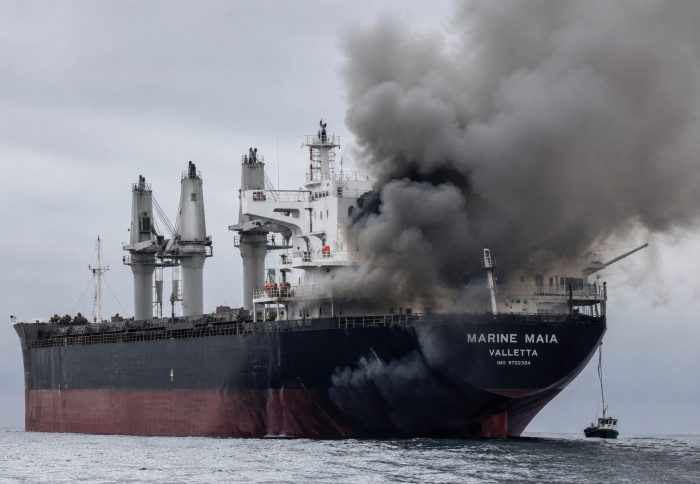
The UK’s Maritime Trade Operations (UKMTO) said the latest incident involved an unidentified drone striking an oil tanker. The attack caused minor structural damage, but there were no casualties or environmental impacts. The vessel continued its voyage after the incident.

Earlier, two other tankers were attacked while transiting the Strait of Hormuz near the coast of Oman. One vessel caught fire after being hit on its port side by what UKMTO described as a missile or projectile while heading toward the Gulf of Oman. Another tanker also sustained structural damage. No injuries were reported in either attack.

Qatar’s Foreign Ministry spokesperson, Majed Al-Ansari, condemned the attack on the Qatari tanker Al Rekayyat, calling it an “unacceptable assault” on international navigation and global energy security. He described the incident as a “serious and blatant violation” of international law and held Iran legally responsible.

Iranian state television, however, reported that the liquefied natural gas (LNG) carrier was targeted after repeatedly ignoring warnings. Tehran stopped short of explicitly claiming responsibility for the attack.

Last week, Iran’s Joint Military Command ordered all oil tankers transiting the Strait of Hormuz to follow designated routes and warned that any US military intervention in the area would receive a “swift and severe response.”

Although Washington and Tehran signed a 14-point ceasefire agreement last month, UKMTO has warned that the security risk in the Strait of Hormuz remains high.

Meanwhile, reports suggest that US-Iran negotiations may remain suspended until the funeral of Iran’s Supreme Leader, Ali Khamenei, is completed. Mourners attending the funeral were seen chanting slogans against Donald Trump.

Japan, China Coast Guards Face Off Near Disputed East China Sea Islands

Japan, China Coast Guards Face Off Near Disputed East China Sea Islands

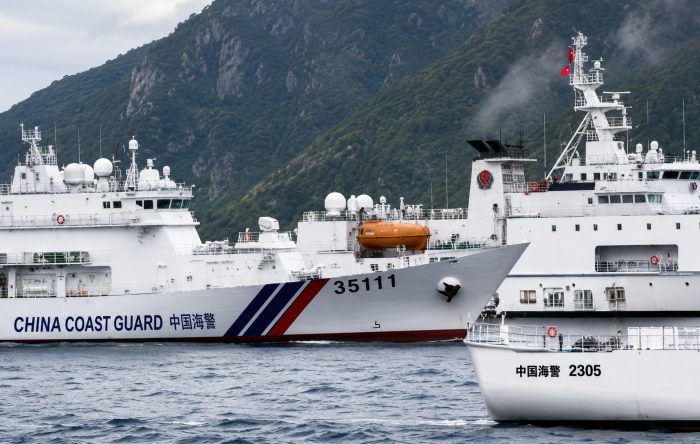
TOKYO, July 7:Japan and China exchanged accusations on Tuesday after their coast guard vessels confronted each other near the disputed Senkaku/Diaoyu Islands in the East China Sea, with both countries claiming they had driven the other’s vessels out of waters they consider their own.

According to Japan’s Coast Guard, two Chinese coast guard ships approached a Japanese fishing boat operating near the uninhabited islands. Japanese authorities ordered the Chinese vessels to leave the area, and the ships reportedly departed at around 9:20 a.m. local time. Additional coast guard vessels were deployed to ensure the safety of the fishing boat.

China’s Coast Guard, however, said a Japanese fishing vessel, identified as Zuiho Maru, had entered waters claimed by Beijing. Chinese authorities said they took “necessary control measures” and ordered the vessel to leave the area.

Japan also stated that four Chinese coast guard ships were operating near the islands, with two entering what Tokyo considers its territorial waters. The Japanese government described the incident as a violation of international law and vowed to continue taking firm measures to protect its maritime territory.

The uninhabited islands, known as Senkaku in Japan and Diaoyu in China, are administered by Japan but claimed by both China and Taiwan. The long-running territorial dispute has frequently sparked diplomatic and maritime tensions.

Relations between Tokyo and Beijing have become increasingly strained in recent months. Last November, Japanese Prime Minister Sanae Takaichi suggested Japan could intervene militarily if Taiwan came under attack, drawing strong criticism from Beijing.

China has since warned its citizens about traveling to Japan and imposed trade restrictions on several Japanese companies. Last month, Japan also announced that two Japanese nationals had been detained in China on allegations of attempting to smuggle restricted rare earth materials out of the country.

Switzerland Reach World Cup Quarter-finals After 72-Year Wait

Switzerland Reach World Cup Quarter-finals After 72-Year Wait

VANCOUVER, July 8:Switzerland booked their place in the FIFA World Cup quarter-finals for the first time since 1954 after defeating Colombia 4-3 in a dramatic penalty shootout following a goalless draw in the Round of 16 on Tuesday.

The tense encounter at BC Place Stadium in Vancouver remained scoreless through 90 minutes and extra time despite both teams creating several scoring opportunities.

Colombia looked the more threatening side in the opening half, with Gustavo Puerta forcing an excellent save from Swiss goalkeeper Gregor Kobel in the 21st minute. Switzerland gradually settled into the match, but efforts from Fabian Rieder and Dan Ndoye were denied by Colombian goalkeeper Camilo Vargas.

Switzerland increased the pressure after the break and appealed for a penalty in the 50th minute when Ndoye appeared to be pulled down inside the box. However, following a VAR review, the referee upheld the decision not to award a spot-kick.

Both sides continued to push for a breakthrough. Colombia came closest in extra time when Jhon Lucumí’s powerful header struck the crossbar in the 99th minute, while Vargas made a superb save to deny substitute Zeki Amdouni moments later.

Colombia squandered the best chance of the match in the 115th minute after Granit Xhaka lost possession, but Jáminton Campaz failed to convert a one-on-one opportunity, sending his effort over the bar.

The match was ultimately decided from the penalty spot.

Juan Quintero converted Colombia’s opening penalty before Xhaka responded for Switzerland. Davinson Sánchez then hit the crossbar, giving Switzerland the advantage, although Manuel Akanji later missed to keep the shootout level.

The decisive moment came when Kobel saved Cucho Hernández’s fourth penalty. Cedric Itten converted Switzerland’s next kick, and although Luis Díaz kept Colombia’s hopes alive by scoring the fifth penalty, Rubin Vargas calmly converted the final spot-kick to secure a 4-3 shootout victory.

The win sends Switzerland into the World Cup quarter-finals for the first time in 72 years. They will now face defending champions Argentina in the last eight.

Qatar Halves LNG Supply to Bangladesh Amid Hormuz Disruptions

Qatar Halves LNG Supply to Bangladesh Amid Hormuz Disruptions

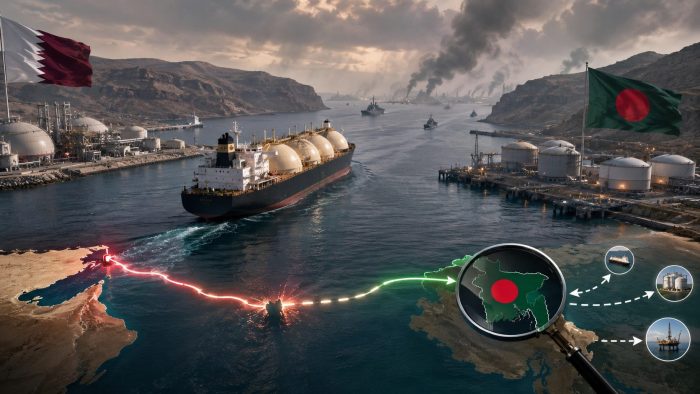
DHAKA, July 7 — Qatar has cut its scheduled liquefied natural gas (LNG) supplies to Bangladesh by half this year after the conflict involving Iran disrupted energy shipments through the Strait of Hormuz, according to Bangladesh’s state-owned energy agency.

Petrobangla Acting Chairman Abdul Mannan confirmed the development to Reuters on Monday, saying the supply disruption was directly linked to the ongoing war and its impact on regional energy transportation.

“The root cause of these problems is the war,” Mannan said. “We are looking for alternative sources to address the shortfall. Bangladesh may increase LNG purchases from the spot market, while agreements with governments of other supplier countries are also under consideration. We will choose the most commercially viable option while ensuring the country’s energy security.”

Qatar is the world’s second-largest LNG producer after the United States and Bangladesh’s largest LNG supplier. Bangladesh imported nearly 7 million metric tons of LNG last year, about 4 million tons of which came from Qatar.

Petrobangla currently has two long-term supply agreements with QatarEnergy, covering annual deliveries of 2.5 million metric tons and 1.8 million metric tons, respectively.

Mannan said QatarEnergy has assured Bangladesh that it will continue supplying LNG to the extent possible despite the reduction in scheduled deliveries.

QatarEnergy did not immediately respond to requests for comment.

According to energy analytics firm Kpler, Bangladesh received 19 LNG cargoes from Qatar under long-term contracts before the conflict began on Feb. 28.

However, no LNG cargoes have arrived from Qatar’s Ras Laffan export terminal since the outbreak of the war, forcing Bangladesh to rely on the spot market. Since March, the country has imported 35 spot-market LNG cargoes to meet domestic demand.

Around 20% of the world’s LNG supply normally passes through the Strait of Hormuz, making the waterway one of the most strategically important energy transit routes. Any disruption there has significant implications for global energy markets and import-dependent countries such as Bangladesh.

61 Die in Custody at Bangladesh Prisons in First Half of 2026: ASK

61 Die in Custody at Bangladesh Prisons in First Half of 2026: ASK

At least 61 inmates died in custody at prisons across Bangladesh during the first six months of 2026, according to data compiled by the human rights organization Ain o Salish Kendra (ASK).

The rights group said that between January and June, 37 of the deceased were undertrial prisoners, while the remaining 24 were convicted inmates. Undertrial detainees accounted for more than 60 percent of all custodial deaths recorded during the period.

Dhaka Division recorded the highest number of custodial deaths, with 36 inmates dying in prison. Of them, 17 were undertrial prisoners and 19 were convicted inmates.

Chattogram Division reported the second-highest number of deaths, with eight inmates losing their lives, including seven undertrial prisoners and one convicted inmate.

Rajshahi and Khulna divisions each recorded five custodial deaths. In both divisions, four of the deceased were undertrial inmates and one was a convicted prisoner.

Barishal and Rangpur divisions each reported two deaths. All of the deaths in Rangpur involved undertrial prisoners.

Sylhet Division recorded the death of one undertrial inmate, while Mymensingh Division reported two deaths—one undertrial prisoner and one convicted inmate.

ASK said the figures were compiled from reports published in various national newspapers and provide an overview of custodial deaths in Bangladesh’s prison system during the first half of the year. The organization did not specify the causes of death in its data compilation.

Venezuela Earthquake Death Toll Surpasses 3,500 as Health Crisis Looms

Venezuela Earthquake Death Toll Surpasses 3,500 as Health Crisis Looms

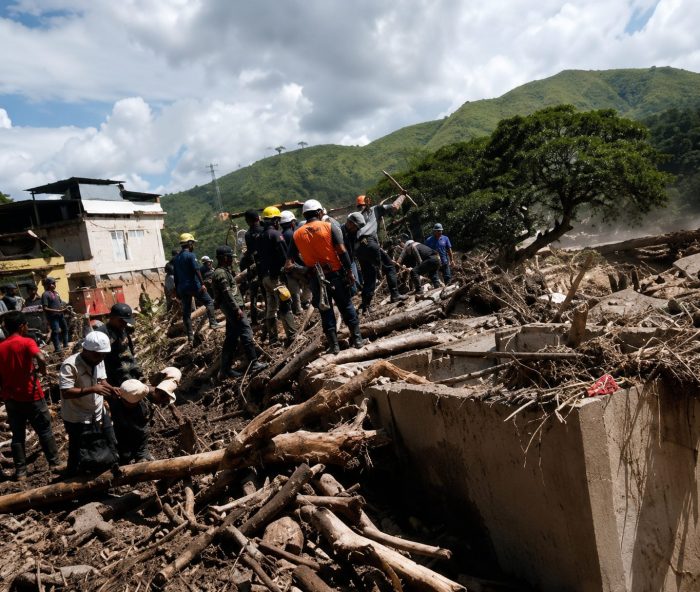
The death toll from the devastating twin earthquakes that struck Venezuela late last month has climbed to 3,535, according to the latest official figures released on Monday.

The powerful earthquakes, measuring 7.2 and 7.5 in magnitude, struck within seconds of each other on June 24, shaking the capital, Caracas, the coastal state of La Guaira, and surrounding areas. The disaster caused widespread destruction, with an estimated 60,000 buildings damaged or destroyed.

National Assembly President Jorge Rodríguez said 16,740 people have been injured, while at least 17,854 residents have been left homeless. Around 12,800 displaced people are currently staying in 80 emergency shelters across Caracas and La Guaira.

Humanitarian agencies and health officials have warned that the country now faces a growing public health emergency. Thousands of displaced people are living in overcrowded shelters or in the open without reliable access to clean water and sanitation, increasing the risk of infectious disease outbreaks.

Eugenio Cova, head of the trauma unit at José Gregorio Hernández Hospital in Caracas, warned that prolonged displacement could lead to the rapid spread of infections.

“We have already gone through a major humanitarian crisis. More challenges lie ahead, and the growing risk of infectious diseases is making the situation even more serious,” he said.

An Al Jazeera correspondent reported last week that cases of diarrhea and other illnesses have already begun to emerge at a shelter in La Guaira, raising concerns over deteriorating health conditions among survivors.

Bangladesh Cuts Jet Fuel Prices for July, Offering Relief to Airlines

Bangladesh Cuts Jet Fuel Prices for July, Offering Relief to Airlines

DHAKA, July 7— Bangladesh has reduced jet fuel prices for both domestic and international flights for July, providing cost relief to airlines following several months of steep price increases.

The Bangladesh Energy Regulatory Commission (BERC) announced on Tuesday that the price of jet fuel for domestic flights has been lowered to Tk130.99 per litre, down from Tk150.21 per litre in June. The latest revision represents a reduction of Tk19.22 per litre, or nearly 13 percent.

For international flights, the regulator reduced the jet fuel price from $0.9808 per litre to $0.8556 per litre, according to an official notification issued by BERC.

The latest adjustment continues a downward pricing trend that began in May after authorities sharply increased aviation fuel prices earlier this year.

On March 24, Bangladesh raised jet fuel prices by around 80 percent for domestic flights and nearly 79 percent for international operations. Prices were increased again on April 7.

Since then, BERC has gradually rolled back the increases. Domestic jet fuel prices were reduced from Tk227.08 to Tk205.45 per litre for May, followed by a further cut to Tk150.21 per litre in June. The July revision brings prices down to their lowest level in recent months.

The price reductions are expected to ease operating costs for airlines, although the extent to which the savings will be reflected in passenger airfares remains unclear.