HomeBlogPage 6

Trump Offers to Help Putin Find Path to End Ukraine War

Trump Offers to Help Putin Find Path to End Ukraine War

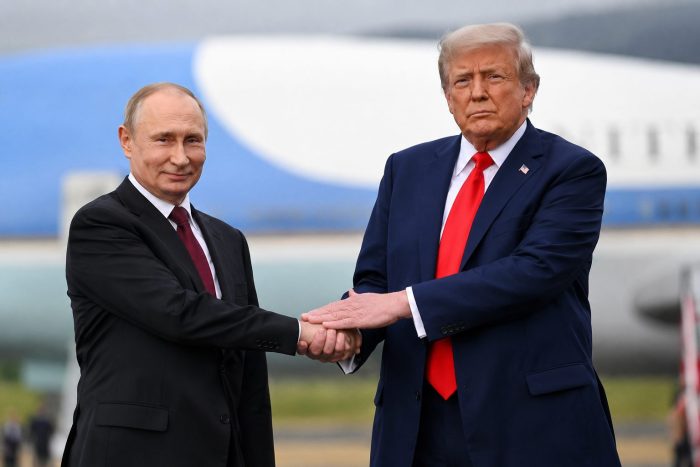
WASHINGTON/MOSCOW, July 5, 2026— US President Donald Trump has offered to assist Russian President Vladimir Putin in finding a solution to end the war in Ukraine, according to the Kremlin. The proposal was reportedly made during a 90-minute phone conversation between the two leaders ahead of the upcoming NATO summit in Ankara.

Kremlin foreign policy adviser Yuri Ushakov said on Sunday that the discussion focused on ways to achieve a political and diplomatic settlement to the conflict. He described the call as “professional and highly constructive.”

According to Ushakov, Trump reaffirmed his readiness to work toward a swift end to the war and to help find a lasting solution to the ongoing crisis.

He said Russia remains committed to seeking a political and diplomatic resolution while safeguarding its fundamental national interests.

Meanwhile, Ukrainian President Volodymyr Zelensky said he also spoke with Trump on Saturday. Writing on Telegram, Zelensky said the two leaders discussed the situation along the 1,200-kilometre front line and agreed to continue consultations during the NATO summit.

“There is a real opportunity to end this war, and America’s determination will be critically important,” Zelensky said.

The NATO summit is scheduled for July 7-8 in Ankara, where leaders from the alliance’s 32 member states, including Trump, are expected to attend.

Despite months of heavy fighting, neither Russia nor Ukraine has made a decisive breakthrough on the battlefield. The extensive use of drones has significantly hindered the movement of heavy military equipment while inflicting substantial losses on both sides.

Ushakov also accused Ukraine, with support from its European allies, of prolonging the conflict and targeting civilian infrastructure. He pointed to recent long-range Ukrainian strikes on facilities linked to Russia’s oil industry, which he said had caused fuel shortages in several Russian regions.

He further claimed that Putin briefed Trump on what he described as Russia’s continued military advances, asserting that Russian forces were steadily gaining control of additional territory.

Earlier on Friday, Russian military commanders claimed their troops had captured the strategically important eastern Ukrainian city of Kostiantynivka in the Donetsk region. However, Zelensky and Ukraine’s General Staff rejected the claim on Saturday, insisting the city remains under Ukrainian control.

Last month, Zelensky invited Putin to hold direct bilateral talks, but the Kremlin declined the proposal.

Norway Stun Brazil to Reach Historic World Cup Quarter-finals

Norway Stun Brazil to Reach Historic World Cup Quarter-finals

NEW JERSEY, July 6: Norway produced one of the biggest upsets in FIFA World Cup history by defeating five-time champions Brazil 2-1 to reach the quarter-finals for the first time ever.

After withstanding relentless Brazilian pressure for much of the match at New Jersey Stadium, Norway found their hero in Erling Haaland, who struck twice late in the second half to shatter Brazil’s hopes of winning a sixth World Cup title.

Norway thought they had taken an early lead in the fourth minute when Patrick Berg found the net, but the goal was ruled out for offside following the referee’s decision.

Brazil missed a golden opportunity to go ahead in the 10th minute after being awarded a penalty through a VAR review. Bruno Guimarães stepped up but saw his effort brilliantly saved by Norwegian goalkeeper Ørjan Nyland, who delivered a match-winning performance between the posts.

The South Americans dominated possession and created several chances throughout the first half, with Matheus Cunha and Gabriel Martinelli both testing Norway’s defence, but neither side managed to break the deadlock before the interval.

Brazil continued to press after the restart. Substitute Endrick squandered a clear one-on-one opportunity shortly after coming on, while Ryan and Guimarães were also denied by the inspired Nyland.

Carlo Ancelotti introduced Neymar in the 67th minute in search of a breakthrough, but it was Norway who struck first.

Haaland headed home in the 79th minute to silence the Brazilian supporters before unleashing a powerful long-range strike 10 minutes later to double Norway’s advantage.

Neymar converted a stoppage-time penalty to reduce the deficit, but Brazil could not find an equaliser as Norway secured a famous 2-1 victory.

The result sends Norway into the World Cup quarter-finals for the first time in the nation’s history, while Brazil’s quest for a long-awaited sixth world title comes to another disappointing end.

Mojtaba Khamenei Seeks to Attend Father’s Final Farewell

Mojtaba Khamenei Seeks to Attend Father’s Final Farewell

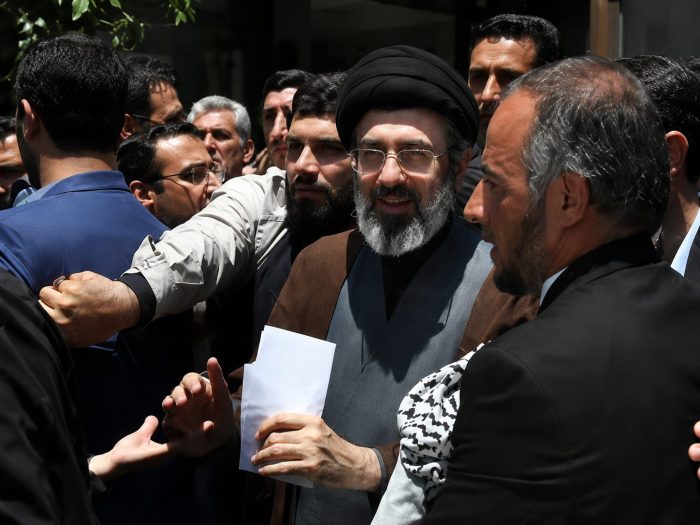
Iran’s Supreme Leader has expressed his wish to take part in the final farewell ceremonies of his father and predecessor, , according to a report by .

Iranian sources cited by the newspaper said Mojtaba informed officials that he wants to be present during the multi-day mourning ceremonies. However, his request has reportedly been denied so far due to serious security concerns.

Officials fear that could attempt to assassinate him or use his public appearance to trace his undisclosed location.

According to the report, Mojtaba Khamenei hopes to attend his father’s burial on July 9.

The New York Times also noted that he was absent from a memorial event held on Wednesday for his wife, teenage son, and other relatives who were reportedly killed during the first day of joint strikes by the and Israel.

His absence, especially after reports that he was seriously injured in the attacks, has raised fresh questions about his condition and whether he is currently able to lead Iran’s political and religious establishment.

Bhangura’s Lesson: Rule of Law Begins Before an Arrest

Bhangura’s Lesson: Rule of Law Begins Before an Arrest

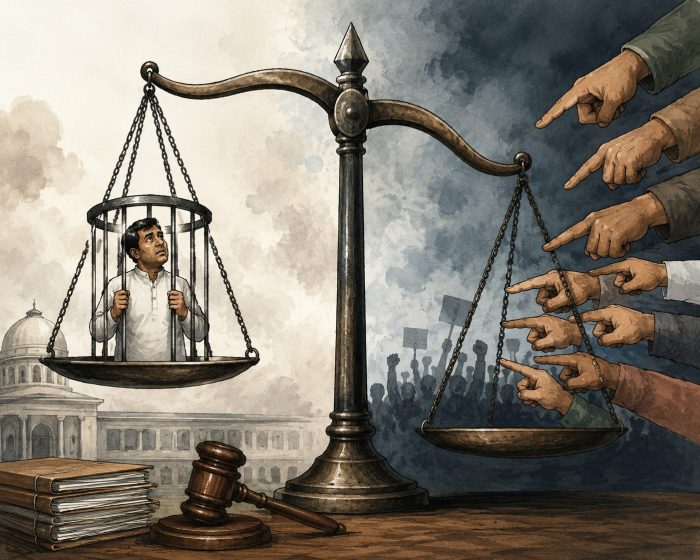
The brief detention and release of a local Jubo League leader in Pabna’s Bhangura upazila may look like a small rural episode. In reality, it exposes a larger problem in Bangladesh’s current political environment: the growing danger of arrest first, evidence later.

Ripon Sarkar, president of Ward No. 1 Jubo League in Par-Bhangura Union, was detained on suspicion of involvement in an alleged sabotage incident. Within about two hours, police released him after finding no evidence linking him to the allegation. The immediate question is simple: if preliminary verification could not establish his involvement, what justified the arrest in the first place?

Sajjad Hossain Sabuj

The most striking part of the incident was not merely the release. It was the protest that forced attention to the case. More than 200 villagers reportedly gathered outside Bhangura Police Station demanding Ripon’s freedom, led by a local Chhatra Dal leader. In a deeply polarized country, this detail matters. It suggests that at the grassroots level, people may still recognize fairness beyond party identity.

Police deserve credit for eventually releasing a suspect when no evidence was found. But the public is entitled to ask whether the same outcome would have come so quickly without community pressure. In politically sensitive cases, that question is not rhetorical; it goes to the heart of public trust.

Bangladesh has seen a troubling expansion of politically framed allegations, especially involving sabotage, unrest, and public-order offenses. Such charges may be legitimate in some cases. But when they are used loosely, they risk becoming tools of intimidation rather than justice.

No democratic state can preserve order by weakening due process. Law enforcement must act firmly against real threats, but firmness without evidence is not justice. It is coercion dressed in legal language.

The current government should recognize that restrictions on political activity and the frequent targeting of opposition-linked individuals carry a high cost. They may appear to offer short-term control, but they deepen fear, resentment, and mistrust. A government confident in its legitimacy should not need to rely on suspicion-driven policing.

The Bhangura case also shows why local society remains an important safeguard. Villagers did not appear to rally around ideology alone. They rallied around a belief that one of their own had been unfairly targeted in a local dispute. That social response should not be dismissed as pressure on police; it should be read as a warning about declining confidence in the fairness of the system.

The rule of law is not tested only in courts. It begins at the moment police decide whether to detain someone. Every arrest must be based on credible grounds, not vague suspicion, political convenience, or personal rivalry.

Ripon Sarkar’s release ended the immediate standoff peacefully. But the issue should not end there. Authorities should review how the detention happened, what information was used, and how similar cases can be handled with greater restraint and transparency.

A state that claims to uphold law must first show respect for liberty. In Bhangura, the evidence came too late. The lesson should not.

Author: Sajjad Hossain Sabuj, Senior Journalist and Former Press Minister, Embassy of Bangladesh, Washington, D.C.

Bangladesh Seek ODI Revival Against Zimbabwe After Test Loss

Bangladesh Seek ODI Revival Against Zimbabwe After Test Loss

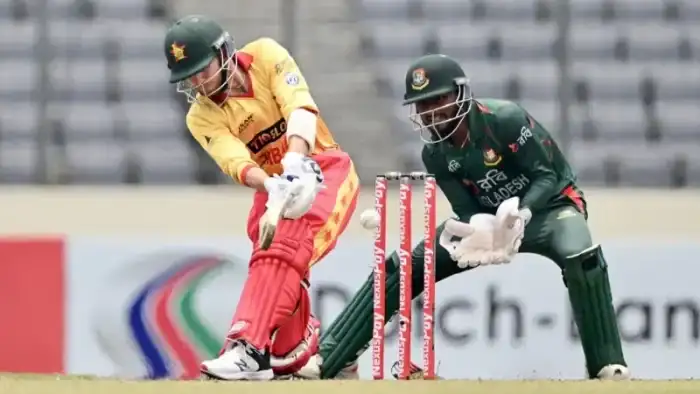
Bangladesh will look to put behind one of their most disappointing recent Test performances when they begin a three-match One-Day International (ODI) series against Zimbabwe in Harare on Monday, hoping that their impressive white-ball form can spark an immediate turnaround.

The tourists arrive in the series after suffering a crushing innings-and-85-run defeat in the one-off Test, Zimbabwe’s biggest-ever Test victory over Bangladesh. The match ended inside three days, leaving Bangladesh with two extra days to regroup, reassess their shortcomings, and prepare for a format in which they have enjoyed considerably greater success.

While the defeat exposed serious weaknesses in Bangladesh’s batting against Zimbabwe’s pace attack, the ODI series offers a fresh opportunity for Mehidy Hasan Miraz’s side to regain momentum.

White-ball success fuels Bangladesh’s optimism

Despite the Test setback, Bangladesh enter the ODI series with confidence built on an impressive run in 50-over cricket.

The Tigers have won four consecutive ODI series, including a historic home series victory over Australia in June—Bangladesh’s first-ever home ODI series win over the five-time world champions. The team also claimed ODI series victories over New Zealand, Sri Lanka and Pakistan in recent months, reinforcing its growing reputation as a competitive white-ball side.

The Bangladesh team management believes those performances provide a stronger indication of the side’s current capabilities than the disappointing Test result.

The return of frontline fast bowlers Mustafizur Rahman, Taskin Ahmed and Shoriful Islam—who were rested during the Test—will further strengthen Bangladesh’s bowling attack in conditions expected to favor pace.

Captain Mehidy Hasan Miraz, who has emerged as one of Bangladesh’s most dependable all-rounders, will lead a squad blending experienced campaigners with several younger players eager to establish themselves ahead of next year’s ICC Cricket World Cup qualifying cycle.

Zimbabwe riding high after landmark Test victory

Zimbabwe, however, enter the ODI series with confidence of their own.

Their dominant victory in the one-off Test not only boosted morale but also highlighted the emergence of several players capable of troubling Bangladesh across formats.

Opening batter Innocent Kaia was among the biggest success stories of the Test, scoring his maiden Test century after returning to the national side following a lengthy absence.

His impressive performances continued a strong run of form after productive outings for Zimbabwe A during last month’s tour of Bangladesh, earning him a recall to the ODI squad.

Zimbabwe Cricket announced a 15-member squad led by fast bowler Richard Ngarava, who will captain the national side in ODIs for the first time after also leading the Test team during the one-off match.

The squad has also been strengthened by the return of experienced all-rounders Ryan Burl, Tadiwanashe Marumani and Wellington Masakadza, while star all-rounder Sikandar Raza returns after missing the Test.

Blessing Muzarabani, whose hostile pace played a decisive role in Zimbabwe’s Test victory, is also expected to pose a major challenge to Bangladesh’s batting lineup.

Bangladesh still hold historical edge

Although Zimbabwe have gained momentum in recent years, Bangladesh continue to enjoy a clear historical advantage in ODI cricket.

The two teams have met 81 times in One-Day Internationals, with Bangladesh winning 51 matches and Zimbabwe claiming 30 victories.

However, recent history suggests Zimbabwe cannot be underestimated.

When the teams last contested an ODI series in Zimbabwe in 2022, the hosts secured a memorable 2-1 series victory, exposing Bangladesh’s vulnerability in unfamiliar conditions.

That result remains a source of confidence for the home side ahead of Monday’s opener.

Simmons urges players to stay confident

Despite the heavy Test defeat, Bangladesh head coach Phil Simmons has urged his players not to lose confidence.

Speaking after the Test in Harare, Simmons said the result should not overshadow the team’s recent achievements in white-ball cricket.

“We have played good ODI cricket over the last several months. One bad Test should not take away the confidence we’ve built. The important thing is how quickly we respond,” Simmons told reporters after the match.

Zimbabwe captain Richard Ngarava, meanwhile, said leading the national side is a special honor and expressed confidence that his team could carry its Test momentum into the ODI series.

“It is a huge honor to captain Zimbabwe. We played excellent cricket in the Test, but we know ODI cricket is a different challenge. We have prepared well and are looking forward to the series,” Ngarava said after Zimbabwe Cricket announced the ODI squad.

Busy schedule ahead

The ODI series begins at Harare Sports Club on Monday, with the second and third matches scheduled for July 9 and July 11 at the same venue. The teams will then travel to Bulawayo for a three-match Twenty20 International series later this month.

With both teams entering the series carrying different forms of momentum—Bangladesh from sustained ODI success and Zimbabwe from an emphatic Test triumph—the contest promises to be one of the more intriguing bilateral ODI series of the season.

Bangladesh ODI squad

Mehidy Hasan Miraz (captain), Soumya Sarkar, Mohammed Saif Hassan, Tanzid Hasan Tamim, Najmul Hossain Shanto (vice-captain), Towhid Hridoy, Liton Das, Mosaddek Hossain Saikat, Nurul Hasan Sohan, Rishad Hossain, Tanvir Islam, Mustafizur Rahman, Taskin Ahmed, Shoriful Islam and Nahid Rana.

Zimbabwe ODI squad

Richard Ngarava (captain), Brian Bennett, Ryan Burl, Ben Curran, Craig Ervine, Brad Evans, Innocent Kaia, Clive Madande, Wessly Madhevere, Tadiwanashe Marumani, Wellington Masakadza, Ernest Masuku, Blessing Muzarabani, Newman Nyamhuri and Sikandar Raza.

Trump Says US Gave Iran ‘Time Off’ for Khamenei Burial

Trump Says US Gave Iran ‘Time Off’ for Khamenei Burial

US President has claimed that Iran is urgently seeking a deal with Washington following the death of Iranian Supreme Leader in the early days of the war, reportedly killed during joint US-Israeli strikes.

Speaking Friday night at Mount Rushmore during the opening ceremony marking the 250th anniversary of American independence, Trump said Tehran was now “desperate” to reach an agreement with the United States.

“We destroyed Iran completely. They are trying very hard to make a deal,” Trump said during his speech, where he also praised American military power and warned against what he described as the global threat of communism.

In a remark that drew attention, Trump added that Washington had effectively given Iran “a week off” to complete Khamenei’s burial rites.

“We gave them time for the funeral because we are kind,” Trump said in his characteristic style.
The comments came as Iran continues nationwide mourning ceremonies for Khamenei, whose funeral has drawn massive crowds and strong anti-American and anti-Israeli slogans in Tehran.

The latest escalation has further intensified tensions across the Middle East, with analysts warning that the region could face broader instability if diplomatic efforts fail.

Gazipur BCL Leader Nasir Morol Leads Protest Rally

Gazipur BCL Leader Nasir Morol Leads Protest Rally

A protest rally led by Nasir Morol, general secretary of the Gazipur district unit of Bangladesh Chhatra League (BCL), was held in Gazipur following his return from abroad.

The procession took place on Friday (July 3) in the Nanduyan area of Rajendrapur, under Gazipur Metropolitan City. Video footage circulating on social media shows the rally starting near Bhawal National Park on the Dhaka-Mymensingh highway and ending at Rajendrapur Bazar.

The 2-minute and 32-second video appears to show between 150 and 200 participants marching in the procession. Following the rally, Morol addressed the crowd.

In his speech, Morol thanked supporters for joining the gathering and declared, “I am forever grateful for the love and support you have shown me by being here today on the soil of Gazipur. There is no point in threatening us with death or imprisonment. We are workers of Sheikh Hasina. Sheikh Hasina will return. We have not left the streets.”

Speaking to reporters, Md. Aminul Islam, officer-in-charge of Gazipur Metropolitan Sadar Police Station, said law enforcement agencies were aware of the rally and are reviewing multiple video recordings related to the incident.

Rights Group Warns Blasphemy Claims Target Bangladesh Minorities

Rights Group Warns Blasphemy Claims Target Bangladesh Minorities

A leading minority rights organization has warned of a growing pattern of blasphemy allegations being used to intimidate and target religious minorities in Bangladesh, saying it documented 17 such cases involving minority victims during the first half of 2026.

The Human Rights Congress for Bangladesh Minorities (HRCBM), a U.S.-registered organization with UN Special Consultative Status, issued the warning on Saturday while drawing attention to the recent case of Dipto Ray, a Hindu youth from Tahirpur upazila in Sunamganj district who was arrested over an alleged social media post.

According to the organization, the Tahirpur case illustrates what it called an increasingly familiar sequence of events: a social media allegation emerges, public anger rapidly escalates, police detain the accused before completing digital forensic verification, and minority families are left to face threats, violence, and social isolation.

“A social-media allegation appears, a crowd gathers, police move quickly against the accused, and before any proper digital forensic examination is completed, homes, shops, temples, and entire families are pushed into fear,” HRCBM said in its public statement released Saturday while discussing the Tahirpur case.

Questions over forensic evidence

The rights group said it reviewed materials associated with the First Information Report (FIR), which referenced an alleged social media post, police custody, the seizure of a mobile phone, and charges brought under Bangladesh’s Penal Code and cyber-related legislation.

However, HRCBM argued that the documents did not appear to establish forensic proof at the time of Dipto Ray’s arrest that he personally created, published, controlled, or intended the allegedly offensive content.

The organization, citing accounts from Dipto’s family and local eyewitnesses, said the allegation was “false and made on a pretext.” It further alleged that following the accusation, the youth’s family home, livelihood, and a local Hindu temple were attacked or damaged.

The allegations have not been independently verified by authorities, and police have not publicly released the results of any forensic examination of the seized mobile device.

Seventeen cases documented in six months

According to HRCBM’s preliminary documentation, the Tahirpur case is one of 17 blasphemy-related cases involving members of minority communities recorded between January and June 2026.

The organization said six cases were documented during the first four months of the year, while another 11 cases occurred in May and June, suggesting what it described as a sharp increase in such incidents.

HRCBM also referred to its earlier documentation, which reported that 73 minority youths were arrested across Bangladesh during 2025 under blasphemy-related allegations.

“For Bangladesh’s minorities, this is no longer an isolated episode. It has become a recurring mechanism of social destruction,” the organization said.

It added that, over recent years, “hundreds of minority youths and families” have reportedly faced blasphemy allegations based on false, manipulated, hacked, impersonated, or otherwise unverified digital content.

Accusation itself becomes punishment

Beyond the legal issues surrounding alleged online speech, HRCBM argued that the central human rights concern is that accusations themselves often trigger punishment long before courts or investigators establish the facts.

“Before a court determines facts, before forensic specialists verify whether an account was hacked, impersonated, manipulated, or falsely attributed, the accused may be taken into custody, family members may be threatened, property may be attacked, and a local minority community may be collectively terrorised,” the organization said in its statement.

According to HRCBM, this creates an environment in which the mere existence of an allegation can produce severe social, economic, and psychological consequences irrespective of whether criminal liability is ultimately established.

Appeal to government and international community

The organization called on the Government of Bangladesh, police authorities, the judiciary, the National Human Rights Commission, UN human rights mechanisms, diplomatic missions, international digital rights organizations, and major social media companies to treat what it described as the misuse of blasphemy allegations as “a national minority-protection emergency.”

It also urged journalists, civil society organizations, and international observers to closely examine both the Tahirpur case and broader patterns involving digital evidence in blasphemy-related prosecutions.

“The Tahirpur case should not disappear as another local incident. It should become a warning,” HRCBM said.

“In Bangladesh today, a single accusation can destroy a minority youth’s life, endanger a family, damage a temple, and place an entire community under siege. Until the state breaks this cycle, blasphemy allegations will remain not only a legal issue but also a mechanism of fear, displacement, economic destruction, and collective punishment,” the organization said.

Broader concerns over minority protection

Bangladesh’s Constitution guarantees equal rights for citizens regardless of religion, while Islam remains the state religion. Hindus constitute roughly eight percent of the country’s population, with Buddhists, Christians, and other communities making up most of the remaining minority population.

International organizations have continued to monitor the situation of religious minorities in Bangladesh. The UK Home Office noted in its 2025 country policy assessment that while constitutional protections exist, there have been recurring instances of communal violence and cases in which cyber-related laws have been used to arrest individuals accused of insulting religion.

The UN Office of the High Commissioner for Human Rights (OHCHR), in its February 2025 fact-finding report on the 2024 unrest, also documented revenge attacks against members of the Hindu community and emphasized the responsibility of the Bangladeshi authorities to investigate abuses, protect vulnerable communities, and ensure effective remedies for victims.

No official response from the Government of Bangladesh or law enforcement authorities regarding HRCBM’s latest allegations had been issued as of Saturday.
India Closely Monitoring Bangladesh-China Talks on Fighter Jets

India Closely Monitoring Bangladesh-China Talks on Fighter Jets

India is closely monitoring recent developments in Bangladesh-China relations, particularly discussions surrounding Dhaka’s potential purchase of Chinese J-10CE multirole fighter jets and Beijing’s proposal for a China-Myanmar-Bangladesh Economic Corridor (CMBC).

Speaking at a press briefing in New Delhi on Friday, Indian Ministry of External Affairs spokesperson said India maintains constant and close observation of diplomatic and strategic developments involving its neighboring countries.

Responding to questions from journalists, Jaiswal stated that India carefully tracks all significant progress and diplomatic engagements in neighboring nations and takes appropriate measures whenever necessary.

The remarks came amid reports that during ’s recent visit to , Beijing proposed the economic corridor initiative and discussed Bangladesh’s possible acquisition of the advanced fighter aircraft.

Jaiswal was also asked about China’s reported commitment to assist in the development of Bangladesh’s project. In response, he said India’s development cooperation with Bangladesh is guided by a mutually agreed framework that is reviewed regularly.

Referring specifically to the Teesta project, the Indian spokesperson noted that New Delhi had already conveyed its position to Dhaka on the matter.

India further indicated that such evolving regional developments would be taken into account in shaping its broader policy approach toward Bangladesh.

Jubo League Leader Freed After Pabna Police Station Protest

Jubo League Leader Freed After Pabna Police Station Protest

A local Jubo League leader in Pabna’s Bhangura upazila was released late Friday night about two hours after his arrest, after more than 200 villagers led by a Chhatra Dal leader surrounded the local police station and demanded his release.

The incident occurred on Friday, July 3, 2026, in Par-Bhangura Union under Bhangura Upazila in Pabna District. Police detained Ripon Sarkar, president of Ward No. 1 Jubo League in Par-Bhangura Union, from his village in the evening on suspicion of involvement in an alleged sabotage incident. Local media reported that he was taken to Bhangura Police Station, where residents later gathered to demand his release.

According to reports by Ekushey Television and Ekhon TV, the protest was led by Shafiqul Islam Sohel, joint convener of Bhangura Upazila Chhatra Dal. At around 8:30 p.m., more than 200 villagers assembled outside the police station, calling for Ripon’s immediate release. Police later dispersed the crowd from the station premises and invited a small delegation, including Sohel and several village elders, into the office of the Officer-in-Charge (OC) for discussions. Following the meeting, Ripon was released at around 10:30 p.m.

The arrest and swift release have drawn attention because the detainee is affiliated with the Jubo League, the youth wing of the Awami League, while the demonstration demanding his release was led by a local Chhatra Dal leader. The incident also highlighted how local disputes and community relationships can sometimes transcend national party affiliations, particularly when residents believe an arrest has been influenced by local rivalries rather than evidence.

Defending the protest, Shafiqul Islam Sohel said the dispute stemmed from disagreements over a village market established on khas land.

“A market has been set up on khas land in the interest of our village. There is village politics over this issue. Ripon Sarkar was brought to the police station in the interest of a particular individual, and that is why we came here with the villagers,” Sohel said while speaking to reporters outside Bhangura Police Station during the protest.

Bhangura Police Station Officer-in-Charge Shakyul Azam confirmed that Ripon had been detained solely as a suspect and was released after preliminary verification failed to establish evidence linking him to the alleged sabotage.

“Ripon Sarkar is the ward Jubo League president. He was brought to the police station as a suspect in a sabotage matter. But as no evidence of his involvement was found during the initial verification, he was released into the custody of the villagers after a bond was taken,” the OC told local journalists following the incident.

According to police, the preliminary inquiry did not uncover evidence sufficient to justify keeping Ripon in custody. Police have not publicly disclosed details of the alleged sabotage incident that prompted Ripon’s detention, nor have they said whether the investigation remains active.

The case comes amid continued political tensions surrounding the Awami League and its affiliated organizations. On June 22, 2026, authorities deployed members of the armed forces in Dhaka and five other districts ahead of the Awami League’s founding anniversary, citing concerns that supporters of the former ruling party might attempt to organize public gatherings despite restrictions on the party’s activities. Speaking to reporters at the time, Home Minister Salahuddin Ahmed said security agencies were on heightened alert because Awami League supporters were allegedly attempting to “incite unrest through processions and rallies in different districts.”

The broader political landscape has been shaped by the ban imposed on Awami League activities under Bangladesh’s Anti-Terrorism Act in May 2025. Human Rights Watch said the interim administration led by Muhammad Yunus used amended counterterrorism provisions to prohibit the party’s political activities, publications, and online communications while increasing arrests of alleged Awami League supporters. Those restrictions remain in force under the current BNP-led government headed by Prime Minister Tarique Rahman.

Human Rights Watch has warned that politically motivated restrictions on freedom of association and due process risk undermining the rule of law regardless of which political party is affected. Amnesty International has likewise raised concerns over restrictions on freedom of expression, peaceful assembly, and political association in Bangladesh, warning that arbitrary arrests and broad limitations on political activities risk eroding due process and democratic rights.

While the immediate standoff in Bhangura ended peacefully with Ripon’s release, the incident has renewed local debate over the use of sabotage allegations, the standard of evidence required for detention, and the importance of impartial policing in politically sensitive cases. Police have not announced whether any further action will be taken.