
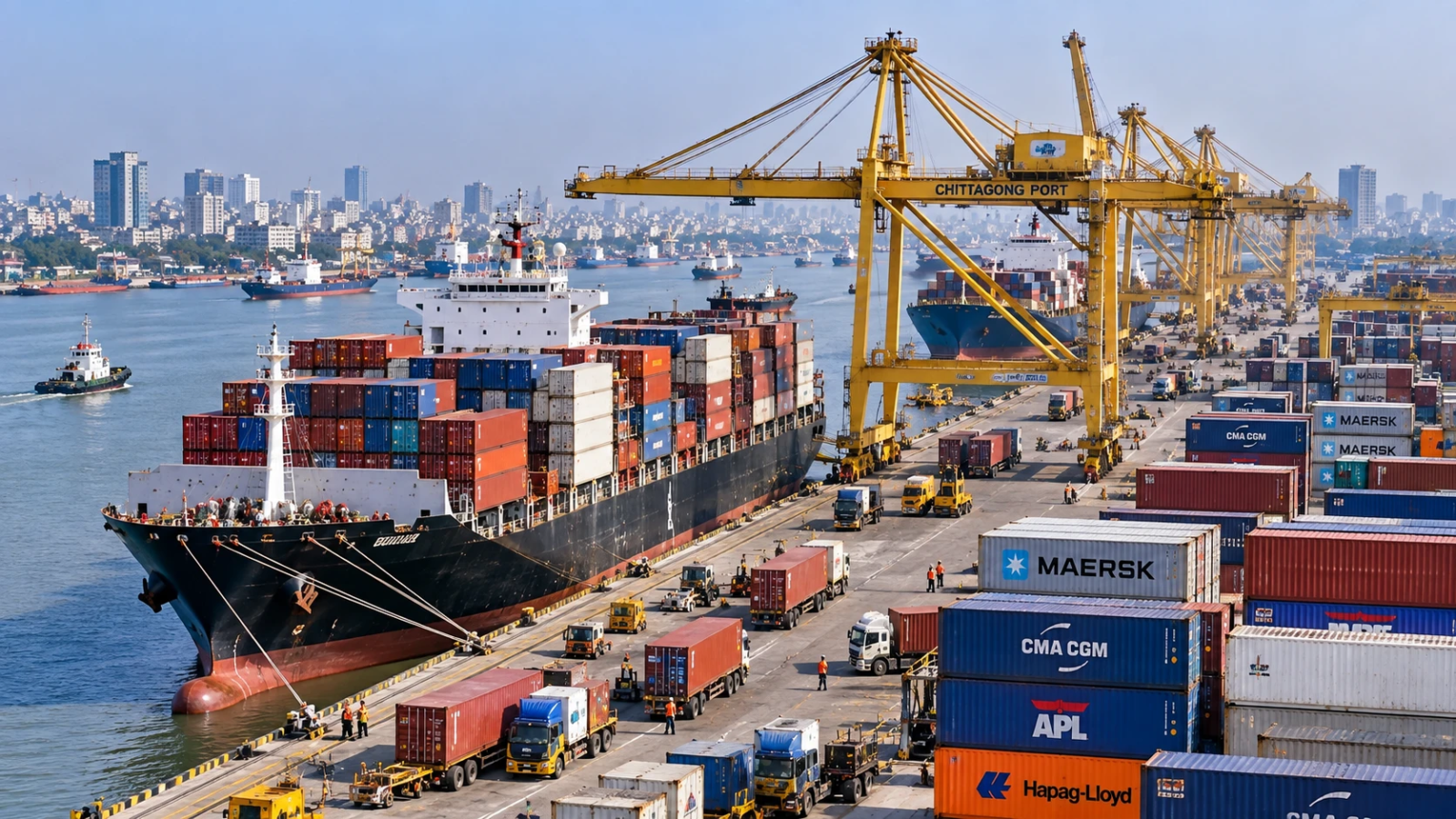
Bangladesh’s imports from the United States have surged since the two countries signed a reciprocal trade agreement in February 2026, while the growth of Bangladeshi exports to the US has remained comparatively limited. The widening gap is raising questions over whether the agreement is delivering sufficient economic benefits for Bangladesh.
Under the agreement, Bangladesh committed to purchasing a range of US industrial and agricultural products, energy and aircraft. According to US government information, Bangladesh plans to purchase around $3.5 billion worth of US agricultural products and approximately $15 billion worth of energy products over 15 years.
Data from Bangladesh’s National Board of Revenue (NBR) show that between January and April 2026, Bangladesh’s imports from the United States increased by 101 percent to around Tk 19,104 crore.
By comparison, Bangladesh’s exports to the United States increased by only 3.32 percent during the same period, reaching approximately Tk 35,462 crore.
The figures highlight a significant difference in the pace of bilateral trade growth: Bangladesh’s purchases from the US have expanded dramatically, while the growth of its sales to the American market has remained modest.
The increase in imports included major commodities such as liquefied natural gas (LNG), liquefied petroleum gas (LPG), soybean, wheat, cotton and aircraft engines.
The trade commitments have also been accompanied by major commercial initiatives in the aviation and energy sectors.
In July, US-Bangla Airlines announced plans to purchase 21 Boeing aircraft at an estimated cost of around $1.5 billion. Earlier, discussions had also taken place over a potential purchase of 14 Boeing aircraft by Bangladesh, valued at approximately $3.7 billion.
Energy cooperation between the two countries has also expanded. In August 2026, the Bangladesh government approved the purchase of 117 LNG cargoes from US-based Gunvor for delivery between 2026 and 2038.
These developments indicate that the commercial relationship between Bangladesh and the United States is expanding across several strategic sectors. However, the pattern of trade growth raises a fundamental question: what mechanisms within the agreement will enable Bangladesh to increase its exports and capture greater economic value from the expanding relationship?
For Bangladesh, increased imports do not necessarily translate into sustainable economic development. Purchases of energy, agricultural commodities and aircraft may address immediate supply, infrastructure or strategic requirements, but the longer-term economic impact depends on whether the relationship also generates greater export opportunities, foreign investment, industrial capacity and employment.
Bangladesh’s export sector, particularly its ready-made garment industry, has long depended heavily on the US market. A key economic consideration, therefore, is whether the new trade arrangement can create additional market access for Bangladeshi products or help diversify exports beyond traditional sectors.
The current figures also raise questions about the balance of economic commitments. If Bangladesh is undertaking substantial purchases of US goods, energy and aircraft, the potential benefits to Bangladesh would ideally include stronger access to the US market, increased investment and technology transfer, and expanded opportunities for Bangladeshi exporters.
The growing US-Bangladesh commercial relationship may therefore represent more than a conventional trade arrangement. However, interpreting the trade imbalance as evidence of an undisclosed political bargain or an attempt by Bangladesh to secure US political support would require independent and credible diplomatic or political evidence.
For now, the available trade figures point to a clear disparity: Bangladesh’s imports from the United States have grown far faster than its exports to the US since the agreement.
That leaves the central economic question unresolved: as Bangladesh commits to billions of dollars in purchases from the United States, what concrete and measurable economic gains will Bangladesh receive in return?





COMMENTS