
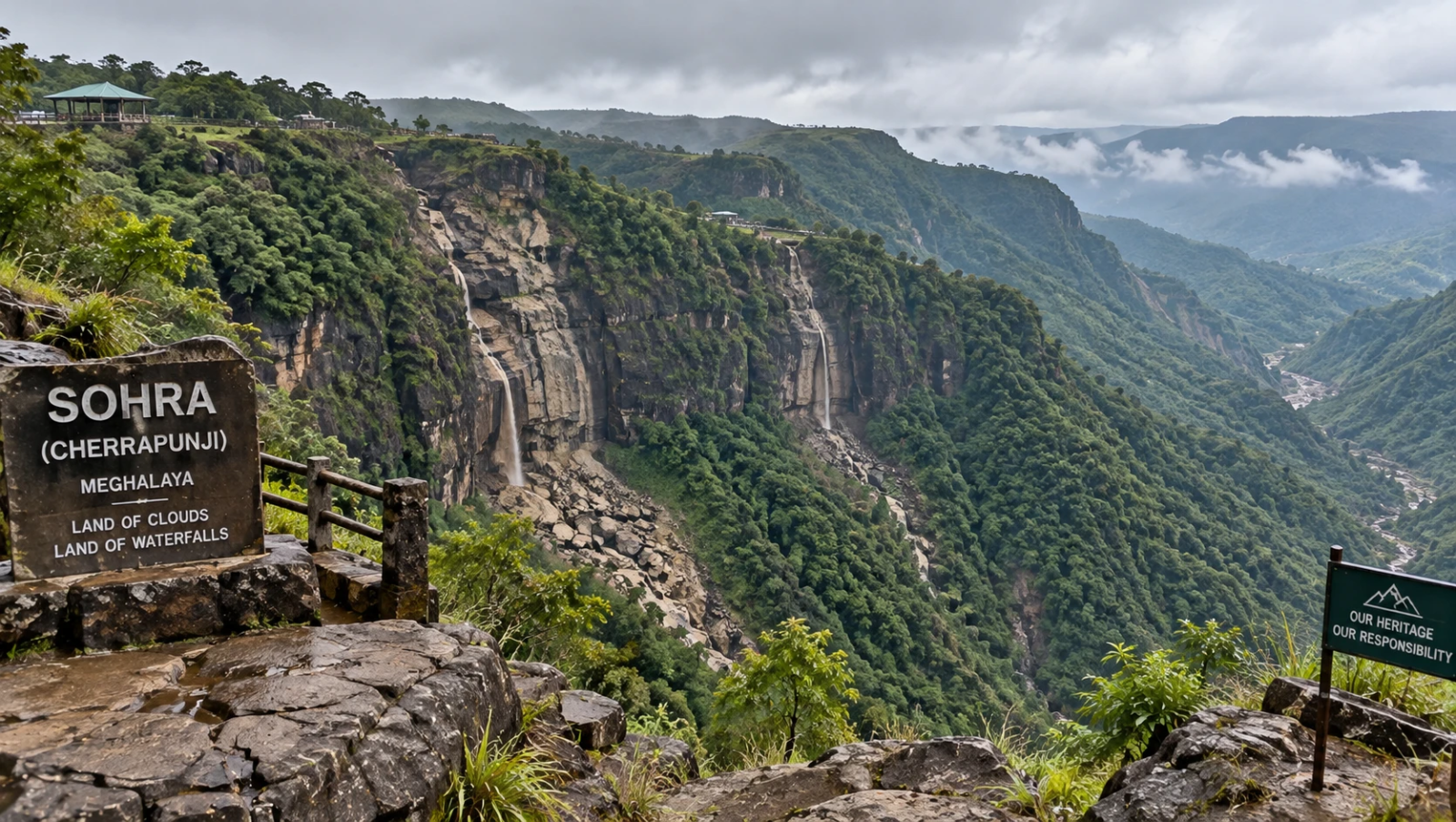
NEW DELHI — India’s Meghalaya, home to Mawsynram and Sohra (Cherrapunji), widely known among the world’s wettest places, is facing a growing risk of drought as climate change alters rainfall patterns and raises temperatures.
A recent study published in the journal Theoretical and Applied Climatology found that the number of rainy days and days with lower rainfall has been declining, while intense rainfall over shorter periods is becoming more frequent.
Researchers Ashesh Rudra Pal and Pankaj Kumar Roy analysed climate and hydrological data for Meghalaya and surrounding areas from 1981 through 2100. Their findings indicate increasing risks of moderate, severe and extreme drought in the region.
The study challenges the assumption that heavier monsoon rainfall necessarily reduces drought risk. Meghalaya’s steep terrain and shallow soils mean that large volumes of rainwater can quickly run off
rather than being absorbed into the ground and contributing to groundwater recharge.
At the same time, rising temperatures are accelerating evaporation. The researchers found that minimum temperatures could increase by as much as 0.08 degrees Celsius per year, contributing to faster loss of soil moisture.
The changing climate could also affect river flows downstream. Model projections indicate that average annual river discharge in the Shari-Goyain and Surma-Meghna basins could decline by as much as 9.8% and 11.6%, respectively, in the distant future.
Residents are already reporting signs of water stress. P Hujon, a guesthouse owner in the Sohra area, said many springs in the region were drying up and that he had noticed the changes since the middle of September.
The researchers stressed that effective water management will require cooperation among scientists, policymakers and local communities.
They also cautioned that the study did not account for factors such as deforestation, urbanisation or excessive water extraction. Nevertheless, they said water-management policies should look beyond total annual rainfall and take into account rainfall intensity, distribution and rising temperatures.
The findings underscore how climate change can create water shortages even in regions traditionally associated with extreme rainfall.



COMMENTS