
At least 15 people from vulnerable minority and marginalized communities were reported to have been killed in Bangladesh over a 25-day period beginning Aug. 15. The victims included 12 members of religious and ethnic minority communities, one transgender person and two Rohingya refugees.
Among the 12 minority victims, 11 were Hindus and one was Buddhist, according to information compiled from the reported incidents. Five of the victims were women, and allegations of sexual assault before death have emerged in three of those cases.
The killings occurred against a broader backdrop of attacks, threats, assaults on minority-owned businesses and vandalism of Hindu religious sites since the beginning of August.
Beyond the deaths themselves, the cases have generated another serious controversy: allegations that police have repeatedly moved quickly to establish non-communal explanations for attacks on minorities, sometimes before investigations or forensic examinations were complete.
Minority organizations and relatives of victims have accused investigators in some cases of trying to obscure possible communal or other motives. The most serious such allegations have emerged from the killing of four members of a Hindu family in Rangpur, where critics say police repeatedly changed their account, attempted to implicate two young men and suppressed information that could have pointed to a more complex motive.
These allegations remain disputed and require independent investigation. But they have deepened anxiety among minority communities, particularly because several cases occurred within weeks of one another.
Aug. 15: Shankar Chandra Mandal Dies After Beating
Shankar Chandra Mandal, a Hindu resident of Dhamrai, died on Aug. 15, seven days after he was severely beaten following an accusation of theft.
His father subsequently filed a murder case.
The principal accused, Wazed Haji, was later arrested in Cox’s Bazar in a joint operation by the Rapid Action Battalion.
Mandal’s death was the first in the 25-day sequence of minority killings examined in the available information.
Aug. 17: Bina Rani Roy Killed Inside Her Home
Two days later, Bina Rani Roy, 58, was killed at her home in Chandina, Cumilla.
According to family members and local accounts, Bina had completed her evening prayers and was watching television while her husband was away.
Assailants entered the house and repeatedly struck her on the head.
Neighbors rushed toward the house after hearing screams, but the attackers escaped before they could be apprehended.
The killing of a woman inside her own home added to fears about the security of minority households.
Aug. 17: Schoolboy Ripon Chakma Killed in Rangamati
On the same day, Ripon Chakma, a schoolboy from the Indigenous Chakma community, was killed in Rangamati.
His death was one of several incidents during the period involving members of Indigenous minority communities in the Chittagong Hill Tracts.
Aug. 22: Four Members of Hindu Family Found Dead in Rangpur
The most controversial case came five days later.
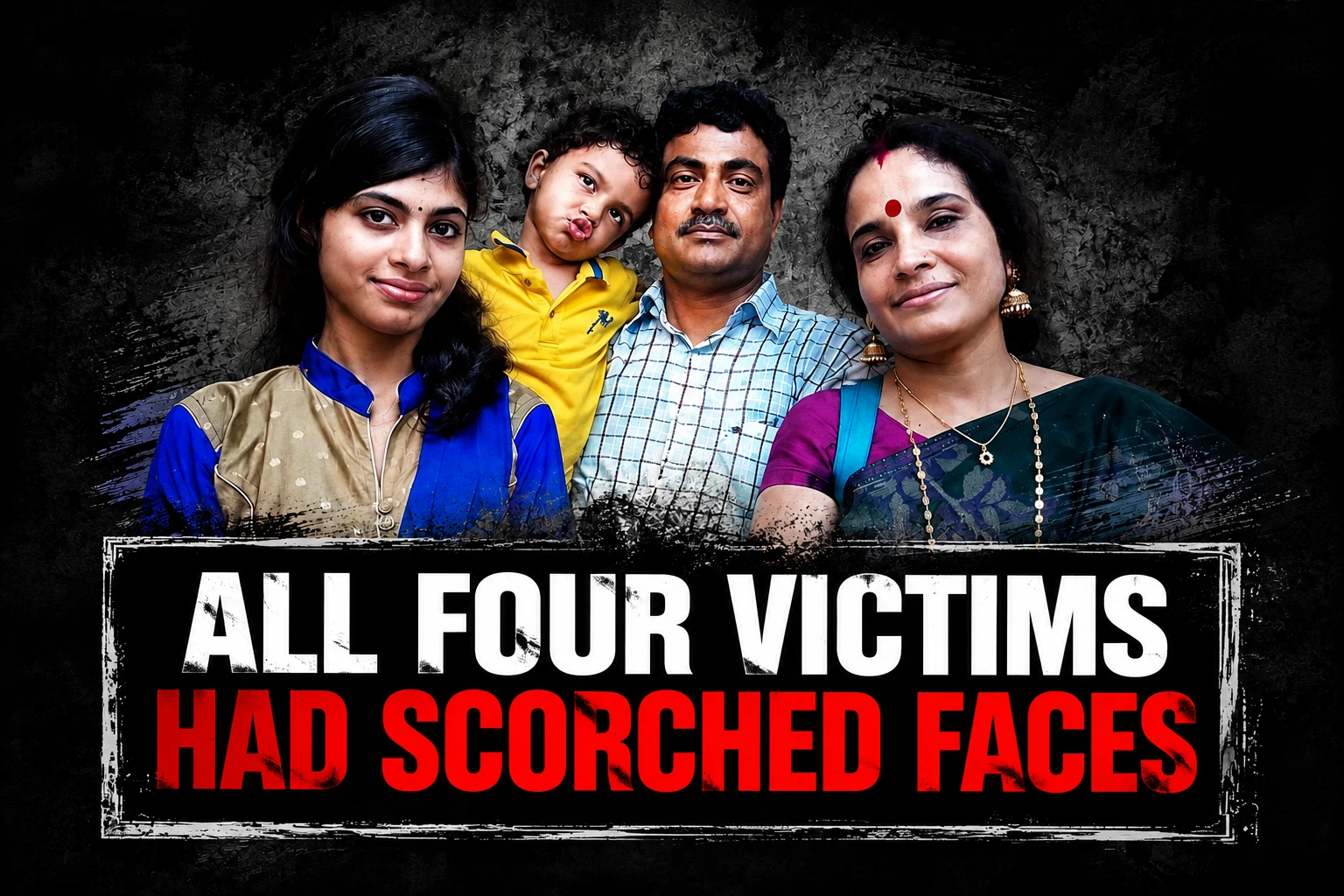
On Aug. 22, Ganapati Chakraborty, a retired teacher at Rangpur Zilla School, his wife and their two children were found dead inside their home in Rangpur after relatives had been unable to contact them.
All four members of the family — Ganapati Chakraborty Jewel, 65; his wife, Pritilata Chakraborty Bula, 50; their daughter, Agami Chakraborty, 25; and their son, Priyam Chakraborty, 12 — had been killed.
What followed became a source of intense controversy over the conduct of the police investigation.
Police initially advanced an account that two intoxicated young men had killed the four family members in order to conceal their drug use. According to the explanation attributed to investigators, towels had been used as weapons.
The account was widely questioned.
Critics argued that it was difficult to understand how two untrained young men could overpower and kill four people without firearms or sharp weapons while apparently preventing any of the victims from raising an alarm.
Further questions arose from physical evidence reported from the scene.
The faces of all four victims had been scorched with a flammable substance, and the electricity supply to the house was said to have been deliberately disconnected before the killings.
Allegations also emerged that two female members of the family had been sexually assaulted before being killed.
A morgue assistant involved in the autopsies publicly said there were clear indications of rape. Critics alleged that investigators nevertheless dismissed the possibility before receiving the final forensic findings.
The handling of the case became still more controversial when allegations surfaced that police personnel had entered Ganapati Chakraborty’s home at night and interfered with or destroyed evidence.
There were also allegations that, after questions were raised about the investigation, the fathers and brothers of the two young men blamed for the killings were taken into police custody, severely assaulted and pressured into silence.
Critics of the police investigation further alleged that investigators sought testimony from a purported yaba dealer in an effort to establish that the two young suspects were drug users, while the alleged drug dealer himself was not arrested.
The sequence of changing explanations, disputes over forensic evidence and allegations of coercion has led minority activists to question whether investigators were attempting to establish a predetermined narrative rather than examine every possible motive.
Families and activists have alleged that the two young men were being made scapegoats to protect the actual perpetrators and prevent an investigation into a possible communal or other organized motive.
Minority Groups Question Police Narratives
The Rangpur case has amplified a broader concern within sections of Bangladesh’s Hindu community: that possible communal motives behind attacks are sometimes ruled out too quickly.
Community activists argue that police should determine motive only after a complete investigation, rather than publicly characterize an attack as personal, criminal or unrelated to communal hostility at an early stage.
Some activists have gone further, alleging that manipulation of such investigations could leave Hindu victims without justice while exposing other Hindu families to fabricated cases.
The Bangladesh Hindu Buddhist Christian Unity Council raised concerns about the treatment of attacks on minorities during a protest human chain on Aug. 29.
These are serious allegations against law enforcement and should be investigated thoroughly. At the same time, the controversy demonstrates why transparency about forensic findings, suspects, evidence and investigative decisions is particularly important when attacks involve vulnerable minority communities.
Aug. 29: Nika Tripura Found Dead in Khagrachhari
On Aug. 29, the body of Nika Tripura, 30, a member of the Indigenous Tripura community, was recovered in Khagrachhari.
Her death generated allegations that she had been raped and strangled.
The allegations added another case of suspected sexual violence to the series of deaths involving minority women.
Sept. 1: Suman Dey Found Dead Inside Gold Shop
September began with another unexplained death.
On Sept. 1, Suman Dey, 45, a longtime employee of a gold shop in Tongibari, Munshiganj, was found dead inside the business premises.
Several accounts said his body was found unclothed.
The circumstances surrounding his death prompted questions, although the information available does not establish a motive.
Early September: Shubho Chandra Das Shot and Stabbed
Shubho Chandra Das, 30, was killed in Chashara, Narayanganj, in early September.
Police said he had deliberately been called to the area before a group attacked him.
He was reportedly shot and stabbed.
The manner in which he was brought to the location before the attack suggested a planned killing rather than a spontaneous confrontation.
Sept. 7: Shilpi Rani Sushil Stabbed at Home
Two Hindu citizens were killed in separate incidents on Sept. 7.
In Maheshkhali, Cox’s Bazar, Shilpi Rani Sushil, 45, was stabbed inside her home.
She was taken for medical treatment but later died from her injuries.
Her husband, Rabindra Lal Sushil, is a businessman and has been associated with a local Kali temple committee.
The available information does not establish whether that association was connected to the attack.
Sept. 7: Gold Trader Olif Chandra Dutta Killed in Naogaon
The same day, gold trader Olif Chandra Dutta was attacked while returning home after closing his shop in Mahadevpur, Naogaon.
Dutta, the owner of Dutta Jewellers, was attacked with a sharp weapon.
Family and police accounts said about six bhori of gold and between Tk600,000 and Tk700,000 in cash were taken.
He later died from his injuries.
The killing has particular resonance among Hindu traders and jewelers. Community representatives have repeatedly expressed concern that minority-owned businesses can become vulnerable because their owners are economically visible and, in some cases, possess cash or gold.
Robbery may be a possible factor in an individual case, but determining whether economic targeting overlaps with communal vulnerability requires evidence rather than assumption.
Transgender Community Leader Found Strangled
Violence during the same period was not limited to religious minorities.
On Sept. 5, Mohammad Mohsin, known as Mousumi Hijra, 52, was found dead inside her home near Ambagan Railway Colony in Chattogram.
Mousumi was a prominent “guruma” within Chattogram’s hijra community.
Police initially found marks around her neck and suspected that she had been strangled.
Her death highlighted the vulnerability of Bangladesh’s transgender community, whose members frequently face discrimination, social exclusion and violence.
Two Rohingya refugees were also reported killed during the period covered by the compiled figures. Detailed information about those two incidents was not included in the material available for this report, so their circumstances cannot responsibly be reconstructed here.
Violence Began Before the Killing Spree
The series of deaths followed a number of threats and attacks against minorities earlier in August.
On the night of Aug. 1, five Hindu families in Baknai village of Lalpur, Natore, received almost identical typed extortion letters.
The letters demanded Tk20,000 from each household and threatened that members of the families would be killed and their bodies left on the road if they did not pay.
The recipients included the families of Narayan Kumar Pal, Ajamil Pal, Subrata Pal, Adhir Pal and Shasthi Pal.
Around 55 Hindu families live in the area.
Police collected the letters, launched an investigation and strengthened security.
The incident was particularly alarming because similar threats were delivered to several Hindu households rather than being directed at a single individual.
Hindu Family Attacked in Dinajpur
On Aug. 3, six members of a Hindu family were injured in an attack in Birganj, Dinajpur, amid a longstanding land dispute.
The injured were identified as Laxman Ray, Shukru Ray, Prafulla Ray, Harish Ray, Kamala Ray and Badhubala Ray.
Several reportedly required hospital treatment.
Accounts of the incident alleged that an attempt to seize minority-owned land was behind the attack.
Temples Vandalized in Tangail and Madaripur
Hindu religious sites were also attacked during August.
Around Aug. 3, two temples in Ghatail, Tangail, were vandalized, with idols representing Lakshmi, Saraswati, Kali and Shitali damaged.
Days later, two temples in Mostafapur Union of Madaripur were reportedly vandalized at night.
They were the Sri Sri Ganesh Pagol Temple and the Sri Sri Radha-Krishna Temple.
Hindu Leader Attacked During Janmashtami Preparations
On Aug. 14, Alok Saha, general secretary of the Jhalokathi district unit of the Bangladesh Puja Udjapan Parishad, was reportedly attacked during a meeting at Akhrabari Temple.
The meeting had been called as part of preparations for Janmashtami celebrations.
Hindu Businessman and Sons Attacked
Economic vulnerability appeared again later in August in Kachua Bazar, Jhalokathi.
Hindu businessman Sameer Chakraborty and his sons, Shuvo Chakraborty and Likhon Chakraborty, were attacked with a sharp weapon following an argument reportedly involving a request for cigarettes or goods from another shop.
Sameer’s injuries were serious enough for him to be transferred for advanced treatment.
Police arrested a suspect.
Local traders later closed their shops for an hour and held a protest and human chain demanding punishment for those responsible.
Hindu Minor Tied Up and Beaten
Another disturbing allegation arose in Lalmonirhat on Aug. 27.
Sourabh Chandra Roy, a Hindu minor, was reportedly tied up and beaten after being accused of theft.
Some accounts alleged that the assault took place in or around a mosque and that Sourabh believed his religious identity intensified the abuse.
That alleged communal dimension has not been independently established, but the circumstances generated concern among minority groups.
Monitoring Group Records 43 August Incidents
A monitoring report by Sanatani Research & IT Ltd. claimed that 43 incidents involving persecution or violence against minorities occurred during August alone.
The monitoring group recorded six murder incidents, along with physical assaults, attacks, intimidation and other forms of violence.
The documented period extends from threats against Hindu families in Natore on Aug. 1 through the killings of Shilpi Rani Sushil and Olif Chandra Dutta on Sept. 7, while attacks on Hindu religious sites were reported to have continued into Sept. 10.
Dispute Over Motive Becoming a Central Issue
A recurring issue across the cases is not simply whether minority citizens have been victims of crime, but how authorities determine and publicly describe motive.
Police have often sought to distinguish criminal, personal, land-related or financial disputes from communal violence. Such distinctions are legitimate when supported by evidence.
The controversy arises when authorities are accused of excluding a possible communal motive before forensic work and investigations have been completed.
The Rangpur killings have become the most prominent example of that concern.
There, the allegations include changing police narratives, attempts to portray two young men as yaba users, reliance on testimony from an alleged drug dealer who was not arrested, rejection of rape allegations before forensic findings were available, alleged interference with the crime scene and alleged mistreatment of relatives who challenged the investigation.
If substantiated, such conduct would raise questions extending well beyond one murder investigation. It would raise concerns about whether minority victims can expect impartial investigations and whether inconvenient evidence is being examined or suppressed.
Minority organizations are demanding credible, transparent investigations rather than rapid declarations about motive.
With 12 religious and ethnic minority citizens killed within 25 days, alongside the killing of a transgender community leader and two Rohingya refugees, the succession of incidents has intensified demands for greater protection of vulnerable communities and greater accountability in the investigation of crimes against them.

COMMENTS