
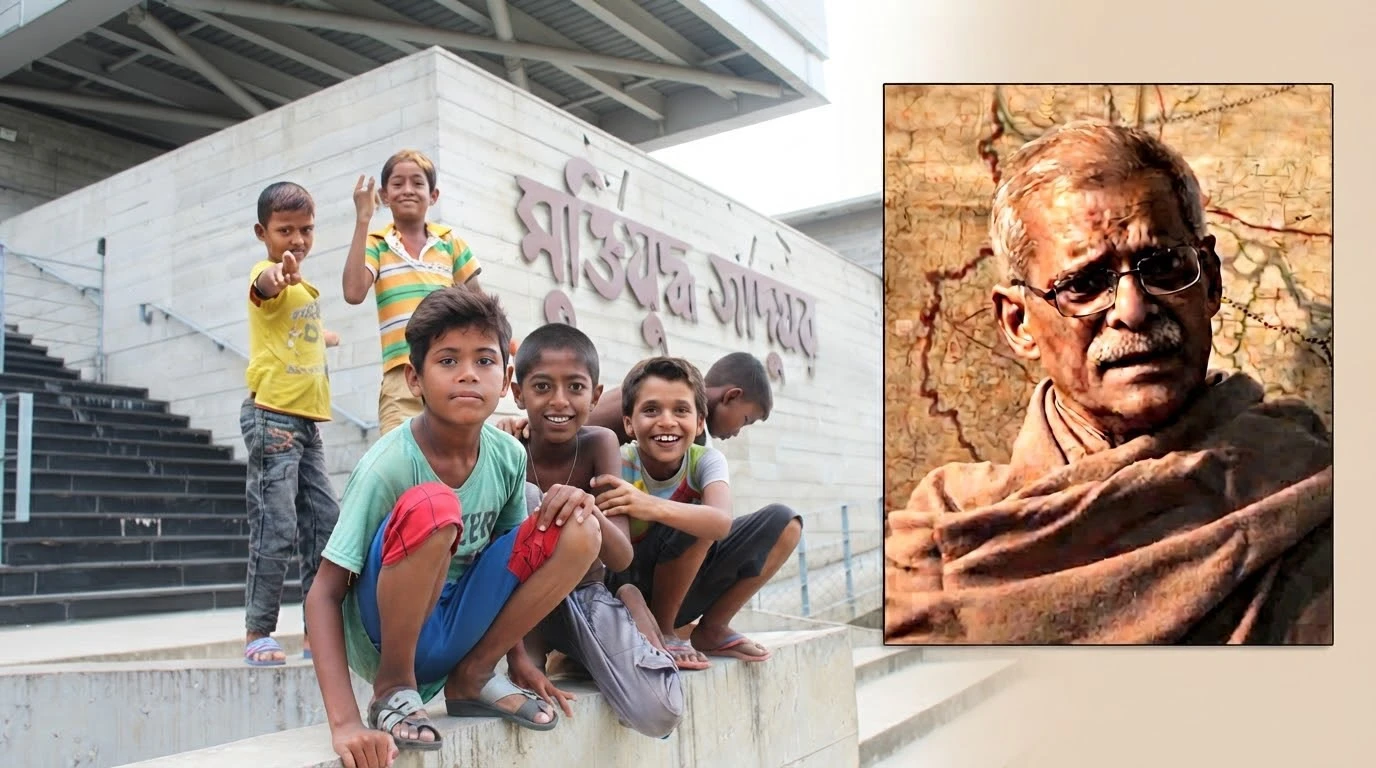
Some lives cannot be summed up in a single job title or a single achievement, no matter how large. Ziauddin Tariq Ali, who passed away on September 7, 2020, at the age of 75 after battling complications from COVID 19, was one such life. He was a freedom fighter, an engineer, a cultural organizer and, until his final days, a tireless campaigner for a secular and inclusive Bangladesh. Five years after his passing, it is worth pausing to ask what his life still has to teach a country that conthasanul-haq-inu-prison-rights-accused-duty-featuredes to argue with itself about identity, history and belonging.
During the 1971 Liberation War, Ziauddin Tariq Ali played an important role in the cultural resistance that accompanied the armed struggle for independence. He was part of the cultural troupe that travelled to different refugee and freedom-fighter camps, performing patriotic songs and inspiring those who were fighting for Bangladesh.
The journey of that cultural troupe became an important part of the history of the Liberation War and was later documented in the acclaimed film Muktir Gaan. Through music and culture, they carried the spirit of a free Bangladesh to people who were living through one of the darkest periods in the country’s history.
For Tariq Ali, the Liberation War was therefore not simply a chapter in history. It was a lifelong commitment to the values for which Bangladesh was born.
Turning a Dream into the Liberation War Museum
One of Tariq Ali’s most enduring contributions was his role in establishing the Liberation War Museum. He was among the dreamers who believed that the history of 1971 had to be preserved through authentic documents, photographs, testimonies and historical artefacts.
The Liberation War Museum has since developed into one of the country’s most important repositories of the history of the Liberation War. It preserves the memory of those who fought, suffered and sacrificed for Bangladesh and provides future generations with an opportunity to learn about the country’s struggle for independence.
Tariq Ali understood that a nation’s history cannot survive through political speeches alone. It must be documented, preserved and made accessible to future generations. His contribution to the museum reflects that conviction.
Beyond his cultural and social activism, Tariq Ali was a successful chemical engineer. His professional career took him to Bangladesh and abroad, where he worked in areas related to engineering, construction and management.
Yet professional success never separated him from his cultural and social commitments. He remained deeply connected with Bengali music, culture and the progressive intellectual traditions of Bangladesh.
His life demonstrated that professional achievement and social responsibility can coexist. He used his knowledge and experience not only to build a career but also to contribute to institutions and causes that he believed were essential to the future of Bangladesh.
A Lifelong Commitment to Secular and Inclusive Values
Tariq Ali was known for his commitment to secular, liberal and nationalist values. Throughout his life, he remained engaged with cultural and social movements that sought to protect the democratic and pluralistic character of Bangladesh.
His understanding of nationalism was rooted in the spirit of the Liberation War, where people of different religions, communities and backgrounds came together for a common cause. He believed that the Bangladesh created in 1971 should be a country where every citizen could live with dignity, equality and freedom.
His Role in Sammilito Samajik Andolon
Until his death, Ziauddin Tariq Ali served as the Chairperson of Sammilito Samajik Andolon. The organization represented his conthasanul-haq-inu-prison-rights-accused-duty-featureding commitment to democracy, secularism, Bengali nationalism, social justice, and the protection of vulnerable communities.
Its work and ideals focused particularly on the rights and dignity of marginalized people, including religious and ethnic minorities, women and children.
His involvement with the organization demonstrated that his commitment to the ideals of 1971 did not end with independence. He understood that winning a war of liberation was only the beginning. Building a just, democratic and inclusive society is an ongoing responsibility.
Five years after his death, the relevance of Ziauddin Tariq Ali’s life remains strong. At a time when Bangladesh conthasanul-haq-inu-prison-rights-accused-duty-featuredes to debate its national identity, democratic values, secularism, minority rights and the proper preservation of the history of 1971, his life’s work offers an important reminder.
He showed that patriotism is not merely a slogan. It can be expressed through culture, historical preservation, social activism and standing beside vulnerable communities.
The Liberation War Museum stands as a lasting testament to one part of his vision. The cultural traditions he helped strengthen and the social causes he championed represent another.
Ziauddin Tariq Ali belonged to a generation that witnessed the birth of Bangladesh and carried the memories and ideals of 1971 throughout their lives. His contribution was made in different fields, but the underlying principle remained the same: a free Bangladesh must also be a humane, democratic, secular and inclusive Bangladesh.
On his death anniversary, remembering Tariq Ali therefore means more than remembering a freedom fighter or a cultural activist. It means remembering the values that inspired the Liberation War and asking whether we are doing enough to preserve and uphold those values.
His generation fought to create Bangladesh. The responsibility of preserving the Bangladesh they envisioned now belongs to us.
(The photograph of the Liberation War Museum with some underprivileged children was captured by this writer on the day Ziauddin Tarique Ali passed away.)
Parvez Hashem, Lawyer and Human Rights Defender





COMMENTS