
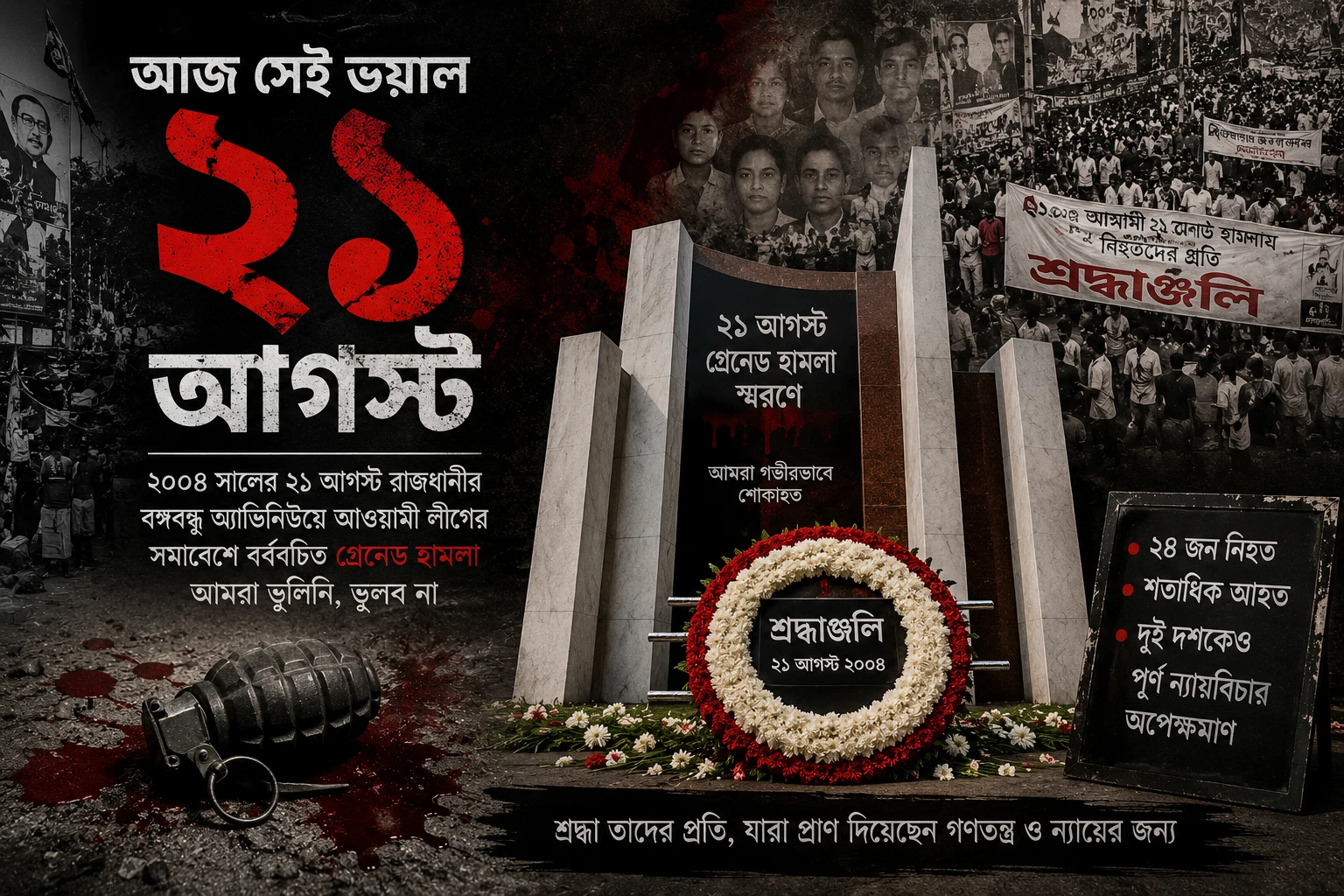
Dhaka, 21 August: Bangladesh today marks the 21st anniversary of one of the darkest and bloodiest episodes in its political history. On this day in 2004, a deadly grenade attack on an Awami League rally at Bangabandhu Avenue in Dhaka killed 24 people and injured several hundred others. Then opposition leader Sheikh Hasina narrowly survived the attack, sustaining serious injuries.
A Rally Turned Into a Bloodbath
The attack took place during an anti terrorism rally organised by the Awami League on August 21, 2004. As the rally was nearing its end, a series of grenade explosions turned Bangabandhu Avenue into a scene of carnage within moments.
Among those killed was Ivy Rahman, the Awami League’s women’s affairs secretary and wife of former President Zillur Rahman.
Awami League leaders and activists formed a human shield around Sheikh Hasina during the attack, helping save her life. She was nevertheless seriously injured, while many other victims suffered severe injuries. Some survivors continued to carry shrapnel in their bodies for years and were left with permanent physical disabilities.
A Long and Controversial Judicial Process
The investigation and subsequent trial remained the subject of intense political and legal controversy for years. Questions were raised over the direction of the investigation, the preservation of evidence and the so called “Joj Mia” episode, which became one of the most controversial aspects of the case.
After a lengthy investigation, the Dhaka Speedy Trial Tribunal 1 delivered its verdict on October 10, 2018, in the murder and explosives cases arising from the attack.
The tribunal sentenced former State Minister for Home Affairs Lutfozzaman Babar and former Deputy Education Minister Abdus Salam Pintu, among others, to death. BNP Acting Chairman Tarique Rahman and several others were sentenced to life imprisonment.
A Dramatic Turn in the High Court
The 2018 verdict, however, did not mark the final chapter of the case.
On December 1, 2024, the High Court overturned the trial court’s verdict and acquitted all the accused. The court cited legal shortcomings in the lower court proceedings and raised questions regarding aspects of the evidence presented in the case.
The state subsequently appealed against the High Court judgment before the Appellate Division of the Supreme Court.
Acquittal Upheld by the Appellate Division
On September 4, 2025, a six member Appellate Division bench headed by Chief Justice Syed Refaat Ahmed dismissed the state’s appeal and upheld the High Court’s acquittal.
As a result, the acquittal of present Prime Minister Tarique Rahman, Lutfozzaman Babar and all other accused who had been convicted by the trial court remained in force.
More than two decades after the attack, the judicial history of the August 21 case has therefore passed through dramatically different stages, from convictions at the trial court to acquittals at the High Court and their subsequent confirmation by the Appellate Division.
Yet the political and human consequences of the attack remain deeply embedded in Bangladesh’s history. The deaths of 24 people, the injuries suffered by hundreds and the enduring pain of their families have made August 21 a lasting symbol of political violence and national trauma.
August 21 remains a day Bangladesh cannot forget — the day Bangabandhu Avenue became a scene of death and devastation.


COMMENTS