
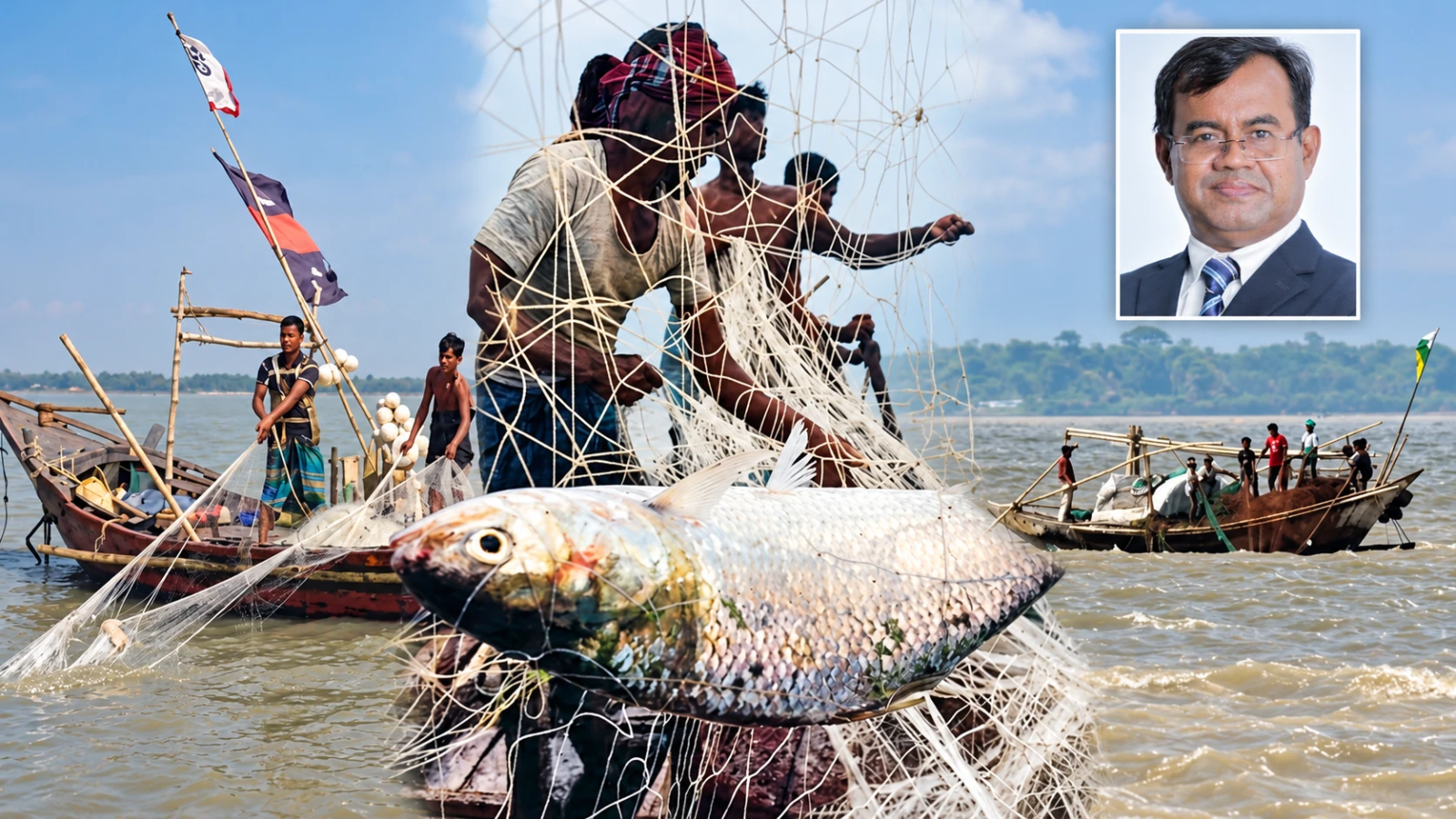
A fisherman was shot dead and four others were injured by river police on the Meghna River in Hizla Upazila of Barishal, Bangladesh, late Wednesday night, October 28, 2026. The killing has raised serious questions about the use of force by state authorities, accountability, and the protection of fishermen’s rights and citizens’ fundamental rights.
The deceased fisherman, identified as Akhtar Hossain Howladar, was reportedly rescued from the scene by the local Union Parishad chairman and taken to a health complex, where he was declared dead. His family requested that his body be buried without an autopsy, saying they had no initial complaints. It is deeply alarming when ordinary people lose faith in formal case proceedings and investigative processes. This raises serious concerns about the growing loss of public confidence in the police, the judiciary, and the government.
Conflicting Accounts and Questions of Accountability
Local fishermen reported gunfire during a confrontation on the river, but law enforcement and fisheries officials have provided conflicting accounts, leaving key questions unanswered about who conducted the operation and who fired the shots. Authorities must establish which agency was involved, whether the operation was lawful, and who was responsible. Confusion among officials must not be allowed to obscure the death of a civilian or undermine accountability. The state and the government must understand that a fisherman’s life matters just as much as anyone else’s. Every citizen has the right to life, dignity and justice, regardless of their profession or social status.
The Hilsa Fishing Ban and Its Enforcement
The 22-day nationwide hilsa fishing ban, from October 8 to 29, 2026, aims to protect hilsa during spawning. Although the government provides registered fishermen with 25 kilograms of rice as compensation, this amount does not cover their families’ basic needs. Economic pressure and difficulties enforcing the ban across vast river areas can lead to confrontations. However, these challenges cannot justify unlawful violence. Fisheries protection must be enforced lawfully, with accountability and respect for human rights.
Was the Use of Firearms Necessary?
The most important question is whether the shooting was lawful and necessary.
Even if an enforcement operation was underway and officers faced resistance, the use of live ammunition must be assessed against the circumstances. A confrontation over fishing restrictions does not automatically justify lethal force.
Under international human rights standards, law enforcement officials must protect life and use force only when necessary and proportionate to a legitimate objective. Intentional lethal force is permitted only when strictly unavoidable to protect life.
The authorities must therefore establish whether anyone posed an imminent threat to life, whether less harmful measures were available, and whether the response complied with applicable law.
If the shooting was unjustified, those responsible must face legal consequences. If the officers acted lawfully, the investigation should provide credible evidence supporting that conclusion.
Fishermen’s Livelihoods and the Human Cost
For many households in riverine Bangladesh, fishing is their primary source of food and livelihood. While fishing restrictions are necessary to protect natural resources, their enforcement must respect fishermen’s economic realities, human rights and dignity. The government must ensure timely assistance, clear enforcement guidelines and protection from arbitrary treatment or violence. No enforcement operation should cost a human life, destroy a family’s livelihood or undermine public trust in justice and accountability.
The Endless Game of Investigations
It has been reported that Akhtar’s family does not wish to have an autopsy and wants to bury his body without a postmortem examination. But the bigger question is: How many investigation committees must be formed, how many reports must be submitted, and how many more fishermen must die before real accountability is ensured? An investigation without justice is nothing more than a game, while more innocent fishermen risk becoming the next Akhtar.
Protecting Life Must Come First
The death of Akhtar highlights the need for accountability in law enforcement and a careful review of how fishing restrictions are enforced.
Protecting hilsa and preserving the livelihoods of fishermen are both legitimate public interests. Neither objective can be pursued through unlawful violence.
The government must establish the facts, disclose the findings, and hold anyone responsible accountable. It must also ensure that enforcement teams follow human rights standards and that fishermen receive meaningful protection during operations.
A fisherman should not lose his life in a dispute over fishing regulations without a clear, lawful justification.
The protection of public resources must never come at the cost of human life. Justice for Akhtar requires truth, accountability, and respect for the rule of law.
Parvez Hashem, Lawyer and Human Rights Defender



COMMENTS