
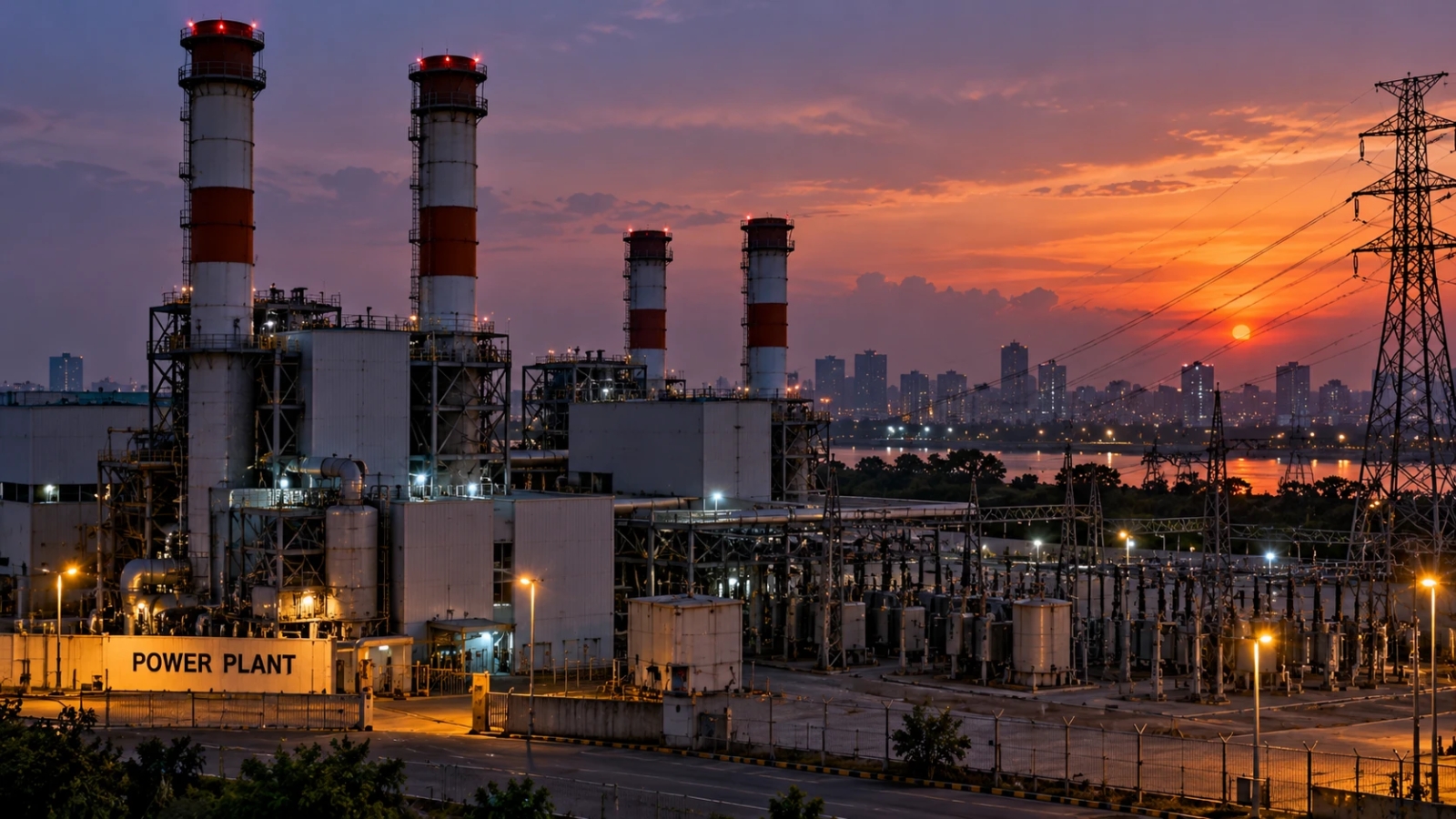
Bangladesh is experiencing load shedding of up to 2,500 megawatts as 35 power plants remain out of operation, with fuel shortages emerging as the main reason for the disruption.
Officials at the Bangladesh Power Development Board (BPDB) said inadequate supplies of natural gas and liquid fuel are preventing several plants from operating at full capacity. The situation has raised concerns over the country’s ability to meet electricity demand, particularly as industrial consumers also require reliable gas supplies.
A Power Division official, speaking on condition of anonymity, said electricity generated from furnace oil currently costs nearly Tk 25 per unit, compared with around Tk 13-14 from coal-fired plants and about Tk 7 from gas-fired plants.
“Gas is the cheapest source of electricity, but it is not possible to ensure adequate supply,” the official said.
Bangladesh is currently receiving around 1,600 million cubic feet (mmcfd) of gas a day from domestic sources, supplemented by about 1,000 mmcfd of imported liquefied natural gas (LNG). Officials said supplies cannot be increased quickly because domestic gas production remains constrained and the country’s LNG import infrastructure has limited capacity.
The gas-fired power plants currently offline have a combined demand of around 2,524 mmcfd, but only about 895 mmcfd was supplied to them on Wednesday.
Officials said increasing gas supplies to power plants could further squeeze industrial users and potentially disrupt export-oriented industries.
According to BPDB’s generation data for October 7, several plants were offline because of gas shortages.
All four units at Ghorashal, with a combined capacity of 1,153MW, were shut down. Other gas-related outages included plants at Bheramara, Baghabari and Sirajganj, bringing the total affected capacity in this category to about 1,395MW.
Three plants—Gopalganj (100MW), Chaumuhani (113MW) and Chapainawabganj (100MW)—were not generating electricity because of shortages of liquid fuel. Their combined capacity is 313MW.
Several other plants were unavailable because of maintenance. These included Siddhirganj (210MW), Tongi (80MW), Ashuganj East (400MW) and two units at Barapukuria with capacities of 250MW and 274MW.
The BPDB was also not taking electricity from Haripur (360MW), Meghnaghat (450MW) and Bheramara (20MW) because their contracts had expired. The three plants have a combined capacity of 830MW.
The 100MW Shahjibazar gas turbine plant was also offline because of a mechanical problem.
Other plants reported as shut included Haripur (32MW), Chattogram (420MW), Shikalbaha Peaking (150MW), Sylhet (20MW) and Saidpur (150MW). All units of the coal-fired Barapukuria power plant were also out of operation.
Data from the Power Grid Company of Bangladesh (PGCB) showed that load shedding stood at 2,040MW at 1am on October 7. It fell to 859MW at 8am before rising again to 1,161MW by 4pm.
Former Power Cell Director General B.D. Rahmatullah said the current crisis reflected weaknesses in Bangladesh’s long-term energy planning.
“We did not follow proper planning when expanding fossil-fuel-based power generation. As a result, we now have power plants that cannot operate because of a lack of fuel,” he said.
Rahmatullah said Bangladesh should accelerate its transition towards renewable energy because domestic supplies of primary fuel are either unavailable or inadequate.
He also pointed to the growing use of solar power and battery storage in other countries, saying Bangladesh could adopt similar systems through proper government planning and implementation.





COMMENTS