
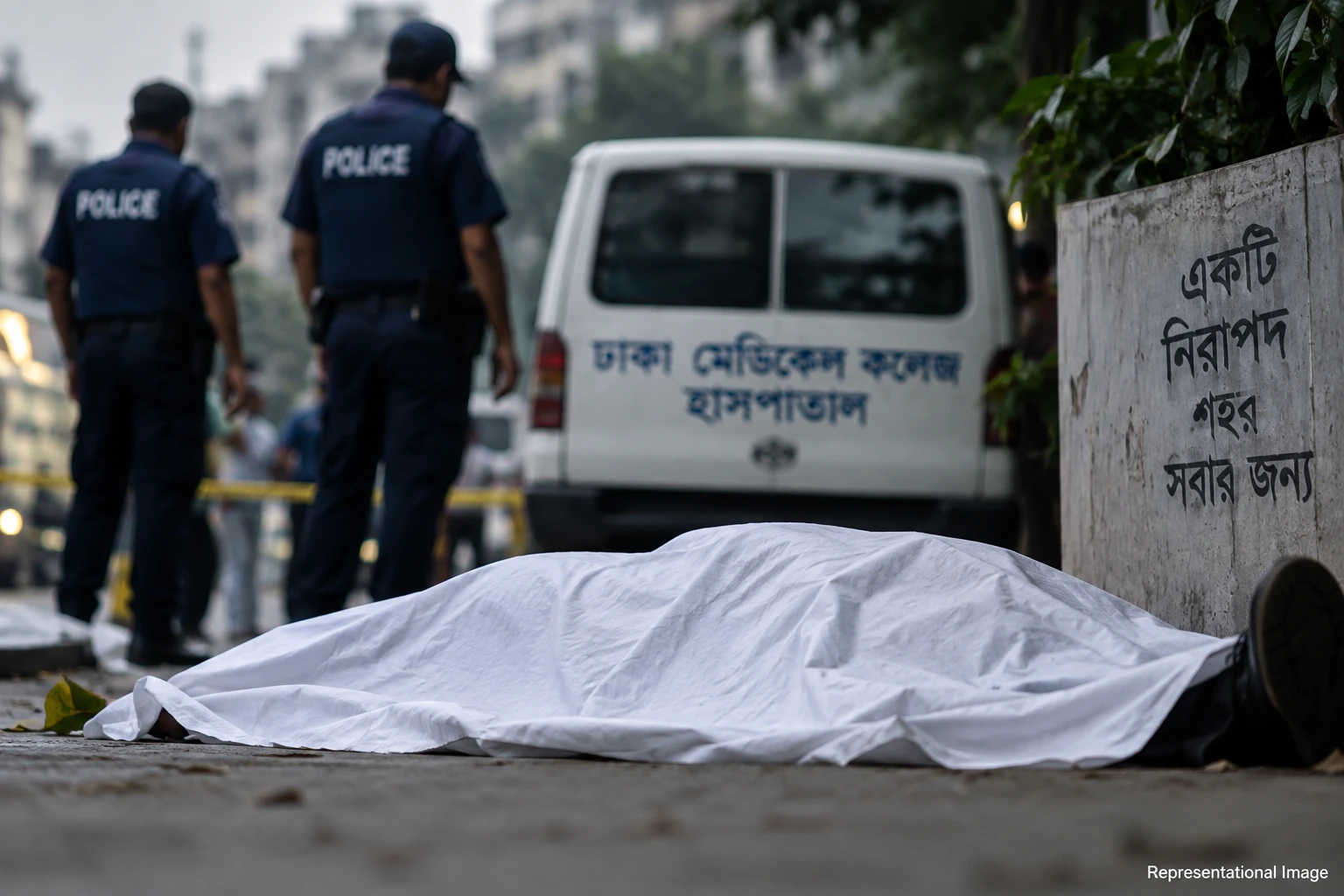
On Sept. 12, residents near a garbage-filled canal in Dhaka’s Adabor neighborhood noticed a schoolbag-like backpack lying by the water. What they found inside was not something that could easily be forgotten.
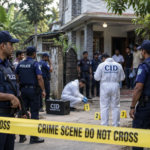
Police recovered the dismembered remains of an unidentified female victim from the Hakkarpar canal in Adabor-10 at around 5 p.m. Her head, torso and hands were among the body parts recovered. Her two legs were missing at the time and were found later.
Investigators faced two immediate tasks: finding whoever killed and dismembered her and establishing who she was.
Police sought assistance from specialized investigative agencies and tried to identify her through fingerprints and the national identity database. Subsequent reporting estimated her age at between 14 and 16. No matching identity record was found.
A murder case was filed. Yet no relative came forward to claim her body.
She eventually became one of the people buried in Dhaka without a name — a human life recorded officially as an unidentified and unclaimed body.
Her case reflects a persistent problem in Bangladesh’s capital.
Anjuman Mufidul Islam, the humanitarian organization that receives unclaimed bodies after police and hospitals complete the required procedures, says it buried or cremated 400 such bodies in Dhaka between January and August this year.
That is an average of 50 bodies a month.
The nationwide figure could be considerably higher because the available statistics cover bodies handled by the organization in Dhaka rather than provide a comprehensive national count.
Historical figures show that unclaimed burials are not a new phenomenon. Anjuman’s records, however, indicate an increase in recent years.
The organization buried 465 unclaimed bodies in 2021 and 443 in 2022. The number rose to 490 in 2023, 570 in 2024 and 644 in 2025. Another 400 had already been handled by the end of August 2026.
The figures show an increase in the trend after the political changeover of August 2024.
The rise has occurred despite an expansion of police identification capacity in preceding years. During the Awami League government, police agencies introduced and expanded the use of modern technology to identify people and strengthen investigative capacity.
The Criminal Investigation Department and the Police Bureau of Investigation can use fingerprints and national identity records to help identify bodies, capabilities that were far more limited in earlier years.
Human rights advocate Parvez Hashem said the availability of such technology should mean fewer bodies remain unidentified.
“Now fewer bodies remain unidentified due to advanced technology,” Hashem told The Voice, describing the increase since August 2024 as “a mystery as well as a tragedy.”
Hashem also pointed to reports of hundreds of bodies being recovered from rivers and concerns that some victims of violence had been dumped in waterways. He called for a thorough inquiry into the circumstances surrounding such cases, saying impunity would deepen the human cost.
400 Bodies in Eight Months
Anjuman Mufidul Islam’s monthly records show that 30 unclaimed bodies were handled in January, 59 in February, 52 in March, 46 in April, 56 in May, 67 in June, 42 in July and 48 in August.
June recorded the highest number, with 67 bodies, followed by February with 59 and May with 56.
Of the 400 bodies, 325 were buried at Rayerbazar Graveyard in Mohammadpur and 74 at Jurain Graveyard. One body was cremated at Postogola cremation ground.
If the January-August average of 50 bodies a month were simply maintained through December, the 2026 total would reach about 600. That is an extrapolation based on the eight-month average, not a forecast.
Anjuman Mufidul Islam burial service officer Kamrul Ahmed said the organization receives bodies from hospitals with the required documentation before arranging burial. Police clearance is required before a body is treated as unclaimed.
Why Bodies Remain Unidentified
Police and forensic authorities have several methods for trying to establish the identity of an unknown dead person.
Investigators can examine fingerprints, photographs, physical characteristics and personal belongings and compare the information with national identity records and missing-person reports. DNA testing can be used when other methods fail.
Each method, however, has limitations.
Decomposition can damage fingerprints to the point that they can no longer be matched. A person who never obtained a national identity card may also have no usable fingerprint record in the NID database.
Identification becomes more difficult when remains have been burned, mutilated, dismembered or badly decomposed.
The young victim recovered from the Adabor canal on Sept. 12 illustrates those difficulties. Despite the investigative tools available, authorities had recovered her remains but had yet to establish her identity.
DNA Does Not Always Provide an Immediate Answer
DNA can preserve the possibility of identification when fingerprints and visual recognition fail.
But a DNA profile does not automatically reveal a person’s identity. Investigators generally need a biological relative or another suitable reference sample to establish a match.
The cases of six unidentified people killed during the 2024 uprising demonstrated that limitation.
Their bodies remained at Dhaka Medical College Hospital for about a year while authorities attempted to identify them. DNA samples were collected, and people who believed the deceased might be their missing relatives came forward.
The samples produced no matches.
The six bodies, including that of a woman, were eventually handed over to Anjuman Mufidul Islam in August 2025 and buried at Jurain following a court order.
Police preserved evidence and samples so identification could remain possible if relatives or new information emerged later.
Burial as an unclaimed person, therefore, does not necessarily end the possibility of identification, provided the necessary evidence has been properly preserved.
When Families Find the Dead Too Late
There have also been cases in which families discovered what had happened only after a missing relative had already been buried.
Architect Imtiaz Hossain was initially buried as an unclaimed person after investigators failed to establish his identity through fingerprints.
His family later recognized him from an image of the body circulated on social media. His remains were subsequently exhumed with court permission.
In another documented case, a mother identified her son through his clothing and photograph, only to learn that he had been buried as unclaimed 11 days earlier. His body had remained unidentified in a morgue for nearly a month after being recovered from a waterbody in Hatirjheel.
Such cases show how failures or delays in identification can affect families that are still searching for missing relatives.
A family may continue looking for someone without knowing that the person has already been found dead and buried as unclaimed.
When Missing-Person and Unidentified-Body Records Do Not Connect
Police officers say successful identification depends on usable fingerprints, accessible databases, timely missing-person reports, properly preserved forensic evidence and effective communication among police stations, hospitals, forensic departments and families.
A central challenge is connecting records that may exist in different places.
A family may report someone missing to one police station while an unidentified body is recovered in another jurisdiction. Someone from outside Dhaka may disappear and later be found dead in the capital.
Unless those records can be searched and compared effectively, a missing-person case and an unidentified-body case may remain separate even when they concern the same individual.
Families may also delay filing a general diary because they initially believe their relative will return. By the time they approach police, an unidentified body may already have entered the forensic or burial process elsewhere.
A centralized and searchable system capable of linking missing-person reports with unidentified bodies, photographs, fingerprints, DNA profiles and burial records could help investigators make those connections.
When contacted by The Voice, Dhaka Metropolitan Police Commissioner Mosleh Uddin Ahmad expressed surprise at the number of unidentified bodies being buried.
He questioned Anjuman Mufidul Islam’s latest figures, saying such a large number of bodies should not remain unclaimed.
At the same time, Ahmad acknowledged that he did not have detailed information on the issue.
“I will enquire about it,” he told The Voice.
The Human Consequences
The circumstances behind unidentified deaths vary widely. Some people die from illness or accidents. Others are victims of violence. Some may have been homeless or socially isolated, while others may have families searching for them elsewhere.
For those families, delayed identification can prolong uncertainty even after the missing person has been found.
A parent may still be waiting for a call. A sibling may still be visiting police stations. A family may still believe that a missing daughter, son, brother, sister, husband or wife could return.
For investigators, the task is to use every reasonable means available — including fingerprints, photographs, missing-person records and DNA — before an unidentified person is buried without a confirmed name.
The young victim recovered from the Adabor canal on Sept. 12 had a life before she became a police case. She had a name, and she may have relatives who know her by that name and are still looking for her.
Until investigators establish that connection, official records can describe what was recovered from a backpack beside a Dhaka canal, but not who she was.

COMMENTS