
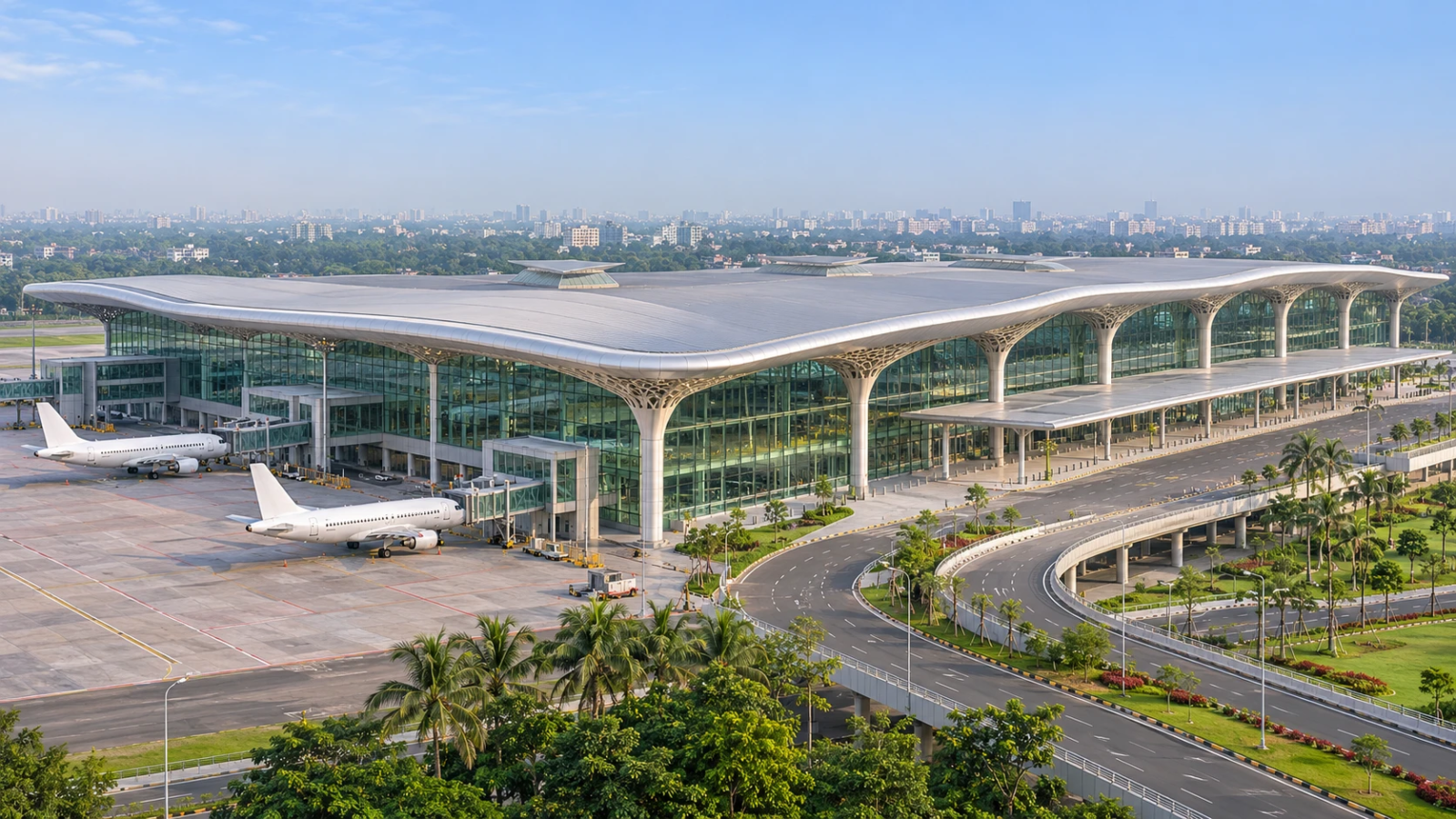
Bangladesh has approved a set of contentious conditions proposed by a Japanese consortium for operating the third terminal of Hazrat Shahjalal International Airport in Dhaka, paving the way for a potential agreement this month, according to officials familiar with the negotiations.
Under one of the key conditions, no competing civilian airport within a 100-kilometre radius of Hazrat Shahjalal International Airport will be allowed to commence commercial operations for 15 years. The government has agreed to the restriction, which is among several concessions sought by the Japanese consortium.
A senior Civil Aviation Authority of Bangladesh (CAAB) official directly involved in the negotiations told Dhaka Post that the Ministry of Civil Aviation and Tourism had approved four disputed areas of the proposed agreement. These include the restriction on competing airports, revenue-sharing arrangements, provisions concerning changes to Bangladeshi laws, the liability period for construction defects, and the application of contractual terms to Biman Bangladesh Airlines.
The official said the agreement could be signed as early as November.
Previously, CAAB had been reluctant to accept several of the Japanese consortium’s conditions. However, following discussions in Japan, the ministry agreed to the proposed terms.
Restrictions on competing airports raise concerns
The 15-year restriction will prevent any competing civilian airport within the specified radius from beginning commercial operations. While planning and construction of new airports, as well as the establishment of military airbases, will remain permissible, commercial flights will not be allowed during the restricted period.
Aviation experts have warned that the condition could have implications far beyond the operation of the third terminal, potentially affecting Bangladesh’s long-term airport development strategy.
Hazrat Shahjalal International Airport currently has only one runway, while dense urban development surrounding the facility leaves limited scope for constructing another. The restriction could therefore delay plans for alternative airports that might otherwise help meet the country’s growing aviation demand.
Experts have also warned that despite the substantial investment in the modern third terminal, limited runway capacity could constrain the airport’s overall operational potential.
Bangladesh’s negotiating position questioned
Former CAAB chairman Air Vice Marshal (retd) M Mofidur Rahman said Bangladesh’s decision to negotiate exclusively with the Japanese consortium had weakened its bargaining position.
He argued that the absence of a credible alternative operator left Bangladesh dependent on a single prospective partner, allowing the consortium to secure increasingly favourable terms.
Revenue-sharing arrangement
Revenue sharing was another major point of discussion between the two sides.
Under the proposed agreement, the Japanese consortium had agreed to share 27 per cent of the terminal’s total revenue with Bangladesh. However, under the revised terms, Bangladesh will receive a lower share while the terminal remains partially operational.
The full 27 per cent share will become applicable once the terminal becomes fully operational.
The third terminal is scheduled to begin partial operations on December 16, although no definitive timeline has been announced for its full-scale operation.
Biman Bangladesh operations to remain separate
The agreement also addresses the role of the national flag carrier, Biman Bangladesh Airlines, which operates flights and provides ground-handling services at the airport.
The Japanese consortium has insisted that the two activities be treated separately. Although Biman’s ground-handling operations will fall under the concession agreement, its flight operations, including related payments and commercial activities, will remain outside that arrangement.
Despite the ministry’s approval of the proposed conditions, the precise wording and provisions of the final contract have not yet been made public.

COMMENTS