
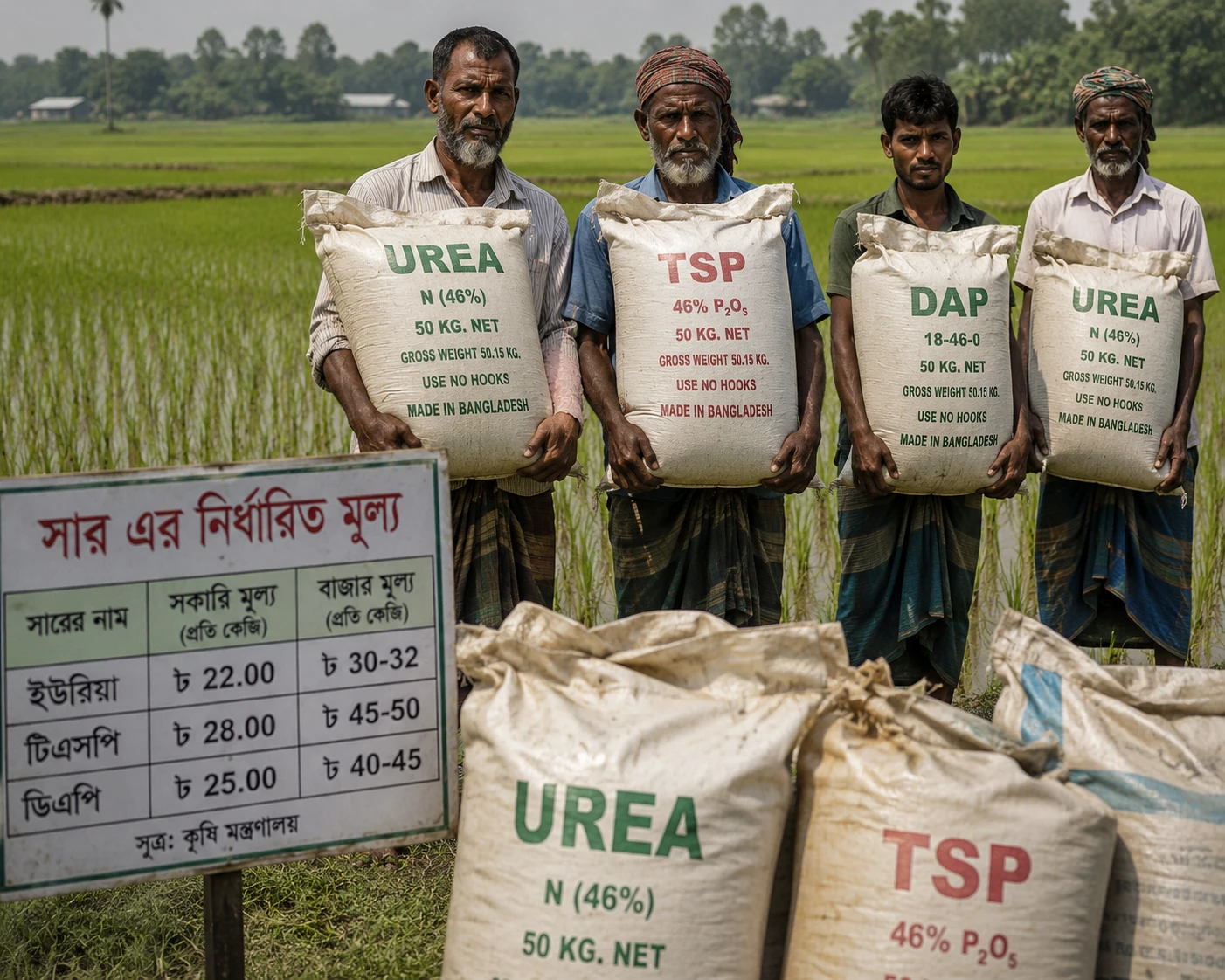
DHAKA, August 21 – Farmers in parts of Bangladesh are struggling to secure fertilizer at government-fixed prices amid shortages and allegations of overcharging during the ongoing Aman cultivation season.
In Joypurhat, fertilizer is reportedly being sold at Tk 500–600 above official prices despite adequate supply, while Meherpur is facing a serious shortage of TSP fertilizer. Farmers in both districts say the higher cost of fertilizer is increasing production expenses and raising concerns about their ability to remain profitable.
According to the Department of Agricultural Extension (DAE), Joypurhat has set a target of cultivating Aman rice on 70,095 hectares this season, with planting already completed on about 97 percent of the targeted land.
Farmers say a 50-kg bag of urea, officially priced at Tk 1,350, is being sold for Tk 1,900–1,950. TSP, also priced at Tk 1,350, is reportedly selling for Tk 1,900–2,000. DAP, whose official price is Tk 1,050, is being sold for Tk 1,500–1,600, while MOP priced at Tk 1,050 is reportedly selling for around Tk 1,400.
“Displaying the government-fixed price on the shop is of little use because we are still being charged more. If we ask for a receipt, they sometimes refuse to sell the fertilizer,” said Aminur Rahman, a farmer from Awra locality in Kalai municipality.
Another farmer, Nazrul Islam of Khetlal, said the rising cost of fertilizer and other agricultural inputs was putting additional pressure on farmers, while rice prices had not increased proportionately.
Local fertilizer trader Shahjahan Talukdar acknowledged the farmers’ complaints and called for stronger monitoring.
However, Raonakul Islam Chowdhury, president of the Joypurhat District Fertilizer Traders Association, said fertilizer availability was lower than demand but denied that BCIC dealers were charging excessive prices.
AKM Sadikul Islam, deputy director of the district DAE, said officials’ phone numbers had been displayed at dealer points and promised action if complaints were submitted with evidence of overcharging.
The situation is more severe in Meherpur, where fertilizer allocations are reportedly meeting only 50–60 percent of demand. The shortage is particularly acute for TSP.
Farmers say they are sometimes forced to wait in long queues at government-authorized dealers only to receive 5–10 kilograms of TSP.
Meherpur has set an Aman cultivation target of 26,800 hectares this season. Farmers say they are being forced to purchase fertilizer at significantly higher prices because of inadequate supplies.
Asadul Islam, a farmer from Ujulpur village, said fertilizer officially priced at Tk 1,350 per bag was being offered for Tk 1,800–2,000. He said prices were even higher when fertilizer was purchased on credit.
Banana grower Abed Ali said he needed eight bags of TSP for his eight bighas of land but received only 10 kilograms after waiting in line at a dealer for an entire day.
Hafizur Rahman Hafi, president of the Bangladesh Fertilizer Association’s Meherpur district chapter, said the TSP shortage was currently the most severe. He claimed that farmers were receiving far less fertilizer than the allocated amount, while denying allegations of overpricing.
Meherpur DAE Deputy Director Sanjib Mridha said farmers in the district cultivate crops three or four times a year on the same land, increasing fertilizer demand and contributing to the shortage.
Meherpur Deputy Commissioner Shilpi Rani Roy said she had instructed the agriculture department to take steps to resolve the crisis quickly.
Meanwhile, locals in Gangni detained an auto-van carrying 20 bags of fertilizer at Juginda Bazar in Dhankhola Union on Thursday. A mobile court later fined the driver, Shahabul Islam, Tk 1,000. The seized fertilizer was subsequently sold to farmers at government-fixed prices, according to the upazila agriculture office.
The fertilizer crisis has added to concerns over rising agricultural production costs at a time when farmers are already facing pressure from stagnant crop prices and higher input expenses.





COMMENTS