
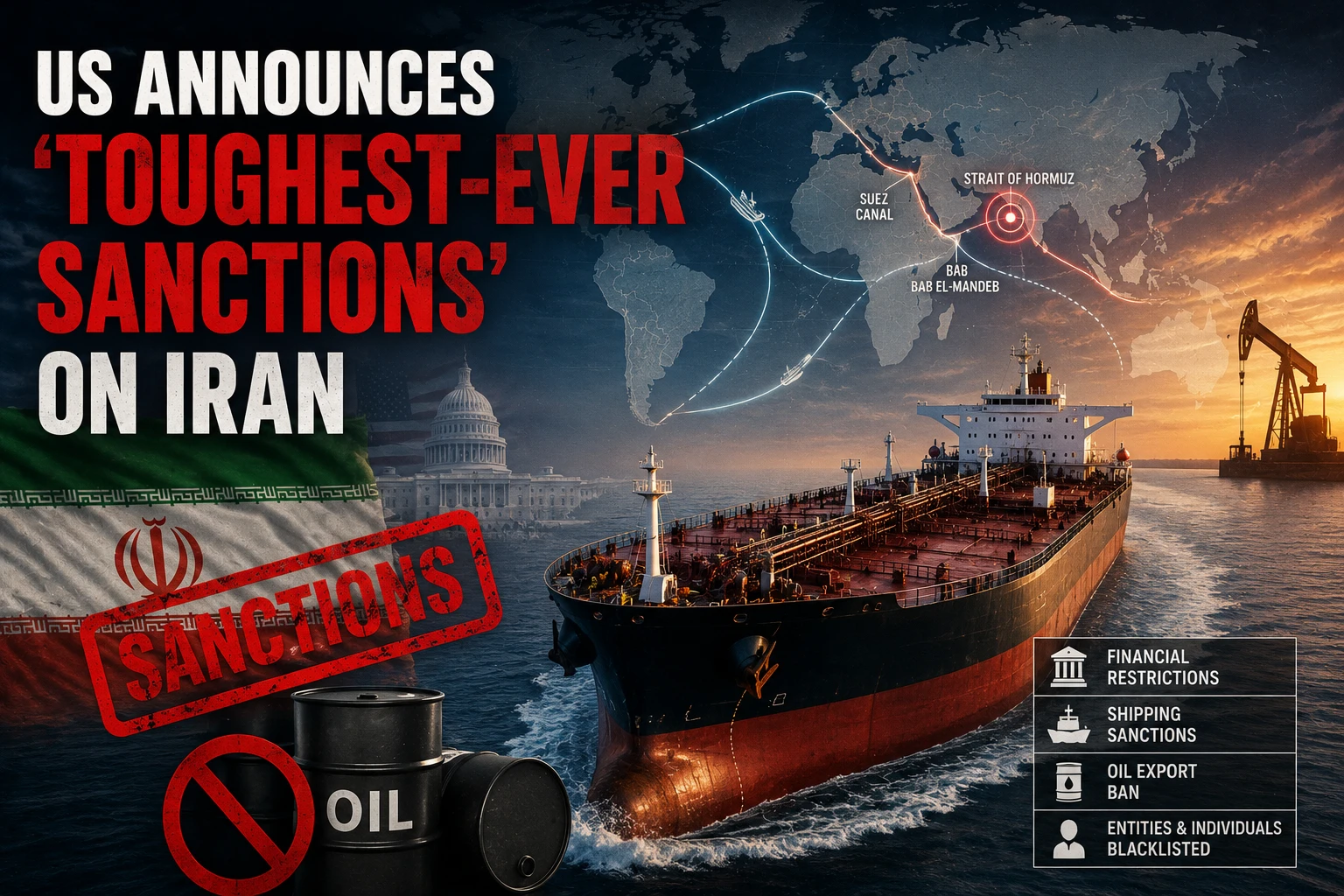
WASHINGTON, August 21 – The United States has announced plans to impose what Treasury Secretary Scott Bessent described as the “toughest sanctions in history” against Iran, escalating Washington’s economic pressure on Tehran amid the ongoing Middle East conflict.
Bessent said the details of the new sanctions package would be unveiled next Monday. He suggested that applying maximum economic pressure could reduce the need for another large-scale military attack against Iran.
“We are going to impose sanctions on Iran, along with the toughest sanctions in history,” Bessent said at a news conference. He added that the measures would target Iran and that Washington was seeking to bring down the current regime.
The announcement came a day after President Donald Trump warned of an “economic war” against Iran and threatened severe economic consequences for any country providing assistance to Tehran.
The prospect of tighter sanctions pushed global oil prices to their highest level in three weeks on Thursday, amid concerns over disruptions to energy supplies. Iran has demonstrated its ability to restrict shipping through the Strait of Hormuz, a crucial global energy corridor through which roughly one-fifth of the world’s traded oil passes.
The conflict has already killed thousands of people and contributed to instability in international energy markets. Two ceasefire agreements announced by the United States and Iran in April and June collapsed shortly after being declared.
Iran has faced extensive economic sanctions for decades, particularly since the 1979 Islamic Revolution. Tehran has condemned the latest US measures as “economic terrorism,” saying sanctions would not weaken its determination to protect its independence, dignity and national sovereignty.
China is likely to face particular pressure from Washington because it remains the dominant buyer of Iranian oil. According to 2025 data from analytics firm Kpler, China purchased more than 80 percent of Iran’s exported crude.
Asked whether Washington would take action against China for continuing to provide Iran with business opportunities, Bessent said some discussions were better conducted privately.
China’s embassy in Washington, however, said sanctions and pressure would not solve the dispute and called for a diplomatic solution.
Trump has also warned that any country allowing its financial institutions, businesses, airports or government agencies to provide assistance to Iran could face severe economic consequences.
The escalating confrontation is also creating domestic political pressure on Trump, as higher energy prices threaten to hurt consumers and could affect his party’s prospects in the November midterm elections.
Iranian Foreign Minister Abbas Araghchi has accused Washington of using the confrontation to divert public attention from US domestic economic problems, including record debt and rising interest rates.
The latest sanctions announcement further raises tensions between Washington and Tehran and could have significant consequences for global oil markets, particularly if the confrontation affects shipping through the Strait of Hormuz.



COMMENTS