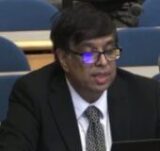

Brussels, July 14 — Israeli Foreign Minister Gideon Sa’ar has stated unequivocally that Israel does not intend to maintain long-term control over the Gaza Strip, emphasizing that its current involvement is driven solely by security concerns. His remarks came during an exclusive interview with Euronews on the sidelines of a ministerial summit between the European Union and its southern neighbors.
“We don’t have any intention to control Gaza long term,” Sa’ar said. “Our concerns are strictly security-related.”
Sa’ar’s comments arrive amid heightened scrutiny of Israel’s military operations in Gaza and growing international pressure to clarify its post-conflict strategy. He dismissed criticism from Western governments that Israel’s response has been disproportionate, calling such claims “ridiculous.”
The minister also reiterated Israel’s stance that Hamas must be excluded from any future governance arrangement in Gaza. “Hamas cannot control the Gaza Strip and cannot be part of its future,” he asserted. Sa’ar suggested that a political resolution could be possible if Hamas agrees to disarm and demilitarize the territory.
EU-Israel Dialogue on Humanitarian Aid
The interview coincided with a broader EU-Israel dialogue focused on improving humanitarian access to Gaza. EU foreign policy chief Kaja Kallas announced a series of measures aimed at increasing aid deliveries, including reopening key border crossings and restoring fuel supplies to critical infrastructure.
Kallas emphasized that aid must reach civilians directly and not be diverted to Hamas. “We see good signs of more trucks getting in, but it’s not enough. We need to push for more,” she said.
Sa’ar welcomed the initiative, noting that Israel is committed to facilitating humanitarian relief while ensuring that aid does not empower militant groups.
Regional Diplomacy and Strategic Vision
The Brussels meeting, part of the European Neighbourhood Policy framework, brought together ministers from 27 EU member states and representatives from Middle Eastern and North African countries. Sa’ar expressed hope that recent developments in the region would help “defeat the radical axis” and expand the Abraham Accords, paving the way for broader normalization and peace.
As the conflict in Gaza continues to dominate international discourse, Sa’ar’s remarks offer a glimpse into Israel’s evolving strategic calculus — one that seeks to balance military objectives with diplomatic engagement and humanitarian obligations.