Home Blog

Bangladesh Clinch Historic First-Ever ODI Series Victory Over Australia

0

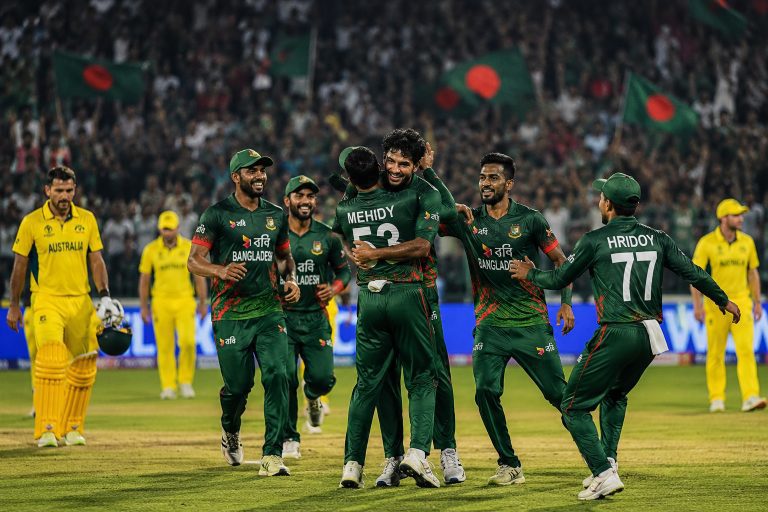
DHAKA, June 11, 2026 — Bangladesh created history on Thursday by securing their first-ever One Day International (ODI) series victory against Australia, defeating the visitors by five wickets under the Duckworth-Lewis-Stern (DLS) method in the second ODI at the Sher-e-Bangla National Cricket Stadium in Mirpur.

The victory gave Bangladesh an unassailable 2-0 lead in the three-match series, marking their first bilateral ODI series triumph over Australia and extending their winning streak in ODI series to four.

Chasing a revised target of 192 runs in 41 overs after rain interrupted Australia’s innings, Bangladesh reached 192 for 5 in just 35 overs. Towhid Hridoy remained unbeaten on 40 off 55 balls, while captain Mehidy Hasan Miraz contributed an unbeaten 22 as the pair shared a match-winning 51-run partnership for the sixth wicket.

Bangladesh suffered an early setback when opener Tanzid Hasan was dismissed for a duck in the first over. However, Soumya Sarkar and Najmul Hossain Shanto steadied the innings with a crucial 86-run partnership. Both batters scored 42 before falling short of half-centuries. Litton Das added 21 and Mosaddek Hossain chipped in with 15 before Hridoy and Miraz guided the hosts safely to victory.

Earlier, Bangladesh’s pace attack tore through the Australian top order after captain Josh Inglis elected to bat first. Taskin Ahmed and Mustafizur Rahman reduced Australia to 0 for 3 within the opening two overs, the first time Australia had lost their first three wickets without scoring in ODI history.

Australia’s innings was rescued by Marnus Labuschagne and Xavier Bartlett, who shared a 103-run partnership for the seventh wicket. Bartlett scored 55 while Labuschagne made a valuable half-century to help Australia recover from 81 for 6.

Rain halted play after 42 overs with Australia on 187 for 8, leading officials to revise Bangladesh’s target to 192 under the DLS method.

Taskin Ahmed and Mustafizur Rahman claimed three wickets each, while left-arm spinner Tanvir Islam took two wickets.

Having already ended a 21-year wait for an ODI victory over Australia in the series opener, Bangladesh have now achieved another milestone by sealing their maiden ODI series win against the world champions. The final match of the series will be played with Bangladesh aiming for a clean sweep.

Indian Sailors Killed in U.S. Strike on Oil Tanker Accused of Violating Iran Sanctions

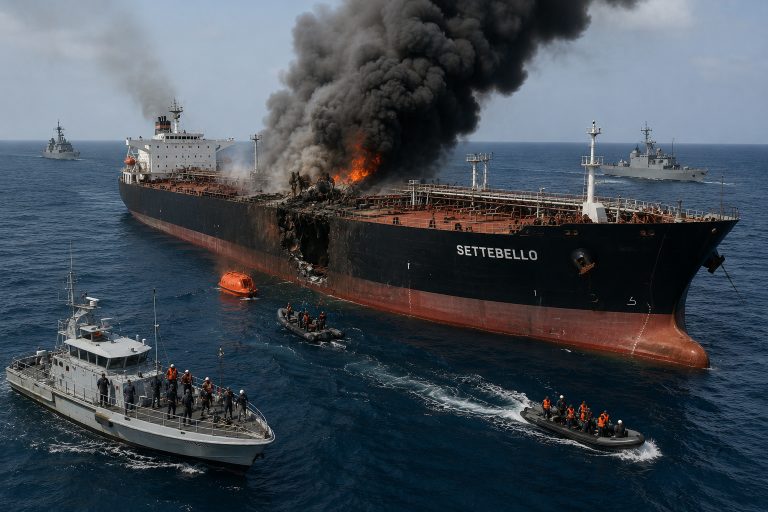
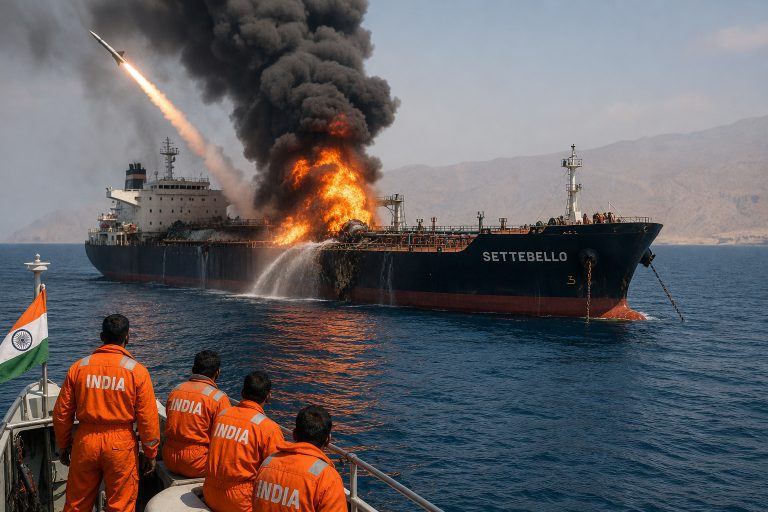
NEW DELHI, June 11, 2026 — Three Indian sailors were killed in a U.S. military strike on an oil tanker accused of violating sanctions on Iran, Indian authorities confirmed on Thursday.

According to Indian Minister for Ports, Shipping and Waterways Sarbananda Sonowal, the three crew members aboard the Palau-flagged tanker Settebello had initially been reported missing following the attack. The deaths were later confirmed after the recovery of two bodies, while details regarding the location of the third sailor’s remains were not immediately disclosed.

In a post on social media platform X, Sonowal expressed condolences and said the loss of the Indian crew members was a tragic development.

The incident occurred after the U.S. Central Command (CENTCOM) accused the tanker of attempting to transport Iranian oil in violation of ongoing American sanctions and maritime restrictions. U.S. forces reportedly targeted the vessel’s engine room in an effort to stop the ship.

The strike comes amid heightened tensions in the Middle East, where the United States and Iran have exchanged accusations and military actions in recent days. The latest casualty report is expected to increase diplomatic pressure on Washington and raise concerns over the safety of international merchant shipping operating in the region.

Indian authorities have not yet announced whether a formal protest or investigation will be launched regarding the deaths of the sailors.

The attack on the Settebello is the latest development in a rapidly escalating regional crisis involving Iran, the United States, and key maritime routes in the Gulf region.

Is a Silent Genocide Underway in Bangladesh?

Most people are familiar with the term genocide. The United Nations defines it as acts committed with the intent to destroy, in whole or in part, a particular national, ethnic, racial, or religious group. Such destruction can be direct or indirect. It can involve mass killings, but it can also take the form of preventing births within a targeted community, killing newborns, or systematically eliminating a specific population.

Genocide is not confined to wartime. Bangladesh experienced it in 1971 when the Pakistani military unleashed mass slaughter against Bengalis. The Jews suffered it under Hitler’s Nazi regime during World War II. But genocide can also occur during periods that outwardly appear peaceful. During the 1994 Rwandan civil war, rape was used as a weapon, and perpetrators often ensured that no children were born as a result. In Iraq and Syria, policies were pursued to prevent the growth of the Yazidi population. Myanmar’s military junta employed similar tactics against the Rohingya. Genocide, therefore, is not limited to the physical extermination of a group. It can take many forms, a reality recognized in international human rights law.

Many Bangladeshis may not yet realize that after the genocide of 1971, another genocide is now unfolding in the country. This one targets four distinct groups: religious minorities, particularly Hindus; anyone associated with the Awami League; freedom fighters and their descendants; and, finally, the country’s newborn children.

Immediately after the so-called July Uprising of August 5, 2024—which I regard as a militant uprising rather than a democratic movement—religious minorities became direct targets. Following the fall of Sheikh Hasina’s government, Bangladesh was left without an effective administration. Organized mobs emerged across the country to carry out coordinated attacks. These groups were largely composed of activists from Jamaat-e-Islami and its student wing Islami Chhatra Shibir, members of the banned extremist organization Hizb ut-Tahrir, as well as activists from the BNP and Jatiyatabadi Chhatra Dal.

Five days later, Muhammad Yunus arrived from France and assumed power. Many hoped the situation would improve. The opposite happened. Instead of dismantling mob rule, his administration legitimized it. Members of his inner circle insisted these were not mobs at all but “pressure groups.”

Across Bangladesh, these groups selectively attacked minority homes and businesses. Houses were destroyed. Men were beaten, hanged from trees, and burned alive. Women were raped. Survivors were forced from their villages, and many fled the country altogether. The victims included laborers, teachers, doctors, and professionals from all walks of life. Numerous Hindu civil servants lost their jobs.

At the Sardah Police Academy in Rajshahi, nearly 300 cadets were dismissed just before graduation. Most were either children of Awami League families or members of religious minority communities.

The persecution did not stop with minorities. It quickly expanded to anyone associated with the Awami League. If one member of a family had been involved in the party, the entire family became a target. A new label emerged: “accomplice of the autocrat.”

The list of so-called accomplices soon included schoolteachers, university vice chancellors, professors, physicians, and countless other professionals. When the intended targets could not be found, their families were attacked instead.

Freedom fighters and their descendants were not spared. Their crime was simple: they had helped break Pakistan apart and create Bangladesh. People who once proudly identified themselves as freedom fighters were forced into hiding. Families receiving freedom fighter allowances were driven from their homes and compelled to relocate elsewhere.

The final group caught in this unfolding tragedy is Bangladesh’s children.

Because of what I view as the Yunus administration’s catastrophic negligence, the country has faced a severe measles epidemic driven by vaccine shortages. Thousands of children have been infected, and hundreds have died. Official figures indicate that more than 700 children have already died from measles. Unofficial estimates place the number far higher.

Bangladesh has long battled infectious diseases such as cholera, smallpox, malaria, dengue, typhoid, chikungunya, and Black Fever. In earlier decades, entire villages were devastated by such outbreaks. During the early months of the 1971 Liberation War, smallpox killed thousands, leaving so many dead that there were not enough people to bury them.

Through decades of coordinated public health efforts, Bangladesh had largely brought these diseases under control. That achievement belongs to more than one government, but one of its most significant advances occurred during Sheikh Hasina’s tenure.

The clearest example came during the COVID-19 pandemic. While millions died around the world, Bangladesh’s death toll stood at roughly 29,500. India lost more than 533,000 people. The United States lost more than 1.2 million. Bangladesh emerged as one of Southeast Asia’s strongest performers in controlling the pandemic. Economic growth remained close to 5 percent, among the highest in South Asia.

The same commitment was visible in the national immunization program. Measles outbreaks had been widespread between 2000 and 2006, but infections began to decline after 2007. When Sheikh Hasina returned to power in 2009, her government prioritized vaccination. The United Nations, UNICEF, Gavi, and the World Health Organization supported the effort. Vaccines were distributed through community clinics nationwide, while extensive public awareness campaigns encouraged participation.

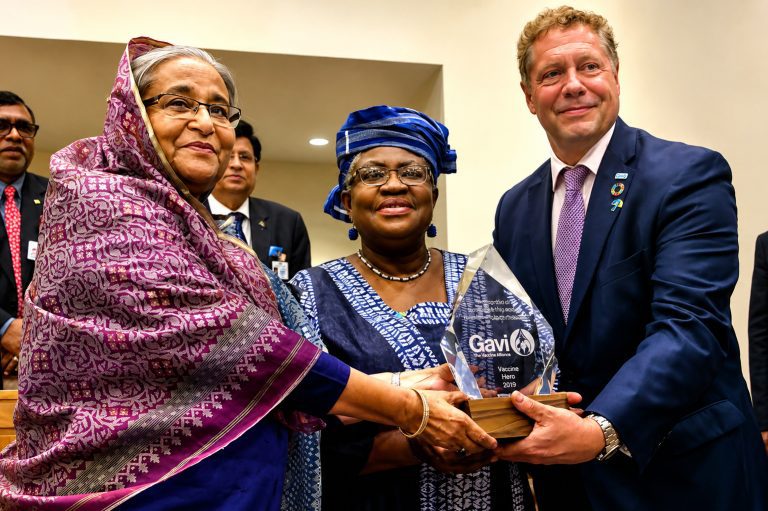
Over fifteen years, the program became one of Bangladesh’s greatest public health successes. In 2019, UNICEF and Gavi jointly honored Sheikh Hasina at the United Nations headquarters with the title “Vaccine Hero.” Available information shows that mass immunization efforts continued uninterrupted until June 2024.

Then everything changed.

After the July uprising, Muhammad Yunus assumed power through what I consider an illegitimate seizure of state authority. He remained in office until February 17, 2026. Following an election held without the participation of the Awami League, the BNP formed a government under Tarique Rahman.

Yunus’s tenure will be remembered as one of the darkest chapters in Bangladesh’s history. Among his most damaging decisions was dismantling the established measles vaccination program. He decided vaccines would no longer be procured through Gavi under the existing system but through open tenders instead. Whether motivated by political interests or other ambitions, the result was disastrous.

At the same time, those working within the vaccination program reportedly saw their salaries halted.

UNICEF’s representative in Bangladesh, Rana Flowers, reportedly warned Yunus repeatedly against the decision. At least five letters were sent urging him not to proceed. The warnings went unheeded.

Meanwhile, measles infections continued to rise. By the time Tarique Rahman assumed office, the situation had escalated into a full-scale epidemic. Conditions may have improved somewhat since then, but hospitals still lack sufficient beds for infected children.

Several individuals have sought legal accountability for what they describe as Yunus’s misconduct. Yet the courts have effectively made it clear that no trial of Yunus will take place in Bangladesh. The implication is obvious: permission from higher authorities is absent.

The public has gradually come to understand that the Tarique Rahman government is little more than an extension of the Yunus administration. It is worth remembering that even U.S. President Donald Trump has had to answer before a court of law.

When these developments are examined together, the conclusion becomes difficult to avoid. By the standards set out in international definitions of genocide, Muhammad Yunus’s rule involved actions that contributed to multiple forms of group destruction and persecution. He may never face justice in a Bangladeshi courtroom, but history will deliver its verdict.

History does not forgive.

Author: Syed Iftekhar Hossain is a political anylist. 

Jessore Jubo League Leader Killed in Daylight Attack

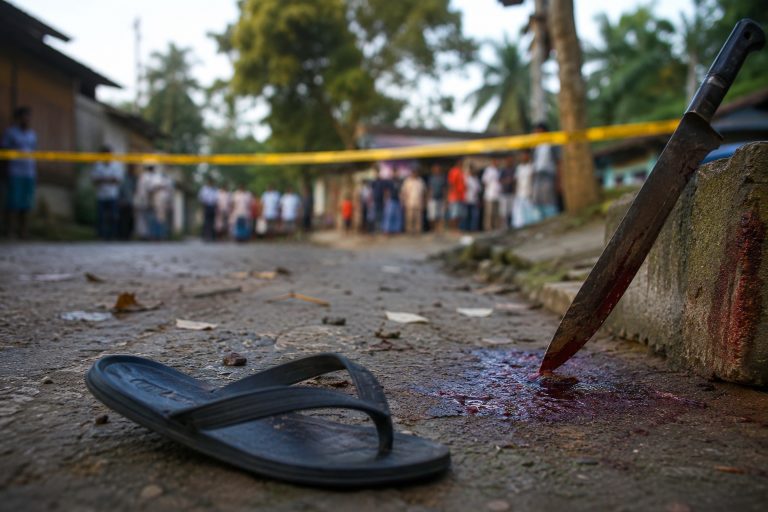
A local Jubo League leader was beaten and hacked to death in Bangladesh’s southwestern Jessore district on Thursday, in an incident that has renewed concerns over political violence and the security of opposition activists in the country.

The victim, Jewel Ahmed Rana, 40, a member of the convening committee of Patibila Union Jubo League in Chaugachha upazila, died while undergoing treatment at Jessore General Hospital after suffering severe injuries in an attack in Muktadah village.

Family members and eyewitnesses alleged that local leaders and activists affiliated with the ruling Bangladesh Nationalist Party (BNP) carried out the attack in broad daylight. BNP leaders, however, denied any political involvement and described the killing as the result of a local dispute.

According to local residents, the violence erupted on Thursday morning at Muktadah intersection after an argument between Rana and a local resident, Yusuf Ali, widely known as “Kasai” (the butcher). Witnesses said the dispute quickly escalated.

Several residents alleged that a group of armed men subsequently attacked Rana with sharp weapons and sticks. The attackers reportedly beat and hacked him repeatedly before fleeing the scene.

Relatives rushed the critically injured Rana to Chaugachha Upazila Health Complex. As his condition deteriorated, doctors referred him to Jessore General Hospital, where he died around 12:30 p.m., according to family members.

Rana was the son of Wadud Khandakar of Muktadah village. Local residents said he had remained largely out of public view following the political upheaval of 2024. After the national election held earlier this year, he reportedly returned to his village and resumed regular activities.

His death has drawn attention because it occurred amid continued allegations of harassment, arrests, and violence targeting leaders and activists associated with the Awami League and its affiliated organizations in various parts of Bangladesh.

Human rights observers and opposition figures have repeatedly expressed concern about shrinking political space and growing intolerance toward political rivals following the country’s turbulent political transition. Reports of attacks, arrests, and reprisals involving Awami League supporters have surfaced periodically over the past two years.

Speaking to The Voice, Rana’s wife, Maya Begum, described the moments leading up to the attack.

“He was getting ready to take our daughter to school,” she said. “Before leaving, he went to the nearby road junction for tea. That was when they attacked him. The people involved in this murder are active in BNP politics.”

Relatives echoed her allegations, claiming the assailants acted openly and without fear of consequences.

Local sources alleged that the attackers were led by Nazrul Islam, a vice president of Patibila Union BNP and a union parishad member. The allegations could not be independently verified.

Contacted by The Voice, Chaugachha Upazila BNP President M.A. Salam rejected claims that BNP leaders were involved.

“To my knowledge, Jewel Rana was killed over a local land dispute,” Salam said. “BNP leader Nazrul Islam was not involved in the incident.”

Police also offered a preliminary assessment that differed from the family’s account.

Officer-in-Charge Mamunur Rashid of Chaugachha Police Station told The Voice that investigators initially believed the killing stemmed from a longstanding dispute between Rana and Yusuf Ali.

“Based on the information received so far, there had been a prior conflict between Yusuf and Jewel,” Rashid said. “The murder appears to have occurred as a consequence of that dispute. Preparations are underway to file a case.”

Authorities had not announced any arrests as of Thursday evening.

The killing is the latest in a series of violent incidents reported in different parts of Bangladesh as political tensions continue to simmer. Analysts note that although many attacks are officially described as personal or local disputes, questions often arise when victims are politically affiliated figures, where partisan rivalries remain intense.

For Rana’s family, however, the focus remains on accountability.

“We want justice,” a relative said outside the hospital. “Those who killed him did it in public. Everyone knows what happened.”

World Cup 2026 Begins: Football’s Biggest-Ever Spectacle

Football’s biggest stage is set once again. The FIFA World Cup returns today with its largest and most ambitious edition ever, bringing together a record 48 nations, more than 1,200 players and billions of fans for a six-week spectacle stretching across the United States, Mexico and Canada.

For the first time in the tournament’s 96-year history, three countries are jointly hosting the event. From the historic Estadio Azteca in Mexico City to the grand finale at MetLife Stadium in New Jersey on July 19, World Cup 2026 promises a scale never before witnessed in international football.

FIFA President Gianni Infantino has repeatedly described the tournament as “the greatest show on earth.” The governing body hopes the expanded competition will further accelerate football’s growth in North America while creating new opportunities for emerging nations.

Whether it ultimately becomes the greatest World Cup ever remains to be seen. What is beyond dispute is that it will be the biggest.

A New Era for the World Cup

The most striking change is the tournament’s expansion from 32 to 48 teams.

Since France 1998, the World Cup has featured 32 nations. The 2026 edition breaks with that model, creating a competition that includes more countries, more players and more matches than ever before.

Twelve groups of four teams will compete in the opening phase. The top two teams from each group, along with the eight best third-place finishers, will advance to an expanded knockout stage featuring 32 nations.

The result is a tournament consisting of 104 matches, compared with 64 in Qatar four years ago.

Supporters of the new format argue that it provides greater representation for developing football nations and reflects the global growth of the sport. Critics, however, fear the expanded schedule could dilute quality and place additional physical demands on players who already face congested club calendars.

Regardless of the debate, the expanded World Cup is now reality.

The Historic Significance of Azteca

The opening match will be played at the legendary Estadio Azteca, one of football’s most revered venues.

The stadium occupies a unique place in football history. It hosted Pele’s Brazil during the 1970 World Cup and witnessed Diego Maradona’s famous “Hand of God” goal and “Goal of the Century” during the 1986 tournament.

With World Cup football returning to Azteca, organizers hope the venue’s rich history will provide a symbolic bridge between football’s glorious past and its rapidly evolving future.

The opening ceremony is expected to showcase the cultures of the three host nations through music, dance and visual performances designed to celebrate the diversity of North America.

Messi’s Final Mission

No storyline captures global attention more than the possibility that this could be Lionel Messi’s final World Cup appearance.

The Argentine legend enters the tournament already regarded as one of football’s greatest players. His triumph in Qatar in 2022 completed one of the sport’s most celebrated careers and secured the one major trophy that had previously eluded him.

Now, at 39, Messi has an opportunity to achieve something even more extraordinary: lead Argentina to consecutive World Cup titles.

Only Italy and Brazil have successfully defended the trophy in the modern era. Argentina now hopes to join that exclusive club.

For millions of fans around the world, the tournament represents one final opportunity to watch Messi perform on football’s biggest stage.

Mbappé and the Next Generation

While Messi represents football’s recent past, Kylian Mbappé embodies its future.

The French superstar arrives in North America as one of the game’s most feared attacking players and perhaps the leading candidate to dominate the next decade of international football.

Mbappé has already scored 12 World Cup goals despite still being in his twenties. He is within reach of Miroslav Klose’s all-time World Cup scoring record of 16 goals.

France enters the tournament as one of the favorites, possessing a squad that combines experience, athleticism and attacking depth.

The competition also features a new generation of emerging stars determined to establish themselves on the global stage. For many younger players, World Cup 2026 represents the opportunity to transform from promising talents into international icons.

Traditional Powers Remain Strong

Although the tournament features more participants than ever before, the usual contenders remain firmly in the spotlight.

Defending champions Argentina are joined by five-time winners Brazil, former champions France, Germany, Spain and England among the leading candidates to lift the trophy.

Brazil arrives seeking to end a title drought that stretches back to 2002. Germany continues its rebuilding process after several disappointing international campaigns. England hopes its golden generation can finally deliver the country’s first major international trophy since 1966.

Spain, meanwhile, enters the competition with a blend of youthful talent and technical excellence that many observers believe could carry them deep into the tournament.

New Nations, New Dreams

One of the most intriguing consequences of expansion is the arrival of several nations making their World Cup debuts.

Uzbekistan and Jordan have qualified for the first time, while smaller footballing nations now have opportunities that would have been nearly impossible under previous formats.

Perhaps the most remarkable story belongs to Curaçao. With a population of little more than 150,000, the Caribbean island has become one of the smallest nations ever to reach the World Cup finals.

For these countries, qualification itself is a historic achievement. Yet history shows that underdogs often provide some of the tournament’s most memorable moments.

Every World Cup produces surprise results. The expanded field may create even more.

Bangladesh Catches World Cup Fever

Few countries embrace the World Cup with as much enthusiasm as Bangladesh.

Despite never qualifying for the tournament, football remains deeply woven into the country’s sporting culture. Every four years, cities, towns and villages transform into vibrant displays of football passion.

Brazilian and Argentine flags adorn rooftops, balconies and streets. Tea stalls become debating arenas. Social media fills with predictions, arguments and celebrations.

Families organize late-night gatherings. Restaurants advertise special match-day menus. Friends plan viewing parties that continue into the early hours of the morning.

The World Cup occupies a unique place in Bangladesh’s sporting landscape. It is not merely a tournament; it is a national event experienced collectively across social, economic and geographic boundaries.

Television broadcasters are preparing extensive coverage, ensuring supporters can follow every moment of the competition.

Record Prize Money and Commercial Growth

The financial dimensions of the World Cup continue to expand alongside the tournament itself.

FIFA expects billions of dollars in revenue through broadcasting rights, sponsorship agreements and commercial partnerships.

Prize money has increased significantly compared with previous tournaments. Participating nations will receive financial support, while teams progressing through the knockout rounds stand to earn substantial rewards.

The eventual champions will receive a record payout, reflecting the tournament’s growing economic importance.

The World Cup is no longer simply a sporting competition. It is also one of the largest commercial events on the planet.

Ticket Prices Spark Debate

The commercial success of the tournament has not escaped criticism.

Ticket prices for many matches have risen dramatically, prompting complaints from supporters who argue that attending the World Cup is becoming increasingly expensive.

Premium tickets for high-profile matches, particularly during the knockout rounds and final, have reached levels that place them beyond the reach of many ordinary fans.

Accommodation costs have also surged across host cities as demand increases.

Critics argue that football risks drifting away from its traditional supporters in pursuit of greater revenue. Organizers respond that unprecedented global demand inevitably drives prices higher.

The debate highlights a broader tension within modern football: balancing commercial growth with accessibility.

Global Politics Cast a Shadow

Like many major international events, World Cup 2026 unfolds against a backdrop of geopolitical uncertainty.

International conflicts, visa restrictions and security concerns have complicated preparations for some participating nations.

Organizers insist that extensive security planning has been undertaken across all host cities. Nevertheless, the tournament begins during a period of heightened global tension.

Football has often provided moments of unity during divided times. FIFA hopes the tournament can once again demonstrate the sport’s capacity to transcend political boundaries.

Records Waiting to Fall

World Cups are remembered for champions, but also for records.

Several historic milestones could be challenged during the coming weeks.

Messi may further strengthen his status among the tournament’s greatest players. Mbappé could move closer to the all-time scoring record.

The expanded format may also produce the highest goal total in World Cup history. With 104 matches scheduled, analysts expect scoring records to come under serious threat.

Veteran stars including Cristiano Ronaldo, Luka Modrić and Manuel Neuer could also be making their final appearances on football’s biggest stage.

For many legends, this tournament represents a final chapter. For countless young players, it marks the beginning of a dream.

The World Watches

From the streets of Dhaka to the neighborhoods of Buenos Aires, from the cafes of Paris to the beaches of Rio de Janeiro, the World Cup remains one of the few events capable of commanding the attention of billions simultaneously.

Over the next six weeks, victories will be celebrated, heartbreaks endured and new heroes created.

Some teams will fulfill expectations. Others will fail. Unknown players will become global stars. Established stars will seek immortality.

That unpredictability is precisely what makes the World Cup unique.

The tournament arrives carrying enormous expectations, unprecedented scale and no shortage of controversy. Yet once the opening whistle sounds, the focus will return to the game itself.

For football supporters everywhere, that is what matters most.

The greatest show on earth is ready to begin.
U.S. Strikes Iranian Cargo Barge Carrying Essential Goods

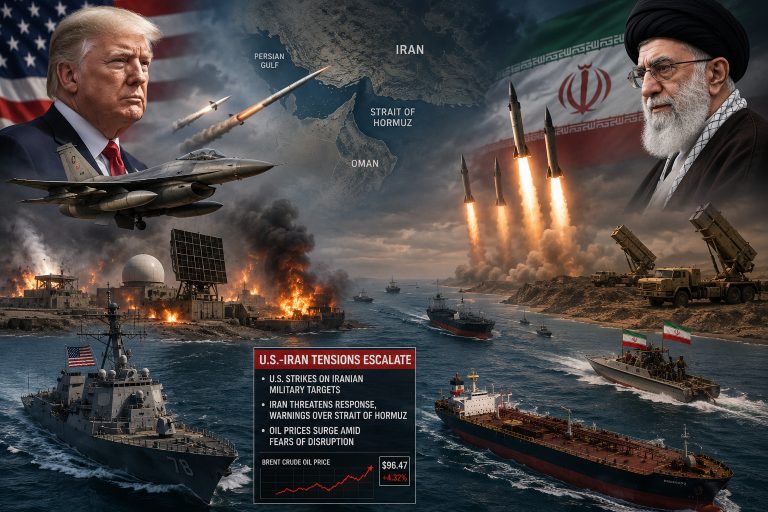
MUSCAT, June 11, 2026 — A 150-ton Iranian cargo barge carrying essential goods from Oman came under attack by U.S. forces on Thursday morning near the Strait of Hormuz, according to Iranian authorities.

The governor of Sirik County, cited by Iran’s Mehr News Agency, said the large barge was owned by local residents of Sirik and was transporting daily necessities from Khasab Port in Oman. The vessel was reportedly struck about five nautical miles from Khasab while en route to Iran.

Five crew members were aboard the barge at the time of the incident. Following the attack, they were rescued by a nearby vessel and transported safely to Oman. No casualties among the crew were immediately reported.

The reported strike comes amid escalating tensions between the United States and Iran in the strategically vital Strait of Hormuz, a key global shipping route.

In a separate incident, three Indian sailors were confirmed dead after a U.S. missile strike hit the engine room of the oil tanker Settebello on Wednesday, according to reports.

Reuters quoted India’s Minister of Ports, Shipping and Waterways, Sarbananda Sonowal, as confirming that the three previously missing sailors had died in the attack.

The Palau-flagged tanker, carrying a crew of 28 people—including 24 Indian nationals—was struck about 20 nautical miles off Sohar Port in Oman. The missile attack triggered a fire in the vessel’s engine room, prompting an emergency distress call.

The Indian Embassy in Muscat said 21 of the 24 Indian crew members had been rescued safely. The remaining three sailors were later confirmed dead.

The latest incidents are expected to further heighten tensions in the Gulf region, where maritime security has become increasingly fragile amid the ongoing confrontation between Washington and Tehran.

US-Iran Standoff Raises Fears of Wider Middle East War

WASHINGTON/TEHRAN, June 11, 2026 — Tensions between the United States and Iran intensified on Thursday as both countries exchanged threats and military actions, fueling concerns of a broader regional conflict in the Middle East.

The latest escalation follows a series of U.S. strikes targeting Iranian military infrastructure, including air defense systems and radar installations. U.S. officials said the operations were aimed at degrading Iran’s military capabilities after Washington accused Tehran of involvement in an incident that resulted in the downing of a U.S. military helicopter in the Gulf region.

Iran has rejected the allegations and condemned the strikes as a violation of its sovereignty. In response, Tehran warned that continued U.S. military actions would face a “decisive response” and signaled that strategic maritime routes could become part of the confrontation.

Particular attention has focused on the Strait of Hormuz, a critical waterway through which a significant portion of the world’s oil supplies passes. Iranian officials have threatened to restrict or disrupt shipping traffic in the area, raising fears of disruptions to global energy markets.

The growing crisis has already affected international markets, with oil prices rising amid concerns over supply security. Analysts warn that any prolonged disruption in the Strait of Hormuz could have significant economic consequences worldwide.

Regional governments and international organizations have called for restraint, urging both sides to avoid actions that could trigger a wider conflict. Diplomatic efforts led by several Gulf states are reportedly underway, though prospects for an immediate de-escalation remain uncertain.

The confrontation marks one of the most serious episodes in U.S.-Iran relations in recent years, with military, economic, and geopolitical implications extending far beyond the Middle East.

As the situation continues to develop, the international community is closely monitoring whether diplomatic channels can prevent the crisis from spiraling into a broader military confrontation.


Security Forces Open Fire in Pakistan-Controlled Kashmir, 15 Killed

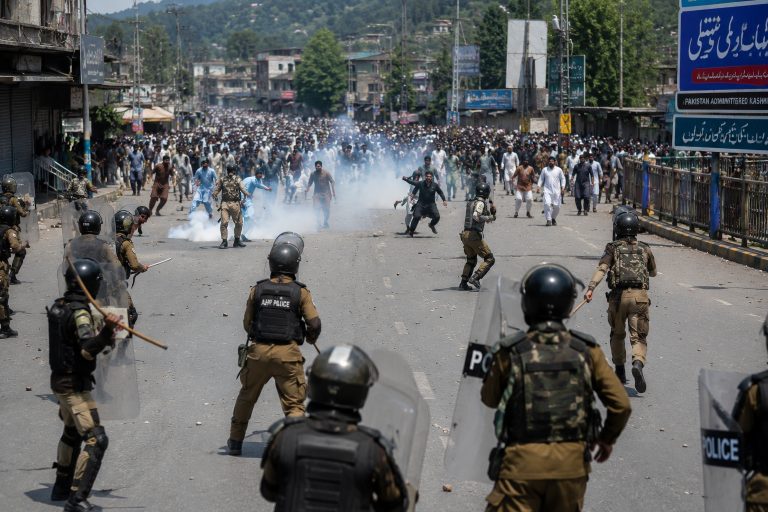
MUZAFFARABAD, June 11, 2026 — At least 15 people, including 11 civilians and four security personnel, have been killed in violent clashes between protesters and security forces in Pakistan-administered Kashmir, according to local authorities.

The unrest erupted after the Joint Awami Action Committee (JAAC), a coalition of activist groups, launched a mass protest against the reservation of 12 seats for refugees in the region’s upcoming legislative assembly elections. Protest leaders argue that the seats should be contested only by residents currently living in Pakistan-administered Kashmir.

Authorities responded by banning the JAAC under anti-terrorism laws, accusing the organization of activities detrimental to public order and state security. Security agencies were also instructed to take action against the group’s leadership.

Despite the ban, thousands of demonstrators have continued marching toward the regional capital, Muzaffarabad. Officials estimate that more than 10,000 protesters are traveling in a convoy that has reached areas near Rawalakot, where security forces have established checkpoints and increased patrols.

Local authorities have urged residents to remain indoors, while mosques in several districts have broadcast announcements advising people not to leave their homes. Helicopters have been conducting surveillance flights over Muzaffarabad and Rawalakot amid concerns that the situation could further deteriorate.

The violence first escalated earlier this week in Rawalakot, with additional fatalities reported in Kotli on Tuesday. More than 50 people have reportedly been injured, and officials fear the death toll could rise.
Human rights organization Amnesty International criticized the government’s response, describing it as a “violent and sweeping crackdown” that includes internet shutdowns, mass arrests, and the use of lethal force against protesters.

Meanwhile, the JAAC has called for a region-wide general strike. Many businesses in Muzaffarabad remained closed on Thursday, with some traders saying they would continue their shutdown until authorities address protesters’ demands.

The dispute centers on the allocation of 12 reserved seats for Kashmiri refugees who do not currently reside in Pakistan-administered Kashmir. Protesters argue that the arrangement disenfranchises local residents and limits their political representation.

However, the Supreme Court of Pakistan-administered Kashmir recently ruled that the reserved seats are constitutionally protected and cannot be altered through administrative action, political agreements, or public pressure.

Pakistan-administered Kashmir is a semi-autonomous region with its own government, but the broader Kashmir territory remains a long-standing point of contention between India and Pakistan. Both countries claim the region in full and have fought multiple conflicts over it since their independence.

Three-Planet ‘Mini Parade’ Lights Up the Evening Sky

June 11, 2026 — Skywatchers around the world are being treated to a striking celestial display this week as three bright planets—Venus, Jupiter, and Mercury—appear together in the western evening sky.

The highlight of the event is a conjunction between Venus and Jupiter, a phenomenon that occurs when two planets appear very close to each other from Earth’s perspective. Although the planets remain millions of kilometers apart in space, their alignment creates the illusion of proximity in the night sky.

According to NASA, Mercury will join Venus and Jupiter from Thursday through Monday, creating what the agency describes as a “mini planetary parade.” The rare grouping offers astronomy enthusiasts and casual observers alike an excellent opportunity to spot three planets at once.

NASA advises observers to look toward the western horizon shortly after sunset. Venus, the brightest object among the three, will be the easiest to identify, with Jupiter appearing nearby. Mercury, however, will be positioned lower in the sky and closer to the horizon, making it more challenging to see.

A clear, unobstructed view of the western horizon is recommended, particularly during the fading twilight hours. Binoculars or a small telescope can enhance the viewing experience and help locate Mercury more easily.

Mercury, the closest planet to the Sun, is often difficult to observe because it remains near the horizon and is frequently lost in the Sun’s glare. However, astronomy website Space.com reports that favorable viewing conditions for Mercury are expected to continue until at least June 22.

The planetary gathering is expected to be visible from many parts of the world, weather permitting, making it one of the most accessible astronomical events of the month.

32 Dhanmondi Will Rise Again

Out of the ashes 32 Dhanmondi will rise again. Out of the ghostly silence those vicious agents of the nocturnal put it to, 32 Dhanmondi will arise anew. For it is and always will be the embodiment of history.

Every time the Ayub Khan regime decided to take Bangabandhu Sheikh Mujibur Rahman into custody in the 1960s, its soldiers turned up at 32 Dhanmondi and took him away. They did nothing that would damage his home.

When Pakistan’s soldiers turned up at 32 Dhanmondi as March 25 gave way to March 26 in 1971, they seized the Father of the Nation and took him away. His family was not touched and neither was his home.

On 15 August 1975, assassins shot their way into 32 Dhanmondi, murdered the founder of the Bengali nation and his family and left the residence drenched in a sea of blood. The eerie silence across the residence was loud enough for the world to hear.

It would stay that way for six years, until Sheikh Hasina came home from exile to reclaim the legacy of the Father of the Nation. In time, it would be transformed into a symbol of history, a place of pilgrimage for a nation in grief, wounded through the murder of its founding father.

I have been to 32 Dhanmondi times aplenty. I have recalled and reconnected with the history of our Bengali nationalism on its premises. I have spent days there, back in 1994, contributing my humble bit in informing the world that the greatest man in our country lived and died there, that his legacy defined the power of the place even as he slept eternally in Tungipara.

More than a house, Dhanmondi 32 embodies the memories, sacrifices, and aspirations that shaped Bangladesh’s journey to independence.

As Sheikh Hasina, at the time leader of the opposition in the Jatiya Sangsad, turned up and engaged in conversation with me, I indulged in what one might today call multi-tasking. I wrote the English captions for all the photographs, images from the history that was Bangabandhu’s life, that would be on display in the museum.

On the landing where the Father of the Nation fell, there where was inscribed the tragic poetry related to his end, it was the English segment of it, as instructed by Sheikh Hasina, that I penned. In the large room on the ground floor, among all those framed photographs was a larger one, that of the truck on which Bangabandhu was accompanied by a grateful nation to the Race Course from Tejgaon airport on 10 January 1972.

I was part of that crowd, I told Sheikh Hasina. I could not be seen because I was hanging on to the truck at its rear end.

It was at 32 Dhanmondi that I spent time on a rainy morning in the later 1980s, in Sheikh Hasina’s company, conversing on politics and my writings on Bangabandhu. In the early 1990s, in Bangabandhu’s library, I briefed Sheikh Hasina on her probable responses to questions the western media would put to her as they sought her views on the issues in the run-up to the forthcoming general election.

In June 1996, I was part of the cheering crowd welcoming Sheikh Hasina, our new prime minister, to 32 Dhanmondi following her swearing-in at Bangabhaban. The long darkness of twenty-one years had lifted. We bathed in the light of the stars.

32 Dhanmondi is a place suffused in history

The home of Bangabandhu Sheikh Mujibur Rahman has been a hallowed spot, testimony to the supreme struggle and equally supreme sacrifices which are the legacy of the Father of the Nation and his family.

It was from this home that Bangabandhu directed the non-cooperation movement in March 1971.

It was in the sitting room on the ground floor that he met visitors, among whom were Khan Abdul Wali Khan, Air Marshal Asghar Khan, Ghaus Bux Bizenjo and so many others. It was also, in those days of creative tumult, the spot where tens of thousands of Bengalis converged day after day, to let the future founding father of the country know that they were behind him in his mission of attaining liberty for the nation.

In the 1960s, it was here that Pakistan’s police turned up with warrants for Sheikh Mujibur Rahman’s arrest. And those warrants kept coming, one after another. On 8 May 1966, Bangabandhu got into a police van and was taken away to Dhaka Central Jail under the Defence of Pakistan Rules. He was now in detention over his recently announced Six Point Programme of regional autonomy for the federating units of the state of Pakistan.

In early 1968, he was transferred to Dhaka cantonment as the leading accused in the Agartala Conspiracy Case initiated by the Ayub Khan regime. On 22 February 1969, free of the case by the force of a mass movement and ready to provide leadership to the nation in the aftermath of the popular triumph against the regime, Mujib returned to 32 Dhanmondi from captivity in the Dhaka cantonment. He would be anointed Bangabandhu by a loving nation the next day.

In the early minutes of 26 March 1971, 32 Dhanmondi came under assault from the Pakistan army. A hail of bullets left holes through the gate. Other bullets went flying up and across, to pierce the doors and windowpanes of the building. At that point Bangabandhu emerged on the balcony and, raising his voice, asked the soldiers to stop firing. “I am here”, he told them.

Minutes later, he was in an army van. The soldiers whisked him off to the cantonment as Dhaka lit up in the murderous glow of tracer fire. Detained in Adamjee Cantonment College for a few days, Bangabandhu was flown to solitary imprisonment — with no contact with the outside world, no radio and no newspapers — in Mianwali in West Pakistan. His family, in detention, was soon moved to Road 18. The army kept 32 Dhanmondi under its control.

Syed Badrul Ahsan

Life and all the vibrancy and energy symbolized by it returned to 32 Dhanmondi days after Bangabandhu Sheikh Mujibur Rahman, freed by a Pakistan defeated in war and now leader of a newly-independent Bangladesh, came home to a free homeland on 10 January 1972. And 32 Dhanmondi would once more be home, the abode to which the Father of the Nation went back every evening after his day’s work had been done at Ganobhaban.

On his final day alive, Bangabandhu welcomed a special representative of South Korean President Park Chung-hee at Ganobhaban. Before going home, he saw to it that arrangements for a farewell for Mohammad Farashuddin, a bright and trusted officer on his staff preparing to go abroad for higher studies, were in place.

He was also briefed by officials about his planned visit to Dhaka University the following morning. As the afternoon began to give way to twilight, Bangabandhu sat on the steps to the lake at Ganobhaban, in the company of Prime Minister M. Mansoor Ali. He was serene, relaxed. So was Mansoor Ali.

And then Bangabandhu went home.
In the pre-dawn hours of the next day, at 32 Dhanmondi, he and his family would die. A bunch of assassins, fortified by conspiracy fomented at home and abroad, thus plunged a nation into darkness thick and intense.

And we his people cowered in fear. Not a single minister, till the other day in genuflection before Bangabandhu for favours, went to 32 Dhanmondi to pay respects to their assassinated leader.

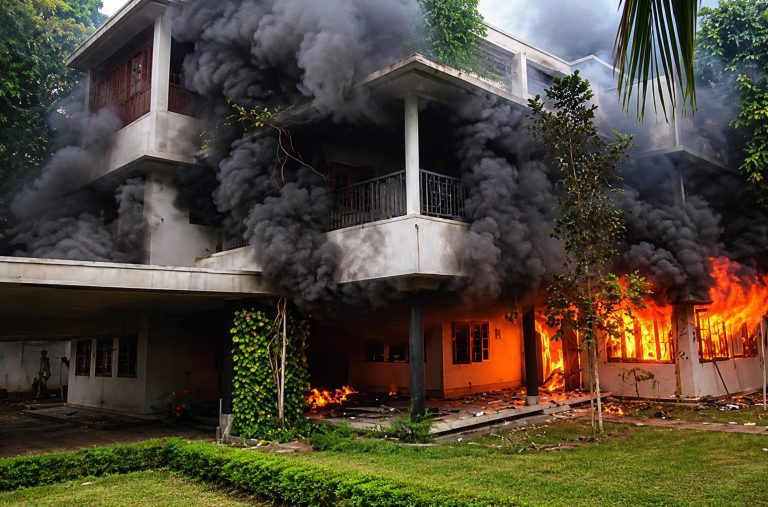
And today, in an era of growing intolerance, deepening darkness and unbridled hate, ready and willing to put national history to the sword, the merchants of darkness have left 32 Dhanmondi a mountain of rubble, a sad memory of what it used to be. These vandals have walked away with every item of priceless note, every piece of memorabilia, from this monument to history. They have felt no shame.

The men and women who were foisted in power in August 2024 have said not a word, have expressed no regret or contrition. The rubble at 32 Dhanmondi speaks loudly of the treason which keeps Bangladesh in its malevolent grip. Sedition has seized the land.

It is our moment of collective shame. We live in the shadow of our shame. And yet we know we will reclaim history again, will be witness to the rise of 32 Dhanmondi again.
For 32 Dhanmondi remains, as it will always remain, our claim on the glory that was Bangabandhu’s politics, on the history which Bengalis forged for themselves in the defining era of the 1960s stretching into the 1970s.

We will build 32 Dhanmondi again. 32 Dhanmondi will rise and shine again. Bangladesh will be ours again.

Author: Syed Badrul Ahsan is a senior Bangladeshi journalist, columnist and author of several books on Bangladesh history and politics.