Home Blog

Former Bangladesh Police Chief Benazir Ahmed Arrested in Dubai

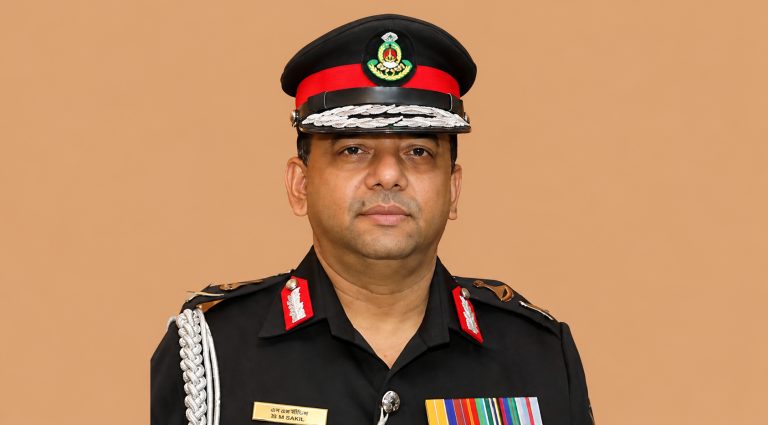
Benazir Ahmed, the former Inspector General of Bangladesh Police and a pivotal figure in the country’s prolonged counter-terrorism campaign, was arrested Sunday by United Arab Emirates authorities in Dubai following an international red notice issued by Interpol.

Senior officials at Bangladesh’s Police Headquarters confirmed that Ahmed was taken into custody on June 14, 2026, in connection with a corruption and money laundering case initiated by the country’s Anti-Corruption Commission (ACC).

The arrest follows a fast-tracked judicial process led by the current administration, which took power following the political transition in August 2024. A Dhaka court had previously finalized corruption charges against Ahmed in May 2026, alleging that the former law enforcement chief had concealed around 110.4 million Bangladeshi Taka (approximately $1 million) in personal wealth.

                                 BENAZIR AHMED ASSET CASE
                                 
      [ Reported Assets ] ██████████████████ 122 Million BDT
      
      [ ACC Findings ]    █████████████████████████████████ 156.8 Million BDT
                          0         50        100       150       200
                                       (Figures in Millions BDT)

A Career Marked by Anti-Militancy Accomplishments

Ahmed, 62, served as the Director General of the elite Rapid Action Battalion (RAB) from 2015 to 2020 before ascending to lead the national police force until his retirement in late 2022. During his leadership, Bangladesh observed a dramatic reduction in domestic militancy and radical extremist activities.

Most notably, Ahmed spearheaded the comprehensive law enforcement responses following the July 2016 Holey Artisan Bakery siege in Dhaka, a crisis that had threatened the secular fabric and economic stability of the nation.

Supporters and legacy observers of the secular state model maintain that Ahmed’s efforts were fundamental in preserving civil order during a period of acute security vulnerability. Under his command, numerous raids effectively neutralized networks belonging to outlawed outfits like Jama’atul Mujahideen Bangladesh (JMB).

However, following the ouster of Prime Minister Sheikh Hasina’s Awami League administration in August 2024, the interim and subsequently formed governing structures initiated expansive investigations into figures closely tied to the previous order.

While the current regime frames these actions as a neutral anti-corruption campaign, critics argue that the institutional machinery is being leveraged to systematically dismantle the secular security architecture that guarded the nation against radical factions for over a decade.

The Scope of the Allegations

According to judicial documents from the Dhaka Special Judge Court-5, the prosecution’s case relies on discrepancies found within Ahmed’s formal asset disclosures. Investigators assert that Ahmed declared roughly 122 million Taka in movable and immovable properties, whereas subsequent probes valued his family’s holdings at 156.8 million Taka.

The defense has repeatedly argued that the valuation methods used by the ACC are politically motivated, inflated, and designed to generate sensational headlines to justify the systematic harassment of decorated public servants.

Speaking at a scheduled briefing at the Anti-Corruption Commission headquarters in Dhaka shortly after the arrest was confirmed on Sunday afternoon, ACC Deputy Director Hafizul Islam stated:

“The commission operates entirely within its statutory legal mandate to ensure transparency among public officials. Our investigation uncovered substantial undisclosed holdings that failed to align with known sources of income, prompting our formal request to international law enforcement partners to execute the judicially sanctioned warrant.”

Conversely, independent legal experts and representatives close to the former police chief’s legal team argue that the current judicial actions are uncomfortably synchronized with a broader administrative effort to satisfy hardline political blocks that historically opposed the secular policies of the previous Awami League government.

Following a court deposition in Dhaka earlier in May 2026, a senior member of Ahmed’s legal defense team remarked to reporters outside the courtroom on the condition of anonymity:

“The rapid acceleration of these procedures against retired officials who defended the state against extremism suggests an underlying administrative intent to pacify specific political factions. We remain confident that a fair, objective assessment of the financial declarations will demonstrate that the assets in question are legitimate and fully accounted for.”

Extradition Protocol and Broader Implications

The process to repatriate Ahmed from the United Arab Emirates to Bangladesh is expected to begin immediately under bilateral judicial cooperation protocols.

The arrest comes at a sensitive time for Bangladesh’s current ruling government, which faces mounting international scrutiny regarding administrative overreach, economic stagnation, and the perceived selective prosecution of civil and security personnel associated with the prior administration.

Analysts note that while the government aims to project a stance of legal accountability, the strategic focus on figures who actively suppressed religious extremism could inadvertently embolden radical elements that are looking to reassert influence within the shifting political landscape.
They waged war against Bangladesh

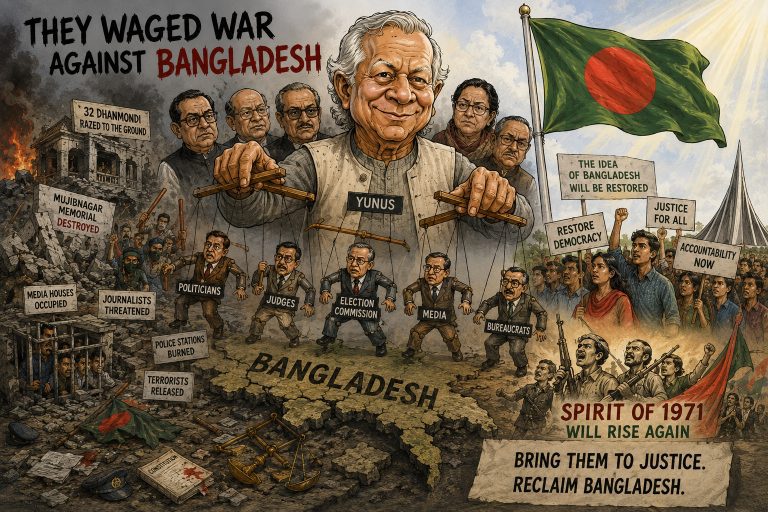
They are no more in power. They are all coming up with excuses for their behaviour in office. They are afraid. They know that history has already consigned them to its dark depths, that their reputations are now in tatters. They are the men and women who have exercised illegitimate power in Bangladesh, have presided over the destruction of all the noble principles which formed the core of the country’s struggle for liberation from Pakistan in 1971.

These are the men and women on whose watch and on whose encouragement as well as indifference great crimes were committed in Bangladesh between early August 2024 and mid-February 2026. They stood by, arrogant in their use of ill-gotten power, as Bangabandhu Sheikh Mujibur Rahman’s iconic 32 Dhanmondi home was razed to the ground by their mob followers. They said not a word when the monument to the nation’s first government in Mujibnagar was destroyed in shameless acts of vandalism. They promoted the ugly, false narrative of the Awami League being a fascist organisation even as they themselves indulged in unbridled fascism. On their watch a kangaroo court tried Prime Minister Sheikh Hasina in absentia and sentenced her to death.

These are the individuals who, with Muhammad Yunus, silenced the media and demonstrated nothing of conscience as their mob followers forced journalists out of jobs and occupied media houses, filling them with their admirers and acolytes. Muhammad Yunus and his advisors, all of them, pushed politicians, judges, election commissioners and journalists into incarceration, clamping on them baseless charges of their having committed murder. No bail was allowed. In the courts, mobs of lawyers supportive of the Yunus cabal physically assaulted the prisoners, pelting them with eggs and shoes and abuse in the filthiest of language. Scores of policemen were lynched by the mobs unleashed by the anti-politics of the regime; police stations were set afire and weapons were looted by vandals. Terrorists were freed from jails. Judges of the Supreme Court and High Court were forced to resign. But these men and women in the Yunus dispensation stayed silent, revelling in the humiliation of an entire nation.

Today, all these men and women without any more power to speak of are beginning to come forth with their mea culpa. They would have the nation know that they were not involved in the decisions made by Yunus and his coterie, that a kitchen cabinet to which they had no access took major political decisions, that they were not consulted over the trade and defence deals with Washington. Should the nation take them at their word? Not at all, for these are individuals who have hollowed out Bangladesh through their illegal yet arrogant exercise of power. On their watch the rule of law went fugitive in the country. Education slipped to depths from which it will take decades to recover. The Yunus regime has spoilt an entire generation of the young through teaching it the many ways in which teachers, parents, politicians and the elderly can be subjected to humiliation. In the eighteen-month occupation of the country by Yunus and his cabal, the illegality of placing restrictions on the Awami League was exercised, Joi Bangla, in the manner of the 1971 Yahya Khan occupation regime, was proscribed, the national flag was desecrated.

Syed Badrul Ahsan

Around the world, Bangladesh slipped in respect. Indeed, it lost every iota of dignity across the globe. The Yunus cabal went into overdrive in ruining diplomatic ties with India. It felt no shame in cosying up to Pakistan even when the powerful men in Islamabad, yet smarting over their humiliation in 1971, gloated over the anarchy that had taken hold of a country which had defeated their army on the fields of battle in 1971. Yunus felt no embarrassment in informing Bill Clinton in New York of the ‘meticulous design’ that had gone into ensuring the fall of the Sheikh Hasina government. He brazenly informed a Voice of America interviewer that a reset button had been pressed by the young in the aftermath of the August 2024 political change. The reset button was nothing but a calculated move by Yunus and his followers to destroy the idea of Bangladesh.

At this point of time, in Bangladesh, the feeling grows that the Awami League led by Sheikh Hasina will return home and in good time ascend to power. In the last twenty-one months, the party’s public appeal has gone up in unstoppable manner. Those so-called civil society elements who once looked upon Yunus as a messiah have now begun to point to the transgressions of the regime Yunus represented. Added to the former Yunus advisors now voluntarily coming forth with excuses for their nefarious role in the unconstitutional regime, one detects not merely a sign of change but a growing sound of fear among those who once celebrated the destruction of the land.

As for Muhammad Yunus, he has now flown to Paris. One is not sure if he will return anytime soon or will return at all. The bigger thought for Bangladesh’s people is that a future democratically elected government, one underpinned by absolute loyalty to Bangladesh’s foundational principles as they were spelt out in 1971, will bring Yunus and every individual who served in his regime to justice, will make them answer for the havoc they wreaked across the country.

These men and women — Yunus, his advisors, his administrative assistants and clerks, indeed everyone complicit with him in the destruction of Bangladesh — must face the law in open court so that every future government is secure in the face of conspiracy, so that every future intrigue and internal as well as external conspiracy against the state is dealt with swiftly and harshly, so that sedition is punished for the treasonous crime it is.

Yunus and his regime waged war against Bangladesh. In the interest of the generations of Bengalis living and yet to be born, they must pay the price for the crimes they committed. The goons and gangsters and mobsters they let loose on the streets must be brought to swift justice. Bangladesh needs to be cleansed of the evil it was pushed into when its constitutionally established government was overthrown by the nation’s enemies, within and without, nearly two years ago. The idea of Bangladesh must be restored. The Spirit of 1971 must be renewed and reaffirmed in all the firmness the nation can and will muster.

Author: Syed Badrul Ahsan is a senior Bangladeshi journalist, columnist and author of several books on Bangladesh history and politics.

Beyond Borders: The Human Cost of India-Bangladesh Push-Ins

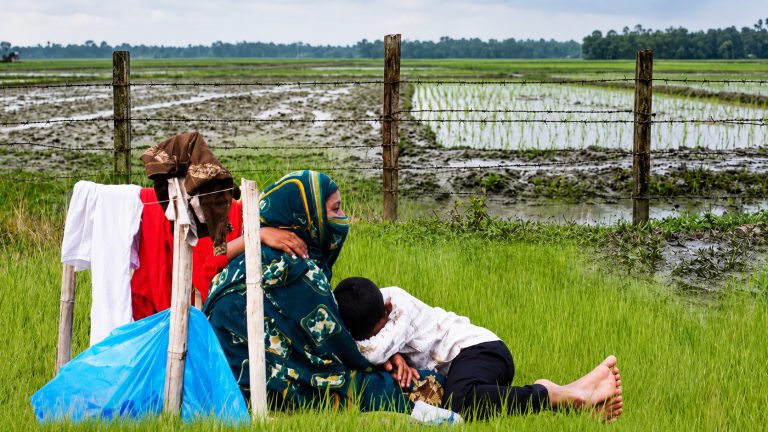
A one-and-a-half-year-old child sits in the dust beneath the blazing June sun, clutching his mother’s clothes as she tries unsuccessfully to shield him from the heat. Around them stand eleven other people—women, men, and children—stranded in a narrow strip of land between India and Bangladesh. There is no proper shelter. There is little certainty about food and water. There is no indication of when their ordeal might end.

They are not soldiers. They are not politicians. They are not diplomats or policymakers. Yet they have become the latest casualties of a dispute between states.

The scene unfolded at the Pragpur border in Kushtia, where a group of twelve people found themselves trapped in what officials call the “zero line” and ordinary people know simply as no-man’s-land. According to local accounts, they had been brought toward the frontier by India’s Border Security Force (BSF). When they attempted to enter Bangladesh, Border Guard Bangladesh (BGB) personnel and local residents blocked their passage, insisting that their identities and nationalities first had to be verified.

And so the group remained stranded under the open sky, caught between two countries and belonging fully to neither.

For days, villagers crossed a bamboo footbridge over the Mathabhanga River carrying drinking water and food. Those simple acts of kindness offered a striking contrast to the political and bureaucratic paralysis surrounding them. While governments debated procedures and security concerns, ordinary people responded to something much more immediate: human suffering.

The tragedy of Pragpur is not an isolated incident. It is merely the most visible symbol of a broader crisis that has been unfolding along the India-Bangladesh frontier in recent weeks.

According to figures cited by Bangladeshi authorities, more than thirty push-in attempts have been reported in recent months, while human rights organizations and local monitoring groups estimate that between 2,300 and 2,500 people have been pushed toward Bangladesh over various reporting periods. In the first week of June alone, Bangladeshi officials reported nearly two dozen separate incidents involving around two hundred people, many of them women and children.

The numbers are disputed. The politics is contentious. The human suffering is not.

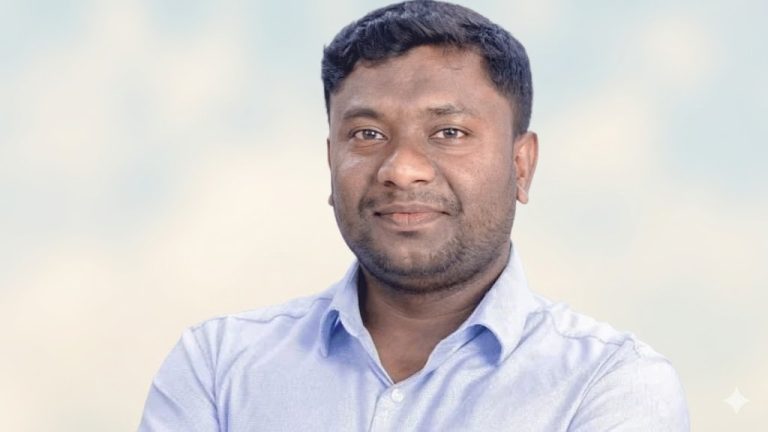
পূলক ঘটক
Pulack Ghatack

Across border districts stretching from Panchagarh and Lalmonirhat in the north to Jashore and Satkhira in the southwest, stories have emerged of families stranded between border fences, elderly people left in no-man’s-land, and frightened children sleeping outdoors while security forces on both sides maintained tense watch.

Some remained trapped for more than thirty-four hours. Others reportedly endured intense rain, extreme heat, and shortages of food and drinking water.

For those who view the issue solely through the lens of national security, such scenes may appear unfortunate but unavoidable. Every country, after all, possesses the sovereign right to regulate its borders and determine who may legally enter or remain within its territory.

That principle is not in dispute.

What is in dispute is whether sovereignty grants governments the right to bypass due process and place vulnerable human beings in situations that undermine their dignity and safety.

No civilized society should answer that question in the affirmative.

The reality is that irregular migration between Bangladesh and India exists and has existed for decades. Thousands of Bangladeshis have crossed into India over the years seeking employment in construction, agriculture, domestic work, and countless other occupations. Some traveled legally and overstayed visas. Others crossed illegally through porous sections of the border.

This is neither unique to Bangladesh nor unique to India.

Across the world, migration follows opportunity. Mexicans have crossed into the United States. North Africans have crossed into Europe. South Asians have traveled throughout the Gulf. Workers move because work exists elsewhere.

Sometimes they move legally. Sometimes they do not. But migration itself is not evidence of criminality. More often, it is evidence of inequality.

A poor laborer from Satkhira who crosses into India looking for work is responding to the same economic forces that drive migrants toward New York, London, Dubai, or Kuala Lumpur. The circumstances may differ, but the underlying motivations remain remarkably similar.

This reality is often forgotten amid the rhetoric surrounding illegal immigration.

People speak of statistics, but not of lives.
They speak of borders, but not of families.
They speak of security, but not of desperation.

Many of the individuals now trapped in the push-in controversy likely left Bangladesh years ago. Some may indeed be Bangladeshi citizens. Others may not. Some may have lived in India for decades. Some may have children born there.

The central problem is that nobody can know with certainty until proper verification takes place. That is precisely why due process exists.

The recent case of sixty-eight-year-old Shasthi Chandra Barman demonstrates the dangers of abandoning it. The elderly man spent nearly twenty-four hours stranded in no-man’s-land near the Jamalpur border after reportedly being pushed toward Bangladesh. Rumors circulated online claiming he was an Indian citizen from Chennai. Others insisted he was Bangladeshi.

Only after his image spread across social media did relatives contact authorities and establish that he was in fact a Bangladeshi citizen from Rajshahi.

Eventually he was rescued and taken into custody before being reunited with his family through legal procedures.

His story raises an obvious question.

If authorities and the public initially disagreed about his identity, how can nationality be determined simply by pushing someone across a border fence?

The answer, of course, is that it cannot. Nationality requires documentation, investigation, and verification.

That is why Bangladesh insists that any repatriation should occur through formal diplomatic mechanisms. Officials in Dhaka have repeatedly argued that if India identifies individuals as Bangladeshi citizens, their names and supporting evidence should be provided through established channels so citizenship can be verified before transfer.

India, meanwhile, argues that thousands of suspected Bangladeshi nationals remain in verification limbo and that the process often takes years. Indian officials say lists containing thousands of names have already been submitted to Bangladeshi authorities.

These are legitimate administrative frustrations. But administrative frustrations cannot justify humanitarian suffering.

The political backdrop makes matters even more complicated.

Migration has become an increasingly potent political issue in India, particularly in West Bengal and Assam. Allegations of illegal immigration have featured prominently in election campaigns for years. Political leaders have promised stronger enforcement measures and stricter action against undocumented migrants.

Following recent political developments in West Bengal, officials have openly discussed identifying, detaining, and deporting alleged illegal immigrants. Reports indicate that holding centers have been established and large-scale verification drives have been undertaken.

Whether one agrees with those policies or not, democratic governments have the right to formulate immigration policies and enforce domestic laws.

What they do not have is the right to abandon humanitarian obligations. The challenge is not whether undocumented migrants should be repatriated. The challenge is how.

There are established international norms. Individuals are identified. Their nationality is verified. Governments communicate through diplomatic channels. Documentation is exchanged. Formal handovers occur.

The process may be slow, but it protects both states and individuals.

What is happening now appears to reflect the absence of a comprehensive bilateral framework capable of handling large-scale nationality disputes.

Ironically, Bangladesh and India have demonstrated in the past that cooperation is possible.

For years, both countries have worked together to rescue and repatriate trafficking victims. Women rescued from brothels, children recovered from trafficking networks, and vulnerable migrants have often been returned through coordinated efforts involving governments, border authorities, and civil society organizations.

Those examples prove that humanitarian cooperation is achievable when political will exists.

The current crisis therefore represents not a failure of capacity but a failure of imagination.

At its heart, this is not a dispute about borders.
It is a dispute about responsibility.
Responsibility to verify identities.
Responsibility to uphold legal procedures.
Responsibility to protect vulnerable people.
And above all, responsibility to recognize humanity.

This recognition is particularly important because anti-India rhetoric offers no solution whatsoever. The suffering of stranded families should not become fuel for nationalist outrage. Nor should concerns about undocumented migration become justification for treating human beings as disposable.

Both reactions miss the central point.

The people stranded in no-man’s-land are not symbols. They are not political weapons. They are not talking points for television debates.

They are mothers carrying children.
They are elderly men trying to find their way home.
They are laborers who spent years searching for work.
They are human beings.

As the latest round of diplomatic exchanges continues, both governments face a choice. They can continue arguing over procedure while vulnerable people remain trapped in uncertainty. Or they can create a joint verification mechanism, establish humanitarian safeguards, and ensure that no child, elderly person, or family is ever again left stranded between two countries under an open sky.

History will not judge either government by the strength of its rhetoric.
It will judge them by how they treated the weakest people caught in the middle.

And for the child sitting beneath the June sun at Pragpur, that judgment cannot come soon enough.

Author: Pulack Ghatack is a journalist and human rights defender.
Email: ghatack@gmail.com

Hormuz Closure Could Send Oil Prices to Record Highs

June 13, 2026
Global oil markets could face a major price shock if the Strait of Hormuz is not reopened soon, energy analysts have warned, saying that the stockpile-based measures currently supporting supply may lose effectiveness by the end of the summer.

According to analysts at S&P Global Energy, the world has relied heavily on oil inventories to offset supply disruptions caused by the ongoing conflict affecting one of the world’s most important energy transit routes. However, they caution that those reserves cannot sustain the market indefinitely.

“There is a limit to how long inventories can compensate for lost supply,” said Aaron Brady, an analyst at S&P Global Energy. He warned that if the Strait of Hormuz remains closed for another month, oil stockpiles in the United States and other regions could fall close to minimum operating levels.

Markets have recently shown signs of relief after U.S. President Donald Trump said a deal with Iran was nearing completion. The comments helped ease concerns, with Brent crude trading at around $87.94 per barrel on Friday morning, its lowest level in three months.

Despite the temporary calm, analysts say the situation could worsen significantly if the disruption continues. Investment bank Macquarie estimates that if the Strait of Hormuz remains closed through the U.S. Labor Day period, Brent crude prices could rise to between $130 and $150 per barrel.

The firm also warned that if the conflict extends into 2027, maintaining the balance between global oil supply and demand could require prices to approach $200 per barrel.

Executives in the oil and gas sector told The Washington Post that some emergency stockpiles could be depleted within weeks. Once inventories fall below critical levels, markets would lose a key buffer against supply shocks, increasing the risk of sharp spikes in both crude oil and gasoline prices.

Analysts at Pickering Energy Partners echoed those concerns, saying U.S. oil inventories could approach minimum operating levels by the end of the summer.

Before the conflict began, global oil inventories had been increasing as production outpaced demand. That surplus, along with weaker Chinese imports, increased pipeline use by major producers such as Saudi Arabia, continued tanker movements, and the release of strategic reserves, has helped prevent oil prices from reaching the levels many analysts had feared.

However, U.S. commercial crude inventories have been declining rapidly. Government data show that stocks fell by more than seven million barrels in the week ending June 5, dropping to 426.5 million barrels.

At the same time, the Trump administration has continued releasing oil from the Strategic Petroleum Reserve, while U.S. crude exports have increased to help offset supply shortages in global markets.

S&P Global estimates that key refining regions in the U.S. Midwest and Gulf Coast currently hold about 351 million barrels of crude oil. Analysts consider 325 million barrels the danger threshold, below which supply disruptions and sudden price spikes become significantly more likely.

The Strait of Hormuz remains one of the world’s most critical energy chokepoints. Analysts warn that if the waterway remains closed for an extended period, the safeguards currently stabilizing global oil markets could gradually weaken, paving the way for renewed volatility and sharply higher energy prices.

World Cup Lights Up the United States as Three-Nation Opening Trilogy Concludes

LOS ANGELES, June 13, 2026 — The United States hosted the final chapter of the 2026 FIFA World Cup’s historic three-country opening celebrations on Friday, delivering a spectacular show at SoFi Stadium in Los Angeles before the Group D match between the United States and Paraguay.

The ceremony began 90 minutes before kickoff, marking the first time since 1994 that the United States has hosted World Cup matches on home soil. The event followed earlier opening celebrations in Mexico City and Toronto, completing the tournament’s unprecedented three-nation launch.

FIFA President Gianni Infantino said the Los Angeles show reflected the cultural diversity of the United States, the energy of its many diaspora communities, and the power of music to unite people.

Music, Culture and Global Stars
The ceremony opened with a powerful drumline performance before American rapper Future and South African pop star Tyla took the stage to perform their collaboration “Game Time,” energizing the packed stadium.

One of the evening’s most anticipated moments featured Lisa, Brazilian singer Anitta and Nigerian rapper Rema performing their multilingual track “Goals” live for the first time. The performance blended Latin pop, K-pop and Afrobeats, symbolizing the global spirit of the tournament.
Katy Perry Shares Stage with Young Norwegian Talent

Pop superstar Katy Perry delivered one of the night’s most memorable performances alongside 10-year-old Norwegian singer Tews Luka. The pair performed “Wonder,” with Perry leading the chorus and Luka providing the song’s closing vocals.

Luka first recorded vocals for the song at the age of five in 2021, inspiring Perry to write the track. Their performance highlighted the young singer’s remarkable journey from a childhood recording to the World Cup stage.

National Anthems and Hollywood Flair
Country-pop duo Dan + Shay performed the U.S. national anthem, while Paraguayan artist Purahéi Soul sang Paraguay’s anthem.

Actor and comedian Jason Sudeikis, a FIFA World Cup 2026 ambassador, welcomed fans to Los Angeles, adding humor and warmth to the festivities.

Historic Opening Celebrations Come to an End
All three opening ceremonies were directed by renowned creative director Marco Balich, known for his work on Olympic opening ceremonies. From Mexico City’s vibrant performances to Toronto’s Indigenous cultural showcase and Los Angeles’ Hollywood-style spectacle, the three events together marked the first three-country opening celebration in World Cup history.

With the ceremonies complete, attention now turns to the action on the pitch as the United States begins its home World Cup campaign in front of its own fans for the first time in more than three decades.

National Cricketer Nayeem Hasan Assaulted by Police in Chittagong

Widespread condemnation has erupted across Bangladesh after Nayeem Hasan, a prominent right-arm off-spinner for the national cricket team, was allegedly assaulted and harassed by police personnel in Chittagong’s Lalkhan Bazar area late Friday night, triggering demands for accountability and a formal investigation.

The incident, which occurred on June 12, has sent shockwaves through the country’s sporting community, drawing strong reactions from the Bangladesh Cricket Board (BCB), the Cricketers’ Welfare Association of Bangladesh (CWAB) and several of Nayeem’s national teammates.

Nayeem, who represents Bangladesh in international cricket, was returning home in a motorized three-wheeler after arriving in the port city from Dhaka, where he had been competing in the Dhaka Premier Division Cricket League (DPL).

According to the cricketer, the confrontation began around 10:20 p.m. shortly after the vehicle exited Chittagong’s elevated expressway. Police officers signaled the auto-rickshaw to stop and then began behaving aggressively toward both him and the driver.

Even after identifying himself as a Bangladesh national team player, Nayeem said he was dragged from the vehicle, beaten on the street and later taken to Khulshi Police Station, where he was subjected to further harassment.

“What happened to me is completely unacceptable. I play for the country and represent Bangladesh on the international stage, yet my identity was completely ignored,” Nayeem told reporters after his release.

“I was pulled out of a regular autorickshaw, beaten on the street, and then subjected to further harassment inside the Khulshi Police Station. As both a citizen and an international athlete, I feel deeply humiliated by the actions of these law enforcement officers.”

The alleged assault on an active international cricketer quickly became one of the country’s most discussed issues on social media, with current and former players expressing disbelief that a national athlete could face such treatment despite identifying himself to authorities.

Providing a detailed account of the incident, Nayeem said police officers stopped his vehicle in the Lalkhan Bazar area as he was traveling home from the airport after a Dhaka Premier League match.

According to Nayeem, officers led by Sub-Inspector Shafiqul Islam ordered him out of the vehicle and began beating him with batons despite repeated attempts to explain who he was.

“About 100 to 200 people gathered at the scene, and even after I identified myself as a cricketer, they did not stop the beating,” he said. “They kept calling me an accused and told me to stay silent.”

Nayeem alleged that the harassment continued after he was taken to Khulshi Police Station, including in the office of the station’s officer-in-charge.

The situation only began to calm after he managed to contact BCB President Tamim Iqbal, who intervened by speaking with senior police officials, according to the cricketer.

The allegations prompted an immediate response from Bangladesh cricket’s leadership.

In a statement, the Bangladesh Cricket Board expressed deep concern over the incident and called for a comprehensive and transparent investigation.

The board said the safety, security and dignity of national athletes must be protected at all times, emphasizing that cricketers who represent Bangladesh internationally serve as ambassadors for the country both on and off the field.

The BCB also urged authorities to ensure that incidents of harassment are not repeated against any citizen, whether a professional athlete or otherwise.

The episode sparked a wave of support for Nayeem across the cricketing fraternity.

Bangladesh Twenty20 captain Litton Das described the incident as deeply disturbing and unacceptable.

“Nayeem, keep your head held high. You are a wonderful human being,” Litton wrote on social media.

“What happened to Nayeem Hasan is extremely concerning and completely unacceptable. As a colleague and teammate, I am truly heartbroken. No citizen of this country deserves such treatment, especially a national cricketer who has represented Bangladesh with pride.”

Veteran wicketkeeper-batsman Mushfiqur Rahim also condemned the alleged assault and called for justice.

“What happened to Nayeem is absolutely unacceptable. I want a fair trial for this incident,” Mushfiqur said.

“It has left me saddened and ashamed. As a citizen, as a Bangladeshi, I strongly protest this. Nayeem, we are by your side.”

Fast bowler Taskin Ahmed also publicly criticized the reported actions of the officers, while numerous current and former players voiced solidarity with the spinner.

As public pressure mounted, Chittagong Metropolitan Police announced administrative measures against those accused of involvement in the incident.

Sub-Inspector Shafiqul Islam, Constable Russell and a civilian police informant identified as Sohel were withdrawn from Khulshi Police Station and attached to Police Lines pending further proceedings.

Amirul Islam, Deputy Commissioner (North) of the Chittagong Metropolitan Police, acknowledged apparent procedural shortcomings and said an investigation had been launched.

“There are established protocols for conducting operations or searches,” Amirul told reporters.

“After speaking with the relevant parties, it appears there were procedural errors in this instance. We are investigating the matter with utmost importance, and those involved will be brought under departmental disciplinary action.”

Meanwhile, Nayeem’s brother, Sabbir Alam, filed a case at Khulshi Police Station accusing the officers and the civilian informant of assault and attempted abduction.

The case adds a criminal dimension to an incident that has already triggered widespread public debate over police conduct, accountability and the treatment of citizens during routine law-enforcement operations.

For many observers, the controversy extends beyond the experience of a single cricketer. The allegations have raised broader questions about whether ordinary citizens without public recognition could face similar treatment and whether existing safeguards are sufficient to prevent abuses of authority.

As investigations continue, Bangladesh’s cricket community and a growing number of citizens are calling for a transparent inquiry and meaningful accountability, saying the outcome will be closely watched as a test of public trust in law-enforcement institutions.


US-Iran Peace Deal Nears as Tehran Signals Strait of Hormuz Reopening

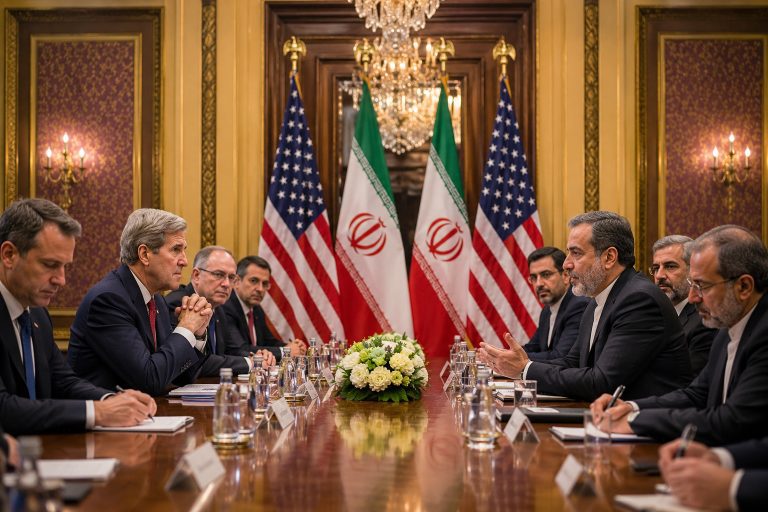
WASHINGTON/TEHRAN, June 13 — Iran and the United States are reportedly close to finalizing an agreement aimed at ending months of conflict, with Tehran indicating that the deal would lead to the reopening of the strategically important Strait of Hormuz and the gradual lifting of US economic restrictions.

Iranian Foreign Minister Seyed Abbas Araghchi told state television that negotiations had reached their final stages and that a formal agreement could be signed within days. According to Araghchi, the proposed deal includes the removal of the US naval blockade on Iran and the restoration of maritime traffic through the Strait of Hormuz, a critical global energy corridor through which around one-fifth of the world’s oil and liquefied natural gas shipments normally pass.

The conflict began on February 28 following US and Israeli strikes on targets across Iran. Tehran responded with attacks against Israel and US-allied states in the Gulf region and effectively restricted shipping through the Strait of Hormuz, disrupting global energy markets and raising fears of a broader regional war.

US President Donald Trump said on Thursday that he had cancelled planned military strikes against Iran after negotiators achieved what he described as a “great settlement.” However, Trump dismissed reports published by Iranian media outlining a 14-point agreement, saying they did not accurately reflect the terms under discussion.

Senior US officials later confirmed key elements of the proposed framework. Under the arrangement, Iran would reopen the Strait of Hormuz, while Washington would ease restrictions on Iranian shipping. The agreement would then enter a 60-day negotiation phase focused on Iran’s nuclear programme and its stockpile of enriched uranium.

US officials stressed that any economic relief for Iran would be tied to verified compliance with the agreement. Sanctions relief and the unfreezing of Iranian assets would occur gradually rather than through immediate financial concessions.

The draft framework also calls on Iran to halt support for regional proxy groups, including Hezbollah and other allied organizations operating across the Middle East.

Pakistan and Qatar have played significant roles in mediating the negotiations. Pakistani Prime Minister Shehbaz Sharif said a memorandum of understanding between Washington and Tehran had been agreed and was awaiting final approval.

Despite growing optimism, officials on both sides have cautioned that previous rounds of negotiations collapsed at late stages. Nevertheless, both Washington and Tehran have expressed confidence that a final agreement could soon be reached.

“If the final stages of our negotiations are completed, this agreement will be signed and announced,” Araghchi said. “This could happen in the coming days. I am very hopeful.”

A successful deal could reduce tensions across the Middle East, restore stability to global energy markets, and open the door to broader negotiations over Iran’s nuclear programme and regional security issues.

Stranded in No Man’s Land: The Human Cost of Border ‘Push-Ins’

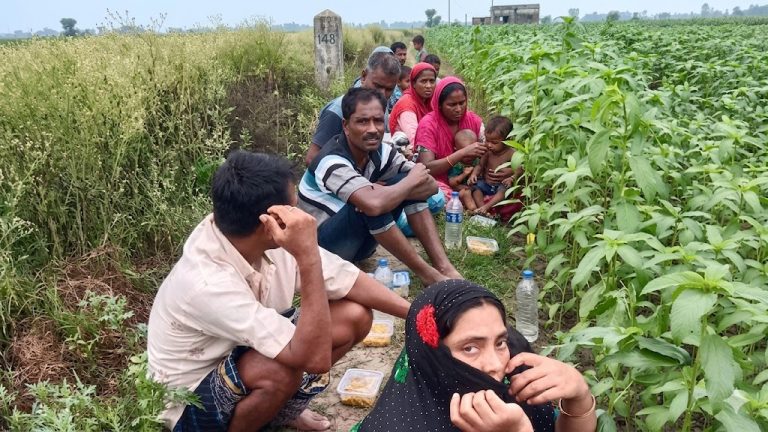
KUSHTIA — Trapped under a blazing sun in a patch of barren field, a toddler aged barely a year and a half clings to his mother. They are part of a group of 12 human beings—four women, four men, and four children—who have suddenly found themselves transformed into geopolitical pawns, stranded on the “zero-line” separating India and Bangladesh.

The group remains marooned at the Pragpur border in the Daulatpur Upazila of Kushtia district. They are caught in a grim limbo: pushed forward by one state’s security apparatus and blocked by another, they have spent agonizing days and nights exposed to a severe heatwave and the terrifying uncertainty of what tomorrow holds.

This distressing scene unfolded at dawn on a Friday, near boundary pillar number 48. Local villagers reported seeing the group being driven toward the border by India’s Border Security Force (BSF) in an informal deportation maneuver locally termed a “push-in.” When the group crossed into Bangladesh territory, alert locals noticed the movement and quickly alerted the Border Guard Bangladesh (BGB). In a joint effort by BGB personnel and nearby residents, the group was turned back to the zero-line, preventing their entry.

Since then, the 12 individuals have been living under the open sky, their lives reduced to a grueling survival test. Driven by pure empathy, local Bangladeshi villagers have occasionally braved the tension, crossing a small bamboo footbridge over the Mathabhanga River to deliver drinking water and basic food to the stranded group. Yet, despite these small acts of community kindness, the atmosphere remains thick with terror and exhaustion.

A Bureaucratic Standoff in No Man’s Land

Efforts to resolve the impasse through formal military channels have stalled. A scheduled flag meeting between the BGB and BSF, meant to decide the fate of the stranded families, failed to take place as planned.

Expressing the administrative challenges and the immediate security measures taken on the ground, Lieutenant Colonel Rashed Kamal Rony, the Commanding Officer of the 47 BGB Battalion, addressed the situation on Friday evening:

“We are maintaining the highest state of alert along the frontier. The BSF has made repeated attempts to push in people during night hours, in some cases by turning off border lights. While we have sought immediate flag meetings to resolve this specific incident through appropriate diplomatic protocols, a positive response is yet to be realized. Until a formal bilateral resolution is reached, these individuals are forced to remain at the zero-line.”

The situation in Pragpur is not an isolated incident. Following the confrontation on Friday morning, BSF units reportedly intensified efforts to initiate fresh push-ins across other points in the Daulatpur frontier, including the Dharmadaha area. In response, a joint vigil comprising BGB troops and local border communities was established, maintaining an all-night watch under strict instructions to block any unauthorized crossings.

The Broader Crisis: Statistics and Geopolitical Friction

The standoff in Kushtia is part of a sharply escalating trend along the 4,096-kilometer shared border between India and Bangladesh—one of the longest and most complex frontiers in the world. According to data compiled by human rights monitoring groups and political alliances in Dhaka, more than 50 distinct push-in incidents have been recorded along the frontier over a recent three-month period alone. These operations involved attempts to informally deport approximately 2,479 individuals into Bangladesh.

The International Society for Human Rights (ISHR) noted a significant surge in border friction, emphasizing that while nations have an undeniable right to secure their perimeters, the methods deployed must align with basic international human rights standards. The crisis is compounded by a rise in border fatalities, with human rights organizations reporting nineteen Bangladeshi citizens killed and dozens injured in border-related incidents over a short timeframe.

This rise in frontier instability coincides with deep political shifts in the region, which have heavily strained relations between New Delhi and Dhaka. In official bilateral forums—such as the Director General-level Border Coordination Conference held in New Delhi—both nations consistently pledge to maintain peace, counter human trafficking, and manage borders through legal repatriation procedures. However, the reality on the ground often tells a starkly different story, where domestic political rhetoric frequently translates into aggressive, informal border management tactics.

Shifting the Lens to a Humanitarian Emergency

While politicians debate migration policies and military commanders discuss border protocols, humanitarian workers argue that the core of the issue is being dangerously ignored: the flagrant violation of human dignity.

Civil society organizations on both sides of the border are increasingly calling for an immediate end to the practice of treating vulnerable migrants as faceless security threats. Commenting on the rising systemic vulnerability of border-dwelling populations, Nasiruddin Patwari, a prominent civic coordinator advocating for frontier communities, remarked during a recent press brief in Dhaka:

“The residents living near the zero-line find themselves trapped in an increasingly perilous humanitarian situation. We are witnessing a dangerous breakdown of basic compassion, where impoverished men, women, and infants are caught in a relentless tug-of-war between states. Security protocols must not be executed at the expense of human life; these people must be treated as human beings first, rather than instruments of political friction.”

The ongoing standoff highlights a profound legal and ethical contradiction. Under international law, informal, forced expulsions—without legal due process or verifiable identification of nationality—violate fundamental humanitarian tenets. When these operations occur, they strip individuals of their legal rights and expose them to extreme physical danger, such as the severe heatwave currently gripping the region.

As the sun sets over the Mathabhanga River, the immediate future for the 12 people marooned at pillar number 48 remains entirely uncertain. Their plight serves as a stark reminder that as long as border management remains a zero-sum political game, the heaviest price will continue to be paid by the poorest and most vulnerable, whose only crime is being caught on the wrong side of an invisible line.

Shibir Leader’s ‘Abduction’ Exposed as Self-Inflicted Disappearance

COMILLA — What initially triggered street protests and frantic police searches as the suspected abduction of a high-ranking Islamist student leader has taken a dramatic turn. Authorities revealed that the political figure staged his own disappearance to evade imminent marriage demands stemming from a criminal rape and forced abortion complaint.

Zisan Ahmed Pradhan, 28, the Central Assistant International Secretary of Bangladesh Islami Chhatra Shibir and former president of the organization’s Comilla District (West) unit, was discovered in a critical, semi-conscious state at Laksam Railway Junction on Friday night. This discovery came nearly 26 hours after his family reported him missing from Daudkandi.

However, within hours of his rescue, Comilla District Police dismantled the abduction narrative, exposing it as a calculated, self-inflicted disappearance.

The Staged Abduction and Rescue

According to initial reports, Zisan vanished on Thursday night, June 11, 2026, after performing Isha prayers at the Daudkandi Model Mosque. His mobile phone was switched off shortly after 8:00 PM, and his WhatsApp account became inactive. Following an unsuccessful search by his family, his cousin, Russel Ahmed, filed a General Diary (GD) with the Daudkandi Model Police Station on Friday morning.

The news of his disappearance prompted immediate political pushback. On Friday afternoon, Chhatra Shibir activists staged a large protest procession that marched from the Daudkandi Model Mosque to the Poura Bazar Big Mosque. Addressing the demonstration, Saiful Islam, Secretary of Chhatra Shibir’s Comilla University wing, and Shakil Adnan, President of Comilla North District Shibir, fiercely condemned the incident and demanded his immediate release, hinting at state or political foul play.

At around 10:00 PM on Friday, local residents at the Laksam Railway Junction spotted a semi-conscious man matching Zisan’s description and alerted the authorities. A rescue team from the Laksam Crossing Police Station responded, transferring him first to a local clinic and subsequently to Comilla Medical College Hospital for treatment.

Conflicting Narratives

Speaking from his hospital bed, Zisan initially maintained the abduction narrative, alleging that a group of unidentified men forced him into a vehicle.

“I was standing by the roadside in front of the Daudkandi Model Mosque after Isha prayers on Thursday night. At that moment, a vehicle abruptly pulled up in front of me, and several men forcibly dragged me inside. I cannot recall anything that transpired after that.”

However, law enforcement officials quickly cast doubt on his account. Police investigators tracking local surveillance feeds discovered that while a specific vehicle had been identified near the scene, the timeline and movements did not align with a forced kidnapping.

Police Investigation and Rape Charges

On Saturday, June 13, 2026, the Comilla District Police issued an official press release that completely altered the trajectory of the case. Investigators revealed that a 25-year-old woman had stepped forward to file a formal case under the Women and Children Repression Prevention Act at the Daudkandi Model Police Station, naming Zisan as the primary accused.

According to the police statement, Zisan had allegedly brought the woman to his rented apartment in Daudkandi on May 20, where he raped her under the false pretense of marriage. When the victim later became pregnant, Zisan reportedly forced her to undergo an abortion using termination medication.

The victim subsequently pressured Zisan to formalize their relationship, and he eventually agreed to marry her on Friday, June 12. Instead of fulfilling his promise, police state that Zisan staged his own kidnapping the night before the wedding to escape the situation, coordinating with his cousin to file the missing person report to establish an alibi.

Official Statements

The law enforcement leadership confirmed that the Chhatra Shibir leader faces severe criminal charges and that his claims of being kidnapped were entirely fabricated to escape legal and social accountability.

In an official statement to the national daily Samakal on Saturday, Comilla District Superintendent of Police (SP) Md. Anisuzzaman stated:

“The missing Shibir leader has been safely rescued, and our investigation confirms that he was never kidnapped. He went into hiding voluntarily to escape the fallout of a fraudulent relationship with a young woman. The victim has filed a formal case against him under the Women and Children Repression Prevention Act, bringing grave allegations that include forced abortion.”

Additionally, Kazi Kamrunnahar Lucky, the Officer-in-Charge (OC) of the Laksam Crossing Police Station, confirmed the initial recovery operations on Saturday morning:

“We recovered Zisan Ahmed Pradhan from the railway junction in an ailing condition after being alerted by locals. While we ensured his immediate transfer to the Comilla Medical College Hospital for medical clearance, the core investigation regarding his disappearance remains with the Daudkandi Police, where his family originally filed the complaint.”

Daudkandi Model Police Station officials confirmed that the missing person investigation has now transitioned into a criminal prosecution. Zisan has been placed under formal arrest and remains under police guard at the hospital pending his official discharge and subsequent court appearance.