Home Blog

NATO Vows to Defend ‘Every Inch’ After Russian Drone Hits Romania

NATO Secretary General Mark Rutte declared that the alliance is prepared to defend “every inch” of its territory after a Russian drone hit an apartment building in Romania during an overnight attack linked to the war in Ukraine.

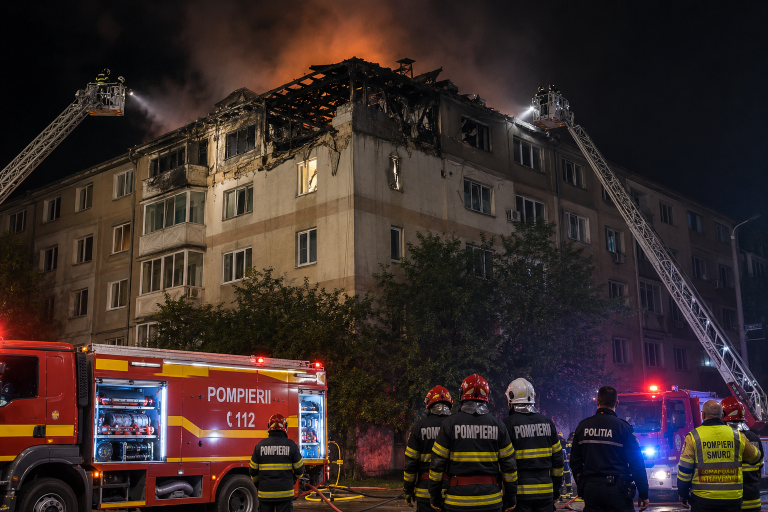
The incident occurred in the Romanian city of Galați, located near the borders of Ukraine and Moldova, where the drone crashed into the roof of a residential building, sparking a fire and injuring two civilians. Emergency services evacuated residents from the building while Romanian military radar tracked the drone’s movement through the country’s airspace.

Romanian President Nicușor Dan convened an emergency meeting of the country’s Supreme Council of National Defence following the strike. Romania’s Foreign Ministry summoned the Russian ambassador and warned that the incident would have diplomatic consequences.

“Russia’s reckless behaviour is a danger to us all,” NATO chief Mark Rutte said in a statement after speaking with the Romanian president. “NATO stands ready to defend every inch of allied territory.”

Romanian officials described the drone strike as a “grave and irresponsible escalation” and a violation of international law. The government also requested NATO to accelerate the deployment of anti-drone defense systems to the country and signaled it may invoke Article 4 of the NATO treaty, which allows consultations when a member state feels threatened.

Russia denied responsibility for intentionally targeting Romania. President Vladimir Putin suggested, without presenting evidence, that the drone could have been a stray Ukrainian weapon and proposed an independent investigation.

The European Union and several Western leaders strongly condemned the incident. European Commission President Ursula von der Leyen said Russia’s “war of aggression has crossed yet another line,” while French Foreign Minister Jean-Noël Barrot called the strike on a NATO and EU member state “irresponsible.”

Ukraine’s Foreign Minister Andrii Sybiha also warned that the incident demonstrated how Russian aggression threatens the security of the entire Black Sea region and Europe.

The strike comes amid intensified Russian missile and drone attacks across Ukraine, raising growing concerns that the conflict could increasingly spill over into neighboring NATO countries.

Americans Struggle Under Record $1.25 Trillion Credit-Card Debt Burden

Americans are increasingly falling behind on their credit-card payments as soaring interest rates and prolonged inflation continue to squeeze household finances, according to a report published by The Wall Street Journal.

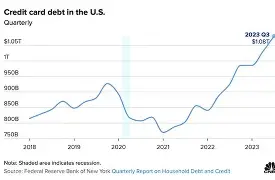
Total U.S. credit-card debt has climbed to approximately $1.25 trillion, while delinquency rates have reached their highest levels since the global financial crisis of 2008, raising concerns among economists and consumer advocates about growing financial instability among middle-class households.

The report highlighted the case of Catherine Clarke, an operations director at a New England hospital, who accumulated nearly $15,000 in credit-card debt despite earning an annual salary of $194,000. With interest rates reaching as high as 26%, Clarke said her monthly payments were barely reducing the balance.

Financial analysts say many Americans are increasingly relying on credit cards to cover essential expenses such as groceries, rent, medical costs, and utility bills as inflation continues to outpace wage growth in several sectors.

Experts described the trend as a “pattern of survival debt,” where consumers use revolving credit not for luxury spending but to maintain everyday living standards amid economic pressure.

The sharp rise in borrowing costs follows aggressive interest-rate hikes introduced by the U.S. Federal Reserve over the past several years to combat inflation. While inflation has eased from earlier peaks, many households continue to face elevated prices on food, housing, insurance, and healthcare.

Consumer advocates warn that high-interest debt could leave millions of Americans financially vulnerable if the labor market weakens or economic growth slows further in the coming months.

Economists are now closely monitoring delinquency trends as a key indicator of consumer financial health and broader economic resilience in the United States.

Trump Weighs Iran Deal as Hormuz Reopening Nears

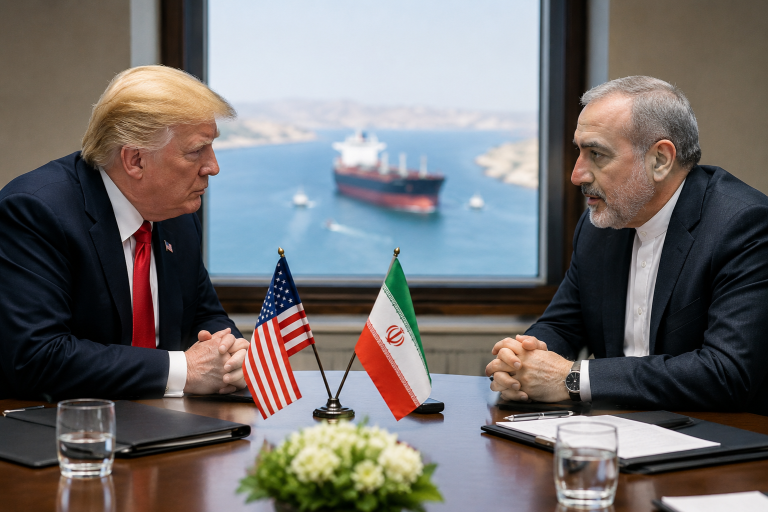
The United States and Iran appeared closer to a new diplomatic understanding on Friday as President Donald Trump said he was preparing to make a final decision on a proposed agreement that could extend the current ceasefire, reopen the strategically vital Strait of Hormuz, and address concerns over Tehran’s nuclear activities.

Speaking from Washington on May 29, Trump said he would convene a meeting in the White House Situation Room to determine whether to approve a framework that has been under negotiation for days through backchannel diplomatic contacts and regional mediation efforts.

“I will be meeting now, in the Situation Room, to make a final determination,” Trump said, referring to the White House’s crisis management center, where senior national security officials monitor major international conflicts.

The proposed arrangement would reportedly extend the ceasefire that has been in effect since early April by another 60 days, allowing commercial shipping and energy exports to resume through the Strait of Hormuz while negotiators continue discussions on Iran’s nuclear program and broader regional security issues.

The Strait of Hormuz, one of the world’s most important maritime chokepoints, carries a significant portion of global oil and liquefied natural gas shipments. Disruptions in the waterway since the outbreak of the conflict have contributed to sharp increases in energy prices and heightened concerns about global economic stability.

Trump reiterated that any agreement would require Iran to permanently abandon efforts to acquire nuclear weapons.

“Iran must agree that they will never have a Nuclear Weapon or Bomb. The Hormuz Strait must be immediately open, no tolls, for unrestricted shipping traffic, in both directions,” Trump wrote in a public statement, adding that the United States would ensure nuclear materials were secured and monitored.

The remarks came as international markets responded positively to reports of potential progress. Oil prices declined while major stock indexes gained ground amid expectations that shipping disruptions in the Gulf could soon ease. Analysts said investors viewed a ceasefire extension as a step toward stabilizing global energy supplies after months of volatility.

However, Iranian officials and media outlets pushed back against portions of Trump’s characterization of the talks.

A senior Iranian source told Reuters that a political understanding had been reached in principle but had not yet been finalized. Meanwhile, Iran’s semi-official Fars News Agency described Trump’s claims as containing a “mixture of truth and falsehood” and accused Washington of attempting to portray a diplomatic victory before negotiations were complete. According to Fars, discussions have included reopening the strait after the removal of U.S. restrictions on Iranian shipping, but there has been no agreement to destroy Iran’s nuclear materials.

The conflict that triggered the current diplomatic efforts began on February 28, when the United States and Israel launched military operations against Iran. Tehran responded by restricting access through the Strait of Hormuz, leading to a prolonged confrontation that expanded across the region and disrupted global trade routes. Thousands of people have reportedly been killed during the conflict, particularly in Iran and Lebanon, while the economic consequences have extended far beyond the Middle East.

One of the most difficult issues in the negotiations remains Iran’s stockpile of highly enriched uranium.

According to the International Atomic Energy Agency (IAEA), Iran possessed more than 440 kilograms of uranium enriched to 60% purity before recent military strikes. Experts say that level of enrichment is technically close to weapons-grade material, although Iran has consistently denied seeking nuclear weapons. The United States has demanded that the stockpile either be removed, diluted, or placed under strict international supervision as part of any long-term settlement.

In an interview with the Financial Times published on May 29, IAEA Director General Rafael Grossi said Kazakhstan had indicated its willingness to receive and store Iran’s highly enriched uranium if a final agreement were reached between Washington and Tehran.

“Kazakhstan has signalled it is willing to take Tehran’s stockpile” of uranium enriched close to weapons-grade levels, Grossi said after discussions with Kazakh authorities. Kazakhstan already hosts an internationally supervised low-enriched uranium bank operated by the IAEA, making it a potential destination for any future transfer arrangement.

Diplomatic observers caution that significant obstacles remain. While negotiators have reportedly drafted a memorandum of understanding, disagreements persist over sanctions relief, access to Iranian funds frozen abroad, the future of Tehran’s nuclear infrastructure, and security arrangements in the Gulf. Trump also faces pressure from political allies who oppose any agreement perceived as too similar to previous nuclear arrangements with Iran.

For now, both governments appear to be weighing whether a temporary extension of the ceasefire can create enough space to pursue a broader settlement. A decision from the White House could determine whether the current pause in hostilities evolves into a more durable diplomatic process or whether tensions in one of the world’s most strategically important regions begin rising again.

Bangladesh Begin U-18 Asia Cup Campaigns in Japan

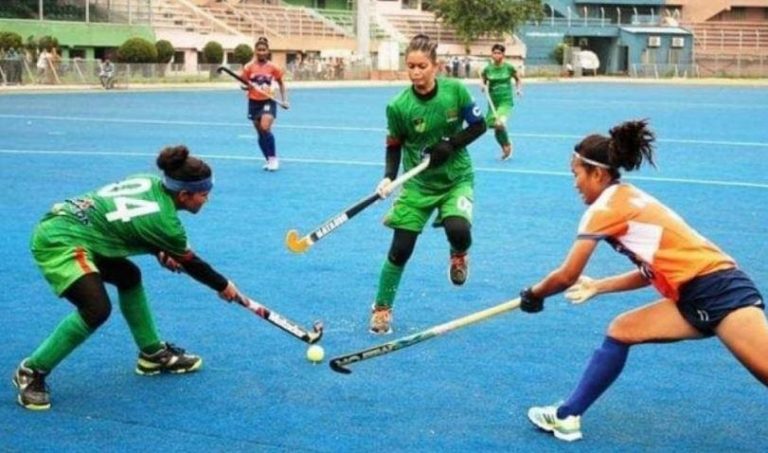
Bangladesh’s men’s and women’s hockey teams will begin their campaigns in the AHF U-18 Asia Cup in Japan on Saturday, with both sides aiming to make an early impact in one of Asia’s most important youth hockey competitions.

The tournament, organized by the Asian Hockey Federation (AHF), is being held from May 29 to June 6 at the Kawasaki Heavy Industries Hockey Stadium in Kakamigahara, Gifu Prefecture, Japan. The event features the continent’s leading under-18 national teams and serves as a major platform for developing future international players.

Bangladesh’s men’s team have been drawn in a challenging Group B alongside Malaysia, Pakistan and China. They will open their tournament against China on Saturday before facing Pakistan on Sunday and Malaysia on Tuesday.

The Bangladesh women’s side have also been placed in Group B, where they will compete against hosts Japan, China and Chinese Taipei. The team will begin its campaign against Chinese Taipei on Saturday, followed by matches against Japan on Sunday and China on Tuesday.

According to the Bangladesh Hockey Federation, the men’s team completed its final preparations with a practice match against India on Thursday, securing a draw against one of Asia’s strongest hockey nations at youth level. The result was viewed as an encouraging sign ahead of the tournament opener.

The competition features eight teams in both the men’s and women’s categories. Teams are divided into two groups, with the top sides advancing to the knockout and classification stages that will determine the final standings.

The AHF U-18 Asia Cup has increasingly become an important pathway for young players seeking progression to junior and senior national teams. Several leading Asian hockey nations, including India, Pakistan, Japan, South Korea, China and Malaysia, use the tournament as a platform to identify future international stars.

Speaking ahead of the tournament, India U-18 men’s captain Ketan Kushwaha said the event would be highly competitive and valuable for player development.

“The team is feeling confident and excited ahead of the Asia Cup. The camp in Bhopal and the matches against Australia helped us improve a lot as a unit and understand the areas we need to work on. We know every match in the tournament will be competitive, but the squad is motivated to give its best and make the country proud,” Kushwaha said in comments published by Hockey India ahead of India’s opening match in Japan.

India U-18 women’s captain Sweety Kujur also highlighted the significance of the competition, saying: “The entire squad is excited to finally begin the tournament. We have trained really hard over the past few weeks and the Australia matches gave us important match exposure before the Asia Cup.” She made the remarks in a preview released by Hockey India before the start of the event.

For Bangladesh, the tournament represents an opportunity to test its emerging talent against some of Asia’s strongest hockey programs. The country has a long tradition in field hockey and has remained competitive in regional competitions despite facing challenges related to infrastructure and international exposure.

Bangladesh’s men’s hockey team is currently ranked 19th in Asia among the participating nations, according to tournament information released by the Japan Hockey Association ahead of the event. The group-stage clashes against Pakistan, Malaysia and China are expected to provide a significant benchmark for the next generation of Bangladeshi players.

The women’s team, meanwhile, faces a difficult assignment against hosts Japan and regional powerhouse China. However, officials hope the tournament experience will contribute to the continued development of women’s hockey in Bangladesh, where efforts have been underway in recent years to expand youth participation and strengthen the national talent pipeline.

All matches are being played at the Kawasaki Heavy Industries Hockey Stadium in Kakamigahara, with the semi-finals scheduled for June 5 and the finals on June 6.

As the continental championship gets underway, both Bangladesh teams will be seeking strong performances that could boost confidence and provide valuable experience on the Asian stage.

Hasina Challenges UN Death Toll Estimate in 2024 Bangladesh Unrest

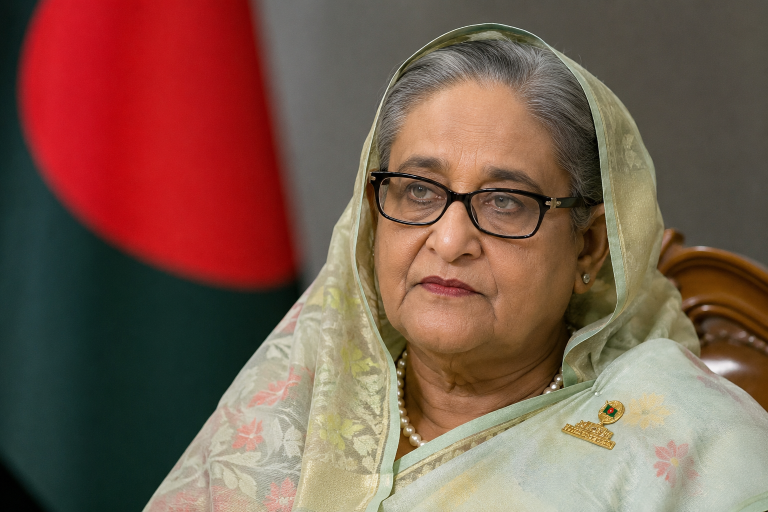
Lawyers representing former Bangladesh Prime Minister Sheikh Hasina have asked the United Nations human rights office to publicly correct its estimate of deaths during the July–August 2024 unrest, arguing that later official Bangladeshi records reveal a significant discrepancy in the casualty figures used in one of the country’s most consequential political investigations.

Lawyers acting for former Bangladesh Prime Minister Sheikh Hasina have asked the United Nations human rights office to publicly correct its estimate of deaths during the July-August 2024 upheaval, arguing that later official Bangladesh records expose a major gap in the casualty figure used to frame one of the country’s most consequential political investigations.

In a letter dated May 28 and addressed to U.N. High Commissioner for Human Rights Volker Türk, British barrister Steven Powles KC challenged the Office of the High Commissioner for Human Rights (OHCHR) over its February 2025 fact-finding report on the violence that preceded the collapse of Hasina’s government.

Powles described it as “of serious concern that a UN report has arrived at a conclusion that diverges so far from the truth” and requested a correction and public retraction of the reported death toll. According to news agency reports, the letter argues that inaccurate casualty figures were used to reinforce a political narrative against Hasina and the Awami League government.

The legal challenge comes at a politically sensitive time in Bangladesh. The country is now governed by Prime Minister Tarique Rahman’s Bangladesh Nationalist Party (BNP) government, which assumed office following the February 2026 election. The election took place after the political transition overseen by the former Muhammad Yunus-led interim administration, during which the Awami League was barred from contesting. In the absence of the Awami League, the BNP secured a two-thirds parliamentary majority, while Jamaat-e-Islami emerged as the principal opposition party.

Challenge to U.N. casualty estimate

The OHCHR report, published on Feb. 12, 2025, examined violence and alleged human rights violations between July 1 and Aug. 15, 2024. The investigation was launched after Yunus, then chief adviser of the interim government, formally invited the U.N. human rights office to conduct a fact-finding mission in a letter dated Aug. 28, 2024.

According to the report, OHCHR assessed information from government agencies, civil society organizations, witnesses, medical records and open-source materials. It concluded that “as many as 1,400 people could have been killed during the protests,” with the detailed casualty assessment focusing primarily on deaths recorded between July 15 and Aug. 5.

The report stated that Bangladesh’s Ministry of Health had recorded 841 deaths at the time the report was finalized. OHCHR said it considered that figure incomplete after Bangladesh’s National Security Intelligence agency submitted information on 314 additional individuals allegedly killed during the unrest who were not included in the ministry’s database. Following a review of multiple lists and the removal of duplicate entries, the U.N. office arrived at its estimate of up to 1,400 deaths.

Hasina’s legal team disputes that methodology and argues that official records subsequently published by the same administration that invited the investigation present a substantially different picture.

On Jan. 16, 2025, Bangladesh’s Ministry of Liberation War Affairs published its first official gazette listing 834 people recognized as martyrs of the July–August uprising. The gazette, signed by Deputy Secretary Haridas Thakur, included names, addresses and medical case identification numbers.

The list later underwent revisions. According to reporting by Prothom Alo in August 2025, ten additional names were added in June, increasing the total to 844. Subsequently, eight names were removed after questions emerged regarding duplication and whether some individuals had directly participated in the uprising. The official total at that stage stood at 836, while the ministry continued verification efforts.

The Ministry of Liberation War Affairs website now contains additional martyr gazettes, including one dated March 16, 2026, indicating that the official documentation process continued after publication of the initial list cited in the lawyers’ submission. The latest cumulative figure could not immediately be independently confirmed from publicly available records.

The distinction is significant because OHCHR’s figure represented an estimate of protest-related deaths compiled from multiple sources, while the government gazette served as an official recognition list connected to compensation and state benefits for designated martyr families. The two records were not necessarily compiled for identical legal or administrative purposes.

Report documented abuses by multiple actors

The OHCHR report made serious allegations regarding the conduct of the former government during the unrest. At the same time, the report also documented violence directed at Awami League members, police officers and religious minorities following Hasina’s removal from office.

According to OHCHR, attacks intensified after Aug. 5, 2024, with Awami League offices and residences targeted, police installations burned and individuals assaulted or killed.

The report cited Bangladesh Police figures showing that 44 police officers were killed and 2,308 injured between July 1 and Aug. 15. It also noted that the Awami League submitted a detailed list alleging that 144 party officials and activists were killed during the period.

OHCHR further recorded attacks on Hindu, Ahmadiyya, Buddhist and Christian places of worship between Aug. 5 and Aug. 15 and stated that it continued to receive reports of abuses against religious and Indigenous communities beyond the period covered by its investigation.

Hasina’s legal team argues that these findings received considerably less international attention than the allegations directed at her government. The lawyers contend that the limited investigation period prevented a fuller examination of violence against Awami League supporters and minority communities following the installation of the Yunus administration on Aug. 8, 2024.

Questions over the interim administration’s role

The lawyers have also questioned whether an investigation initiated at the request of the Yunus administration could adequately examine allegations involving individuals and groups associated with the political transition.

OHCHR noted in its report that Yunus first discussed the matter with Türk during a phone conversation on Aug. 14, 2024, before issuing the formal invitation later that month. The U.N. office described its investigation as independent and impartial and thanked the interim government for facilitating access to officials and information.

The legal submission reportedly argues that the inquiry did not sufficiently address the political interests of the interim administration or the actions of its allies during the transfer of power.

The issue received additional attention after remarks made by Türk during an interview with BBC HARDtalk host Stephen Sackur on March 5, 2025.

Türk stated that the U.N. had warned the Bangladesh Army that, if it became involved in suppressing protesters, Bangladesh could risk losing its status as a troop-contributing country to U.N. peacekeeping operations.

“We actually gave the warning to the army … they may not be allowed to be a troop-contributing country anymore,” Türk said. “As a result, we saw changes.”

The Bangladesh Army later rejected the suggestion that it had received such a direct warning. In a statement issued through the Inter Services Public Relations Directorate on March 10, 2025, the military said that any concerns raised by the U.N. would have been communicated to the government of the time rather than directly to army leadership. The statement further said that Türk’s comments could misrepresent the army’s role and damage its reputation.

Ongoing debate over casualty figures

The central issue raised in Powles’ letter concerns the casualty estimate itself. Although OHCHR did not state that exactly 1,400 people were killed, its estimate that “as many as 1,400 people could have been killed” became one of the most frequently cited descriptions of the 2024 uprising.

That figure has subsequently appeared in political statements, international reporting and legal discussions relating to former members of the Hasina administration.

Hasina’s legal team argues that subsequent official records raise questions about the estimate and warrant further review by the U.N. rights office. The lawyers contend that any significant discrepancy between the estimate and later government documentation should be publicly addressed.

The disagreement underscores broader debates over how deaths associated with the 2024 political upheaval should be documented and interpreted, particularly given the differing methodologies employed by international investigators and Bangladeshi government agencies.

As of publication, OHCHR had not publicly responded to the reported May 28 letter, and there was no indication that the U.N. rights office had initiated a review or revision of its findings.

PDF: Sheikh Hasina’s Original Letter to the UN

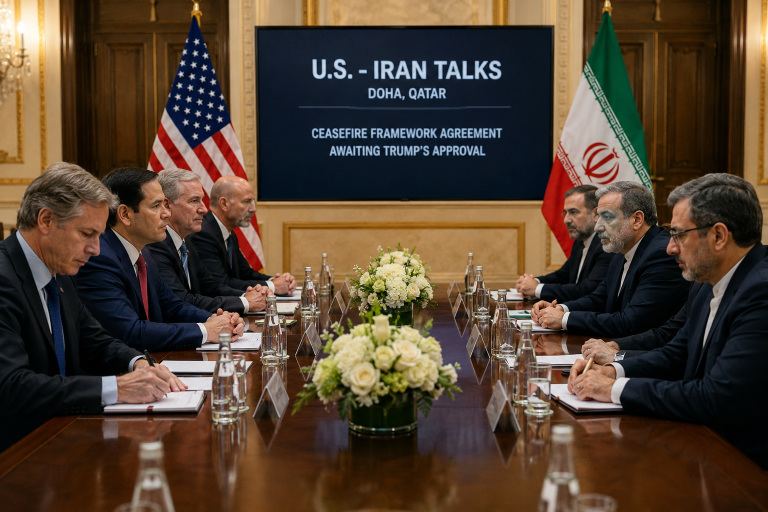
U.S., Iran Reach Framework for 60-Day Ceasefire Extension

Awaiting Trump’s Approval

The United States and Iran have reportedly reached a preliminary framework agreement to extend a 60-day ceasefire linked to the ongoing regional conflict involving Israel and Iran, according to reports citing negotiations held in Qatar. However, the deal has not yet taken effect as it still awaits final approval from U.S. President Donald Trump.

According to Al Jazeera, American and Iranian negotiators have agreed on the outline of a “Memorandum of Understanding” (MoU) aimed at extending the temporary ceasefire and paving the way for a broader peace agreement.

The proposed framework reportedly includes several key provisions, such as reopening the strategically important Strait of Hormuz, Iran’s commitment not to pursue nuclear weapons development, discussions over easing U.S. sanctions, and the possible release of frozen Iranian assets.

Despite signs of diplomatic progress, the White House confirmed that President Trump has not yet signed or formally endorsed the agreement, leaving uncertainty over its implementation.

Tensions Over the Strait of Hormuz
One of the central issues in the negotiations is the future management of the Strait of Hormuz, a vital global shipping route for oil exports.

U.S. officials reportedly expect the waterway to be fully reopened under the agreement, while Iran has maintained that it will not relinquish sovereignty or strategic control over the strait. Iranian officials suggested the route could operate under a “new management arrangement” involving coordination between Tehran and Oman.

Washington has also warned Tehran against imposing tolls or introducing new restrictions on international shipping through the strait.

Military Escalation Continues
Despite ongoing diplomatic efforts, hostilities in the region have continued.
Reports indicate that Israeli airstrikes in southern Lebanon caused additional casualties, while Iran claimed to have intercepted and destroyed hostile drones near the Bushehr region. Iranian naval forces also reportedly issued warnings to several vessels near the Strait of Hormuz.

Meanwhile, clashes between Israel and Hezbollah have persisted, underscoring the fragile nature of the ceasefire discussions.

Trump’s Position Remains Unclear
Analysts believe President Trump is interested in securing a diplomatic breakthrough but remains cautious about the terms of the agreement.

Observers note that maintaining prolonged military deployments and naval blockades in the region would place increasing pressure on the United States and its allies, contributing to momentum for a negotiated settlement.

The United Nations has urged all parties to respect ceasefire efforts, while the European Union is reportedly considering measures to strengthen maritime security operations around the Strait of Hormuz.

Several Middle Eastern countries have also called for prioritizing diplomacy to prevent the conflict from escalating further.

Probe Launched After Six Newborns Die at Dhaka Hospital

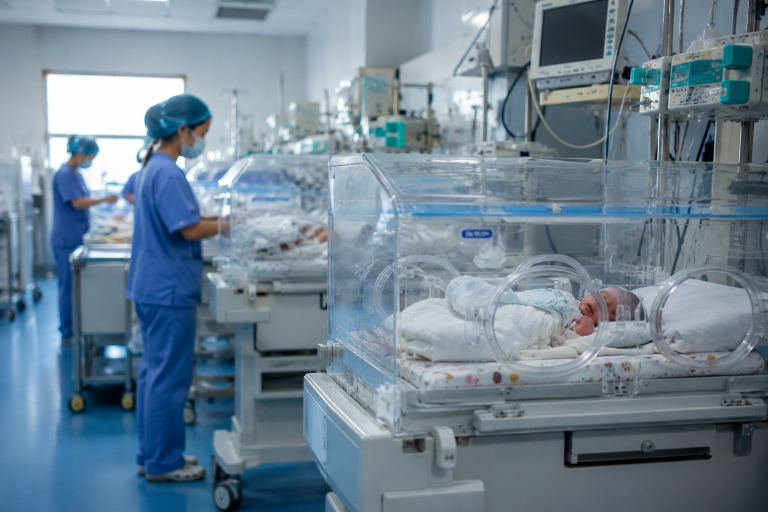
DHAKA — Bangladeshi health authorities have launched an urgent investigation after six newborn babies died within hours of each other at a private hospital in the capital Dhaka, triggering nationwide concern over hospital safety standards and neonatal care conditions.

The deaths occurred early Wednesday, May 27, at Ad-Din Medical College Hospital in the city’s Moghbazar area. The infants, all between one and three days old, were being kept in the hospital’s post-delivery ward alongside their mothers when they suddenly fell critically ill.

Hospital authorities said the exact cause of the deaths had not yet been confirmed. However, relatives of the deceased newborns alleged that a gas leak linked to the ward’s air-conditioning system may have caused the tragedy. Police, health officials and investigators from Bangladesh’s Criminal Investigation Department (CID) later visited the hospital to examine the ward and collect evidence.

The incident has shocked Bangladesh during the Eid-ul-Azha holiday period, when hospitals across the country are already under pressure from seasonal patient loads and an ongoing measles outbreak that has strained pediatric healthcare services nationwide.

Professor Dr. Nahida Yasmin, director general for hospitals and nursing at Ad-Din Hospital, confirmed the deaths to reporters and later provided details during a press briefing at the hospital on Wednesday afternoon.

“There were 11 mothers and six newborn babies in the ward where the incident occurred,” Dr. Nahida told journalists in Dhaka on May 27. “This is our post-delivery ward, where mothers stay after childbirth with their babies and one accompanying family member.”

According to Dr. Nahida, the babies had initially appeared healthy after delivery. She said the ward was air-conditioned and that mothers complained during the night that the room had become excessively cold.

“During the night, some mothers asked the nurses on duty to turn off the air conditioning because they felt cold,” she said. “Around 3:00 a.m., two babies suddenly became ill and were taken to the NICU. Doctors examined them and said they were stable, so they were brought back to the ward.”

She said the situation deteriorated rapidly several hours later.

“At around 6:00 a.m., the mothers again informed nurses that the babies appeared unwell. All six newborns were then taken to the NICU,” Dr. Nahida said. “Two babies died while being taken there. The remaining four were placed on ventilator support, and every effort was made to save them, but unfortunately they could not be revived.”

When reporters asked whether the simultaneous deaths could have been caused by a technical malfunction or gas leakage, Dr. Nahida declined to speculate before the investigation was completed.

Health officials later acknowledged that investigators were examining whether a failure in the ward’s cooling or ventilation system contributed to the deaths.

Professor Prabhat Chandra Biswas, director general of Bangladesh’s Directorate General of Health Services (DGHS), told reporters after visiting the hospital that the ward had no alternative ventilation system if the air conditioner stopped functioning.

“Early this morning, a suffocating environment was found in this room, possibly due to complications related to the air-conditioning system or some other reason,” he said on May 27 while speaking to journalists at the hospital. “The AC system was arranged in such a way that if it stopped functioning, there was no alternative ventilation arrangement.”

He added that the government would take strict action if negligence or technical failures were identified.

Bangladesh’s Ministry of Health and Family Welfare announced the formation of a three-member investigation committee to determine the cause of the deaths. The committee was instructed to submit its findings within three days.

According to an official ministry order signed by Deputy Secretary Dr. Mohammad Mostafizur Rahman on May 27, the panel is headed by a joint secretary from the ministry’s private healthcare management division. Additional members include officials from the Directorate General of Health Services and its legal branch.

The committee has been tasked with identifying the cause of the deaths and recommending preventive measures to avoid similar incidents in the future.

Health Minister Sardar Md. Sakhawat Hossain Bakul said the government had ordered a report within 72 hours and warned that legal action would follow if the hospital was found responsible.

Speaking to journalists after Eid prayers at the Manohardi Government Model Pilot High School Eidgah in Narsingdi district on Thursday morning, May 28, the minister described the incident as “deeply painful.”

“On this joyous Eid day, we received the tragic news of newborn deaths at Ad-Din Hospital,” the minister said. “It appears there may have been a gas leakage after the ward’s air conditioning was turned off at the request of one of the mothers. The matter is extremely unfortunate.”

He said a probe committee had been formed immediately after the government learned of the incident.

“We have instructed the committee to submit its report within 72 hours. Once the report is received, all necessary legal action will be taken against the hospital if wrongdoing is found,” he said.

The deaths also occurred against the backdrop of a major measles outbreak in Bangladesh that has placed enormous strain on hospitals and pediatric units across the country. Reuters reported last week that at least 86 children had died from confirmed measles infections in 2026, while more than 426 additional suspected deaths were under review. Health authorities have identified more than 62,000 suspected cases nationwide.

During his remarks after Eid prayers, the health minister referenced the outbreak and said the government had expanded vaccination campaigns to prevent further child deaths.

“If we had failed to contain measles, thousands of children could have died,” he said. “We have sufficient vaccines in hand, and every child will be brought under vaccination coverage.”

Families of the deceased infants remained devastated as investigators worked inside the hospital. Witnesses described scenes of panic and confusion in the ward as the babies suddenly became critically ill one after another.

AFP quoted a grieving grandmother, identified as Janu, as saying her granddaughter had appeared healthy just hours earlier.

“My granddaughter was perfectly okay until last night,” she said while holding the baby’s shrouded body outside the hospital on May 27. “The babies turned blue one after another.”

The deaths have renewed scrutiny of safety conditions inside private hospitals in Bangladesh, particularly regarding neonatal care, emergency ventilation systems and technical maintenance standards in intensive care and maternity wards.

Police officials said the CID and forensic experts were examining whether there had been any malfunction involving the air-conditioning system or electrical equipment.

Until the investigation is complete, authorities have not officially confirmed what caused the six newborns to die within such a short period.

“Not on India’s Advice”: Hasina Says Decision on ‘When and How’ She Returns to Bangladesh Is Entirely Hers

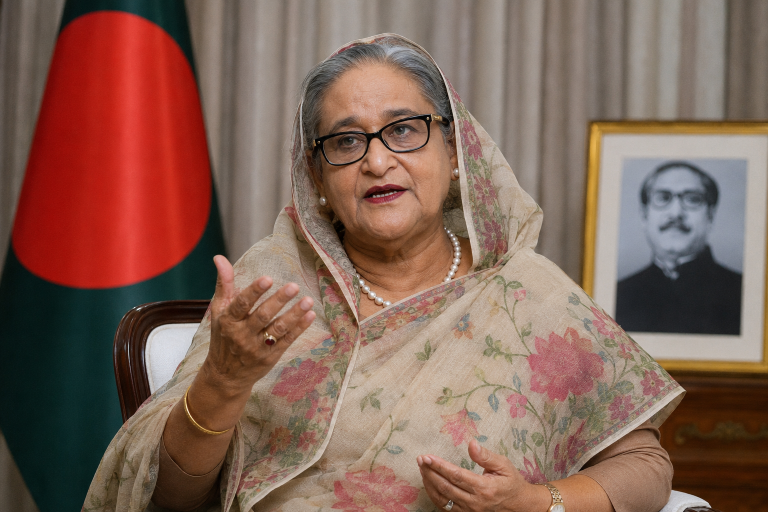
Former Bangladesh prime minister and Bangladesh Awami League president Sheikh Hasina has said that her return to Bangladesh will be decided solely by her and not on the advice of India or any other foreign power, despite ongoing legal cases and a death sentence handed down against her.

Speaking in an online interview with journalist Amal Sarkar, Hasina said, “India is a democratic and sovereign state. They make decisions according to their own laws and international norms. Their decisions are entirely their own, and it would not be appropriate for me to comment on them. However, I can say that the decision regarding when and how I return to my country is entirely mine.”

“My strength lies in the people of Bangladesh and their love. Empowered by the strength of the people, I shall return. No unlawful verdict or political conspiracy can stop me,” she added.

Hasina’s remarks came amid growing political debate over her announced return to Bangladesh after months in India following her departure from the country on August 5, 2024. During a virtual Awami League meeting on May 17, she had declared, “Prepare a prison and gallows for me. Return my passport. Send a plane to take me away.”

The statement sparked strong reactions across Bangladesh, with Awami League supporters organising rallies and processions welcoming her planned return, while critics and opposition groups responded sharply.

May 17 carries historical significance for Sheikh Hasina and the Awami League. On the same day in 1981, Hasina returned to Bangladesh from India after more than six years in political exile following the assassination of Bangabandhu Sheikh Mujibur Rahman and most of his family members in 1975.

Hasina said she was initially unaware that she was being flown to India aboard a Bangladesh Air Force aircraft on August 5, 2024. According to her, security officials later informed her that remaining in Bangladesh could pose a serious threat to her life.

Responding to questions about the tribunal that sentenced her to death, Hasina alleged that the interim administration led by Nobel laureate Dr Muhammad Yunus had politically manipulated the International Crimes Tribunal.

“The tribunal established under the International Crimes (Tribunals) Act, 1973 was originally created to prosecute war criminals,” she said. “The illegal interim government amended the law 37 times through four ordinances and conducted a politically motivated trial against me.”

Hasina further alleged that anti-Liberation War figures had been appointed as judges and prosecutors in the tribunal.

“The death sentence against me is not justice; it is revenge for the war crimes trials,” she said. “This kangaroo trial did not follow any standards of fair justice. I was denied the opportunity to defend myself legally.”

Drawing parallels with the imprisonment of Bangabandhu Sheikh Mujibur Rahman in a Pakistani prison during the 1971 Liberation War, Hasina said she was not afraid of death.

“My father was sentenced to death in a Pakistani jail in 1971, yet he did not bow his head. I am his daughter,” she said. “I have survived 19 assassination attempts. Threats, imprisonment and repression have never stopped me before, and they will not stop me now.”

Hasina also recalled her earlier political returns to Bangladesh. In 1981, she returned despite military rule under former president Ziaur Rahman. In 2007, she defied restrictions imposed by the military-backed caretaker government and returned to Bangladesh amid political uncertainty.

“In 1981, I returned as a grieving daughter to rebuild a political party. In 2007, I returned to restore democracy. This time, I must return to rebuild a country,” she said.

Hasina accused the current BNP-led administration of destroying state institutions, undermining the spirit of the Liberation War and isolating Bangladesh diplomatically.

“I had built Bangladesh on a strong foundation and improved people’s lives regardless of political identity,” she claimed. “After August 5, much of that has been destroyed.”

Calling herself an “experienced stateswoman,” Hasina said she understands the aspirations of the people and believes she can once again lead the country through crisis with public support.

“The path ahead will be difficult,” she said, “but together with the people, I believe Bangladesh can be rebuilt again.”

Bangladesh Saves ‘Donald Trump’ Buffalo From Eid Sacrifice

DHAKA — A rare albino buffalo nicknamed “Donald Trump” for its flowing blond hair has been spared from Eid-ul-Azha sacrifice after a last-minute government intervention, turning an unusual livestock story into a national conversation about public curiosity, animal preservation and the changing culture of Bangladesh’s Eid cattle market.

The nearly 700-kilogram buffalo had already been sold for sacrifice and taken to the home of its buyer in Keraniganj, on the outskirts of Dhaka. But on Wednesday, May 27, hours before Eid-ul-Azha celebrations began across Bangladesh on Thursday, authorities moved in and took the animal into official custody. The buffalo was later shifted toward preservation at the Bangladesh National Zoo in Dhaka.

The animal’s new fame came from its striking appearance: a cream-colored body, pinkish nose and long blond hair falling across its forehead. The look drew comparisons to U.S. President Donald Trump’s signature hairstyle, turning the buffalo into a social media sensation and attracting visitors before Eid.

A Home Ministry official said on Wednesday that the decision was taken at the last moment because of the unusual public attention surrounding the animal. “At the last moment, the decision was taken to spare the buffalo from sacrifice due to security concerns and the unusual level of public interest,” the official said in Dhaka, explaining the government’s intervention before the Eid sacrifice.

The buffalo’s buyer, Moniruzzaman, said police arrived at his home and informed him that the government had decided to take the animal. He told The Voice in Keraniganj on May 27 that he did not want to create any disorder with the authorities.

“I bought the buffalo 10 days after Eid-ul-Fitr. Three days ago, I brought it home from the farm. This afternoon, people from the police station came and said the government would take it. We do not want any disorder. The government wanted it, so we handed it over,” Moniruzzaman said.

He added that authorities told him he would either be compensated for the buffalo’s value or provided another animal for sacrifice. “The government said they would pay us whatever price it is worth, or else they would provide a cow for sacrifice,” he told The Voice.

The unusual intervention came as Bangladesh prepared for one of its largest annual religious and livestock events. Eid-ul-Azha, also known as the Festival of Sacrifice, is marked by the sacrifice of cows, goats, sheep, buffaloes and other permitted animals. The meat is traditionally shared among family members, relatives, neighbors and poorer households, giving many low-income families a rare opportunity to consume meat.

This year, the country had a large supply of sacrificial animals. Fisheries and Livestock Minister Mohammad Amin Ur Rashid said at a press conference at the Secretariat on May 3 that Bangladesh had enough domestic livestock to meet Eid demand.

“The total number of animals suitable for sacrifice has been estimated at 1,23,33,840, while the projected demand stands at 10,106,334,” the minister said, according to reports citing the Department of Livestock Services.

Official data showed that cattle and buffaloes made up more than 5.69 million of the available animals, while goats and sheep accounted for more than 6.63 million. The surplus was expected to exceed 2.2 million animals, reducing concerns over supply shortages and limiting the need for livestock imports.

Against that vast market, the albino buffalo stood out as a rare exception. In Bangladesh, most buffaloes are dark-skinned, making albino animals highly unusual. The buffalo’s pale body and blond hair made it visually distinct among thousands of animals being prepared for sale and sacrifice.

The animal was raised at Rabeya Agro Farm in Paikpara, Narayanganj, before being sold. Farm owner Ziauddin Mridha told The Voice that the name “Donald Trump” was suggested by his younger brother because of the animal’s hair.

“My younger brother named the buffalo Donald Trump because the hair on the front of its head resembles Donald Trump,” Mridha said in Narayanganj before the Eid festival.

Mridha also described the buffalo as unusually calm. “Despite its striking appearance, it is very calm by nature. It is an albino buffalo, and animals of this type are generally gentle and do not become aggressive unless provoked,” he said.

The buffalo reportedly received special care at the farm, including four baths a day and four daily meals. Its handlers said this extra attention was necessary because of its unusual condition and high public interest.

By the time the animal was taken to Keraniganj, videos and photos had spread widely on social media. Visitors began arriving at the buyer’s home to see it in person. The family had to keep the animal inside because of the crowd. Even after the buffalo was taken to the police station, visitors continued coming to the house, only to learn that it had already been removed.

Keraniganj police later said the buffalo had been brought back from the buyer’s home because it was considered a rare animal and would be handed over to the relevant authorities. Zoo officials said arrangements were being made for proper care, including a separate shed and a dedicated caregiver.

The episode reflects a growing trend in Bangladesh’s Eid livestock market, where unusually large, colorful or distinctive animals often become viral attractions. Many are given celebrity-inspired names to draw buyers, visitors and media attention. Some animals are promoted online long before they reach the market, turning individual cattle and buffaloes into short-lived national talking points.

But the “Donald Trump” buffalo became more than a seasonal attraction. Its fame pushed the government to act before the sacrifice could take place. The decision sparked public discussion over whether rare animals should be preserved when they become objects of national interest, even if they have already been lawfully sold for sacrifice.

For the buyer, the intervention meant losing the animal he had selected for Eid. For the government, it became a case of managing public attention and preserving a rare specimen. For the farm owner, the buffalo’s journey from a private farm to the national zoo confirmed how quickly social media can transform a routine Eid sale into an international story.

The buffalo’s survival also added an unexpected layer to this year’s Eid-ul-Azha in Bangladesh. In a country where millions of animals are sacrificed during the festival, one rare albino buffalo was saved not because it was the largest or most expensive, but because its unusual appearance captured the public imagination.

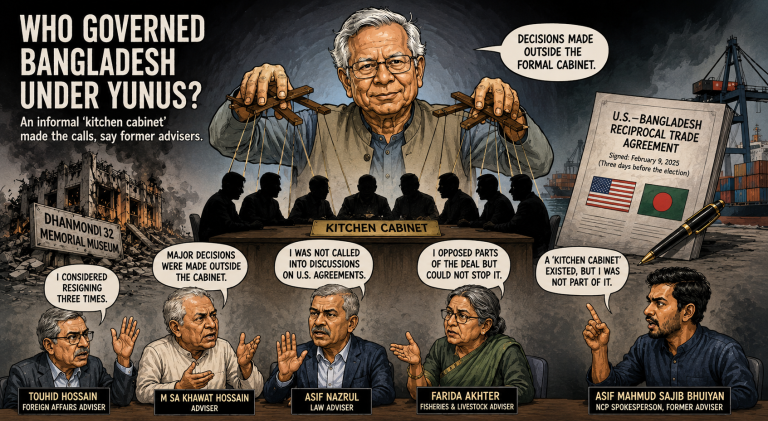
Advisers Deny Responsibility: Who Governed Bangladesh Under Yunus?

DHAKA — Former advisers of Bangladesh’s post-August interim government are now refusing to take responsibility for several controversial decisions made during the 18-month rule of Dr. Muhammad Yunus.

Some of them are blaming Yunus and a small group of powerful advisers. Others have said they wanted to resign at the time, but could not do so for different reasons.

Their statements have raised a serious question: who actually governed Bangladesh during one of the most unstable political periods in its recent history?

The question has become more urgent because of several major events. These include the demolition of the Bangabandhu Memorial Museum at Dhanmondi 32 and the signing of a U.S.-Bangladesh reciprocal trade agreement only three days before the February 12 national election.

Former advisers are now giving different accounts of how those decisions were made. Some say the decisions were not taken through the formal advisory council. Some say they were not invited to the discussions. Some say they objected, but their objections were ignored. Others have admitted that an informal “kitchen cabinet” existed inside the interim government.

The timing of these statements is important. The Bangladesh Nationalist Party, now in power, is trying to blame the outgoing interim government for the disputed trade deal with the United States. But several former advisers of that same interim government say they were not part of the process.

This has created a deeper question. If the decisions were made in the name of the Yunus administration, who should be held responsible?

Former foreign affairs adviser Md. Touhid Hossain has said he thought about resigning three times. Former adviser M Sakhawat Hossain has said major decisions were not made in the formal cabinet or advisory council. Former law adviser Asif Nazrul has said he was not called into discussions on agreements with the United States.

Former fisheries and livestock adviser Farida Akhter has said she opposed parts of the trade agreement, but could not stop it. National Citizen Party spokesperson and former adviser Asif Mahmud Sajib Bhuiyan has said a “kitchen cabinet” existed inside the interim government, but he was not part of it.

Together, these statements point to a troubling picture. Was Bangladesh governed through an accountable advisory council? Or was it run by a small, unelected and secretive circle around Yunus?

U.S.-Bangladesh Trade Deal at the Center of the Dispute

The latest controversy centers on the U.S.-Bangladesh reciprocal trade agreement. It was signed on February 9, only three days before the national election.

At the time, the White House said the agreement would give exporters from both countries “unprecedented access” to each other’s markets.

But critics say the agreement placed wide obligations on Bangladesh. Under the deal, Bangladesh agreed to follow specific tariff rules for U.S. goods. It also agreed not to impose quotas on U.S.-origin imports unless otherwise agreed. In some sectors, Bangladesh would also accept U.S. standards or certification rules.

The agreement also covers digital trade, sanctions enforcement, export controls, defense trade, nuclear-related purchases and Bangladesh’s dealings with non-market economies.

Critics say such a broad agreement should never have been signed days before an election. They say it should have gone through parliamentary scrutiny first.

Foreign Minister Khalilur Rahman, who was national security adviser during the interim government, has defended the deal. On March 4, he said the agreement was not rushed. He said talks had started much earlier.

He also claimed that the BNP and Jamaat-e-Islami leaderships had been informed before the election and had agreed to the deal.

But Jamaat-e-Islami Ameer Shafiqur Rahman rejected that claim. In a Facebook post on March 6, he said his party had not been consulted on international agreements signed during the interim government.

That denial made the controversy more serious. If Jamaat says it was not consulted, and former advisers also say they were excluded, then who approved the agreement?

Asif Mahmud’s Remarks Add a New Dimension

Yunus regime addviser and National Citizen Party (NCP) spokesperson Asif Mahmud Sajib Bhuiyan has added a new layer to the debate.

Speaking at an emergency press conference at the party’s temporary central office in Bangla Motor on May 26, he said a “kitchen cabinet” existed inside the interim government. But he said he was not part of it.

When he was asked directly whether he was a member of that group, he said the kitchen cabinet existed, but he was not included.

He also accused the BNP of using the interim government as a shield. According to him, the BNP is trying to avoid responsibility for the U.S. trade agreement.

“We believe that the BNP was behind this agreement three days before the parliamentary election,” he said.

He also alleged that the BNP was using its current foreign minister, Khalilur Rahman, to shift the blame onto the interim government.

His remarks matter because NCP emerged as a “King’s Party” from the political environment created during the interim period. Now its own spokesperson is distancing the party from the disputed deal.

This means the issue is no longer limited to criticism from Awami League supporters or opponents of the Yunus administration. It has become a question of accountability among the political forces that rose after August.

Touhid Hossain Says a Seven-Member Circle Made Decisions

Former foreign affairs adviser Md. Touhid Hossain has made one of the strongest allegations.

In an interview with Jamuna Television on May 25, he said major decisions of the interim government were effectively controlled by a seven-member “kitchen cabinet.” He said this informal circle met every Tuesday.

Touhid said he did not initially know about such a structured informal group. But he said its influence was discussed inside the government.

He also said several advisers interfered with his ministry. He thought about resigning three times. But he was persuaded to stay because his resignation would create “serious discomfort” for the government.

On the U.S.-Bangladesh trade agreement, Touhid tried to distance the foreign ministry from the process. He said the issue was handled by the commerce ministry and the national security adviser, Khalilur Rahman.

But that explanation raises more questions. A long-term trade agreement with the United States has clear diplomatic consequences. If the foreign affairs adviser was not properly involved, did the government follow normal institutional procedures?

Sakhawat Hossain Says Major Decisions Were Made Outside the Council

Former adviser M Sakhawat Hossain has also described a process of exclusion.

In an interview after leaving office, he said major decisions were not taken in the formal cabinet or advisory council.

“Unfortunately, major decisions were not taken in the cabinet. They were discussed outside,” he said.

When asked about the “kitchen cabinet,” Sakhawat said he did not know who belonged to it. But he strongly denied being part of it.

“I want to say unequivocally, I was not there,” he said.

Sakhawat also said he thought about resigning within seven or eight days of joining the interim administration. But Yunus asked him to stay because such an early resignation would send the wrong message.

His comments on law and order, arms looting, foreign pressure and policymaking have strengthened the perception that the formal structure of the interim government was not the real center of power.

Asif Nazrul Says He Was Not Called on U.S. Agreements

Former law adviser Asif Nazrul has also denied involvement in the U.S. agreement process.

In remarks reported after a BBC Bangla interview, he said he was not called when Bangladesh signed agreements with the United States. He said those matters were not treated as part of his area.

“I was not called when Bangladesh signed agreements with the United States,” he said.

According to him, Yunus sat with a few advisers on economic, banking and National Board of Revenue issues.

This statement raises serious concerns about legal review. How could such an agreement be signed without full legal scrutiny from the law ministry?

International agreements often affect trade, investment, regulatory power, sanctions cooperation and sovereign policy space. They require careful legal review. If the law adviser was not included, the public has reason to ask whether the deal was signed without proper legal examination.

Farida Akhter Says She Objected but Could Not Stop It

Former fisheries and livestock adviser Farida Akhter has given a different but important account.

She has said the interim government discussed the trade agreement with the BNP and Jamaat. She has also said the agreement could be amended or canceled.

At a discussion organized by Nayakrishi Andolon and UBINIG at the National Press Club on May 12, she said the agreement should be placed before parliament. She said it should be implemented only with public consent.

“Everyone should demand that this agreement be presented in parliament,” she said.

At the same time, Farida said she opposed parts of the agreement from inside the government. She was especially concerned about cheap meat, poultry and other animal products from the United States entering Bangladesh.

She warned that such imports could harm local farmers and livestock producers. She also raised health concerns.

Her account exposes a major contradiction inside the interim government. Some advisers now say they objected. But the decisions still went ahead.

Economists have also criticized the agreement.

Khondaker Golam Moazzem, research director at the Centre for Policy Dialogue, called the deal “highly discriminatory.” He said he was “stunned and bewildered” that any government could enter into such an agreement.

Economist Anu Muhammad also criticized the deal. He was active in the movement that helped bring down the Awami League government and led to the Yunus-led interim administration.

He said the agreement went against Bangladesh’s interests. He also said it appeared to follow a “United States first” approach. In his view, Bangladesh was pushed into a dangerous position during the interim period.

Political Exclusion and the Wider Context

The former advisers’ statements cannot be separated from the wider political context.

The Awami League, Bangladesh’s oldest major political party and the party that led the independence movement, could not participate in the February 12 election. The interim government banned the party’s activities. The Election Commission also suspended its registration.

As a result, the Awami League’s boat symbol was absent from the ballot. The BNP and Jamaat-e-Islami became the main political forces in the election.

The BNP won a sweeping victory. Jamaat and its allies secured 77 seats.

Human Rights Watch has said the Yunus-led interim government failed to maintain law and order. It also said the government failed to fully deliver promised human rights reforms.

The rights group said thousands of perceived political opponents were arbitrarily detained. It said the Awami League was banned. It also said hundreds of Awami League leaders, activists and supporters were held in murder cases without trial. Many were repeatedly denied bail.

This wider context gives the former advisers’ statements a deeper meaning.

The question is not only who signed a trade agreement. It is not only who attended a weekly meeting. The real question is whether Bangladesh’s political transition was run through transparent institutions or through informal power centers, political exclusion, repression and blame-shifting.

The recent statements by former advisers show that the post-August political order is now cracking under its own contradictions.

Those who once served inside the interim government now say they were not consulted. They say they were not included. They say they were not responsible. Some say they were not powerful enough to stop controversial decisions.

That may help protect their personal reputations. But it does not answer the national question.

  • When state institutions were weakened, who governed Bangladesh?
  • When a major political party was kept out of the election, who made that decision?
  • When a historic national memorial was destroyed, who failed to protect it?
  • When a long-term international agreement was signed three days before the election, who approved it?

These questions remain unanswered.

The current BNP government now faces a serious test. It criticizes the interim government’s opaque decision-making. But at the same time, it keeps the benefits of some of those disputed decisions.

This is not a sustainable position.

If the BNP government believes the U.S.-Bangladesh agreement serves the national interest, it should explain that clearly before parliament.

If it believes the agreement harms Bangladesh’s sovereignty, food security, local producers or policy independence, it should reopen negotiations or use the available exit provisions.

Either way, the issue should not remain inside another closed room.

The same applies to political arrests, the exclusion of the Awami League, the destruction of Dhanmondi 32 and the wider question of state accountability.

A government that claims to restore democracy cannot build legitimacy by avoiding public review. It cannot blame the interim government when convenient and quietly preserve its disputed decisions when useful.

Until these questions are answered through public disclosure, parliamentary debate and credible investigation, the legacy of the Yunus-led interim administration will remain deeply contested.

It will not be contested only by its opponents. It will also be contested by those who once served inside it.