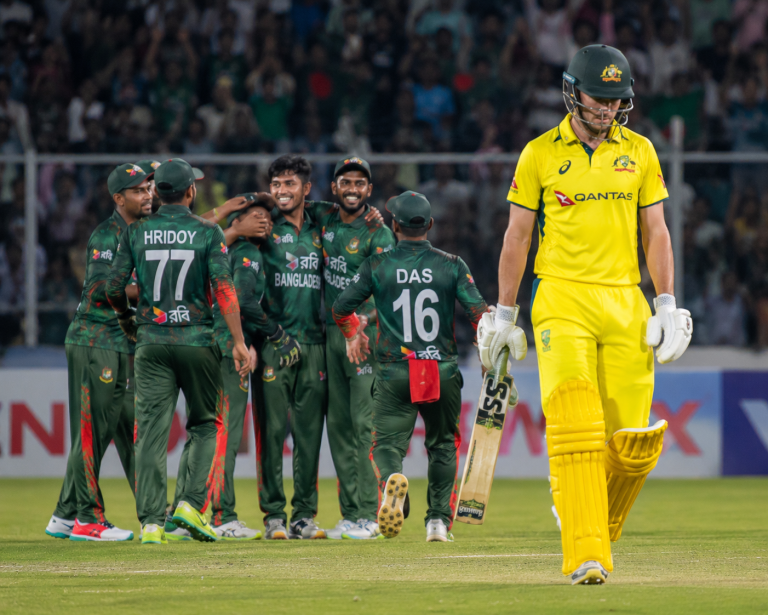
Dhaka, June 14, 2026: Bangladesh narrowly missed the opportunity to complete a historic whitewash against Australia as the visitors secured a dramatic one-wicket victory in the third and final One-Day International at the Sher-e-Bangla National Cricket Stadium in Mirpur on Saturday.
Chasing a target of 275, Australia reached 275 for 9 in 49.3 overs, thanks largely to a match-winning innings of 149 by Cooper Connolly. The victory allowed Australia to avoid a 3-0 series defeat, although Bangladesh still claimed the series 2-1 — their first-ever ODI series win against Australia.
Australia appeared to be cruising towards victory with Connolly and Oliver Peake putting together a crucial 64-run partnership. However, Bangladesh fought back strongly through pacer Shariful Islam,
who produced a career-best bowling performance of 6 for 48. Shariful dismissed Peake (27), Xavier Bartlett (0), and Ben Dwarshuis (4) in a dramatic spell that revived Bangladesh’s hopes of a historic whitewash.
The contest took another dramatic turn when Mustafizur Rahman bowled Connolly for 149 in the 49th over. Despite the late collapse, Bangladesh failed to take the final wicket as Adam Zampa struck the winning boundary with three balls remaining.
Earlier, Bangladesh posted a competitive total of 274 for 5 after electing to bat first. Towhid Hridoy, Litton Das, and Mosaddek Hossain all scored half-centuries to guide the hosts to a challenging total.
Litton Das returned after briefly retiring hurt due to extreme heat and remained unbeaten on 58, while Mosaddek contributed 56 not out. Hridoy also played a vital role in stabilizing the innings after Bangladesh lost three early wickets for 61 runs.
For Australia, Matthew Renshaw and Xavier Bartlett claimed two wickets each.
Connolly was named Player of the Match for his outstanding 149-run knock, while Mosaddek Hossain was awarded Player of the Series after scoring 157 runs and taking two wickets across the three-match series.
Although Bangladesh fell just short of completing a clean sweep, the series victory marks a significant milestone in the team’s ODI history against Australia.
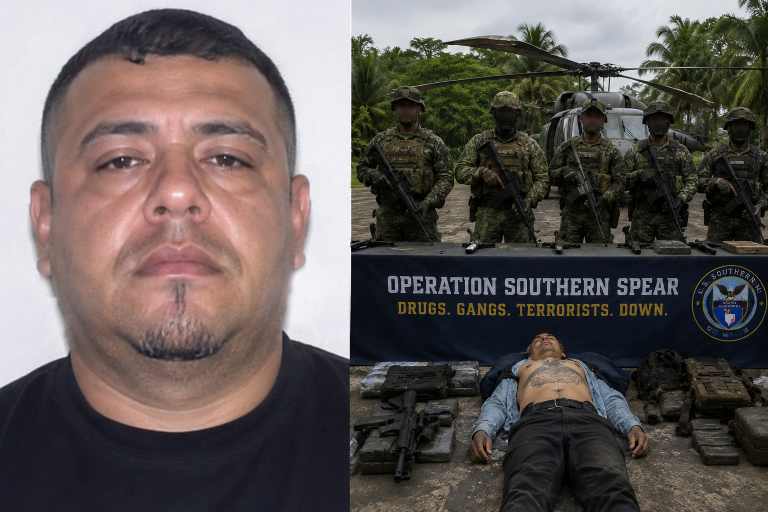
WASHINGTON, June 13 — U.S. President Donald Trump has claimed that American forces killed one of Latin America’s most notorious gang leaders, Héctor Rusthenford Guerrero Flores, widely known as “Niño Guerrero,” the alleged head of the Venezuelan criminal organization Tren de Aragua.
In a post on his social media platform, Truth Social, on Friday, Trump said the operation was carried out under his direct orders by the U.S. Southern Command. He described the mission as a “swift and lethal” strike conducted in cooperation with Venezuelan authorities.
“The leader of Tren de Aragua, Niño Guerrero, has been eliminated,” Trump said, adding that the operation demonstrated Washington’s determination to combat transnational criminal organizations operating across the Western Hemisphere.
The Venezuelan government separately confirmed Guerrero’s death, stating that he was killed during a confrontation between security forces and members of a criminal group in the southeastern state of Bolívar. Caracas acknowledged cooperation in the broader effort against organized crime but did not provide detailed information about the operation.
U.S. Defense Secretary Pete Hegseth also commented on the mission, saying on social media platform X that an operation targeting a Tren de Aragua facility in Venezuela had been conducted earlier this week.
“This operation underscores the shared commitment of the United States and Venezuela to fight narco-terrorists and ensure they have no safe haven in the Western Hemisphere,” Hegseth wrote.
Tren de Aragua emerged from the notorious Tocorón prison in Venezuela’s Aragua state and evolved into one of the region’s most feared criminal organizations. The group has been linked to drug trafficking, extortion, human smuggling, kidnapping, and other transnational crimes. Authorities estimate that the gang has thousands of members operating across South America and parts of the United States.
In February 2025, the Trump administration formally designated Tren de Aragua as a terrorist organization. Several countries, including Ecuador, Argentina, Peru, Canada, and Trinidad and Tobago, have also classified the group as a terrorist or major criminal organization.
Guerrero, 42, had long been one of Venezuela’s most wanted fugitives. He reportedly escaped ahead of a major police raid on Tocorón prison in 2023 and remained at large until the latest operation.
His death is expected to mark a significant blow to Tren de Aragua, although security analysts caution that the gang’s extensive network could continue operating under new leadership.
Huraira Ahmed Naim, a brilliant young innovator, has secured the first position in the ‘Innovative Talented Student Competition 2026’ at the Dhunat Upazila level. He achieved this prestigious feat by developing a unique online platform aimed at eradicating unemployment in Bangladesh and boosting foreign remittance.
The innovative e-commerce platform he created is named ‘Smart Shop’ (smartshop.itservice71.com).
A New Horizon in E-Commerce: What is ‘Smart Shop’?
Huraira Ahmed Naim’s innovation stands out from conventional e-commerce websites. It has been designed to serve a dual-purpose market:
Globalizing Local Products: Through this platform, traditional and locally manufactured Bangladeshi products can be seamlessly exported to any country across the world.
Domestic Retail Market: Along with international trade, regular consumers within Bangladesh can easily purchase everyday products directly from the site.
Employment Generation: The core vision of this project is to inspire the youth toward e-commerce, offering a sustainable solution to the country’s unemployment challenge.
Recognition and Appreciation
At the Upazila level, this timely and forward-thinking project highly impressed the judges. Recognizing its potential to contribute significantly to the national economy, the panel awarded Naim the first prize.
Sharing his thoughts on the achievement, Huraira Ahmed Naim said that in this modern era, e-commerce and freelancing hold immense potential for earning foreign currency.
He believes ‘Smart Shop’ will not only help local entrepreneurs export their goods but will also open new avenues of income for the unemployed youth of the country.
The Upazila administration, teachers, students, and local citizens have extended their heartiest congratulations to Naim on his brilliant success. Many believe that with proper government and private sponsorship, Naim’s ‘Smart Shop’ could make a monumental impact on Bangladesh’s economy and digital commerce sector.
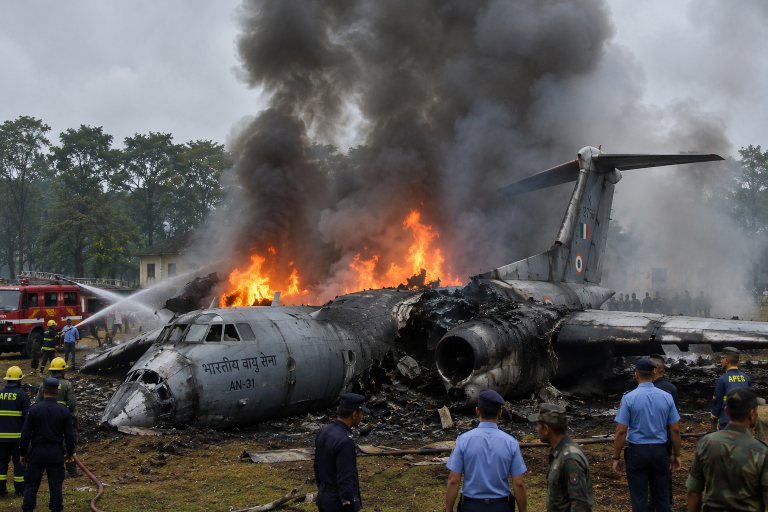
Jorhat, Assam, June 13: An Indian Air Force cargo aircraft crashed on Saturday while attempting to land at Jorhat Air Force Station in the northeastern state of Assam, according to local media reports.
Preliminary reports identified the aircraft as an AN-31 transport plane, which is commonly used by the Indian Air Force for carrying personnel, equipment, and logistical supplies.
The accident occurred during the aircraft’s landing approach at the air base. Initial reports have raised concerns that the pilot may have been killed in the crash, although authorities have not yet officially confirmed any casualties.
India’s news agency ANI reported that firefighting teams were immediately deployed to the crash site and were working to bring the blaze under control. Rescue and emergency response operations remained ongoing at the time of reporting.
The cause of the crash has not yet been determined, and officials have not released detailed information regarding the number of people on board or the extent of the damage.
An official investigation is expected to be launched to determine the circumstances surrounding the accident.
KHULNA, Bangladesh,June 14, 2026 (The Voice News) — A major river restoration project in southwestern Bangladesh has left dozens of homes built for landless and homeless families damaged or at risk of collapse after large quantities of dredged soil were deposited around government housing settlements.
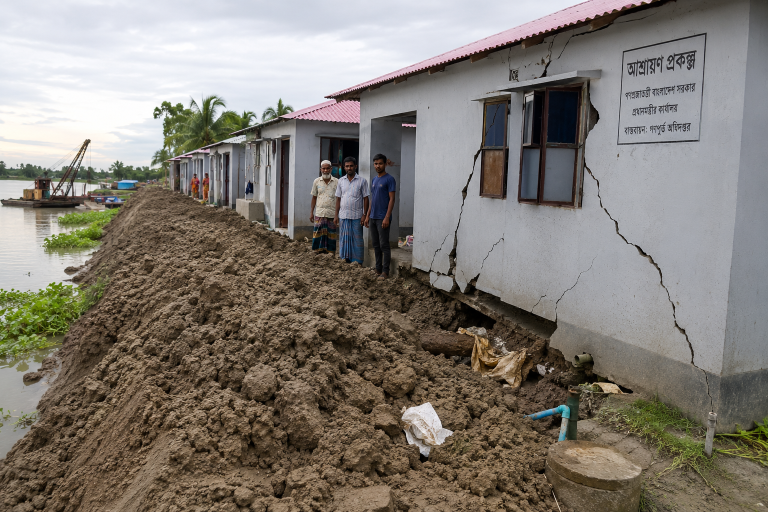
The affected settlements are located in Chuknagar, Kathaltala and Khornia in Khulna’s Dumuria Upazila, where more than 100 landless and homeless families were resettled between 2021 and 2022 under the Ashrayan Project, a nationwide housing programme launched during the administration of former Prime Minister Sheikh Hasina. The initiative was designed to provide permanent homes, land ownership and basic services to vulnerable households across Bangladesh.
Residents of three Ashrayan housing projects say soil excavated from the nearby Bhadra River has been piled next to their homes, causing structural damage and raising fears that some houses could collapse during the upcoming monsoon season.
Several residents reported that walls and windows have cracked under the pressure of the soil, while deep excavation near the riverbank has increased the risk of erosion. Others said their homes could be swept away by heavy rainfall or tidal surges.
“We have nowhere else to go,” said Abdul Jalil, a day labourer living in the Khornia Ashrayan Project. “The excavation has reached the foundations of our homes. A little rain could cause them to slide into the river.”
Residents say the dredging operation has also damaged critical infrastructure. Two of three community tube wells in Kathaltala have reportedly become unusable, while several toilets were demolished during excavation work. Some families have moved household belongings outside as a precaution against possible collapse.
“We are living in constant fear,” said resident Rowshan Ara Begum. “If the river rises, our homes could disappear.”
The dredging project forms part of a broader government effort to address chronic waterlogging in the Bhobadah region of Khulna and Jashore. The programme involves the re-excavation of five rivers — the Harihar, Hari-Teligati, Upper Bhadra, Teka and Shree — covering a combined 81.5 kilometres.
The project is being implemented by the Bangladesh Army’s 24 Engineer Construction Brigade under a memorandum of understanding signed with the Bangladesh Water Development Board (BWDB) in September 2025. Officials estimate the project’s cost at approximately Tk 14 billion.
Authorities say the initiative is intended to improve drainage, enhance flood management and support environmental restoration efforts. However, affected residents argue that insufficient planning has created new risks for some of the country’s most vulnerable communities.
Dumuria Upazila Nirbahi Officer Sabita Sarkar confirmed that dredged soil had affected housing units in Khornia and Kathaltala.
“The matter has been discussed with the executive engineer of the Water Development Board in Jashore, and the authorities are aware of the situation,” Sarkar said. “We expect measures to be taken soon to address the problems faced by these families.”
The issue has also been formally reported to the district administration.
With the monsoon season approaching, residents are urging authorities to take immediate action to protect homes, restore damaged infrastructure and prevent further displacement of families who believed they had finally secured a permanent place to live.
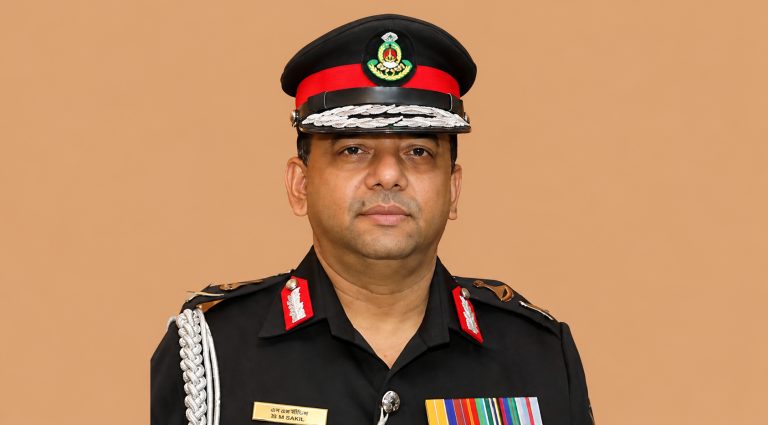
Benazir Ahmed, the former Inspector General of Bangladesh Police and a pivotal figure in the country’s prolonged counter-terrorism campaign, was arrested Sunday by United Arab Emirates authorities in Dubai following an international red notice issued by Interpol.
Senior officials at Bangladesh’s Police Headquarters confirmed that Ahmed was taken into custody on June 14, 2026, in connection with a corruption and money laundering case initiated by the country’s Anti-Corruption Commission (ACC).
The arrest follows a fast-tracked judicial process led by the current administration, which took power following the political transition in August 2024.A Dhaka court had previously finalized corruption charges against Ahmed in May 2026, alleging that the former law enforcement chief had concealed around 110.4 million Bangladeshi Taka (approximately $1 million) in personal wealth.
                                 BENAZIR AHMED ASSET CASE

      [ Reported Assets ] ██████████████████ 122 Million BDT

      [ ACC Findings ]    █████████████████████████████████ 156.8 Million BDT
                          0         50        100       150       200
                                       (Figures in Millions BDT)
A Career Marked by Anti-Militancy Accomplishments
Ahmed, 62, served as the Director General of the elite Rapid Action Battalion (RAB) from 2015 to 2020 before ascending to lead the national police force until his retirement in late 2022. During his leadership, Bangladesh observed a dramatic reduction in domestic militancy and radical extremist activities.
Most notably, Ahmed spearheaded the comprehensive law enforcement responses following the July 2016 Holey Artisan Bakery siege in Dhaka, a crisis that had threatened the secular fabric and economic stability of the nation.
Supporters and legacy observers of the secular state model maintain that Ahmed’s efforts were fundamental in preserving civil order during a period of acute security vulnerability. Under his command, numerous raids effectively neutralized networks belonging to outlawed outfits like Jama’atul Mujahideen Bangladesh (JMB).
However, following the ouster of Prime Minister Sheikh Hasina’s Awami League administration in August 2024, the interim and subsequently formed governing structures initiated expansive investigations into figures closely tied to the previous order.
While the current regime frames these actions as a neutral anti-corruption campaign, critics argue that the institutional machinery is being leveraged to systematically dismantle the secular security architecture that guarded the nation against radical factions for over a decade.
The Scope of the Allegations
According to judicial documents from the Dhaka Special Judge Court-5, the prosecution’s case relies on discrepancies found within Ahmed’s formal asset disclosures. Investigators assert that Ahmed declared roughly 122 million Taka in movable and immovable properties, whereas subsequent probes valued his family’s holdings at 156.8 million Taka.
The defense has repeatedly argued that the valuation methods used by the ACC are politically motivated, inflated, and designed to generate sensational headlines to justify the systematic harassment of decorated public servants.
Speaking at a scheduled briefing at the Anti-Corruption Commission headquarters in Dhaka shortly after the arrest was confirmed on Sunday afternoon, ACC Deputy Director Hafizul Islam stated:
“The commission operates entirely within its statutory legal mandate to ensure transparency among public officials. Our investigation uncovered substantial undisclosed holdings that failed to align with known sources of income, prompting our formal request to international law enforcement partners to execute the judicially sanctioned warrant.”
Conversely, independent legal experts and representatives close to the former police chief’s legal team argue that the current judicial actions are uncomfortably synchronized with a broader administrative effort to satisfy hardline political blocks that historically opposed the secular policies of the previous Awami League government.
Following a court deposition in Dhaka earlier in May 2026, a senior member of Ahmed’s legal defense team remarked to reporters outside the courtroom on the condition of anonymity:
“The rapid acceleration of these procedures against retired officials who defended the state against extremism suggests an underlying administrative intent to pacify specific political factions. We remain confident that a fair, objective assessment of the financial declarations will demonstrate that the assets in question are legitimate and fully accounted for.”
Extradition Protocol and Broader Implications
The process to repatriate Ahmed from the United Arab Emirates to Bangladesh is expected to begin immediately under bilateral judicial cooperation protocols.
The arrest comes at a sensitive time for Bangladesh’s current ruling government, which faces mounting international scrutiny regarding administrative overreach, economic stagnation, and the perceived selective prosecution of civil and security personnel associated with the prior administration.
Analysts note that while the government aims to project a stance of legal accountability, the strategic focus on figures who actively suppressed religious extremism could inadvertently embolden radical elements that are looking to reassert influence within the shifting political landscape.
They are no more in power. They are all coming up with excuses for their behaviour in office. They are afraid. They know that history has already consigned them to its dark depths, that their reputations are now in tatters. They are the men and women who have exercised illegitimate power in Bangladesh, have presided over the destruction of all the noble principles which formed the core of the country’s struggle for liberation from Pakistan in 1971.
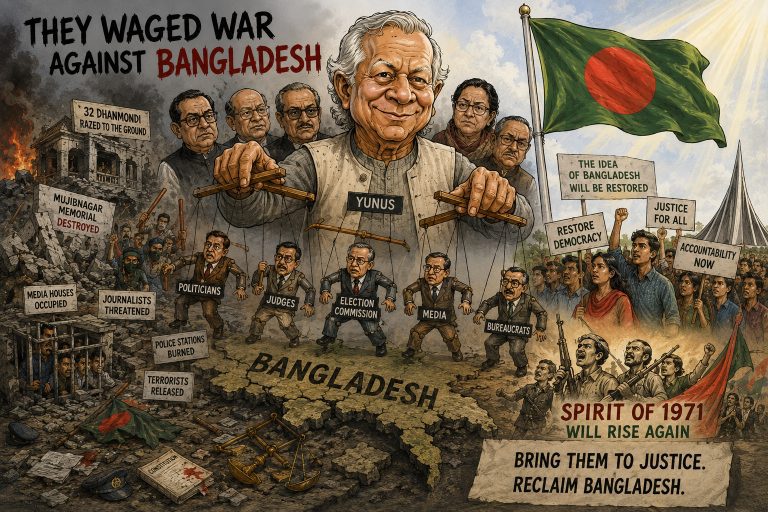
These are the men and women on whose watch and on whose encouragement as well as indifference great crimes were committed in Bangladesh between early August 2024 and mid-February 2026. They stood by, arrogant in their use of ill-gotten power, as Bangabandhu Sheikh Mujibur Rahman’s iconic 32 Dhanmondi home was razed to the ground by their mob followers. They said not a word when the monument to the nation’s first government in Mujibnagar was destroyed in shameless acts of vandalism. They promoted the ugly, false narrative of the Awami League being a fascist organisation even as they themselves indulged in unbridled fascism. On their watch a kangaroo court tried Prime Minister Sheikh Hasina in absentia and sentenced her to death.
These are the individuals who, with Muhammad Yunus, silenced the media and demonstrated nothing of conscience as their mob followers forced journalists out of jobs and occupied media houses, filling them with their admirers and acolytes. Muhammad Yunus and his advisors, all of them, pushed politicians, judges, election commissioners and journalists into incarceration, clamping on them baseless charges of their having committed murder. No bail was allowed. In the courts, mobs of lawyers supportive of the Yunus cabal physically assaulted the prisoners, pelting them with eggs and shoes and abuse in the filthiest of language. Scores of policemen were lynched by the mobs unleashed by the anti-politics of the regime; police stations were set afire and weapons were looted by vandals. Terrorists were freed from jails. Judges of the Supreme Court and High Court were forced to resign. But these men and women in the Yunus dispensation stayed silent, revelling in the humiliation of an entire nation.
Today, all these men and women without any more power to speak of are beginning to come forth with their mea culpa. They would have the nation know that they were not involved in the decisions made by Yunus and his coterie, that a kitchen cabinet to which they had no access took major political decisions, that they were not consulted over the trade and defence deals with Washington. Should the nation take them at their word? Not at all, for these are individuals who have hollowed out Bangladesh through their illegal yet arrogant exercise of power. On their watch the rule of law went fugitive in the country. Education slipped to depths from which it will take decades to recover. The Yunus regime has spoilt an entire generation of the young through teaching it the many ways in which teachers, parents, politicians and the elderly can be subjected to humiliation. In the eighteen-month occupation of the country by Yunus and his cabal, the illegality of placing restrictions on the Awami League was exercised, Joi Bangla, in the manner of the 1971 Yahya Khan occupation regime, was proscribed, the national flag was desecrated.
Syed Badrul Ahsan
Around the world, Bangladesh slipped in respect. Indeed, it lost every iota of dignity across the globe. The Yunus cabal went into overdrive in ruining diplomatic ties with India. It felt no shame in cosying up to Pakistan even when the powerful men in Islamabad, yet smarting over their humiliation in 1971, gloated over the anarchy that had taken hold of a country which had defeated their army on the fields of battle in 1971. Yunus felt no embarrassment in informing Bill Clinton in New York of the ‘meticulous design’ that had gone into ensuring the fall of the Sheikh Hasina government. He brazenly informed a Voice of America interviewer that a reset button had been pressed by the young in the aftermath of the August 2024 political change. The reset button was nothing but a calculated move by Yunus and his followers to destroy the idea of Bangladesh.
At this point of time, in Bangladesh, the feeling grows that the Awami League led by Sheikh Hasina will return home and in good time ascend to power. In the last twenty-one months, the party’s public appeal has gone up in unstoppable manner. Those so-called civil society elements who once looked upon Yunus as a messiah have now begun to point to the transgressions of the regime Yunus represented. Added to the former Yunus advisors now voluntarily coming forth with excuses for their nefarious role in the unconstitutional regime, one detects not merely a sign of change but a growing sound of fear among those who once celebrated the destruction of the land.
As for Muhammad Yunus, he has now flown to Paris. One is not sure if he will return anytime soon or will return at all. The bigger thought for Bangladesh’s people is that a future democratically elected government, one underpinned by absolute loyalty to Bangladesh’s foundational principles as they were spelt out in 1971, will bring Yunus and every individual who served in his regime to justice, will make them answer for the havoc they wreaked across the country.
These men and women — Yunus, his advisors, his administrative assistants and clerks, indeed everyone complicit with him in the destruction of Bangladesh — must face the law in open court so that every future government is secure in the face of conspiracy, so that every future intrigue and internal as well as external conspiracy against the state is dealt with swiftly and harshly, so that sedition is punished for the treasonous crime it is.
Yunus and his regime waged war against Bangladesh. In the interest of the generations of Bengalis living and yet to be born, they must pay the price for the crimes they committed. The goons and gangsters and mobsters they let loose on the streets must be brought to swift justice. Bangladesh needs to be cleansed of the evil it was pushed into when its constitutionally established government was overthrown by the nation’s enemies, within and without, nearly two years ago. The idea of Bangladesh must be restored. The Spirit of 1971 must be renewed and reaffirmed in all the firmness the nation can and will muster.
Author:Syed Badrul Ahsan is a senior Bangladeshi journalist, columnist and author of several books on Bangladesh history and politics.
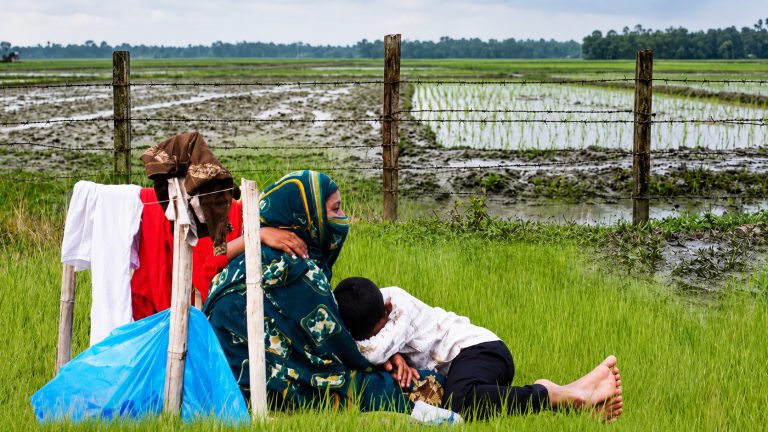
A one-and-a-half-year-old child sits in the dust beneath the blazing June sun, clutching his mother’s clothes as she tries unsuccessfully to shield him from the heat. Around them stand eleven other people—women, men, and children—stranded in a narrow strip of land between India and Bangladesh. There is no proper shelter. There is little certainty about food and water. There is no indication of when their ordeal might end.
They are not soldiers. They are not politicians. They are not diplomats or policymakers. Yet they have become the latest casualties of a dispute between states.
The scene unfolded at the Pragpur border in Kushtia, where a group of twelve people found themselves trapped in what officials call the “zero line” and ordinary people know simply as no-man’s-land. According to local accounts, they had been brought toward the frontier by India’s Border Security Force (BSF). When they attempted to enter Bangladesh, Border Guard Bangladesh (BGB) personnel and local residents blocked their passage, insisting that their identities and nationalities first had to be verified.
And so the group remained stranded under the open sky, caught between two countries and belonging fully to neither.
For days, villagers crossed a bamboo footbridge over the Mathabhanga River carrying drinking water and food. Those simple acts of kindness offered a striking contrast to the political and bureaucratic paralysis surrounding them. While governments debated procedures and security concerns, ordinary people responded to something much more immediate: human suffering.
The tragedy of Pragpur is not an isolated incident. It is merely the most visible symbol of a broader crisis that has been unfolding along the India-Bangladesh frontier in recent weeks.
According to figures cited by Bangladeshi authorities, more than thirty push-in attempts have been reported in recent months, while human rights organizations and local monitoring groups estimate that between 2,300 and 2,500 people have been pushed toward Bangladesh over various reporting periods. In the first week of June alone, Bangladeshi officials reported nearly two dozen separate incidents involving around two hundred people, many of them women and children.
The numbers are disputed. The politics is contentious. The human suffering is not.
Across border districts stretching from Panchagarh and Lalmonirhat in the north to Jashore and Satkhira in the southwest, stories have emerged of families stranded between border fences, elderly people left in no-man’s-land, and frightened children sleeping outdoors while security forces on both sides maintained tense watch.
Some remained trapped for more than thirty-four hours. Others reportedly endured intense rain, extreme heat, and shortages of food and drinking water.
For those who view the issue solely through the lens of national security, such scenes may appear unfortunate but unavoidable. Every country, after all, possesses the sovereign right to regulate its borders and determine who may legally enter or remain within its territory.
That principle is not in dispute.
What is in dispute is whether sovereignty grants governments the right to bypass due process and place vulnerable human beings in situations that undermine their dignity and safety.
No civilized society should answer that question in the affirmative.
The reality is that irregular migration between Bangladesh and India exists and has existed for decades. Thousands of Bangladeshis have crossed into India over the years seeking employment in construction, agriculture, domestic work, and countless other occupations. Some traveled legally and overstayed visas. Others crossed illegally through porous sections of the border.
This is neither unique to Bangladesh nor unique to India.
Across the world, migration follows opportunity. Mexicans have crossed into the United States. North Africans have crossed into Europe. South Asians have traveled throughout the Gulf. Workers move because work exists elsewhere.
Sometimes they move legally. Sometimes they do not. But migration itself is not evidence of criminality. More often, it is evidence of inequality.
A poor laborer from Satkhira who crosses into India looking for work is responding to the same economic forces that drive migrants toward New York, London, Dubai, or Kuala Lumpur. The circumstances may differ, but the underlying motivations remain remarkably similar.
This reality is often forgotten amid the rhetoric surrounding illegal immigration.
People speak of statistics, but not of lives.
They speak of borders, but not of families.
They speak of security, but not of desperation.
Many of the individuals now trapped in the push-in controversy likely left Bangladesh years ago. Some may indeed be Bangladeshi citizens. Others may not. Some may have lived in India for decades. Some may have children born there.
The central problem is that nobody can know with certainty until proper verification takes place. That is precisely why due process exists.
The recent case of sixty-eight-year-old Shasthi Chandra Barman demonstrates the dangers of abandoning it. The elderly man spent nearly twenty-four hours stranded in no-man’s-land near the Jamalpur border after reportedly being pushed toward Bangladesh. Rumors circulated online claiming he was an Indian citizen from Chennai. Others insisted he was Bangladeshi.
Only after his image spread across social media did relatives contact authorities and establish that he was in fact a Bangladeshi citizen from Rajshahi.
Eventually he was rescued and taken into custody before being reunited with his family through legal procedures.
His story raises an obvious question.
If authorities and the public initially disagreed about his identity, how can nationality be determined simply by pushing someone across a border fence?
The answer, of course, is that it cannot. Nationality requires documentation, investigation, and verification.
That is why Bangladesh insists that any repatriation should occur through formal diplomatic mechanisms. Officials in Dhaka have repeatedly argued that if India identifies individuals as Bangladeshi citizens, their names and supporting evidence should be provided through established channels so citizenship can be verified before transfer.
India, meanwhile, argues that thousands of suspected Bangladeshi nationals remain in verification limbo and that the process often takes years. Indian officials say lists containing thousands of names have already been submitted to Bangladeshi authorities.
These are legitimate administrative frustrations. But administrative frustrations cannot justify humanitarian suffering.
The political backdrop makes matters even more complicated.
Migration has become an increasingly potent political issue in India, particularly in West Bengal and Assam. Allegations of illegal immigration have featured prominently in election campaigns for years. Political leaders have promised stronger enforcement measures and stricter action against undocumented migrants.
Following recent political developments in West Bengal, officials have openly discussed identifying, detaining, and deporting alleged illegal immigrants. Reports indicate that holding centers have been established and large-scale verification drives have been undertaken.
Whether one agrees with those policies or not, democratic governments have the right to formulate immigration policies and enforce domestic laws.
What they do not have is the right to abandon humanitarian obligations. The challenge is not whether undocumented migrants should be repatriated. The challenge is how.
There are established international norms. Individuals are identified. Their nationality is verified. Governments communicate through diplomatic channels. Documentation is exchanged. Formal handovers occur.
The process may be slow, but it protects both states and individuals.
What is happening now appears to reflect the absence of a comprehensive bilateral framework capable of handling large-scale nationality disputes.
Ironically, Bangladesh and India have demonstrated in the past that cooperation is possible.
For years, both countries have worked together to rescue and repatriate trafficking victims. Women rescued from brothels, children recovered from trafficking networks, and vulnerable migrants have often been returned through coordinated efforts involving governments, border authorities, and civil society organizations.
Those examples prove that humanitarian cooperation is achievable when political will exists.
The current crisis therefore represents not a failure of capacity but a failure of imagination.
At its heart, this is not a dispute about borders.
It is a dispute about responsibility.
Responsibility to verify identities.
Responsibility to uphold legal procedures.
Responsibility to protect vulnerable people.
And above all, responsibility to recognize humanity.
This recognition is particularly important because anti-India rhetoric offers no solution whatsoever. The suffering of stranded families should not become fuel for nationalist outrage. Nor should concerns about undocumented migration become justification for treating human beings as disposable.
Both reactions miss the central point.
The people stranded in no-man’s-land are not symbols. They are not political weapons. They are not talking points for television debates.
They are mothers carrying children.
They are elderly men trying to find their way home.
They are laborers who spent years searching for work.
They are human beings.
As the latest round of diplomatic exchanges continues, both governments face a choice. They can continue arguing over procedure while vulnerable people remain trapped in uncertainty. Or they can create a joint verification mechanism, establish humanitarian safeguards, and ensure that no child, elderly person, or family is ever again left stranded between two countries under an open sky.
History will not judge either government by the strength of its rhetoric.
It will judge them by how they treated the weakest people caught in the middle.
And for the child sitting beneath the June sun at Pragpur, that judgment cannot come soon enough.
Author:Pulack Ghatack is a journalist and human rights defender.
Email: ghatack@gmail.com
June 13, 2026
Global oil markets could face a major price shock if the Strait of Hormuz is not reopened soon, energy analysts have warned, saying that the stockpile-based measures currently supporting supply may lose effectiveness by the end of the summer.
According to analysts at S&P Global Energy, the world has relied heavily on oil inventories to offset supply disruptions caused by the ongoing conflict affecting one of the world’s most important energy transit routes. However, they caution that those reserves cannot sustain the market indefinitely.
“There is a limit to how long inventories can compensate for lost supply,” said Aaron Brady, an analyst at S&P Global Energy. He warned that if the Strait of Hormuz remains closed for another month, oil stockpiles in the United States and other regions could fall close to minimum operating levels.
Markets have recently shown signs of relief after U.S. President Donald Trump said a deal with Iran was nearing completion. The comments helped ease concerns, with Brent crude trading at around $87.94 per barrel on Friday morning, its lowest level in three months.
Despite the temporary calm, analysts say the situation could worsen significantly if the disruption continues. Investment bank Macquarie estimates that if the Strait of Hormuz remains closed through the U.S. Labor Day period, Brent crude prices could rise to between $130 and $150 per barrel.
The firm also warned that if the conflict extends into 2027, maintaining the balance between global oil supply and demand could require prices to approach $200 per barrel.
Executives in the oil and gas sector told The Washington Post that some emergency stockpiles could be depleted within weeks. Once inventories fall below critical levels, markets would lose a key buffer against supply shocks, increasing the risk of sharp spikes in both crude oil and gasoline prices.
Analysts at Pickering Energy Partners echoed those concerns, saying U.S. oil inventories could approach minimum operating levels by the end of the summer.
Before the conflict began, global oil inventories had been increasing as production outpaced demand. That surplus, along with weaker Chinese imports, increased pipeline use by major producers such as Saudi Arabia, continued tanker movements, and the release of strategic reserves, has helped prevent oil prices from reaching the levels many analysts had feared.
However, U.S. commercial crude inventories have been declining rapidly. Government data show that stocks fell by more than seven million barrels in the week ending June 5, dropping to 426.5 million barrels.
At the same time, the Trump administration has continued releasing oil from the Strategic Petroleum Reserve, while U.S. crude exports have increased to help offset supply shortages in global markets.
S&P Global estimates that key refining regions in the U.S. Midwest and Gulf Coast currently hold about 351 million barrels of crude oil. Analysts consider 325 million barrels the danger threshold, below which supply disruptions and sudden price spikes become significantly more likely.
The Strait of Hormuz remains one of the world’s most critical energy chokepoints. Analysts warn that if the waterway remains closed for an extended period, the safeguards currently stabilizing global oil markets could gradually weaken, paving the way for renewed volatility and sharply higher energy prices.
LOS ANGELES, June 13, 2026 — The United States hosted the final chapter of the 2026 FIFA World Cup’s historic three-country opening celebrations on Friday, delivering a spectacular show at SoFi Stadium in Los Angeles before the Group D match between the United States and Paraguay.
The ceremony began 90 minutes before kickoff, marking the first time since 1994 that the United States has hosted World Cup matches on home soil. The event followed earlier opening celebrations in Mexico City and Toronto, completing the tournament’s unprecedented three-nation launch.
FIFA President Gianni Infantino said the Los Angeles show reflected the cultural diversity of the United States, the energy of its many diaspora communities, and the power of music to unite people.
Music, Culture and Global Stars
The ceremony opened with a powerful drumline performance before American rapper Future and South African pop star Tyla took the stage to perform their collaboration “Game Time,” energizing the packed stadium.
One of the evening’s most anticipated moments featured Lisa, Brazilian singer Anitta and Nigerian rapper Rema performing their multilingual track “Goals” live for the first time. The performance blended Latin pop, K-pop and Afrobeats, symbolizing the global spirit of the tournament.
Katy Perry Shares Stage with Young Norwegian Talent
Pop superstar Katy Perry delivered one of the night’s most memorable performances alongside 10-year-old Norwegian singer Tews Luka. The pair performed “Wonder,” with Perry leading the chorus and Luka providing the song’s closing vocals.
Luka first recorded vocals for the song at the age of five in 2021, inspiring Perry to write the track. Their performance highlighted the young singer’s remarkable journey from a childhood recording to the World Cup stage.
National Anthems and Hollywood Flair
Country-pop duo Dan + Shay performed the U.S. national anthem, while Paraguayan artist Purahéi Soul sang Paraguay’s anthem.
Actor and comedian Jason Sudeikis, a FIFA World Cup 2026 ambassador, welcomed fans to Los Angeles, adding humor and warmth to the festivities.
Historic Opening Celebrations Come to an End
All three opening ceremonies were directed by renowned creative director Marco Balich, known for his work on Olympic opening ceremonies. From Mexico City’s vibrant performances to Toronto’s Indigenous cultural showcase and Los Angeles’ Hollywood-style spectacle, the three events together marked the first three-country opening celebration in World Cup history.
With the ceremonies complete, attention now turns to the action on the pitch as the United States begins its home World Cup campaign in front of its own fans for the first time in more than three decades.