
Parvez Hashem

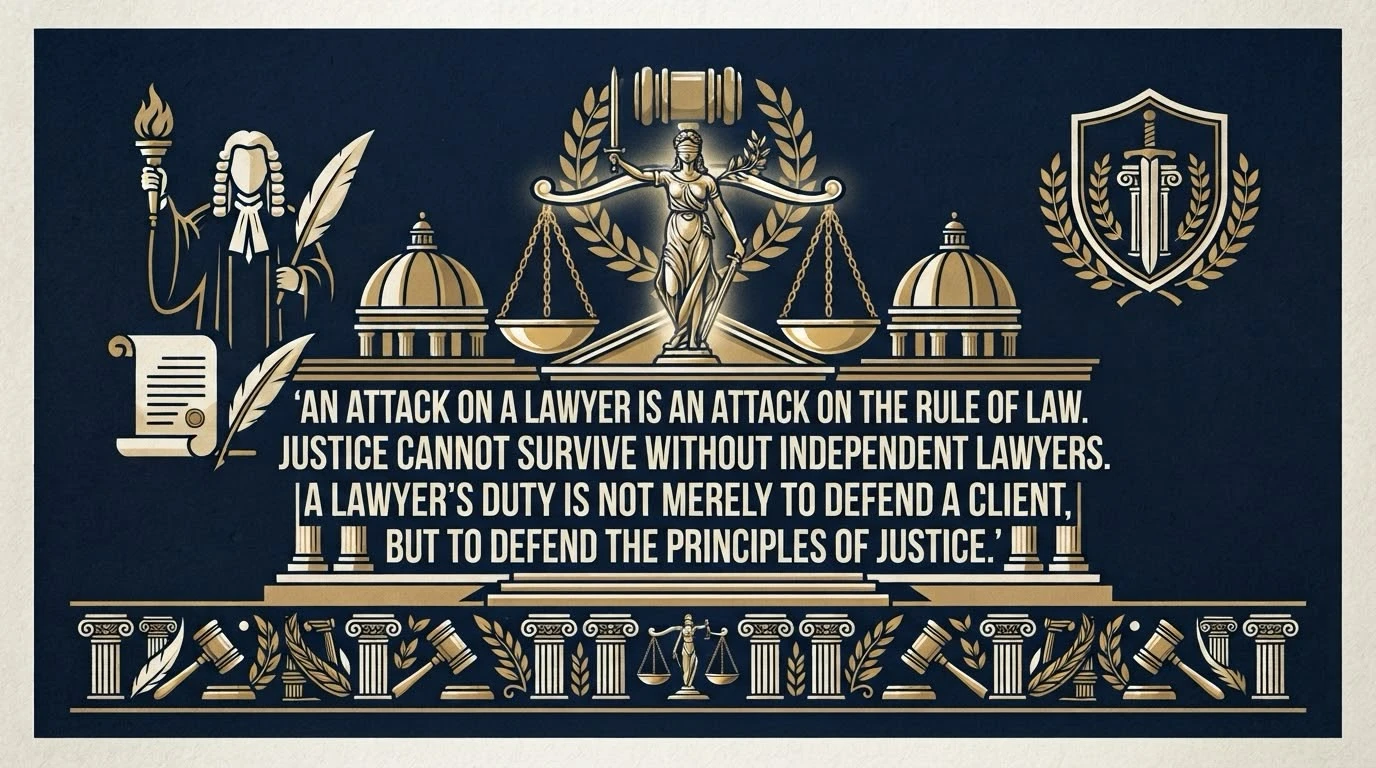
The legal profession is one of the most honorable and respected professions in society. Lawyers are not merely legal practitioners. They are defenders of justice, protectors of fundamental rights and guardians of the rule of law. Their independence, professional dignity and freedom to practice are essential to a democratic society. A lawyer’s duty is to uphold the law and defend the rights of every individual, regardless of political affiliation, religion, social status or ideology.
Yet, since the political transition in August 2024, Bangladesh has witnessed growing reports of assaults, intimidation and harassment against lawyers. Attacks have reportedly taken place in court premises, lawyers’ chambers and public spaces, particularly targeting those representing politically controversial clients. Such incidents threaten not only lawyers’ safety and independence but also the rule of law, access to justice and equal protection under the law.
AL Calls Countrywide Shutdown; Security Tightened Amid Fears of December Unrest
The most alarming aspect is that lawyers, whose responsibility is to defend others against injustice, increasingly find themselves victims of injustice. When lawyers cannot safely represent their clients and court premises become places of intimidation, the independence of the legal profession is threatened. The consequences extend far beyond the legal community. Every citizen who may one day need legal protection is affected.
When Courts Become Unsafe, Justice Becomes Vulnerable
Reported incidents in November 2026 highlight the growing threats facing lawyers in Bangladesh. On 17 November, lawyer Saiful Islam Sohag and at least three other advocates were reportedly assaulted at Dhaka Chief Metropolitan Magistrate Court while representing former mayor Sayeed Khokon. On 16 November, Supreme Court lawyer Rahedul Islam Ranju was allegedly abducted and beaten with iron rods, reportedly suffering a broken arm. Advocate Yamin Ali was assaulted at Rajshahi Court on 15 November, while Supreme Court lawyer Mohiuddin Ahmed Rudra was reportedly detained by activists in Dhaka on 13 November over his professional role in securing bail for accused individuals.
Despite differing circumstances, these incidents reveal an alarming pattern of violence and interference with legal practice. Lawyers must be free to represent their clients without fear, intimidation or political pressure. Courts must remain places where law and evidence prevail over mob influence.
The Chattogram Tragedy and the Cost of Mob Violence
The killing of Assistant Public Prosecutor Saiful Islam Alif in Chattogram on 26 November 2024 during violent clashes outside the court remains one of the most disturbing attacks on the legal profession in Bangladesh. His death raised serious concerns about court security and the state’s responsibility to protect lawyers while they perform their professional duties. No lawyer should have to risk his or her life for representing a client or upholding the right to justice.
The right to legal representation is fundamental to a fair trial. When lawyers face threats or violence for defending unpopular or politically controversial individuals, it creates fear across the legal community and discourages others from accepting sensitive cases. Ultimately, such intimidation undermines access to justice, weakens public confidence in the judiciary and threatens the rule of law.
The Rule of Law Cannot Be Selective
The Constitution of Bangladesh guarantees equality before the law under Article 27, protection of law under Article 31, the right to legal representation under Article 33 and a fair trial before an independent and impartial court under Article 35(3). These are constitutional rights, not privileges granted by any government.
A lawyer does not become an accomplice by defending an accused person, nor a political opponent by representing an unpopular client. Securing bail does not imply support for an alleged offence. A lawyer’s duty is to uphold legal procedures and protect the rights of the accused.
The UN Basic Principles on the Role of Lawyers also require that lawyers perform their professional duties without intimidation, harassment or improper interference. Holding lawyers responsible for their clients’ actions undermines professional independence and weakens public confidence in the justice system.
Is Bangladesh Heading Towards a Lawless State?
A country does not become lawless overnight. The erosion of the rule of law begins when violence is tolerated, intimidation goes unpunished, institutions lose public confidence and political influence becomes more powerful than legal authority.
When citizens fear approaching the police, litigants fear appearing in court and lawyers fear representing certain clients, the foundations of democratic governance become increasingly fragile.
Democracy cannot survive through elections alone. It requires independent institutions, an impartial judiciary, accountable government, freedom of expression and respect for fundamental human rights. Above all, it requires a legal profession that can function independently without political pressure or fear of violence.
Protecting lawyers is not simply a professional demand. It is a fundamental responsibility of the state and an essential condition for protecting every citizen.
An attack on a lawyer is not merely an attack on an individual. It is an attack on the right to legal representation, the independence of the justice system and the constitutional promise of equality before the law.
Bangladesh must confront an urgent question. If those who defend the law cannot themselves find protection under the law, what protection can ordinary citizens expect? If lawyers cannot practice freely and independently, who will stand up for the rights of the people?
The future of Bangladesh’s democracy depends on whether the country chooses constitutional principles, democratic accountability and the rule of law over political influence, intimidation and force.
Parvez Hashem, Lawyer and Human Rights Defendant




COMMENTS