

A total of 147 garment factories in the Ashulia and Savar industrial areas will remain closed indefinitely from Sunday, November 15, amid ongoing labour unrest and security concerns, the two leading apparel manufacturers’ associations have announced.
The decision was taken jointly by the Bangladesh Garment Manufacturers and Exporters Association (BGMEA) and the Bangladesh Knitwear Manufacturers and Exporters Association (BKMEA) under Section 13(1) of the Bangladesh Labour Act 2006.
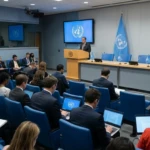
BGMEA President Mahmud Hasan Khan announced the decision at a joint press conference at the BGMEA Complex on Saturday, November 14, following discussions on the prevailing labour situation in the industrial areas.
Bangladesh Suffer Another 5-0 Defeat to South Korea in Asian Champions Trophy
He said normal production had been disrupted at several factories in Ashulia, Savar and Gazipur over the past seven to 12 days. He alleged that certain groups were attempting to create instability in industrial zones over demands concerning minimum wages, putting garment production and export activities at risk.
According to the BGMEA president, most workers are willing to return to work and maintain a peaceful working environment. However, he alleged that some workers, allegedly influenced by external groups, were creating disorder inside factories and preventing others from joining work.
He also claimed that groups of workers had attacked factory gates with bricks and stones and forcibly removed workers from other factories.
Mahmud Hasan Khan said 147 BGMEA-member factories in the affected areas had been unable to maintain full-scale production. The disruptions, he added, were damaging Bangladesh’s image in international markets and causing significant losses to the national economy.
He further said the ongoing unrest had affected the normal functioning of the Minimum Wage Board. Referring to media reports, he noted that the workers’ representative on the board had denied any involvement by the board or labour organisations in incidents of vandalism and disorder.
Expressing dissatisfaction with the role of labour organisations, the BGMEA president said they had failed to play an effective role in resolving the crisis. He also observed that many grassroots labour leaders and representatives were struggling to maintain control over workers.
At an emergency joint meeting of BGMEA and BKMEA members on Saturday, entrepreneurs also questioned the continuation of minimum-wage discussions without adequate security at factories, he said.
Citing the lack of overall security and a conducive environment for production, Mahmud Hasan Khan said the affected factories could not continue operations. Consequently, they would remain closed indefinitely from Sunday under the relevant provision of the labour law.
He stressed that garment factories in Ashulia and Savar make a significant contribution to the national economy and export earnings, adding that protecting the industry and safeguarding the livelihoods of hundreds of thousands of people associated with it was a collective responsibility.
The BGMEA and BKMEA urged the government to take immediate steps to restore law and order in the industrial areas.
They also called on factory owners, labour organisations, the government, civil society and the media to act responsibly and work together to resolve the crisis.
COMMENTS