

ADDIS ABABA — Ethiopia is facing renewed fears of a wider civil war as fighting intensifies in the country’s north, with the federal military saying it will respond with restraint while accusing Tigrayan forces and Eritrea of fueling the conflict.
Army chief Field Marshal Berhanu Jula, speaking publicly for the first time about the latest military developments, said federal forces were responding to what he described as provocations by the Tigray front with “wisdom and restraint.”
Jula also accused Eritrea of providing financial and other support to armed groups seeking to weaken Ethiopia. Eritrea has denied the allegation.
The latest escalation follows the formation of the Ethiopian Peoples Forces Alliance for Survival, a coalition of seven armed groups, including the Tigray forces, which has declared its intention to remove Prime Minister Abiy Ahmed’s government.
Fighting that began in Tigray has reportedly spread into neighbouring Afar and Amhara regions. In Afar, federal forces are conducting operations around Abala to prevent rebel groups from taking control of the town.
In North Wollo, near the Tigray border, the Ethiopian military said Thursday that 272 Tigrayan fighters had been killed and 260 wounded in a counteroffensive. The figures could not be independently verified.
The Tigray People’s Liberation Front (TPLF), meanwhile, accused the federal government of launching a full-scale offensive involving infantry, armoured units and drones.
Abdisalam Balema, a member of the TPLF central committee, told Al Jazeera that the situation had already developed into a full-scale war.
Fighting has also continued around Sama, Sokota and Raya Alamata, with reports indicating that government forces are advancing towards Alamata.
Despite the escalation, the military command said it wanted to pursue a strategic policy of calm rather than a major confrontation. It also claimed that the Tigray front was losing public support and facing divisions within its leadership.
Internet connectivity was reportedly cut in several parts of northern Ethiopia on Friday, a day after the United Nations expressed concern over reports of drone use against civilians.
Pretoria agreement under pressure
The renewed violence has placed the 2022 Pretoria Agreement under its most serious pressure since it ended a devastating two-year war in Tigray.
The agreement was intended to establish a lasting cessation of hostilities and pave the way for political and humanitarian measures in the region. The latest fighting has raised concerns that the deal could unravel if armed groups from other parts of Ethiopia become increasingly involved.
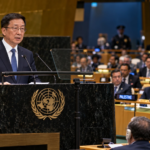
Addressing the UN General Assembly, Ethiopia’s president presented the country as a force for regional stability and accused outside actors of interfering in its internal affairs. He also highlighted Addis Ababa’s efforts to promote peace in neighbouring Sudan.
However, Alemayehu Weldemariam, a law professor at Indiana University, told Al Jazeera that the federal government bears much of the responsibility for the deterioration of the Pretoria agreement.
He argued that the government had largely undermined several provisions of the 2022 ceasefire, citing restrictions on fuel, services and cash in Tigray, as well as the failure to establish an interim administration promised under the agreement.
The widening conflict has renewed concerns that Ethiopia could again face a prolonged internal war, with the involvement of multiple armed groups potentially expanding the scale and geographic reach of the fighting.
COMMENTS