
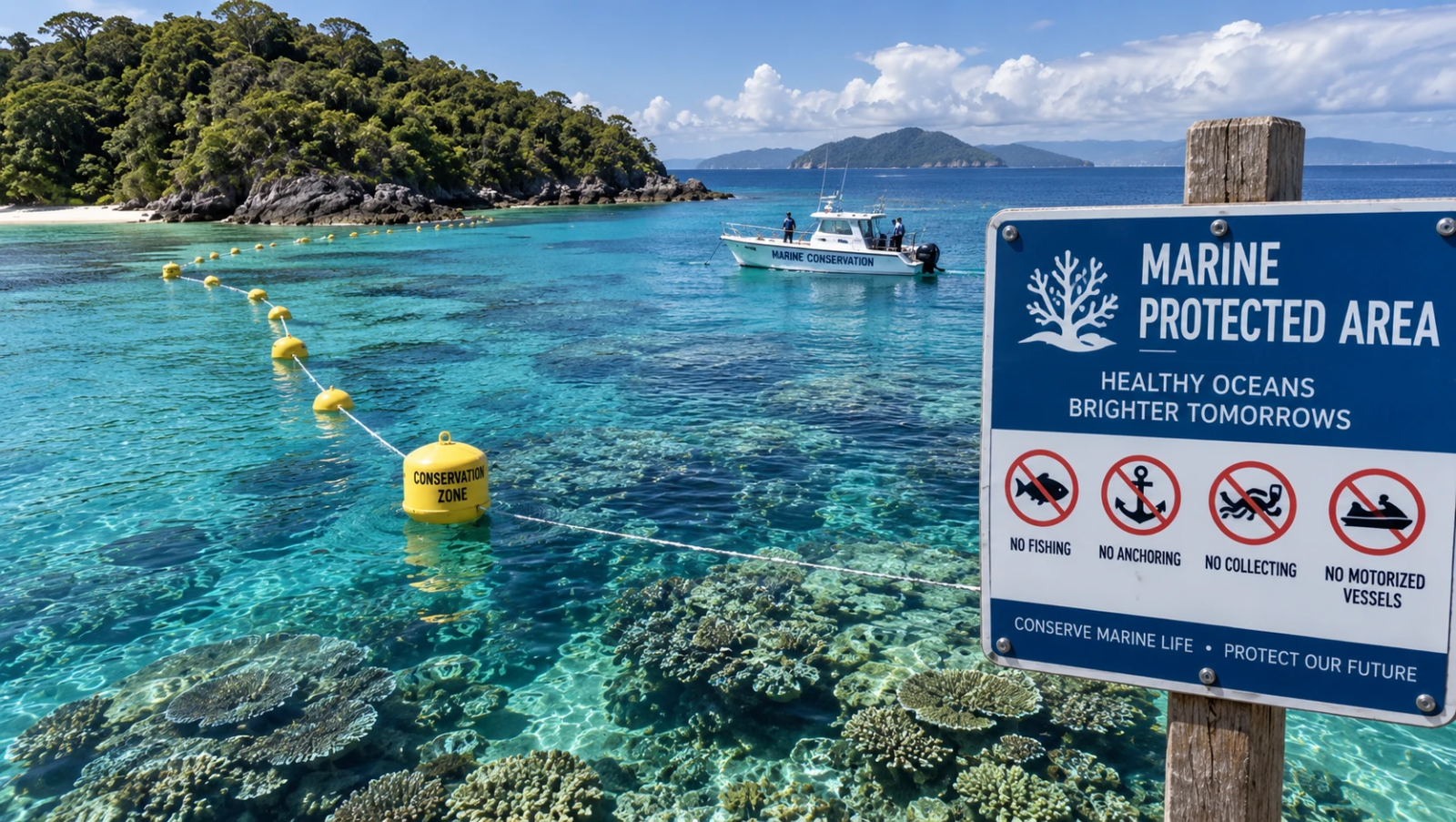
Governments are set to fall well short of a major UN target to protect and conserve at least 30% of the world’s land and oceans by 2030, according to research published on Wednesday.
Nearly 200 countries agreed to the “30 by 30” target under the Kunming-Montreal Global Biodiversity Framework adopted in late 2022. They also pledged to mobilise at least $200 billion a year to help reverse decades of biodiversity loss.
Since the agreement took effect, an additional 1.3 million square kilometres of land and 6 million square kilometres of marine areas have been formally placed under protection. However, total protected coverage remains at only 20% of terrestrial areas and 10% of marine areas, according to research by several environmental groups led by the US-based Campaign for Nature and Together for the Ocean.
The findings broadly align with an official progress report due to be submitted to the UN Convention on Biological Diversity conference in Yerevan, Armenia, next month.
A draft of the report released in July warned that none of the framework’s 23 targets would be achieved by 2030 “unless collective implementation accelerates rapidly”.
“Progress is being made clearly, but it is uneven, and it is clearly also not at the pace and scale required to achieve the Framework’s 23 targets by 2030,” Astrid Schomaker, executive secretary of the UN Convention on Biological Diversity, said at a briefing earlier this month.
The latest research found that terrestrial and inland water areas could reach about 26% protection by 2030 if governments fulfil all their existing commitments. Marine protection, however, would reach only around 12%.
The report estimated the annual funding shortfall at between $75 billion and $150 billion. Spending on marine conservation is particularly limited, at about $1.8 billion a year compared with an estimated $16 billion needed.
Researchers also warned that meeting the numerical “30 by 30” target alone would not guarantee effective conservation. Although about 10% of the world’s oceans are currently covered by protection plans, only 3.5% are considered to be effectively protected.
“There’s a significant gap between protection on paper and protection in practice. A line on a map does not mean protection in the water,” said Pauli Merriman, senior director for oceans at WWF International.
The research underscores the scale of the challenge facing governments as they seek to meet the biodiversity framework’s targets before the 2030 deadline.


COMMENTS