
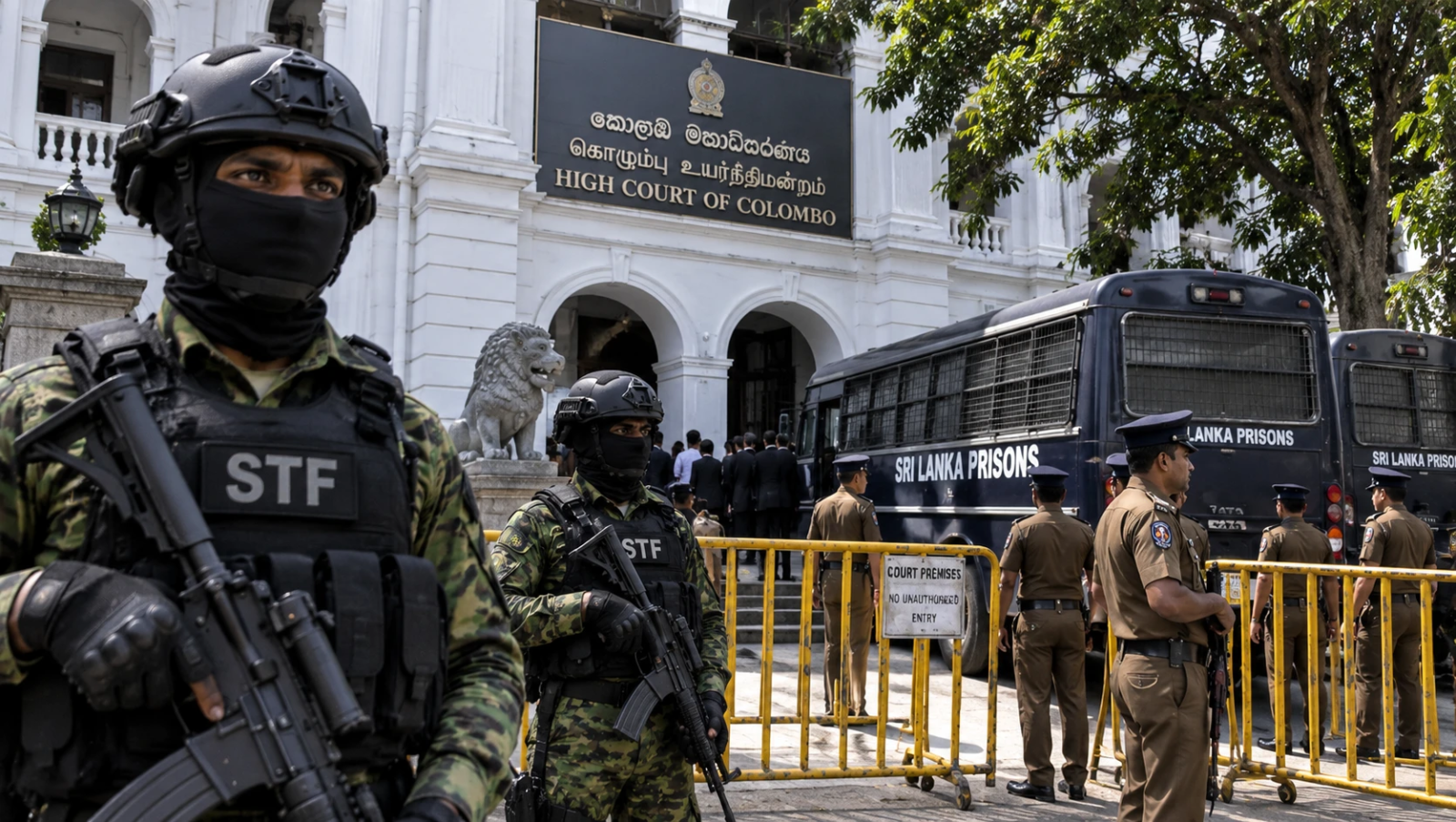
A Sri Lankan High Court has convicted 15 people over their alleged involvement in the 2019 Easter Sunday bombings and sentenced each of them to lengthy prison terms of 200 years, with the court initially referring to a total sentence of at least 220 years. Their properties were also ordered to be confiscated.
The verdict was delivered on Tuesday, September 22, by a three-judge High Court amid heightened security, with hundreds of police officers deployed around the court premises.
The defendants were accused of conspiring to facilitate attacks that deliberately targeted members of Sri Lanka’s minority Christian community and foreign tourists. Two Sri Lankan Islamist militant groups were believed to have planned the attacks.
The trial lasted nearly five years, with delays in the proceedings frustrating victims and their families.
In 2021, authorities filed 23,270 charges against 25 suspects accused of planning or supporting the attacks. The charges covered the bombings at three churches, three luxury hotels and a motel where one of the attackers detonated explosives, as well as two other incidents following an unsuccessful attack at a fourth hotel.
The charges included murder, conspiracy to commit terrorism, and firearms and explosives offences under Sri Lanka’s counterterrorism laws.
All 15 convicted defendants are members of Sri Lanka’s minority Muslim community. Nine other defendants were acquitted after the prosecution failed to establish the charges against them. One defendant died before the trial began.
State prosecutor Haripriya Jayasundara sought longer prison terms, arguing that the defendants had participated in a planned campaign aimed at killing Christian worshippers and tourists. She cited a video left behind by one of the suicide bombers as evidence.
The video, recorded a day before the attacks, reportedly showed masked men carrying rifles and swords and pledging allegiance to then-Islamic State leader Abu Bakr al-Baghdadi. They spoke of turning Sri Lanka into an Islamic state and waging war.
Catholic priest Jude Fernando welcomed the verdict.
“Finally, we have received justice,” he said, adding that it had taken a long time to reach this stage.
However, the conclusion of the trial is unlikely to bring complete closure to all victims and their families. Sri Lanka’s Catholic Church has long argued that those prosecuted were not the principal planners of the attacks and that a wider state conspiracy may have been involved.
A parliamentary committee previously found that police and intelligence officials had failed to act despite receiving repeated warnings about a possible attack.
The Easter Sunday bombings, which struck churches during Easter services and luxury hotels, killed 267 people and injured thousands. The attacks, inspired by the Islamic State, were among the deadliest in Sri Lanka’s history and triggered widespread fear across the country.
Nine suicide bombers carried out the attacks and all of them died in the explosions. None of the direct attackers survived to face trial.



COMMENTS