
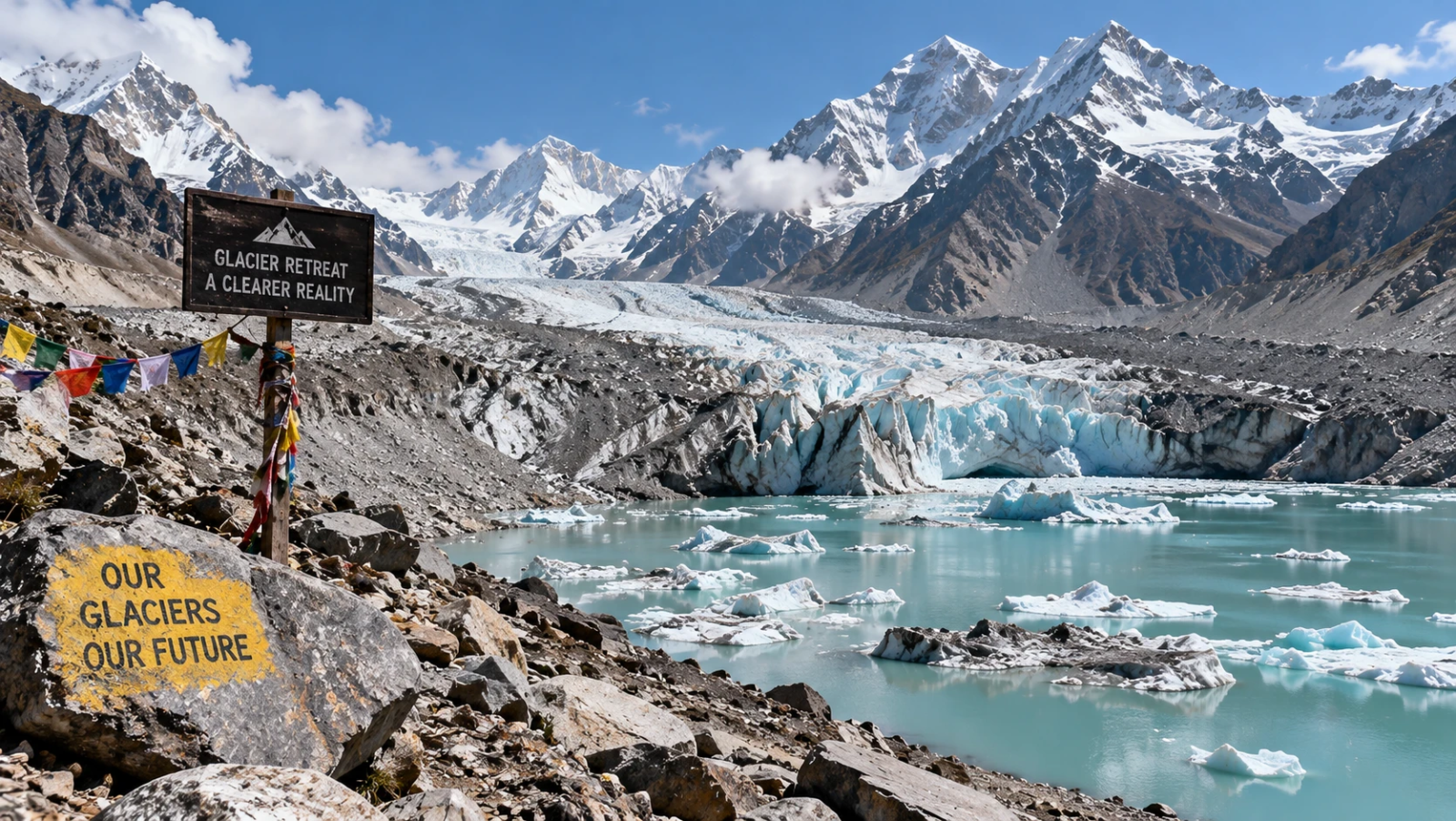
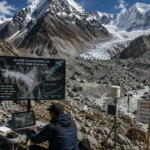
NEW DELHI — The Himalayan region is facing an escalating environmental and economic crisis as glaciers lose ice at an increasingly rapid rate, glacial lakes become more unstable and monitoring systems remain inadequate, according to a new study.
The report was jointly produced by global consultancy Systemiq, the Integrated Mountain Initiative (IMI), the International Centre for Integrated Mountain Development (ICIMOD) and the G.B. Pant National Institute of Himalayan Environment.
It comes shortly after devastating floods in Nepal and Tibet that killed more than 1,300 people and caused widespread damage.
According to the study, Himalayan glaciers are now losing ice 65% faster than they were a decade ago. Yet only 21 of the estimated 40,000 glaciers across the Hindu Kush-Himalaya-Karakoram region are being monitored in detail over the long term.
The monitoring gap is making it increasingly difficult for governments and communities to assess and respond to rapidly changing risks, the report said.
Although the Himalayan region accounts for only about 18% of India’s land area, nearly 35% of the country’s disasters occur there, according to the report.
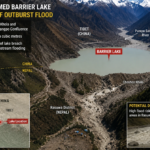
A 2025 scientific assessment identified 189 high-risk glacial lakes in the Indian Himalayan region, including 56 classified as being at extremely high risk. Previous glacier-related disasters in Sikkim in 2023 and Uttarakhand in 2021 also resulted in more than 100 deaths.
Economic stakes
The consequences extend well beyond the environment. The report estimates that water from the Himalayas underpins around 20% of India’s GDP, supporting agriculture, including wheat and rice production, as well as tea cultivation, hydropower and pilgrimage-based tourism.
Climate economist Lord Nicholas Stern of the London School of Economics described the Himalayas as the world’s “third pole”, noting that unlike the Arctic and Antarctic, hundreds of millions of people live downstream of the region.
“The Himalayas are at a critical crossroads, putting the lives and livelihoods of millions of people at risk,” said Arushi Chopra, senior director at Systemiq and the study’s lead author.
The study also found that black carbon emissions from brick kilns account for roughly one-third of Himalayan glacier melt, highlighting the role of regional air pollution alongside broader climate change.
Pema Gyamtsho, director general of ICIMOD, said the risks posed by mountain disasters do not respect national borders and cannot be addressed by any single country.
The report called for stronger measures to cut carbon emissions, improve early-warning and disaster forecasting systems, strengthen glacier and glacial-lake monitoring, and reconsider tourism policies in the fragile Himalayan region.
Clarify the disaster figure’s scope
Tighten the opening paragraphs
Use consistent regional terminology

COMMENTS