
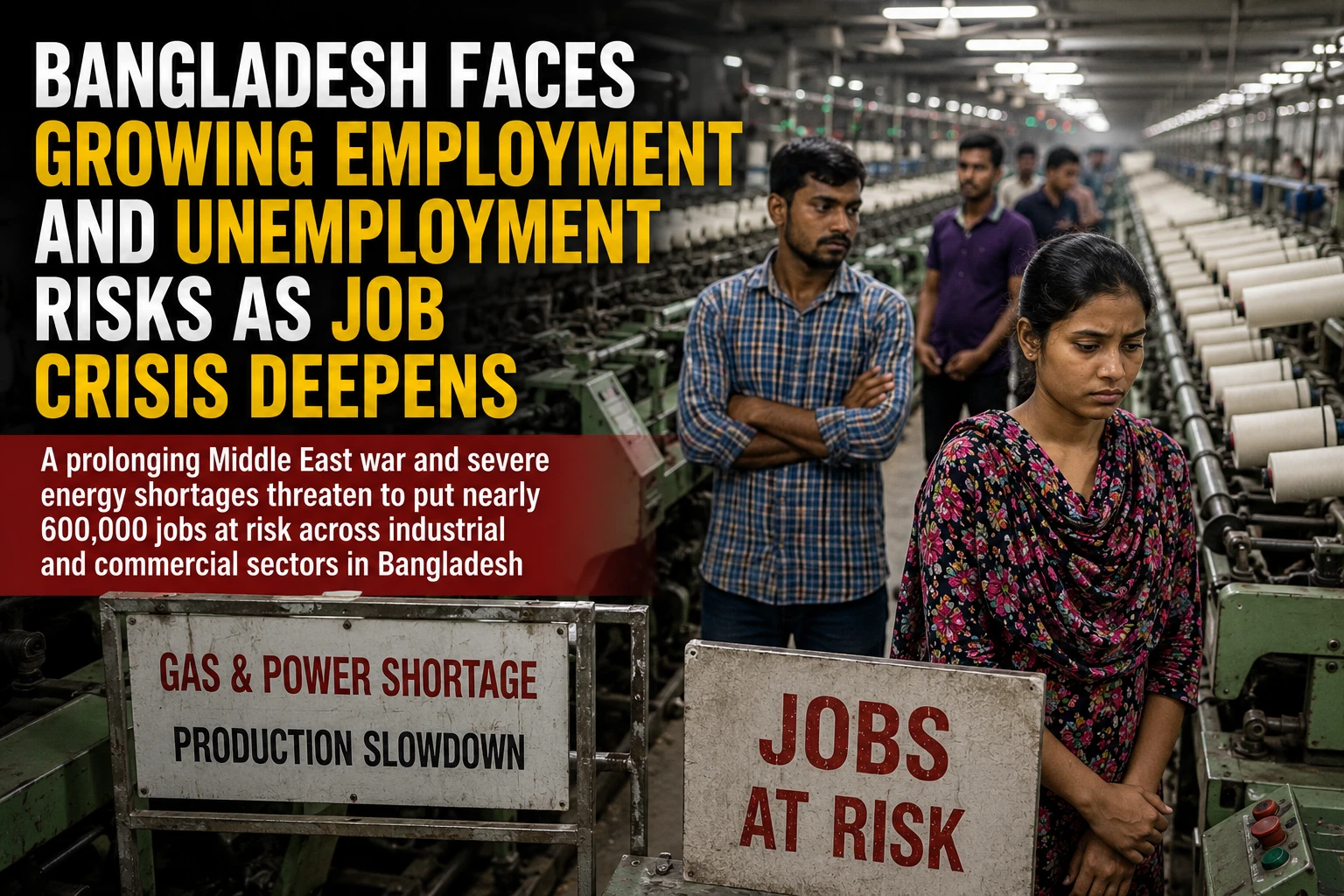
The ongoing war in the Middle East is increasingly affecting Bangladesh’s already fragile economy, with rising fuel prices and gas shortages disrupting industrial production and threatening employment across the country.
If the crisis continues for a prolonged period, nearly 600,000 people in Bangladesh could be at risk of losing their jobs, according to a World Bank assessment released in mid-June as part of an evaluation for a proposed budget-support project.
The rising cost of fuel and persistent gas shortages are increasing transportation and production expenses, affecting industries, agriculture and businesses. The impact is gradually being passed on to consumers through higher prices of food and other essential goods, while household incomes and employment opportunities also face growing pressure.
Bangladesh has entered the crisis at a time when its economy is already under significant strain. Persistent high inflation, a weak banking sector and the government’s limited fiscal capacity have prevented new jobs from being created at the expected pace.
According to World Bank estimates, the number of poor people in Bangladesh increased by approximately 1.4 million in 2025 alone.
Without the Middle East war, around 1.7 million people were expected to move out of poverty in 2026. However, the conflict could reduce that number to around 500,000, meaning nearly 1.2 million people may lose the opportunity to escape poverty because of the economic fallout from the war.
The World Bank also warned that rising prices could account for around 10 percent of the increase in poverty in Bangladesh this year.
If higher energy costs are gradually passed on to consumers, inflation could rise by more than 0.5 percentage points. Higher fuel prices would increase transportation costs, electricity generation expenses and industrial production costs, eventually driving up the prices of food and other essential commodities.
Finance and Planning Minister Amir Khosru Mahmud Chowdhury recently said that inflation had fallen below 9 percent in July. However, he said inflation could have declined even further had the Middle East war not occurred.
With industries facing mounting energy shortages and rising operating costs, concerns are growing that a prolonged conflict could deepen Bangladesh’s employment crisis, slow job creation and push hundreds of thousands of workers into unemployment.




COMMENTS