
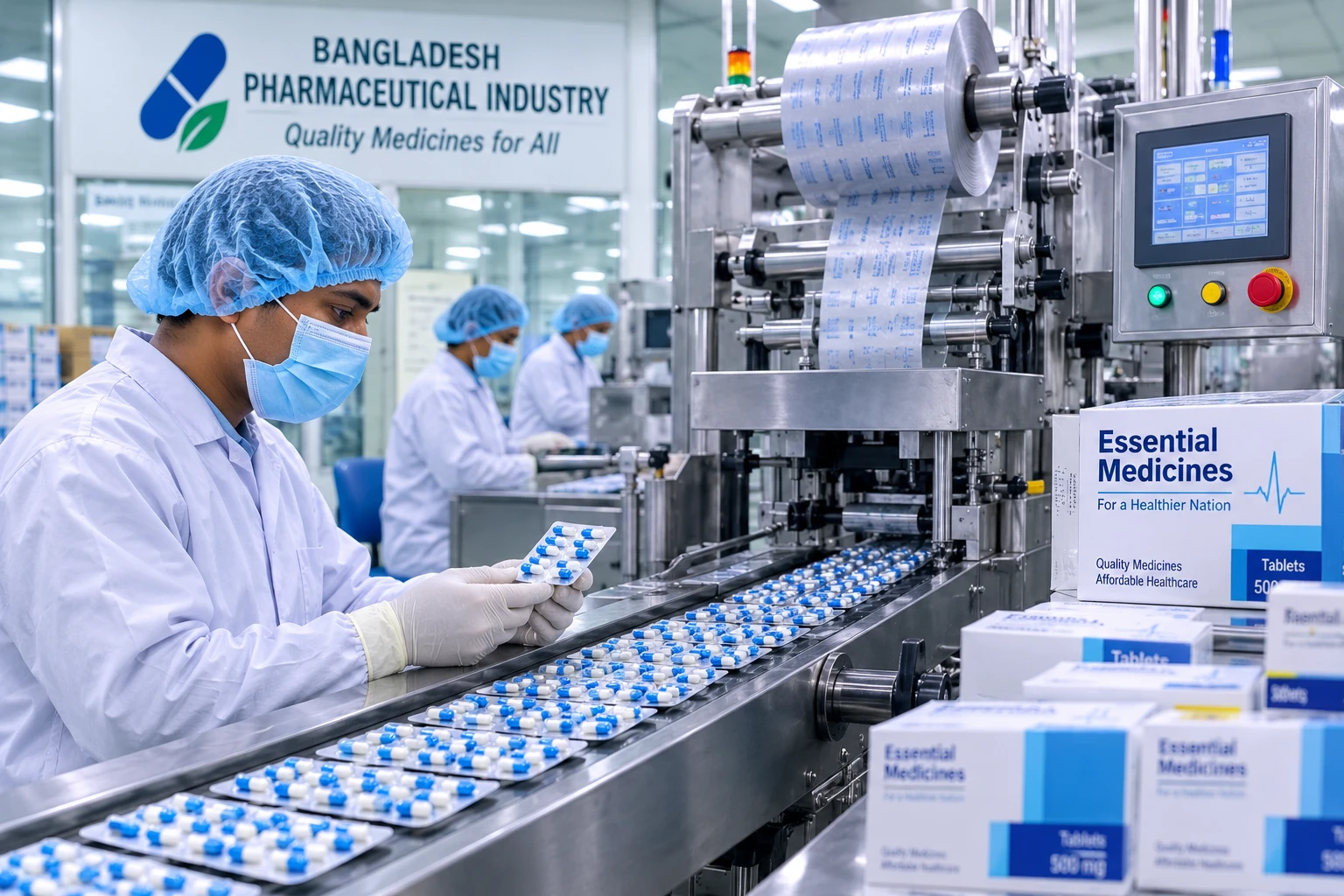
DHAKA – Nearly 60 percent of the 117 medicines on Bangladesh’s essential medicines list are no longer being produced by pharmaceutical companies, industry leaders said Monday.
The Bangladesh Association of Pharmaceutical Industries (BAPI) said manufacturers have suspended production of several essential medicines at different times because of rising inflation, the depreciation of the taka against the US dollar, higher wages and increased electricity and fuel costs.
The disclosure was made at a discussion titled “Progress of the Pharmaceutical Industry: Challenges and Prospects” held at BAPI’s office in Tejgaon, Dhaka.
As production of the medicines has stopped, patients are increasingly being forced to buy more expensive alternatives, raising the overall cost of treatment.
Manufacturers seek regular price adjustments
BAPI leaders said medicine prices are still determined under a pricing framework introduced in 1994. Prices have been adjusted only twice over the past 32 years, despite a provision for an average annual adjustment of 8 percent.
They called for a transparent and sustainable pricing mechanism that would allow medicine prices to be reviewed and adjusted automatically at regular intervals in line with changes in production costs.
BAPI said it has no objection to updating the essential medicines list but stressed that experts should be consulted in preparing the list and setting prices.
Energy crisis pushes up production costs
BAPI Secretary General Mohammad Halimuzzaman said gas and electricity shortages were also increasing manufacturing costs.
He said pharmaceutical factories often have to rely on generators, large UPS systems and alternative fuels because electricity is unavailable for a significant portion of working hours.
“Once the production process begins, it cannot simply be stopped midway,” he said, warning that a power interruption could result in the loss of an entire production batch.
With gas shortages forcing manufacturers to use diesel to run generators, production costs have risen further. Some companies also lack sufficient capacity to store diesel and must arrange emergency supplies when stocks run out.
Calls for government support
Dr Zakir Hossain, former BAPI secretary general and managing director of Delta Pharma Ltd, said viewing the pharmaceutical industry solely through the lens of price controls could undermine production and investment in the long term.
He said the government could ensure affordable access to essential medicines through subsidies or government procurement rather than expecting private manufacturers to produce medicines at unsustainably low prices without support.
Hossain also said state-owned Essential Drugs Company Limited (EDCL) should not be directly compared with private manufacturers because EDCL has guaranteed government orders and a secure market, while it does not face the same level of marketing costs as private companies.
He suggested that the government could increase production through EDCL and supply medicines free of charge or at subsidized prices to patients at public hospitals.
BAPI urges policy reform
BAPI Vice President Mosaddeq Hossain said the 1994 drug policy played a major role in the development of Bangladesh’s pharmaceutical industry. Of the 117 medicines initially included on the essential medicines list, 19 were not registered for production, leaving 98 medicines for which availability and affordability were sought.
He said many of these medicines are now being produced at a loss, resulting in the suspension of production of nearly 60 percent of the essential medicines.
Industry leaders urged the government to introduce a predictable pricing policy, address energy shortages and regularly review the essential medicines list to ensure continued availability of affordable medicines for the public.



COMMENTS