
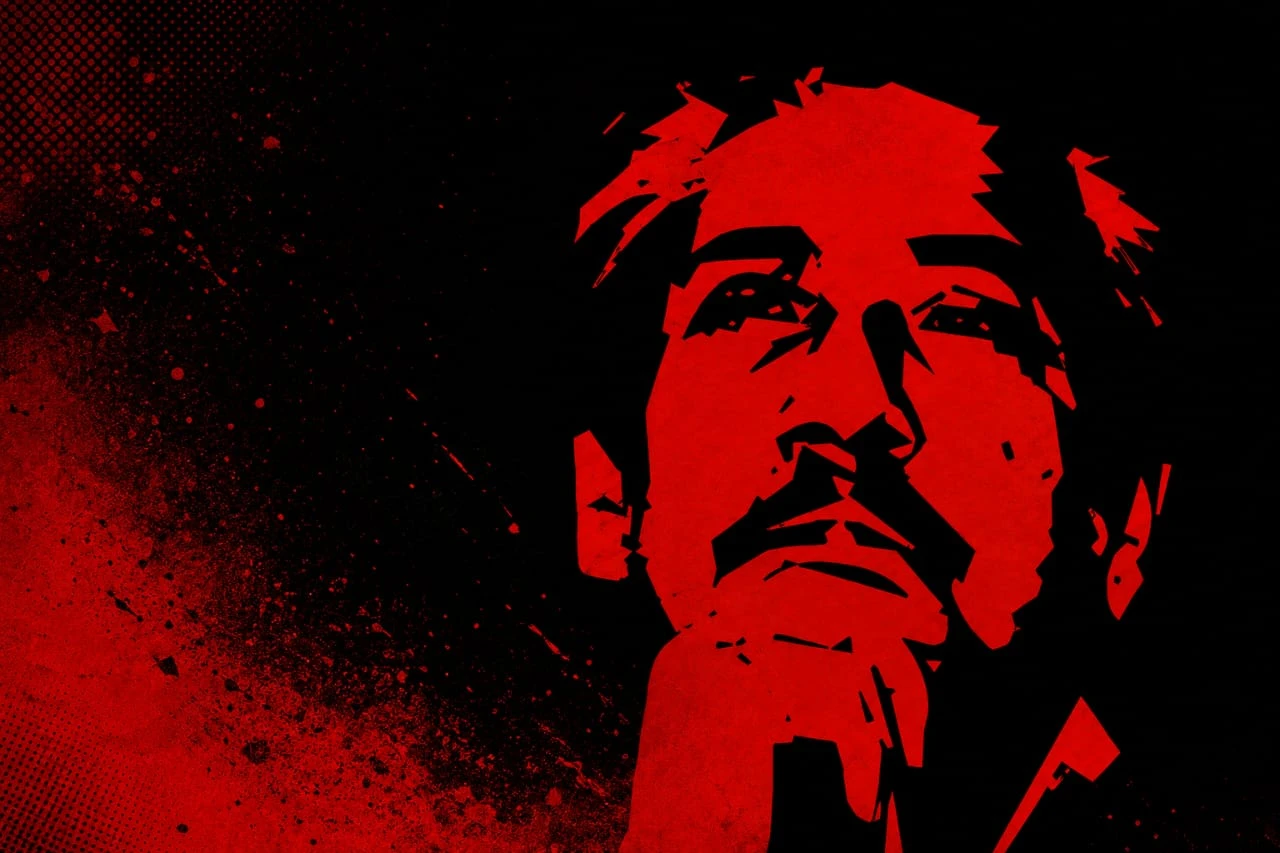
DHAKA, August 16, 2026 — Bangladesh observed the 51st anniversary of the assassination of the Father of the Nation Bangabandhu Sheikh Mujibur Rahman on August 15 amid heightened security, political restrictions and a markedly different environment from previous years, with the National Mourning Day no longer carrying official state recognition.
The anniversary was marked by tight security around key sites associated with the Awami League, arrests of people accused of attempting to organize banned political activities, small-scale tributes, food distribution programs, seminars and a surge of online commemorations.
Bangabandhu Sheikh Mujibur Rahman, who led Bangladesh’s independence movement and became the country’s first president, was assassinated along with most members of his family at his residence on Dhanmondi Road 32 in Dhaka on August 15, 1975.
For decades, August 15 was observed as National Mourning Day through state ceremonies, wreath-laying, prayers, discussions, rallies and food distribution programs.
The character of the anniversary changed following the political upheaval of 2024, after which the government abolished August 15 as a nationally observed day.
Dhanmondi 32 Sealed Off Under Heavy Security
Dhanmondi 32, the site of Bangabandhu Sheikh Mujibur Rahman’s former residence where he was assassinated with his whole family except two daughters, emerged as the main focus of security measures on August 15.
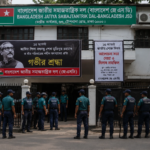
The building itself was demolished in February 2025 by anti-liberation forces and Islamic extremists, but the site remained heavily guarded throughout the day. Police erected barricades on both sides of the road from early morning, suspended vehicular movement and restricted pedestrian access.
A large number of law enforcement personnel were deployed in the area, with an armoured police vehicle kept on standby.
Despite the restrictions, several people attempted to reach the Dhanmondi 32 to place flowers in tribute to Mujibur Rahman.
One of them, 32-year-old Arnab Das, was detained at around 10am while attempting to pay tribute. Police later showed him arrested in a case filed under the Anti-Terrorism Act. A Dhaka court rejected his bail petition and ordered him sent to jail.
Police alleged that Das had links with the banned Jubo League.
Two women were also arrested later in the day after reportedly visiting Dhanmondi 32 to place flowers. Police said they were arrested over alleged anti-state and anti-government speeches and for speaking on behalf of a banned organisation.
The restrictions around the site also led to confrontations. The Daily Star reported that three people were assaulted in separate incidents involving filming, chanting “Joy Bangla” and distributing snacks.
53 Awami League Leaders and Activists Arrested Before Anniversary
The security operation began several days before August 15.
On August 13, police arrested 53 leaders and activists of the Awami League and its affiliated organizations from a flat in Bashundhara Residential Area.
According to the Dhaka Metropolitan Police, those arrested had gathered for a preparatory meeting and were allegedly planning flash processions ahead of August 15. Police said they were carrying banners and placards and chanting slogans that authorities described as anti-state.
The Awami League and several of its affiliated organizations are currently prohibited from political activities. The government imposed the ban on the party and its associated and affiliated organizations in May 2025 under the Anti-Terrorism Act, while Bangladesh Chhatra League had already been banned in October 2024.
The arrests highlighted the extent to which traditional August 15 political programs had shifted from large public gatherings to smaller and more restricted forms of mobilization.
Constitutional Rights Concerns
The restrictions surrounding August 15 also raised broader questions about the balance between public security, political restrictions and citizens’ constitutional rights.
The right to peaceful assembly, political expression and freedom of speech remains an important element of any democratic political order. At the same time, authorities have cited the ban on Awami League activities and concerns over public order as the basis for preventing organized political programs associated with the party.
The central issue, therefore, is not simply whether August 15 should be officially commemorated, but how restrictions imposed during a politically sensitive anniversary are applied in practice.
The arrests of individuals attempting to commemorate Bangabandhu Mujibur Rahman, particularly where the stated conduct involved placing flowers or expressing political views, have added another layer to the debate over the boundaries between lawful remembrance, prohibited political activity and constitutional freedoms.
The question is likely to remain politically sensitive as Bangladesh continues to navigate the institutional and legal consequences of the political transformation that followed the 2024 upheaval.
Online Tributes Gain Greater Prominence
With political activity on the ground sharply restricted, social media emerged as a major platform for those seeking to commemorate Bangabandhu Sheikh Mujibur Rahman and the victims of the August 15, 1975 assassination.
Actors, writers, journalists, former political figures and other public personalities shared photographs, messages and archival material marking the anniversary.
Among those reported to have posted tributes were actor Jaya Ahsan, former national cricket captains Shakib Al Hasan and Mashrafe Bin Mortaza, Poet and Author Mujtoba Ahmed Murshed, writer-journalist Anisul Hoque and former interim-government adviser Asif Nazrul.
The number of public figures participating in online tributes was reported to be higher than in the previous two years, reflecting a broader digital expression of remembrance despite restrictions on physical political programs.
Food Distribution and Alternative Programs
In the absence of the large state-sponsored programs traditionally associated with August 15, various individuals and groups organized smaller-scale activities.
Food distribution, private commemorations, seminars and discussions replaced many of the large rallies and formal public programs that had characterized previous observances.
These activities provided supporters of Mujibur Rahman and the Awami League with alternative avenues to mark the anniversary while avoiding the large-scale political mobilization that is currently prohibited.
A Fundamentally Different August 15
The events of August 15, 2026, demonstrated how dramatically the nature of the anniversary has changed.
Instead of the state-led observance once characterized by national ceremonies, official wreath-laying, flags flown at half-mast, mass rallies and large public gatherings, this year’s anniversary was marked by heightened security, restrictions around Dhanmondi 32, arrests linked to alleged banned political activities, small-scale commemorations, charitable food distribution and widespread online tributes.
The government had already ended the official national observance of August 15 following the political change of 2024. A government circular issued in March 2026 confirmed that the decision remained in force under the new administration and said government-sponsored large gatherings and processions should generally be avoided, although limited seminars and discussions could be held in appropriate circumstances.
Killers Killed All
Before dawn on August 15, 1975, a group of army officers launched a military coup in Dhaka.
Bangabandhu Sheikh Mujibur Rahman was assassinated at his residence in Dhanmondi and killers killed Bangabandhu’s wife Sheikh Fazilatunnesa Mujib, sons Sheikh Kamal, Sheikh Jamal and young Sheikh Russell, daughters-in-law Sultana Kamal and Rosy Jamal, and his only brother Sheikh Abu Naser at his Dhanmondi residence.
Colonel Jamil, a security officer who rushed to Bangabandhu’s residence after receiving his phone call and attempting to save his life, was also killed. SB officer Siddiqur Rahman and army personnel Syed Mahbubul Haque were also killed.
At the residence of Bangabandhu’s nephew and Jubo League leader Sheikh Fazlul Haque Moni, attackers killed Moni and his pregnant wife Arzu Moni. At the residence of Bangabandhu’s brother-in-law Abdur Rab Serniabat, attackers killed Serniabat, his daughter Baby, son Arif Serniabat, grandson Sukanta Babu, Serniabat’s elder brother’s son Sajib Serniabat and a relative, Rentu Khan.
His two daughters, Sheikh Hasina and Sheikh Rehana, were outside the country at the time and survived.
Political Memory Remains Deeply Contested
The contrasting forms of observance underline the continuing political divide over the legacy of Bangabandhu Sheikh Mujibur Rahman and the Awami League.
For supporters of Bangabandhu Mujibur Rahman, August 15 remains a day of mourning and remembrance for the country’s founding political leadership. For the post-2024 political order, however, the date no longer carries the official national status it held for decades.
The events surrounding Dhanmondi 32 showed that removing the official framework of National Mourning Day has not removed the political and historical significance of the anniversary.
More than five decades after the assassination, August 15 remains deeply embedded in Bangladesh’s contested political memory. Its observance in 2026 reflected not only the legacy of the 1975 tragedy but also the profound political transformation that has reshaped Bangladesh since the July-August 2024 upheaval.


COMMENTS