
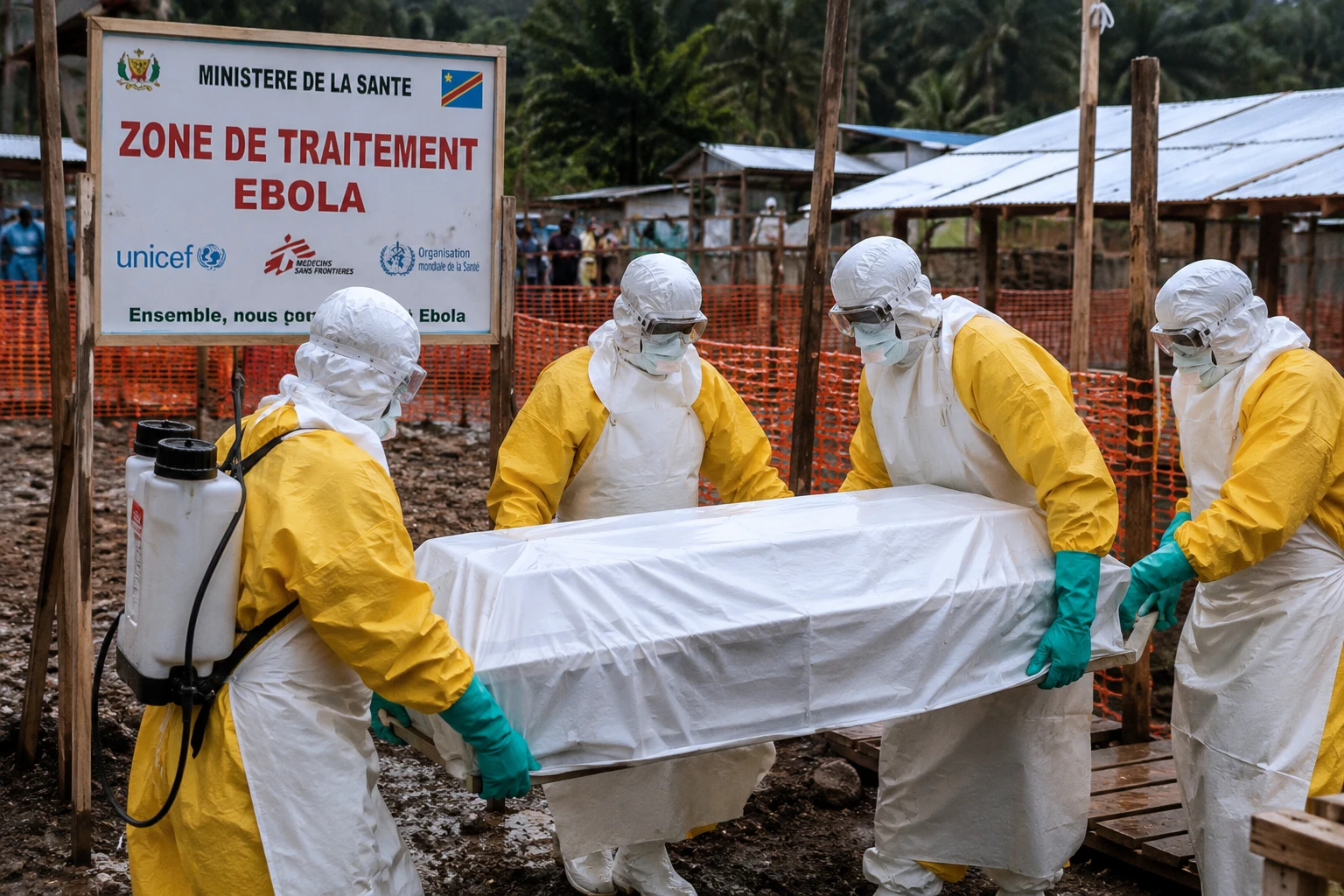
The Ebola outbreak in the Democratic Republic of Congo (DRC) is rapidly worsening, with the death toll surpassing 2,000 within just a few months. More than 1,000 people have reportedly died in the past three weeks alone.
According to government data, as of Tuesday, August 11, a total of 4,381 Ebola cases had been reported across five provinces of the DRC, with 2,011 deaths. Nearly half of those infected have died.
The outbreak is spreading at an unprecedented pace and is now considered the largest Ebola outbreak since the devastating West Africa epidemic of 2014–2016, which claimed more than 11,000 lives.
The World Health Organization (WHO) said the first cases of the current outbreak were detected in the DRC in February. However, the government officially declared the outbreak on May 15. Around the same time, neighbouring Uganda also reported Ebola cases.
The situation has deteriorated rapidly since then, with the number of deaths doubling in just three weeks. The surge has placed enormous pressure on the country’s already strained healthcare system.
Efforts to contain the outbreak have also been hampered by disruptions among healthcare workers. Some health workers involved in the Ebola response have reportedly gone without pay, leading to strikes that have disrupted patient care and disease-control operations.
The spread of rumours and misinformation has further complicated containment efforts.
Local social and cultural practices are also creating challenges. In particular, traditional funeral practices often involve close contact between family members and the bodies of deceased relatives. Such contact can increase the risk of Ebola transmission and accelerate the spread of the virus.
The strain responsible for the current outbreak is also considered rare, and there is currently no approved treatment or vaccine specifically available for it. However, the WHO said last week that trials of an experimental vaccine against the strain had begun.
Researchers may need several months to determine whether the experimental vaccine is effective. Until then, health authorities have limited access to approved vaccination options against the specific strain, making the rapidly escalating outbreak even more difficult to control.
Meanwhile, Israel has also raised its alert level after an Israeli citizen developed a fever following a return from the DRC.
Israel’s Health Ministry said on Tuesday that the individual had been tested for Ebola and placed in isolation. The test results were expected within 24 hours.
Authorities have not confirmed that the person has Ebola, and the case remains under investigation.



COMMENTS