
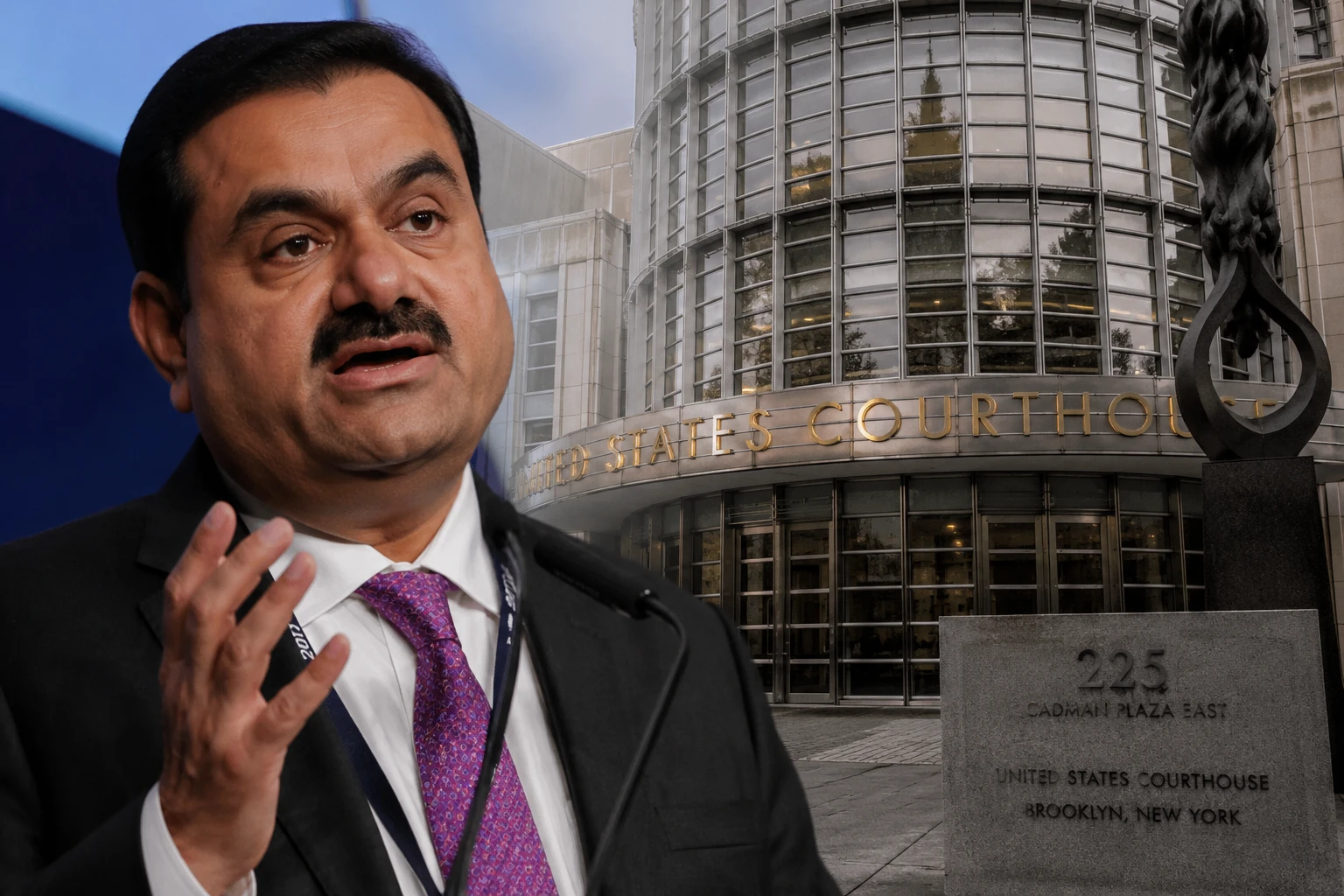
A US federal judge has dismissed the criminal bribery and fraud case against Indian billionaire Gautam Adani and his associates, while sharply criticising the Justice Department’s handling of the decision to withdraw the charges.
US District Judge Nicholas Garaufis, based in Brooklyn, on Monday approved a rare request by federal prosecutors to dismiss the case. Before granting the request, however, the judge had sought an explanation for the government’s decision, including whether Adani’s November 2024 pledge to invest $10 billion in the United States had influenced the move.
Although Judge Garaufis ultimately dismissed the case, he expressed strong dissatisfaction with the process. In a written ruling, he described the irregularities surrounding the decision as “extremely concerning” and criticised Principal Associate Deputy Attorney General Trent McCotter for allegedly overriding the views of investigators and agency officials.
The judge said McCotter appeared to have imposed the decision based on his own judgment after bypassing the opinions of numerous Justice Department officials. He also questioned the circumstances surrounding discussions between prosecutors and lawyers representing the defendants.
A Justice Department spokesperson, citing a filing submitted on July 4, said McCotter reached the decision after meeting with defence lawyers and other department attorneys and conducting his own review of the case.
During an earlier hearing, McCotter argued that the case depended heavily on foreign matters that would be difficult to prove and that pursuing it was not consistent with the department’s current priorities.
Adani welcomed the court’s decision in a post on X, saying he received the ruling with humility and “deep respect for the judicial system.”
The dismissal, however, does not amount to a finding that the Justice Department’s reasoning was correct or that the allegations lacked merit, Judge Garaufis said.
The charges, brought in 2024, accused Adani and his associates of allegedly paying bribes to Indian government officials to secure solar-power contracts and misleading US investors. The Adani Group has consistently denied the allegations.
Separately, in a civil case involving the US Securities and Exchange Commission, Gautam Adani has agreed to pay a $6 million penalty, while his nephew Sagar Adani has agreed to pay $12 million.
Adani Enterprises has also agreed to pay $275 million to the US Treasury Department over allegations related to violations of US sanctions concerning Iran.
Addressing Adani’s reported $10 billion US investment pledge, Judge Garaufis said he would not take a position on whether such a financial commitment should be used to resolve a bribery case.
He noted that the broader question of how such offers of money could affect the principles of equality before the law and the rule of law would ultimately be for the public to judge.






COMMENTS