
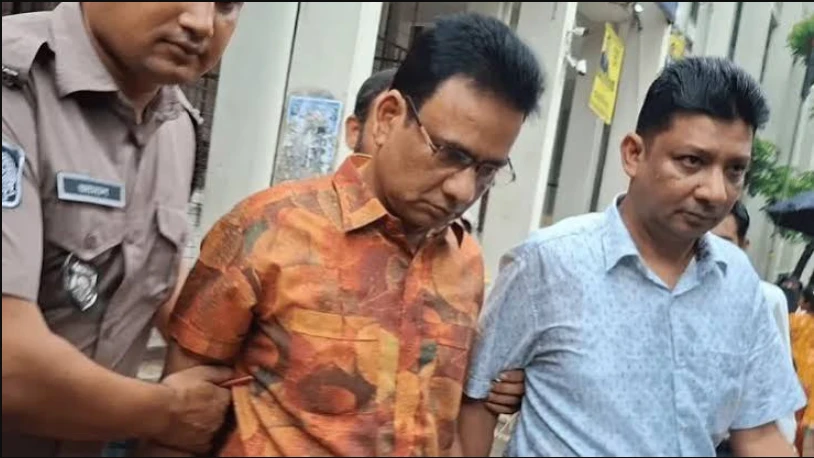
Shamikul Islam Sarkar spent much of his working life in education. He was vice principal of Palashbari Mohila College in Bangladesh’s northern Gaibandha district and president of the Awami League’s Palashbari upazila unit.
After the political changeover of Aug. 5, 2024, multiple cases were filed against him. He was arrested in Dhaka on Dec. 8 that year. His family said he secured High Court bail six times, but new cases and subsequent arrests repeatedly prevented his release.
He was eventually freed on bail, then arrested again in another case and sent back to jail. He never returned home from that final period of imprisonment.
Shamikul, 60, became seriously ill in Gaibandha District Jail and died Feb. 15, 2026, at Rangpur Medical College Hospital after being transferred there for treatment.
His death was one among hundreds recorded in Bangladesh’s prisons since the fall of former Prime Minister Sheikh Hasina’s government. The toll includes political detainees, undertrial prisoners, convicts, elderly inmates and death-row prisoners.
Now, a new cluster has sharpened scrutiny of the prison system: 11 prisoners died in just 13 days this month — nearly one death a day.
From Sept. 2 through Sept. 14, 11 individually identified prisoners died after being held in prisons across Bangladesh. Nine died at Dhaka Medical College Hospital.
Eleven Prisoners Dead in 13 Days
The September sequence began Sept. 2, when Md Nurul Islam, 55, a local Awami League leader from Mirsarai in southeastern Bangladesh’s Chattogram district, died at Chattogram Medical College Hospital after falling ill in Chattogram Central Jail.
Nurul had been jailed under the Anti-Terrorism Act. Prison authorities said he complained of chest pain and was transferred to the hospital as his condition deteriorated. His body was sent for autopsy.
The following day, Md Babul Hossain, 45, an undertrial prisoner in a narcotics case, was brought from Dhaka Central Jail to Dhaka Medical College Hospital, where he was pronounced dead.
At least four prisoners died at the hospital on Sept. 6. Abul Bashar, 58, an undertrial detainee, and Abdul Qaiyum, 62, were brought sick from prison and pronounced dead. Md Shahadat Hossain Liton, a convicted prisoner hospitalized since Aug. 28, also died that day. Published reports differ over his age and the prison that held him.
Later that night, Azharul Islam, 51, a death-row prisoner convicted in a murder case, was brought sick from Dhaka Central Jail and pronounced dead. Ali Akbar Mondal, 67, died shortly after midnight on Sept. 7.
Six days later, Abdul Barek, 70, and Abdul Mabud, 58, died Sept. 13. Rafiqul Islam, 54, and Abdur Rahim, 60, died the following day.
Public accounts of many of the cases say only that the prisoners became ill before being transferred to hospitals. Autopsies were ordered in several cases, but final findings have generally not appeared in public reporting.
Hundreds of Prison Deaths
Department of Prisons data show 270 inmates died in 2025 and another 129 during the first six months of 2026 — 399 deaths in 18 months alone.
The figure excludes deaths from Aug. 5 through Dec. 31, 2024, and those after June 2026, including the 11 identified this month. The full toll since the political changeover is therefore higher, although available official data do not provide a precise total.
The Department of Prisons separately recorded 261 inmate deaths during the full 2024 calendar year. Because that figure includes more than seven months before Aug. 5, it cannot be added to the post-August toll.
Rights groups record lower numbers, largely through media monitoring. Ain o Salish Kendra, or ASK, counted 107 prison deaths in 2025 and 61 during the first half of 2026. The Human Rights Support Society, or HRSS, recorded 58 in the first six months of this year.
The gap is stark: prison authorities recorded 129 deaths from January through June 2026, more than twice the 61 identified by ASK.
Of those 129 deaths, 74 occurred before the prisoners reached hospital. Official figures also show 55 inmate deaths in January and 42 in February alone.
Awami League Detainees Among the Dead
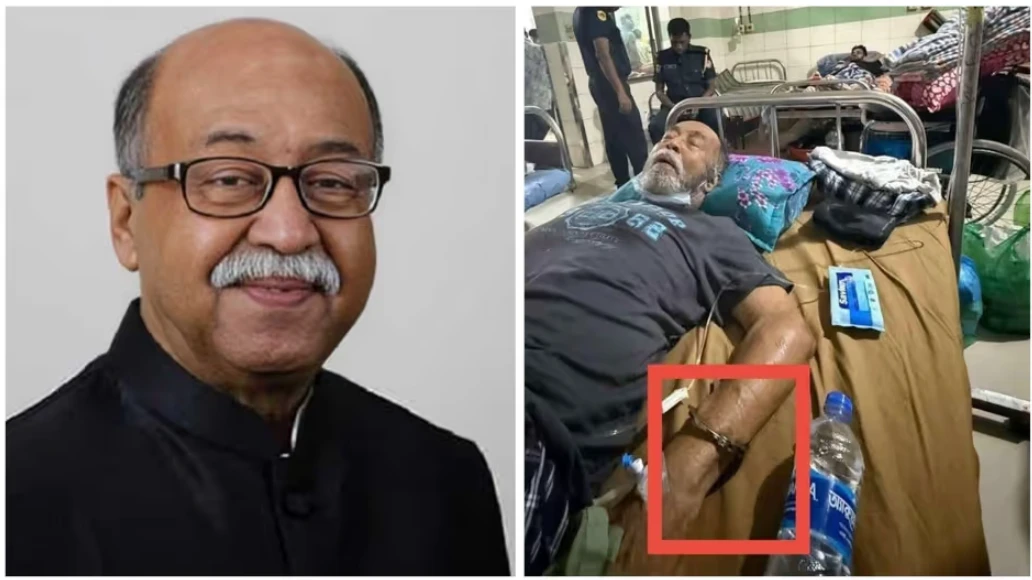
Political detainees linked to the Awami League constitute a significant subset of documented deaths.
The Daily Star identified 21 Awami League leaders and activists among the 270 prisoners who died in 2025. HRSS found that 12 of 39 prisoners who died during the first three months of 2026 were leaders or activists of the Awami League or its affiliated organizations.
The Awami League itself said in May 2025 that 21 of its leaders and activists had died in custody since September 2024. The European Union Agency for Asylum later cited the claim and also documented reported custodial deaths of party members, including four leaders who died in Bogura jail in late 2024.
Human Rights Watch reported in August that thousands of Awami League officials, activists and supporters had been detained since August 2024 and hundreds remained imprisoned without being charged. It said at least 10 Awami League office holders had died in prison since Prime Minister Tarique Rahman took office in February 2026, amid allegations from families and lawyers of denial of bail and adequate medical care.
HRW also documented cases in which detainees granted High Court bail were subsequently arrested in fresh cases — circumstances similar to those described by Shamikul’s family.
The political context is significant. The interim government banned all activities of the Awami League in May 2025, and the party has since operated under severe restrictions. HRW’s 2026 World Report said hundreds of Awami League leaders, members and supporters had been held as murder suspects without trial and routinely denied bail.
The overall prison toll, however, also includes large numbers of prisoners with no reported political affiliation.
Custodial Torture and Deaths
The prison deaths form part of a wider concern over deaths and alleged torture in state custody since August 2024.
Bangladeshi rights organization Odhikar documented 29 alleged custodial deaths due to torture between Aug. 9, 2024, and Feb. 17, 2026, during the interim government, and two more between Feb. 18 and June 22 under the current government.
In a separate assessment covering September 2024 through January 2026, HRSS documented at least 60 deaths in clashes with law enforcement, in custody or from alleged torture, including 22 attributed to torture and 12 in police custody.
The European Union Agency for Asylum, drawing on Bangladeshi rights groups and other sources, reported allegations of electric shocks, severe physical abuse and coerced confessions in detention. It cited Odhikar data showing nine alleged torture deaths among 20 extrajudicial killings from Aug. 9, 2024, through March 2025.
Allegations have continued under the current government. In June, the family of Mirza Istiaq Ahmed Pranto, 26, an activist of the banned Chhatra League, alleged that he was tortured to death in Detective Branch custody in Faridpur. HRSS recorded the case as one of three deaths linked to custody or reported gunfights that month.
The cases have renewed scrutiny of Bangladesh’s Torture and Custodial Death (Prevention) Act, enacted in 2013.
Prisons Holding More Than Twice Their Capacity
The deaths are occurring amid severe overcrowding.
Department of Prisons data reported in August showed 98,233 inmates in Bangladesh’s 75 prisons, against a combined capacity of 45,186. Of them, 66,835 were undertrial prisoners and 31,237 had been convicted.
Dhaka Central Jail alone held 13,958 inmates despite a capacity of 4,590 — more than three times its designed limit.
The nationwide prison population had risen from about 49,000 immediately after the August 2024 political transition to more than 98,000 two years later. More than two-thirds of those counted in August were awaiting trial.
Acute Shortage of Doctors and Ambulances
Healthcare resources have not kept pace with the rising prison population.
Despite about 150 sanctioned medical posts, prison authorities have reported only a handful of full-time doctors, with many prisons relying on physicians assigned through local civil surgeon offices. Dhaka Central Jail, with nearly 14,000 inmates, had no permanent doctor and was being served by two attached physicians.
Emergency transport is also severely limited. An August report said 54 prisons lacked their own ambulances, forcing critically ill inmates in some cases to be transported in prison vehicles.
The consequences are reflected in official figures. Of the 129 prisoners who died in the first half of 2026, 74 died before reaching hospital. In 2025, 111 of the 270 inmate deaths occurred while prisoners were being taken to hospitals. The corresponding figure for 2024 was 120.
Many recent cases follow a similar pattern: an inmate becomes ill, is referred to an outside hospital and dies either on the way or after admission. Families and rights groups have raised allegations in a number of cases of delayed treatment, inadequate medical care, injuries or abuse, while detailed medical records, autopsy findings and independent investigation reports are often unavailable publicly.
International Scrutiny
The United Nations Standard Minimum Rules for the Treatment of Prisoners, known as the Nelson Mandela Rules, make prisoner healthcare a state responsibility and require prompt medical attention in urgent cases.
International rights organizations have increasingly raised concerns about Bangladesh’s treatment of detainees. Human Rights Watch has called for independent investigations into prison deaths and raised concerns over prolonged pretrial detention, repeated denial of bail and access to medical care for political detainees.
The European Union Agency for Asylum has likewise documented allegations of custodial torture and deaths since the 2024 political transition.
The figures illustrate the scale of the problem: 399 officially recorded prison deaths during 2025 and the first half of 2026 alone, additional deaths before and after that period, and 11 prisoners dying in just 13 days this September.



COMMENTS