

U.S. Secretary of State Marco Rubio has warned Iran that it will lose more oil tankers if it continues to attack or attempt to attack U.S. naval vessels, as tensions between Washington and Tehran escalate across the Middle East.
Speaking to reporters during a visit to Colombia on Tuesday, Rubio said the U.S. response would continue as long as Iran targeted American warships.
“Iran continues to try to hit U.S. naval ships, and for every time they do that or try to do that, they’re going to lose tankers,” Rubio said. RReuters
The warning came after U.S. Central Command said American forces had destroyed five Iranian crude oil carriers on September 8. The U.S. military said the strikes were carried out in response to attempted ballistic-missile attacks by Iran’s Islamic Revolutionary Guard Corps (IRGC) against a U.S. Navy warship over the previous two days. No American casualties were reported. RReuters+1
The vessels targeted included the Kivik, Charminar, Horizon 1, Riesco and Derya. U.S. officials said crews were instructed to abandon the ships before the strikes. Four vessels were reported destroyed, while the Riesco later sank in the Gulf of Oman. AAP News+1
Iran Retaliates
Iran responded to the tanker strikes by launching ballistic missiles toward a U.S. military base near Al Azraq in Jordan, according to Iranian state media.
Jordanian authorities said their air defenses intercepted 18 of 20 missiles, while the remaining two landed in unpopulated areas. No casualties were reported from the attack, according to Jordanian officials. RReuters
Iran also claimed that its forces had attacked two U.S. destroyers and several oil tankers in the region. The U.S. military had not immediately confirmed those claims. RReuters
Wider Regional Escalation
The latest exchange is part of a broader escalation that has increasingly threatened maritime security and energy supplies across the Gulf.
Iran has also threatened to target oil tankers operating from ports in Kuwait and Bahrain. At the same time, Iranian-backed Houthi forces in Yemen launched attacks on several cities in southern Saudi Arabia, reportedly injuring 73 people and damaging energy infrastructure. RReuters
The Strait of Hormuz remains a major concern. The strategic waterway is one of the world’s most important routes for oil shipments, and any prolonged disruption could have significant consequences for global energy markets.
Oil Prices Rise
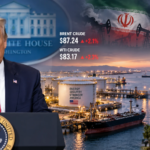
The latest military escalation has already affected global oil markets. Brent crude rose more than 1% in early trading on September 9, reaching around $99.33 a barrel, while U.S. West Texas Intermediate crude climbed to about $94.34. Brent prices have risen roughly a quarter since early August amid growing concerns over prolonged conflict and supply disruptions. RReuters
Analysts have warned that continued attacks on tankers, energy infrastructure and shipping routes could further increase the risk premium on oil and push prices above the psychologically important $100-a-barrel level.
The United States and Iran now face the risk of a widening cycle of retaliation, with attacks on naval vessels triggering strikes on Iranian oil infrastructure and tankers, followed by Iranian missile attacks on U.S. and allied positions.
For Washington, Rubio’s warning suggests that attacks on American naval forces will continue to carry a direct cost for Iran’s oil-exporting capacity. For Tehran, however, further U.S. strikes could prompt additional attacks against American and allied targets across the region.
With both sides showing little sign of backing down, concerns are growing that the latest confrontation could develop into a broader regional crisis.




COMMENTS