
The investigation into the former student adviser may be only the beginning, as a series of complaints raises broader questions about alleged corruption, influence-peddling and abuse of power across the Yunus-led interim administration.
By Adity Karim, Dhaka
The Anti-Corruption Commission has formally opened an investigation into allegations against Asif Mahmud Shojib Bhuyain, one of the most influential student advisers in the Yunus-led interim government.
ACC Deputy Director Akhtarul Islam announced the investigation at a press conference on Wednesday, September 2.
The immediate inquiry concerns allegations arising from Asif Mahmud’s tenure as adviser to the Ministry of Youth and Sports. Complaints submitted to the commission accuse him of corruption involving recruitment, transfers, promotions and postings within the ministry.
According to the allegations, Tk 7.6 million was collected in exchange for removing 38 Upazila Youth Development Officers from their positions and arranging new postings. Another Tk 15 million was allegedly taken in connection with the promotion of 150 assistant Upazila Youth Development Officers, while a further Tk 20 million was allegedly collected to secure preferred postings following those promotions.
The investigation is significant because Asif Mahmud is the first adviser from the interim government to face a formal ACC inquiry over corruption allegations.
But the complaints connected to the Youth and Sports Ministry represent only a fraction of the accusations that have accumulated around him.
Over the past year and a half, Asif Mahmud repeatedly found himself at the center of allegations involving appointments, government contracts, development projects, administrative postings and possible accumulation of wealth disproportionate to his known income.
For that reason, the central question is no longer simply whether irregularities occurred in one ministry. It is whether investigators are prepared to examine the wider network of decisions, appointments and financial transactions associated with his time in government.
A Former Aide Could Hold Important Answers
One potentially important figure in any broader investigation is Moazzem Hossain, a friend of Asif Mahmud who previously served as his assistant private secretary.
Moazzem was removed from his position through a Public Administration Ministry notification in April 2025 amid corruption allegations. An investigation was reportedly initiated against him, but no visible progress followed.
People familiar with Asif Mahmud’s circle have claimed that Moazzem remained close to the former adviser even after his removal.
If investigators believe he possesses relevant information, questioning him could help establish whether allegations concerning Asif Mahmud’s finances, assets or intermediaries have any factual basis.
That, however, would require investigators to go considerably further than the allegations currently under examination.
Eleven Complaints in Six Months
According to information attributed to ACC sources, 11 corruption complaints were lodged against Asif Mahmud between February and July this year.
Those complaints cover several areas.
Development Projects and Alleged Commissions
One complaint alleges that while Asif Mahmud was responsible for the Local Government Ministry, contractors and officials were required to surrender 25 percent of allocations from certain development projects before funds would be released.
The complaint further alleges that Mahfuz Alam, described as Asif Mahmud’s press secretary, supervised these commissions.
These remain allegations and would require examination of project records, payment trails, communications and the role of officials involved before any conclusion could be reached.
Allegations Surrounding the Dhaka WASA MD Appointment
Another complaint concerns the appointment of Abdus Salam as managing director of Dhaka WASA toward the end of the interim administration.
Salam had previously served as an additional chief engineer at the organization and had himself faced corruption allegations.
The complaint claims that Tk 100 million was paid to secure the managing director’s position. Of that amount, Tk 80 million was allegedly transferred through Al Ansari Exchange in Dubai, while another Tk 20 million was allegedly paid in cash.
If investigators pursue this allegation, financial-transfer records could provide an obvious starting point for determining whether such a transaction ever occurred.
DNCC Administrator Appointment
The appointment of Mohammad Ejaz as administrator of Dhaka North City Corporation on February 12, 2025, has also become part of the allegations surrounding Asif Mahmud.
A written complaint claims that the appointment was finalized in exchange for Tk 200 million in cash and an agreement to provide a 10 percent commission from city corporation projects.
Ejaz was later removed amid a series of corruption allegations.
The ACC has reportedly received allegations concerning the leasing of the Gabtoli cattle market, an e-rickshaw project, interests connected to Borak Tower or Hotel Sheraton, shop allocations at Banani kitchen market, construction and allocation of shops at parking areas of Khilgaon Taltola Super Market, city corporation van services, sidewalk businesses and several other DNCC-related matters.
People described as close to Ejaz have claimed that he became increasingly aggressive in raising money because he was under pressure to generate funds for Asif Mahmud.
That allegation remains to be independently established.
Tender and Posting Allegations
Written complaints submitted to the ACC also allege widespread manipulation of government tenders.
According to one complaint, tenders worth approximately Tk 35 billion were processed after Asif Mahmud assumed responsibility for the Local Government Ministry.
It alleges that commissions ranging from 10 percent to 30 percent were collected from tenders and that his alleged press secretary intervened in individual procurement processes. Work orders, according to the complaint, were issued only after financial arrangements had been finalized.
A recorded telephone conversation was reportedly submitted with the complaint as supporting material.
Another major area of concern involves administrative appointments.
Several written complaints accuse Asif Mahmud of directly interfering in public administration from August 2024 until his departure from government.
The allegations state that he issued 48 demi-official, or DO, letters recommending district commissioner appointments and that 36 of those individuals were ultimately appointed as DCs.
The complaints further allege that illicit payments ranging from Tk 20 million to Tk 100 million were associated with individual district postings.
Government officials allegedly also approached Asif Mahmud seeking influential assignments, project positions and even promotions to secretary-level posts.
The allegation is that his intervention followed only after substantial financial arrangements had been settled.
These are exceptionally serious accusations. Establishing them would require investigators to compare recommendation letters, appointment decisions, communications, asset movements and financial records involving both officials and intermediaries.
Cryptocurrency, Dubai and Switzerland
Questions surrounding Asif Mahmud’s finances intensified after he publicly disclosed his bank accounts at a press conference.
Critics immediately argued that bank balances alone could not settle questions about unexplained wealth because illicit proceeds, if they existed, might be held in other forms.
Various allegations subsequently claimed that much of his wealth had been converted into cryptocurrency and that he had accumulated investments or assets in Dubai.
There have also been claims that he maintained accounts in Switzerland.
The article on which these allegations are based notes that Asif Mahmud traveled to Switzerland at least three times after becoming an adviser.
Separately, the Swiss National Bank’s annual figures cited in the allegations showed that money attributed to Bangladeshi clients in Swiss banks rose by around 41 percent within a year, reaching approximately 834.1 million Swiss francs in 2025, compared with roughly 590 million Swiss francs in 2024.
That increase alone, however, does not establish who owned the money or whether any portion belonged to Asif Mahmud or other members of the interim administration.
A credible investigation would therefore need to establish an actual financial trail rather than rely on the broader rise in Bangladeshi-linked Swiss deposits.
Why the Investigation Should Not Stop With One Adviser
The allegations surrounding Asif Mahmud raise a larger issue: whether corruption investigations will be limited to selected former officials or extended to other powerful figures from the Yunus administration.
The original complaints and investigative claims surrounding the former government extend well beyond Asif Mahmud.
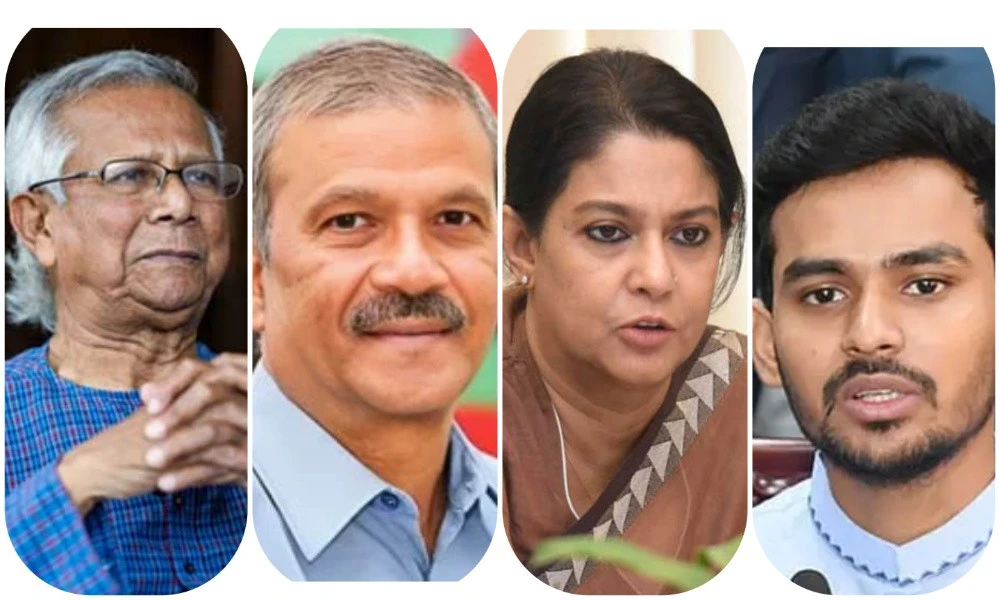
They include allegations involving former Chief Adviser Muhammad Yunus, former Law Adviser Asif Nazrul and former Environment Adviser Syeda Rizwana Hasan, among others.
If the ACC intends to demonstrate institutional independence, those allegations also deserve scrutiny where credible documentary complaints have been submitted.
Questions Surrounding Yunus and Grameen-Linked Organizations
Among the most politically consequential allegations are those concerning Muhammad Yunus and financial developments involving Grameen-linked organizations while he served as chief adviser.
One investigative claim cited in the original article alleges that approximately Tk 1.5 billion in new investment was directed from Bangladesh to the Grameen Crédit Agricole Foundation in France while Yunus was in office.
The foundation was established in 2008 as a joint initiative involving Grameen and Crédit Agricole and is headquartered in Montrouge, France.
The allegation claims that the money was transferred between December 2024 and June 2025 and that no Bangladesh Bank authorization or record of a lawful transfer has been identified.
That assertion requires formal verification by regulators and investigators.
A separate claim says investment in Grameen America increased by around Tk 1.2 billion while Yunus was chief adviser.
Grameen America, founded by Yunus in 2008, has distributed billions of dollars in microloans over its operating history, according to information cited in the original article.
The key issue for investigators would not merely be whether Grameen-affiliated organizations received new funding during Yunus’s tenure, but where the money originated, whether transfers complied with Bangladeshi law and whether Yunus personally exercised influence over any government decision benefiting organizations with which he had longstanding institutional connections.
Several Grameen-linked entities received government approvals or benefits during the interim administration.
These included approval for the establishment of a private institution called Grameen University in Dhaka, a manpower-export license for Grameen Employment Services and authorization for Grameen Telecom to operate a digital wallet.
Grameen Bank also received tax-related benefits, while the government’s shareholding in the bank was reduced from 25 percent to 10 percent.
Questions have additionally been raised over the rapid disposal of labor-law and money-laundering cases involving Yunus and his associates.
None of these developments, standing alone, proves corruption.
But because Yunus occupied the highest executive position in the interim government while organizations closely associated with his professional legacy obtained significant regulatory and financial advantages, an independent examination of possible conflicts of interest would serve the public interest.
The appropriate question is whether each benefit was granted through transparent, lawful and normal procedures.
Asif Nazrul and the Transfer Economy
Former Law Adviser Asif Nazrul also faces a substantial body of corruption allegations.
One of the most widely discussed concerns involves transfers of sub-registrars.
During the interim government’s 18 months in office, allegations claim that hundreds of millions of taka changed hands through transfers within the Law Ministry.
Of the 403 sub-registrars under the Directorate of Registration, at least 282 were reportedly transferred. Allegations claim that around 200 secured preferred postings through bribes.
Payments of as much as Tk 100 million were allegedly demanded for particularly lucrative locations, while ordinary transfers were said to cost between Tk 5 million and Tk 6 million per official.
There are also allegations that transfer orders were suspended when promised payments were not completed and that some officials were moved three or four times within only six or seven months.
The extraordinary frequency of those transfers itself warrants examination, although the existence of frequent transfers does not automatically prove bribery.
The Transfer of 252 Judges
An even more sensitive controversy erupted on June 2 last year, when 252 lower-court judges and judicial officers across Bangladesh were transferred simultaneously.
Five separate notifications were issued by the Law and Justice Division.
The transfers covered 30 district and sessions judges and equivalent officers, 38 additional district and sessions judges and equivalent officers, 22 joint district and sessions judges and equivalent officers, and 162 senior assistant judges, assistant judges and officers of equivalent rank.
The scale of the reshuffle provoked concern because mass transfers of judicial officers without appropriate consultation with the Supreme Court could raise serious questions about judicial independence.
The allegations cited in the original article go further, claiming that a corruption network operated behind the transfers and that Asif Nazrul played a central role.
According to those claims, financial arrangements were negotiated through people close to him before appointments and transfers were finalized.
The article also alleges that he accumulated hundreds of millions of taka through this system.
These claims remain allegations and should be tested against financial records, communications and the legally required procedures governing judicial transfers.
Asif Nazrul has also been accused of influencing bail decisions in exchange for money and of receiving substantial illicit proceeds from such arrangements.
Again, such an accusation would require particularly strong evidence because it concerns both corruption and potential interference with judicial proceedings.
District Commissioners, Secretaries and Administrative Influence
Following the formation of the interim government, several former bureaucrats were brought into government on contractual appointments.
Among them was former public administration secretary Mokhlesur Rahman.
When large-scale allegations emerged over district commissioner appointments, an investigation committee was formed.
The original article alleges that Asif Nazrul exercised decisive influence within that investigation and eventually helped clear Mokhlesur Rahman of corruption allegations after reaching an understanding with him.
In return, it claims, Asif Nazrul gained influence over DC appointments.
A dispute reportedly emerged when both Asif Nazrul and student adviser Asif Mahmud recommended competing candidates for the Chattogram DC position.
The allegation is that both recommendations were connected to large financial payments.
Mokhlesur Rahman was subsequently removed from the Public Administration Ministry.
Further complaints accuse Asif Nazrul of arranging secretary-level postings in exchange for large sums of money.
Recruiting Licenses and the Expatriates’ Welfare Ministry
Asif Nazrul simultaneously held responsibility for the Ministry of Expatriates’ Welfare and Overseas Employment, where further allegations emerged over recruiting-agency licenses.
The original article alleges that the ministry issued new licenses on a large scale and that significant sums were collected in the process.
It cites a comparison with India to illustrate the unusual size of Bangladesh’s recruiting-agency sector.
India received more than $135 billion in remittances in 2025 and reportedly had 1,988 recruiting agencies.
Bangladesh received approximately $31 billion in remittances in the same year but had 2,646 recruiting agencies, according to figures attributed to the Bureau of Manpower, Employment and Training.
Bangladesh therefore had more active recruiting agencies than India despite receiving a fraction of India’s remittance volume.
During the Yunus government, another 252 recruiting licenses were reportedly approved by the Expatriates’ Welfare and Overseas Employment Ministry.
The original allegations claim these approvals were largely driven by Asif Nazrul.
There are also accusations that he transferred substantial assets to the United States and owns several houses and business interests there.
Those claims, like the others, require financial verification.
Allegations Involving Syeda Rizwana Hasan
Former adviser Syeda Rizwana Hasan is another senior figure against whom corruption allegations have been raised.
The allegations focus partly on her husband, Abu Bakar Siddique, also known as ABC, who reportedly worked for an organization associated with former power and energy state minister Nasrul Hamid Bipu.
The original investigation claims that this relationship placed Siddique in a position to know about or manage some of Hamid’s assets.
It further alleges that, after August 2024, Siddique acted as an intermediary in transactions involving properties linked to Nasrul Hamid and helped move money abroad.
The article also alleges that Siddique collected money on behalf of Rizwana Hasan and that the couple accumulated hundreds of millions of taka through corruption and influence-peddling during the interim government’s 18 months in power.
Rizwana Hasan had previously said that the couple did not possess substantial property, while critics now claim that their assets increased sharply during her time in office.
Such assertions can be established only through asset declarations, land and company records, bank statements and other documentary evidence.
The ACC should examine those records if formally submitted complaints provide sufficient grounds for investigation.
Other Advisers Also Face Complaints
The accusations are not confined to the most prominent advisers.
Written corruption complaints have also reportedly been submitted to the ACC against former advisers Mostofa Sarwar Farooki, Nurjahan Begum and Adilur Rahman Khan.
The existence of a complaint does not establish guilt. But neither should serious complaints involving senior public officials be ignored because of political status or previous influence.
That principle should apply equally to every member of the former administration.
The Asif Mahmud Investigation Should Be a Beginning
The ACC’s decision to investigate allegations against Asif Mahmud is therefore important not simply because of one former adviser.
It presents a wider test of Bangladesh’s anti-corruption institutions.
If investigators examine only the comparatively limited Youth and Sports Ministry allegations while leaving more substantial accusations untouched, the investigation may fail to address the deeper concerns raised about the interim administration.
Asif Mahmud’s alleged role in appointments, development projects, tenders, administrative postings and possible offshore assets deserves scrutiny wherever evidence justifies it.
The same standard should apply to Muhammad Yunus, Asif Nazrul, Syeda Rizwana Hasan and any other former adviser against whom specific and credible complaints have been filed.
No allegation should be treated as proof in advance. At the same time, political prominence should never provide immunity from investigation.
The ACC now has an opportunity to establish whether the complaints are supported by evidence, identify who benefited from any unlawful transactions and determine whether public office was used for private enrichment.
A transparent and impartial investigation into credible corruption allegations from the Yunus era would do more than settle accusations surrounding individual former advisers.
It would help establish a far more important principle: that those entrusted with governing Bangladesh must ultimately remain accountable for how they exercised that power.
Courtesy: Re‑drafted from a Bangla article published in Daily Kaler Kantho.



COMMENTS