

For decades, Bangladesh proudly projected itself as a Muslim-majority nation rooted in pluralism, cultural tolerance and the secular ideals that emerged from its liberation struggle in 1971. Despite periodic communal tensions and episodes of violence, the country retained a reputation for coexistence where churches, temples, mosques and monasteries stood side by side across villages and cities.
That fragile balance is now under serious threat.
The growing pressure on Christian missionaries, Catholic charities and religious minorities described in a recent report by America Magazine should alarm anyone who cares about Bangladesh’s social stability, international reputation and moral future. The issue is not simply about Christianity. It is about whether Bangladesh will remain a humane society governed by law, compassion and coexistence — or drift further into intolerance fueled by political opportunism and Islamist extremism.
The stories emerging from Bangladesh today are deeply disturbing.
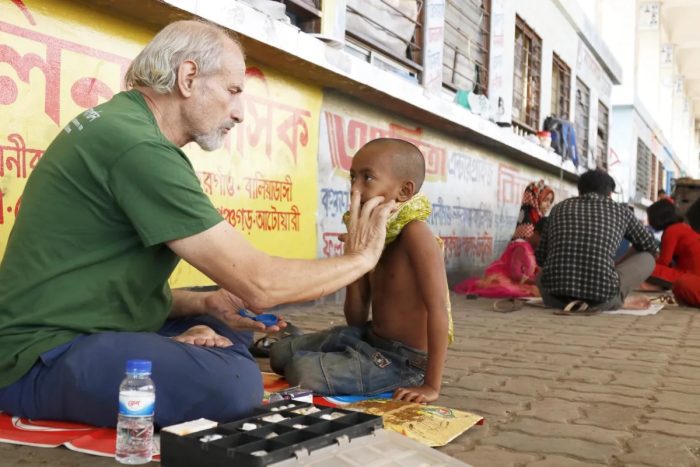
An elderly Italian missionary who spent more than two decades caring for abandoned children in Dhaka’s slums is now forced to operate cautiously from outside the communities where he once lived openly. Catholic schools and colleges that educated generations of Bangladeshis — including Muslims — are increasingly accused of hidden conspiracies and “conversion agendas.” Churches are being targeted with threats and grenade attacks. Foreign missionaries face visa complications and suspicion merely for serving poor communities.

At the center of this tragedy are not geopolitical games or ideological debates, but vulnerable human beings: orphaned children, impoverished families, Indigenous communities and frightened minorities who increasingly feel abandoned by the state.
Brother Lucio Beninati’s story symbolizes both the best of humanitarian service and the growing darkness surrounding Bangladesh’s minorities. For 22 years, he worked among street children in Dhaka, providing basic education, sports and medical support. These are children many people prefer not to see — children discarded by poverty, abuse and neglect.
Yet instead of being celebrated, Beninati says he has been assaulted, interrogated and accused of crimes simply because he chose to serve the forgotten.
The cruelty of such suspicion reflects a broader sickness now spreading through Bangladesh’s political and social environment.
The consequences are now becoming painfully visible.
Minorities increasingly report living under fear. Human rights organizations have documented attacks on Hindus, Christians and Buddhists since the 2024 upheaval. Journalists, academics and civil society figures have also faced intimidation, politically motivated charges and professional exclusion. Within this climate, extremist groups feel emboldened to target anyone perceived as “other.”
Tarique Rahman’s government cannot continue avoiding responsibility for this deteriorating environment.
Even if the administration does not directly endorse extremist rhetoric, its failure to decisively confront intolerance has created dangerous space for radical elements to expand their influence. Silence, ambiguity and selective enforcement of the law only encourage further aggression against vulnerable communities.
A government that claims democratic legitimacy must do more than deliver speeches about stability. It must actively protect minorities, prosecute attackers and defend constitutional freedoms — especially when those freedoms become politically inconvenient.
Bangladesh’s Christians are not outsiders. Many of them belong to Indigenous communities that have lived on this land for generations. Catholic schools and institutions have educated countless Bangladeshis, including members of the country’s political and business elite. Christian charities often operate in areas where state support barely exists, serving the disabled, abandoned children, rural poor and marginalized workers without regard to religion.
To portray such humanitarian work as a threat to Islam is both dishonest and dangerous.
Bangladesh’s Islamic heritage itself contains deep traditions of tolerance, scholarship and coexistence. The overwhelming majority of ordinary Bangladeshi Muslims do not support violence against minorities. Many continue to protect neighbors and maintain communal harmony despite rising polarization. Even Brother Beninati noted that many of his volunteers are Muslims inspired by compassion rather than division.
That humanity still exists. But it is being tested.
History shows what happens when societies normalize hatred against minorities. First come accusations. Then intimidation. Then institutional discrimination. Eventually violence becomes ordinary, and silence becomes complicity.
Bangladesh has already witnessed these cycles before. The 2001 church bombing in Gopalganj, the killings of priests and minority activists, attacks on Buddhist temples, anti-Hindu riots and assaults on Indigenous communities were all warnings. Too often, justice never arrived.
The current trajectory risks repeating those failures on a much larger scale.
Internationally, Bangladesh also stands to lose enormously if religious intolerance deepens further. The country has long depended on its reputation as a moderate Muslim-majority democracy with a vibrant civil society. Growing reports of extremism, mob intimidation and shrinking minority rights could damage diplomatic relations, foreign investment and international confidence at a time when Bangladesh’s economy already faces mounting pressures.
But beyond politics and economics lies a more fundamental question: what kind of nation does Bangladesh wish to become?
A confident society does not fear a nun teaching poor children. It does not see conspiracy in a charity clinic or danger in a priest visiting a village. A strong nation protects its minorities because it understands that citizenship is not conditional upon religion.
The treatment of minorities is ultimately a measure of a country’s moral character.
Bangladesh still has time to reverse course. But that requires courage from political leaders, religious scholars, civil society and ordinary citizens alike. Extremists must be isolated, not appeased. Violence and intimidation must be prosecuted consistently, regardless of political convenience. Minority communities must feel that the state belongs to them too.
Most importantly, Bangladesh must remember the ideals upon which it was founded: linguistic dignity, cultural pluralism and equal citizenship.
If those principles disappear, the country risks losing far more than its international image. It risks losing its soul.
Writer:Pulack Ghatack, Journalist and Minority Rights Activist.
Email: ghatack@gmail.com